Alaska Agricultural Property Financing Options
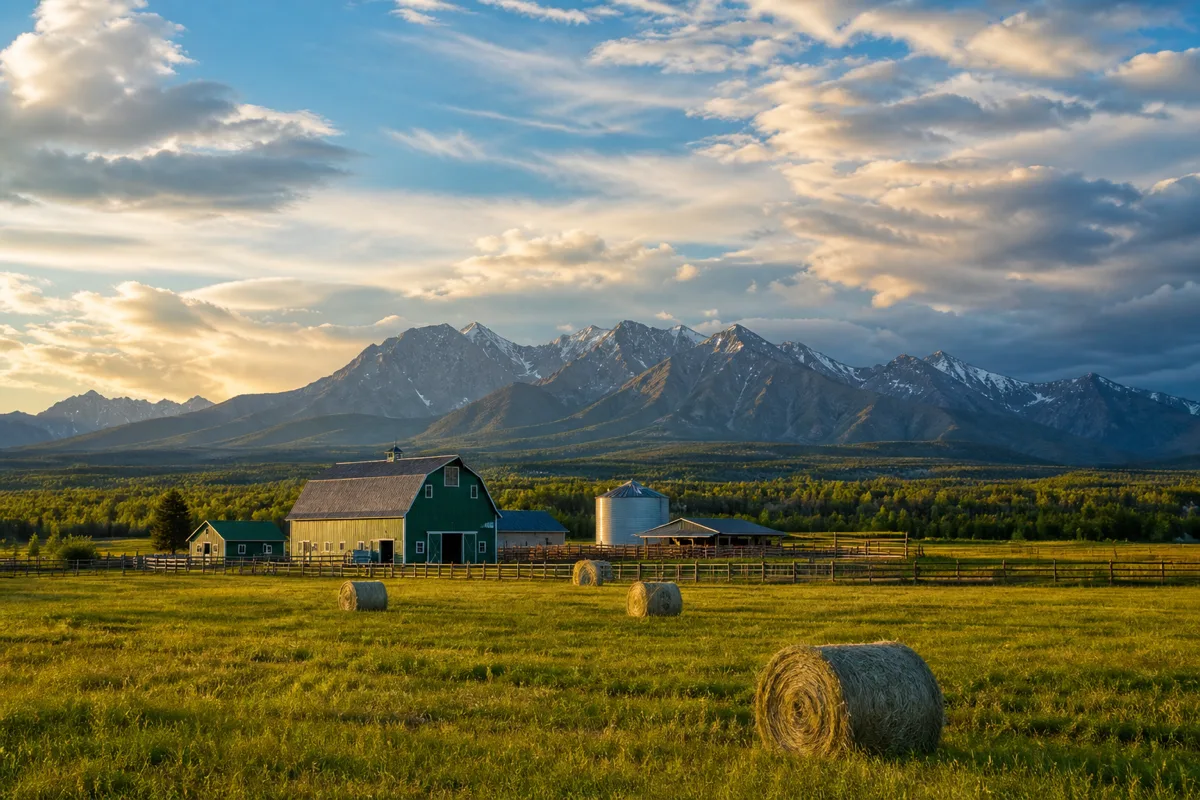
Alaska agricultural property financing sits at the intersection of residential mortgage lending, farm lending, and rural property finance — a combination that requires specialized lender experience. Whether you’re buying a small homestead farm in the Mat-Su Valley, a larger agricultural parcel outside Palmer, or a property with livestock operations anywhere in the state, understanding the right financing path saves time and avoids the frustration of being declined by lenders who don’t understand Alaska’s unique ag market.
Why Alaska Farm Lending Is Different
Alaska’s agricultural sector is small but growing. The Matanuska-Susitna Valley — particularly the Palmer and Wasilla areas — has some of the most productive farmland in the state, known for oversized vegetables thanks to the midnight sun growing season. But even with productive agricultural land, financing farm properties in Alaska presents unique challenges:
Mixed-use classification: Most Alaska “farms” are also someone’s home. Properties with a primary residence plus outbuildings, greenhouses, livestock facilities, and acreage span multiple lender classification systems. The mix of residential and agricultural use often means standard residential lenders (who fund homes) and farm lenders (who fund operations) each see only part of the picture.
Appraisal complexity: Agricultural properties are appraised differently than residential homes. The income approach (capitalizing farm revenue) and the sales comparison approach (comparing to similar ag properties) both require appraisers with specific agricultural experience. Alaska has limited numbers of these specialists, which can extend your timeline.
Income verification: Farm income — from crop sales, CSA subscriptions, farmers markets, livestock, or agritourism — is irregular and may show significant year-to-year variation. Lenders who don’t understand agricultural income cycles may view it less favorably than consistent wage income.
Property access: Many agricultural parcels in Alaska have seasonal access, shared driveways, or private road maintenance responsibilities. Lenders want clear access easements and may require year-round vehicle access for residential mortgage qualification.
Residential Mortgage Options for Farm Properties
If a farm property is primarily a residential property — with agricultural use secondary — you may be able to finance through conventional residential channels:
Conventional loans work for properties where the residential use is dominant and the agricultural component is incidental. A home on 5 acres with a garden and small greenhouse typically qualifies as a residential property even if you sell some produce. The key test: is the property primarily valued and used as a residence?
USDA Rural Development loans (Section 502 Direct and Guaranteed) are designed for rural properties, which includes many Alaska agricultural areas. Zero-down options exist for income-eligible borrowers, and the eligible areas include significant portions of Mat-Su Borough, Kenai Peninsula, and other agricultural regions. Subject to income limits and credit approval.
FHA loans can apply to farm properties with up to 30% of the appraised value from agricultural use, though guidelines are strict. FHA requires the property to be “primarily residential in nature” and the appraiser must be comfortable with the classification.
For properties you’re considering near Palmer or Wasilla, see our Palmer area home loan resources for lender context.
Farm Service Agency (FSA) Programs
The USDA Farm Service Agency is the primary federal source of farm-specific credit. Alaska has an FSA office that administers several relevant programs:
Direct Farm Ownership Loans — FSA lends directly for purchasing farmland, constructing farm buildings, or improving farmland. Maximum loan amounts apply and are subject to annual adjustment. First-time farmers receive prioritized access to the direct loan pool. Interest rates are set by FSA, not by the market, and are often below commercial rates.
Guaranteed Farm Ownership Loans — FSA guarantees a portion of loans made by commercial lenders, encouraging those lenders to extend credit to farm buyers who might otherwise be declined. This opens conventional bank and credit union channels to agricultural borrowers.
Farm Operating Loans — separate from ownership loans, these cover annual operating expenses including seed, feed, fertilizer, equipment, and family living expenses during the farm’s early years. Operating loans support the business side of a farm purchase.
Emergency Loans — for farms that have suffered losses from natural disasters. Alaska’s wildfire, flooding, and earthquake exposure makes this relevant for established farm operators.
FSA loan applications involve more documentation than standard mortgages, including a farm business plan, financial statements, production history, and a description of farming experience. First-time farmers without an established production history can still qualify with a credible farm plan and adequate collateral.
Alaska-Specific Lenders for Agricultural Properties
Beyond FSA, several lender types serve Alaska agricultural buyers:
CoBank and Farm Credit System: Farm Credit operates in Alaska through Alaska Farm Credit. They specialize specifically in agricultural and rural lending, understand seasonal income, and are comfortable with farm appraisals. Their programs range from residential on small hobby farms to full commercial agriculture.
Community banks and credit unions: Some Alaska credit unions and community banks have agricultural lending experience, particularly in the Mat-Su Valley. Alaska USA Federal Credit Union, Matanuska Valley Federal Credit Union, and several local banks have worked with Palmer-area farm buyers.
Portfolio lenders: Some mortgage companies hold loans on their own balance sheets (rather than selling to Fannie/Freddie), allowing more flexibility in how they evaluate mixed-use agricultural properties. Premier Mortgage (NMLS# 1168048) can help identify programs suited to your specific property type.
Mat-Su Valley Farmland: Key Financing Facts
The Matanuska-Susitna Borough contains the majority of Alaska’s productive agricultural land. Several specifics affect financing in this area:
Mat-Su Borough agricultural land classifications: Borough zoning distinguishes between “Agricultural” (A), “Rural Residential” (RR), and “Rural” (R) designations. True agricultural-zoned land may limit residential construction options and affect how lenders classify the property.
Farms near Palmer: Palmer is the agricultural center of Alaska, host to the Alaska State Fair and home to established farm operations. Properties in the immediate Palmer area have more comparable sales for appraisals than remote farm parcels. This makes financing more accessible.
AHFC on agricultural properties: Alaska Housing Finance Corporation programs are designed primarily for residential properties. AHFC financing typically doesn’t apply to properties where agriculture is the primary use, though it may work for homesteads where the residence is clearly primary.
Property size considerations: Residential mortgage lenders often get uncomfortable above 10-20 acres. Beyond that threshold, many default to farm lending channels. In the Mat-Su Valley where 40-160 acre parcels are common, farm credit becomes the more relevant channel for the acreage even if the home itself would qualify for a residential mortgage.
Building a Case for Your Agricultural Property Loan
Regardless of which lending channel you pursue, preparing a strong loan package improves approval chances and speeds the process:
- Detailed property description — what is the land currently used for? What are your intended agricultural uses?
- Farm income history — if the property has been operated, provide 2-3 years of farm income documentation (Schedule F or farm business records)
- Farm business plan — especially important for FSA and new farmers. Include crop/livestock plan, revenue projections, and expense estimates
- Comparable sales — your real estate agent should pull ag property comps; helping your lender see comparable transactions in the market supports the appraisal
- Environmental considerations — has the property had any chemical storage, fuel tanks, or other potential contamination? Lenders require clean environmental status
Frequently Asked Questions
Can I get an FHA loan for a property with a chicken operation and large garden?
Likely yes, if the property is primarily residential. FHA considers properties with “incidental agricultural use” — gardens, small livestock, hobby farming — as eligible. The key is that the appraiser classifies it as residential, not agricultural. A home on 3-5 acres with a chicken coop and large garden would typically qualify; a working dairy or commercial produce operation would not.
Are Alaska farm properties eligible for USDA Rural Development loans?
Many are. USDA RD eligibility is based on the property location (must be in a rural area as defined by USDA) and the borrower’s income (must be within income limits). Much of Mat-Su Borough, the Kenai Peninsula, and other agricultural areas of Alaska qualify geographically. The property must be primarily residential in use. Subject to eligibility review and credit approval.
What credit score do I need for FSA farm loans?
FSA direct loans don’t have a published minimum credit score, but they evaluate your full credit history, including bankruptcy, foreclosures, and payment history. FSA considers applicants who have experienced financial hardship but can demonstrate current creditworthiness and a viable farm plan. Guaranteed loans through commercial lenders have higher standards set by the individual lender.
How do I finance a farm purchase when my income is from the farm?
Farm income documentation requires 2 years of tax returns (specifically Schedule F) showing net farm profit. Lenders average the two years. If your farm income is variable, the average may be lower than your best year but higher than your worst. Some lenders will use a 3-year average for greater stability. Income from off-farm employment can supplement farm income qualification.
Can I use a construction loan to build farm buildings on land I’m purchasing?
Yes, though it requires coordination between your land loan, construction financing, and permanent financing. Some farm credit lenders do one-time close construction loans that cover the land purchase, building construction, and permanent mortgage in a single closing — this is often the most efficient path for new farm builds in Alaska.
Ready to explore financing for your Alaska agricultural property? Get Your Free Quote →
Premier Mortgage NMLS# 1168048. All loan programs subject to credit approval. Rates and terms vary. FSA programs administered by USDA. Contact your local FSA office for current program details. This content is for educational purposes only.
Ready to Take the Next Step?
Get a free home loan quote today through our trusted partner.
Or call 9078411600
Disclaimer: This article is for informational purposes only and does not constitute financial, mortgage, legal, or tax advice. Interest rates, loan programs, eligibility requirements, and fees are subject to change without notice and may vary based on your individual circumstances. Alaska Home HQ is not a lender, broker, or financial institution. All loan applications are processed by Premier Mortgage (NMLS: 1168048). We may have a business relationship with Premier Mortgage and may receive compensation when you use their services through our links. Consult a licensed mortgage professional before making financial decisions. Terms of Service · Privacy Policy