Alaska ARM Loans — Adjustable-Rate Mortgage Guide
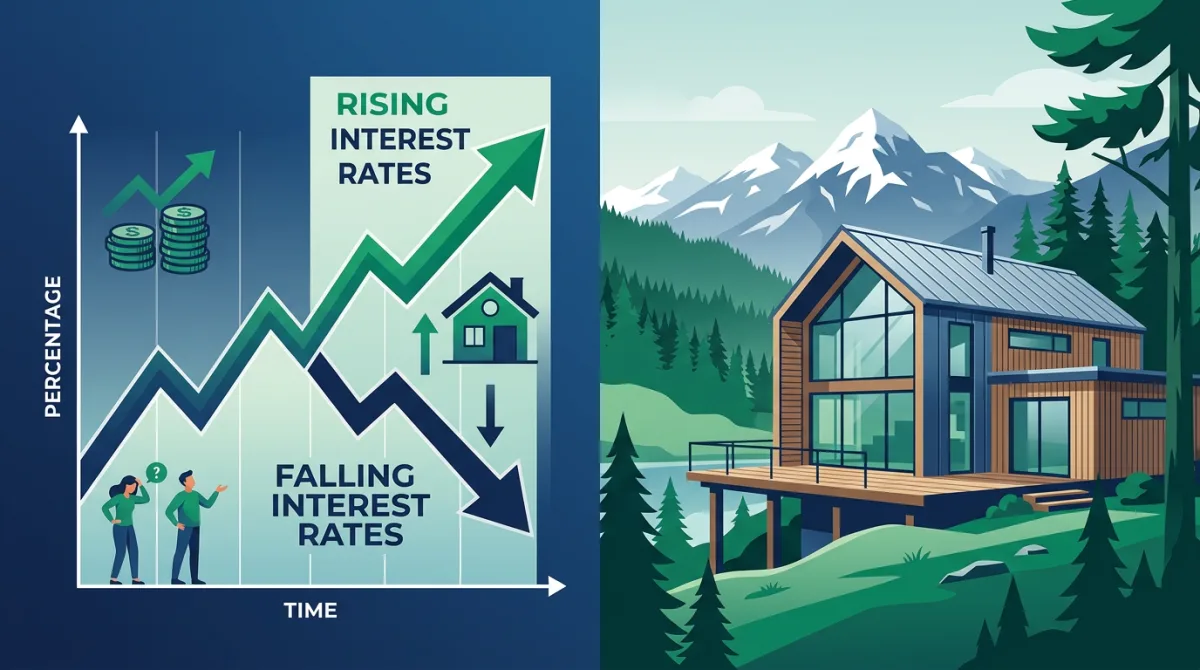
Alaska ARM Loans: Adjustable-Rate Mortgage Guide
Adjustable-rate mortgages — commonly called ARM loans — offer Alaska homebuyers an alternative to traditional fixed-rate financing. An adjustable-rate mortgage in Alaska starts with a lower introductory interest rate that remains fixed for an initial period, then adjusts periodically based on market conditions. For the right buyer and the right situation, ARMs may provide meaningful savings during those early years of homeownership.
With Alaska’s dynamic housing market and fluctuating rate environment, understanding how ARM loans work gives you another tool in your homebuying toolkit. Whether you’re purchasing your first home in Juneau, upgrading in the Mat-Su Valley, or buying a property you plan to sell within a few years, this guide covers what you need to know.
How Adjustable-Rate Mortgages Work
An ARM has two distinct phases:
The fixed-rate period is the initial stretch where your interest rate stays locked. Depending on the ARM type, this period lasts 3, 5, 7, or 10 years. During this time, your monthly payment remains predictable — just like a fixed-rate mortgage.
The adjustment period begins after the fixed-rate window expires. Your rate then adjusts at set intervals (typically once per year) based on a benchmark index plus a margin set by your lender. The adjustment can move your rate — and your monthly payment — up or down.
Common ARM Structures
ARM loans are described using two numbers. Here’s what each means:
| ARM Type | Fixed Period | Adjustment Frequency |
|---|---|---|
| 5/1 ARM | 5 years | Adjusts annually after |
| 5/6 ARM | 5 years | Adjusts every 6 months after |
| 7/1 ARM | 7 years | Adjusts annually after |
| 7/6 ARM | 7 years | Adjusts every 6 months after |
| 10/1 ARM | 10 years | Adjusts annually after |
The 5/1 ARM is the most popular option nationally and in Alaska. It offers a substantial rate discount compared to 30-year fixed rates while providing five years of payment stability.
Rate Caps Protect You
Every ARM includes rate caps that limit how much your interest rate can change:
- Initial adjustment cap: Limits the first rate increase after the fixed period ends (typically 2%)
- Periodic adjustment cap: Limits each subsequent annual adjustment (typically 2%)
- Lifetime cap: Limits the total increase over the loan’s life (typically 5% above the initial rate)
These caps mean your rate cannot jump to extreme levels overnight, even in a rising rate environment. For a deeper explanation of how ARM rate caps and adjustments work, the CFPB’s adjustable-rate mortgage guide is a useful resource.
When an ARM May Make Sense in Alaska
ARM loans aren’t right for everyone. They tend to work best in specific scenarios:
You Plan to Move or Sell Within the Fixed Period
If you anticipate relocating for work, military reassignment, or personal reasons within 5–7 years, an ARM lets you take advantage of the lower introductory rate without worrying about future adjustments. This is especially common among military families stationed at Joint Base Elmendorf-Richardson or Eielson Air Force Base.
You Expect to Refinance Before the Adjustment
Some buyers choose an ARM with the intention of refinancing before the fixed period expires. If rates drop or your financial profile improves, you may refinance into a fixed-rate loan before any adjustment hits.
You’re Buying in a Higher Price Range
The rate savings on an ARM become more significant on larger loan amounts. On a $400,000 mortgage, even a 0.75% rate difference translates to roughly $200/month in savings during the fixed period. For buyers in Alaska’s higher-cost markets like Juneau or Anchorage, those savings add up.
You Want Maximum Purchasing Power
Because the initial rate is lower, your monthly payment during the fixed period is lower — which means you may qualify for a larger loan amount. This can be the difference between affording the home you want and settling for less.
ARM vs. Fixed-Rate: Running the Numbers
Consider this comparison for a $350,000 mortgage in Alaska:
| Feature | 30-Year Fixed | 5/1 ARM |
|---|---|---|
| Initial Rate | 6.75% | 5.875% |
| Monthly Payment (P&I) | $2,270 | $2,071 |
| Monthly Savings | — | $199 |
| 5-Year Savings | — | ~$11,940 |
Rates shown are illustrative examples only and do not represent current offers. Contact Premier Mortgage (NMLS# 1168048) for actual rates based on your financial situation.
If you sell or refinance within those five years, the ARM saves you nearly $12,000. However, if you stay past the fixed period and rates rise, your payments could increase — potentially exceeding what the fixed-rate option would have cost.
The key question: how long do you realistically plan to keep this mortgage?
Understanding Rate Indices and Margins
When your ARM adjusts, the new rate equals a benchmark index plus a fixed margin:
New Rate = Index + Margin
Common indices used for ARM loans include:
- SOFR (Secured Overnight Financing Rate): The most widely used index for new ARM products, replacing the older LIBOR benchmark
- Constant Maturity Treasury (CMT): Based on U.S. Treasury yields
The margin is set by your lender at origination and typically ranges from 2.25% to 3.0%. It does not change over the life of the loan.
When comparing ARM offers, pay attention to both the initial rate and the margin. A lower margin means smaller adjustments when the rate resets.
Alaska-Specific ARM Considerations
Several factors make ARMs particularly relevant in the Alaska market:
Military Buyers and PCS Cycles
Alaska’s large military population often faces relocations every 3–5 years. A 5/1 ARM aligns naturally with typical PCS (Permanent Change of Station) timelines. Military buyers may also pair an ARM with VA loan benefits for zero down payment and no PMI.
Seasonal Homebuyers
Some Alaskans maintain homes primarily for seasonal use — summer cabins, fishing properties, or winter retreats. An ARM with a longer fixed period may provide affordable financing for properties that aren’t primary residences.
Current Rate Environment
Today’s Alaska mortgage rate trends show the spread between ARM and fixed rates remains meaningful. Monitoring this spread helps you evaluate whether the ARM discount is worth the adjustment risk. When the spread narrows to less than 0.5%, the certainty of a fixed rate may outweigh the modest savings.
AHFC Loan Programs
Alaska Housing Finance Corporation offers various mortgage products. Check with AHFC to see if adjustable-rate options are available through their programs, which sometimes offer below-market rates for qualifying Alaskans.
Rate Lock Strategies for ARM Borrowers
If you’re leaning toward an ARM, consider your rate lock strategy carefully. Because ARM initial rates tend to be more volatile than fixed rates, locking in your rate as soon as you’re under contract may protect you from upward movement during processing. Most lenders offer 30–60 day rate locks, with extensions available for a fee.
Questions to Ask Your Lender
Before committing to an ARM in Alaska, get clear answers on these points:
- What index is the ARM tied to, and what is the margin?
- What are the initial, periodic, and lifetime rate caps?
- What would my payment be at the maximum rate cap?
- Is there a prepayment penalty if I refinance early?
- Can I convert this ARM to a fixed-rate loan later?
A knowledgeable Alaska lender like Premier Mortgage (NMLS# 1168048) can walk you through these details and help you compare ARM scenarios against fixed-rate alternatives specific to your situation.
Frequently Asked Questions
Are ARM loans risky for Alaska homebuyers?
ARM loans carry more uncertainty than fixed-rate mortgages because your rate and payment may increase after the fixed period. However, rate caps limit the maximum adjustment, and if you plan to sell or refinance before the adjustment period begins, the risk is minimal. The key is matching the ARM’s fixed period to your expected timeline in the home.
Can I refinance out of an ARM before it adjusts?
Yes, many borrowers plan to refinance before the adjustment period begins. As long as you have sufficient equity, acceptable credit, and can qualify at current rates, refinancing from an ARM into a fixed-rate loan is a common strategy. Start exploring refinance options 6–12 months before your fixed period expires.
What happens if rates drop during my ARM’s adjustment period?
If the benchmark index decreases, your adjusted rate may actually go down, lowering your monthly payment. ARM adjustments work in both directions. During periods of declining interest rates, ARM borrowers may benefit from automatic rate reductions without the need to refinance.
Do VA loans offer ARM options in Alaska?
Yes, the VA loan program offers a hybrid ARM option, commonly the VA 5/1 ARM. It combines VA benefits — including no down payment and no PMI — with the lower initial rate of an adjustable-rate mortgage. This is a popular choice among military buyers at Alaska installations who expect to PCS within five years.
How much can my ARM rate increase in a single year?
Most ARM products cap annual adjustments at 2 percentage points. So if your rate after the fixed period is 5.875%, the maximum it could reach after the first adjustment is 7.875%. The lifetime cap — typically 5% above your initial rate — sets the absolute ceiling for the loan’s duration.
Ready to Take the Next Step?
Get a free home loan quote today through our trusted partner.
Or call 9078411600
Disclaimer: This article is for informational purposes only and does not constitute financial, mortgage, legal, or tax advice. Interest rates, loan programs, eligibility requirements, and fees are subject to change without notice and may vary based on your individual circumstances. Alaska Home HQ is not a lender, broker, or financial institution. All loan applications are processed by Premier Mortgage (NMLS: 1168048). We may have a business relationship with Premier Mortgage and may receive compensation when you use their services through our links. Consult a licensed mortgage professional before making financial decisions. Terms of Service · Privacy Policy