Alaska Arsenic Well Water Mortgage
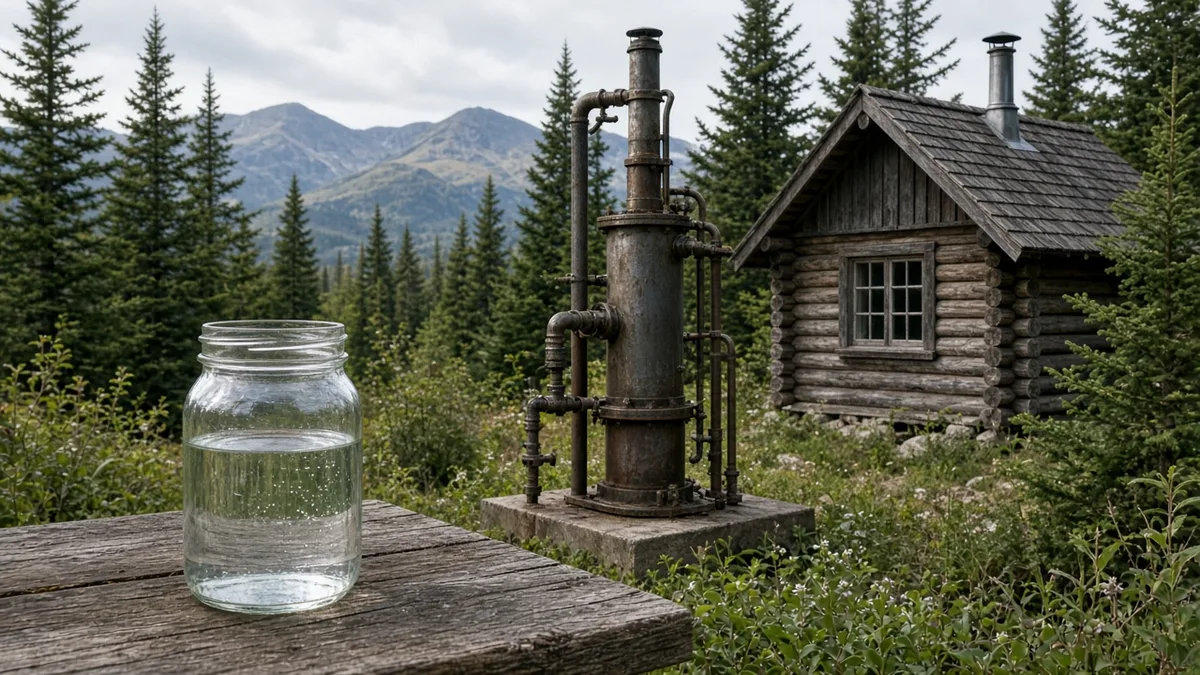
An Alaska arsenic well water mortgage is a home loan on a house whose drinking water comes from a private well in a place where arsenic in groundwater is a known concern. The loan file wants a laboratory report for that well. The report is the concentration. A neighborhood rumor, a seller’s memory, and a test from a different contaminant are not substitutes.
This is not the PFAS well article. PFAS and arsenic are different substances, and a result for one does not answer the other. This is not the general well-water testing article, which is the broader panel, including bacteria and nitrate. Use that guide for the rest of the sample. Use this page when arsenic is the reason the file slowed down. Buyers on the Kenai Peninsula see the question often enough that it deserves its own stack, and so do buyers in the Fairbanks area, the Mat-Su, and parts of Anchorage.
Alaska Home HQ is educational. It is not a lender and it is not the Department of Environmental Conservation. Rates vary. Subject to credit approval.
What an Alaska arsenic well water mortgage file is actually holding
DEC’s best-management-practices manual for private drinking water systems says it is guidance, not a regulation, and that it should not be treated as a complete requirement. It defines the audience as private water systems, meaning a potable system that is not a public water system. In the sampling section it lists drinking-water quality standards of primary concern for private-system owners. The arsenic line in that list is 0.010 mg/L, which the manual also writes as 10 micrograms per liter, or 10 parts per billion. The same sentence says arsenic in Alaska groundwater and surface water is naturally occurring, and that it is tasteless, colorless, and odorless when dissolved.
That figure is the manual’s listed standard of concern. The manual also says baseline sampling, after the system is disinfected and flushed, is how an owner finds out whether a water-quality issue exists and whether treatment is required. It says the analyses should be done by a laboratory certified by DEC or by another state for drinking-water work. It does not, in that guidance, hand a mortgage underwriter a condition code. A lender may ask what the household drinks. This page does not add a second pass-fail number and does not declare that a particular treatment is a loan condition.
The Alaska Division of Geological & Geophysical Surveys describes arsenic in groundwater on its geologic-hazards page. DGGS says arsenic has been found in wells in the Fairbanks area, on the Seward and Kenai Peninsulas, in the Mat-Su Valley, and in Anchorage, and that other places in the state are also likely to exceed the federal public-water level. DGGS states that the Environmental Protection Agency set the maximum contaminant level for arsenic in drinking water at 10 parts per billion for public water systems, and that the same level can be used as a guideline for private wells. That is the same concentration DEC’s manual lists. DGGS is a geological survey. DEC’s manual is the drinking-water guidance. Neither document is a mortgage program guide.
What the water will not tell you by taste
Because arsenic dissolved in water has no taste, smell, or color, a clear glass does not clear the file. DGGS says heating or boiling the water, or adding chlorine as a disinfectant, does not remove arsenic. A shock chlorination of a new well, which the DEC manual discusses as a disinfection step, is not an arsenic treatment. Shipping a “we chlorinated it” note in place of a metals result misses the contaminant the advisory is about.
DGGS says levels can change over time, including with the seasons and after earthquakes, and that the state health department recommends testing a private well for arsenic once a year, especially where nearby wells are known to have it. The DEC manual’s monitoring discussion similarly points owners toward repeat arsenic sampling when earlier tests were elevated or when nearby wells have shown it. A test from the year the well was drilled, if that year was long ago, is a history. The loan file is stronger with a current sample from a certified lab, drawn the way that lab instructs, and labeled to the property.
If a treatment system is already in the house, test the raw water and the treated water. DGGS says a system bought to remove arsenic should be certified for that removal, and it names adsorptive media and reverse osmosis as the two common methods it discusses. It also says a point-of-use unit at the drinking tap is often what people install, because the health concern it describes is from ingestion, and a point-of-entry unit treats water as it enters the house. Maintain whatever is installed, and retest. A filter with an unknown cartridge and no post-treatment sample is a box on the wall, not a result.
DGGS names bottled water or a water-delivery service as another way to drink. That choice is a household fact. Whether a lender accepts delivery in place of a treated well is a program question this page does not answer. A house that is plumbed and filled by a truck, with no well at all, is the hauled-water article. Do not use that article to skip a well test on a property that has a well.
How the loan file uses the report
Give the lender and the appraiser the current lab report, the well’s location as the inspector or the as-built describes it, and any treatment equipment with the follow-up sample. The well and septic inspection guide is where the inspection write-up lives. Inspection condition and water chemistry are both real. A working pump does not answer arsenic. An arsenic number does not prove the septic is sound.
If the report is above 0.010 mg/L, the conversation is about what people in the house drink and whether treatment or another drinking source is in place and verified. The DEC manual’s 0.010 mg/L line is guidance for private systems, and the manual says the document itself is not a regulation. It is not a federal property setback, and it is not a distance rule from a drainfield. Separation distances between wells and septic systems belong to the wastewater rules and to the inspection, not to a number invented on this page.
A Permanent Fund Dividend can pay for the lab or for a cartridge. It does not change the result. Subject to credit approval, and subject to the property meeting the standards of the program you are actually using. Alaska Home HQ will not promise that a well under the listed figure is approved, or that a well over it is denied. The report goes in the file. The program reads it.
Ready to explore your options? Get a free home loan quote from Premier Mortgage (NMLS# 1168048).
Frequently Asked Questions
Does boiling or bleaching a private well remove arsenic?
DGGS says heating, boiling, and adding chlorine as a disinfectant do not remove arsenic. Chlorine shows up in well work as a way to disinfect a system. That step is not a metals treatment. The concentration still comes from a laboratory test.
Is 10 parts per billion a mortgage denial line?
DEC’s private-system manual lists 0.010 mg/L, or 10 parts per billion, among basic contaminants of primary concern, and the manual says it is guidance rather than a regulation. DGGS describes the same EPA public-water level as a guideline for private wells. A lender may ask what the household drinks when the report is over that figure. This page does not turn the figure into an approval or a denial.
Can a PFAS test stand in for an arsenic test?
No. They are different contaminants, and a PFAS report does not answer an arsenic question. Send the arsenic result when arsenic is the issue, and keep the PFAS article for the other file. A well can be tested for both, with each result staying with its own contaminant.
How often is a new arsenic test worth doing?
DGGS says the state health department recommends an annual arsenic test on a private well, especially where wells nearby are known to have arsenic, because levels can change with seasons and after earthquakes. The DEC manual also points to repeat sampling when earlier results were elevated. A current certified-lab report is the document the loan file can read.
What if the house uses a filter or delivered drinking water?
Test before and after any arsenic treatment, and keep the treated-water result with the raw-water result. DGGS discusses certified removal equipment and also names bottled water or delivery as alternatives. Whether delivery satisfies the loan program is a question for that program. A hauled-water house with no well is a different article.
Ready to Take the Next Step?
Get a free home loan quote today through our trusted partner.
Or call 9078411600
Disclaimer: This article is for informational purposes only and does not constitute financial, mortgage, legal, or tax advice. Interest rates, loan programs, eligibility requirements, and fees are subject to change without notice and may vary based on your individual circumstances. Alaska Home HQ is not a lender, broker, or financial institution. All loan applications are processed by Premier Mortgage (NMLS: 1168048). We may have a business relationship with Premier Mortgage and may receive compensation when you use their services through our links. Consult a licensed mortgage professional before making financial decisions. Terms of Service · Privacy Policy