HO-6 Insurance: Closing the Coverage Gap in Alaska Condos
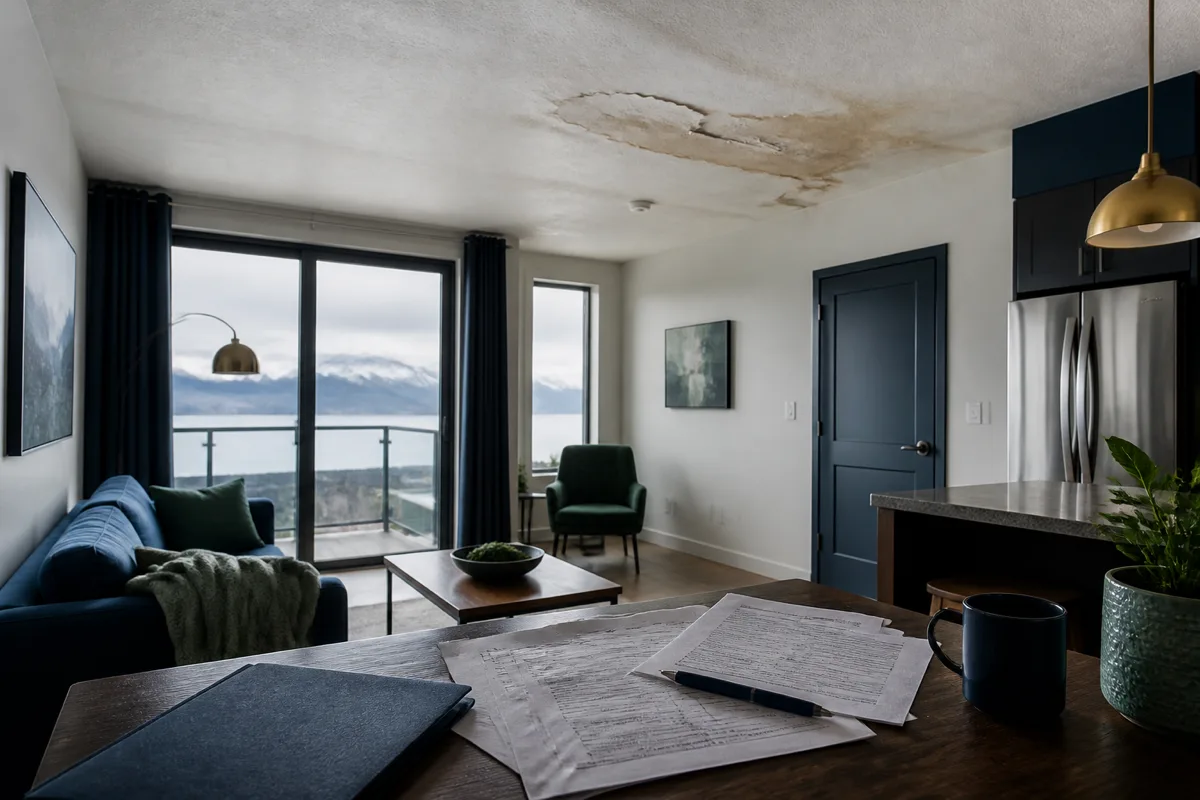
Condo buyers in Alaska often assume the building’s master insurance policy has them fully covered — after all, the HOA is paying for insurance too, right? It usually covers less than owners expect, and the gap between what the master policy protects and what you personally need is exactly what an HO-6 policy is built to close.
What the Master Policy Actually Covers
Most Alaska condo association master policies follow a “bare walls” or “single entity” coverage structure, insuring the building’s structure, common areas, and sometimes original fixtures as installed by the builder — but generally not your personal belongings, upgrades you’ve made since purchase, or the interior finishes between your unit’s drywall. Some policies extend further (“all-in” coverage), covering original fixtures and finishes, but even then, personal property and post-purchase upgrades are almost always excluded. Our condo master insurance policy guide breaks down how to read your specific association’s policy declaration.
What HO-6 Insurance Fills In
An HO-6 (condo owner’s) policy is designed to cover exactly what the master policy leaves out:
- Interior structure from the walls in — drywall, flooring, cabinets, countertops, and any upgrades you’ve made since the unit was originally built.
- Personal property — furniture, electronics, and belongings, similar to renter’s or homeowner’s contents coverage.
- Loss assessment coverage — if the HOA levies a special assessment against all owners to cover an insured loss (like storm or fire damage) that exceeds the master policy’s limits, loss assessment coverage on your HO-6 can reimburse your share.
- Liability coverage for incidents inside your unit.
- Loss-of-use coverage, helping cover temporary housing costs if your unit becomes uninhabitable after a covered loss.
Why Alaska Lenders Require It
Because the master policy alone doesn’t protect your personal investment in the unit’s interior, virtually every Alaska lender requires proof of an active HO-6 policy — with coverage amounts sufficient to rebuild the interior — as a condition of closing on a condo purchase, and as an ongoing requirement for the life of the loan. Letting an HO-6 policy lapse can trigger a lender-placed (forced) policy that’s typically more expensive and covers far less than a policy you choose yourself.
Common Coverage Gaps to Watch For
- Deductible mismatches. If the HOA’s master policy has a high deductible (some run $10,000-$50,000+ after a major claim year), a large loss assessment can hit unit owners hard even with an HO-6 in place, unless your loss assessment coverage limit is set high enough to absorb it.
- Underinsuring the interior. Buyers sometimes set HO-6 dwelling coverage too low, not accounting for upgraded flooring, cabinets, or fixtures added since original construction.
- Ordinance or law gaps for older buildings that would need code upgrades during a rebuild — ask your insurance agent whether this is included or needs to be added.
A Practical Step Before Closing
Ask the HOA for the current master policy declaration page and any recent claims or assessment history, then bring both to your insurance agent when quoting your HO-6 policy — that context helps size your loss assessment coverage correctly rather than guessing at a generic limit.
Rates and coverage requirements vary by lender and insurer — this is general guidance, not a specific quote.
Looking at a specific Alaska condo? Get a free home loan quote from Premier Mortgage (NMLS# 1168048) to understand your full closing cost picture, including insurance.
Frequently Asked Questions
Is HO-6 insurance required to buy a condo in Alaska?
Yes, in nearly all cases where you’re financing the purchase — lenders require proof of an active HO-6 policy at closing and for the life of the loan.
How much HO-6 coverage do I actually need?
Enough to rebuild your unit’s interior finishes and replace your personal property, plus a loss assessment limit that reflects the master policy’s deductible size — your insurance agent can help calculate this based on your unit’s specifics.
What happens if I let my HO-6 policy lapse?
Your lender will likely force-place a policy on your behalf, which is typically more expensive and covers far less than a policy you select yourself, and the cost gets added to your mortgage payment.
Does HO-6 insurance cover a special assessment from the HOA?
Loss assessment coverage on your HO-6 policy can reimburse your share of a special assessment tied to an insured loss, up to your policy’s loss assessment limit — it generally doesn’t cover assessments for non-insurance reasons like routine capital improvements.
How is HO-6 different from a standard homeowner’s policy?
A standard homeowner’s (HO-3) policy covers the entire structure since you own the whole building; an HO-6 only needs to cover from the walls in, since the association’s master policy is responsible for the building’s shared structure.
Ready to Take the Next Step?
Get a free home loan quote today through our trusted partner.
Or call 9078411600
Disclaimer: This article is for informational purposes only and does not constitute financial, mortgage, legal, or tax advice. Interest rates, loan programs, eligibility requirements, and fees are subject to change without notice and may vary based on your individual circumstances. Alaska Home HQ is not a lender, broker, or financial institution. All loan applications are processed by Premier Mortgage (NMLS: 1168048). We may have a business relationship with Premier Mortgage and may receive compensation when you use their services through our links. Consult a licensed mortgage professional before making financial decisions. Terms of Service · Privacy Policy