Alaska Condominium Mortgage Checklist for Buyers
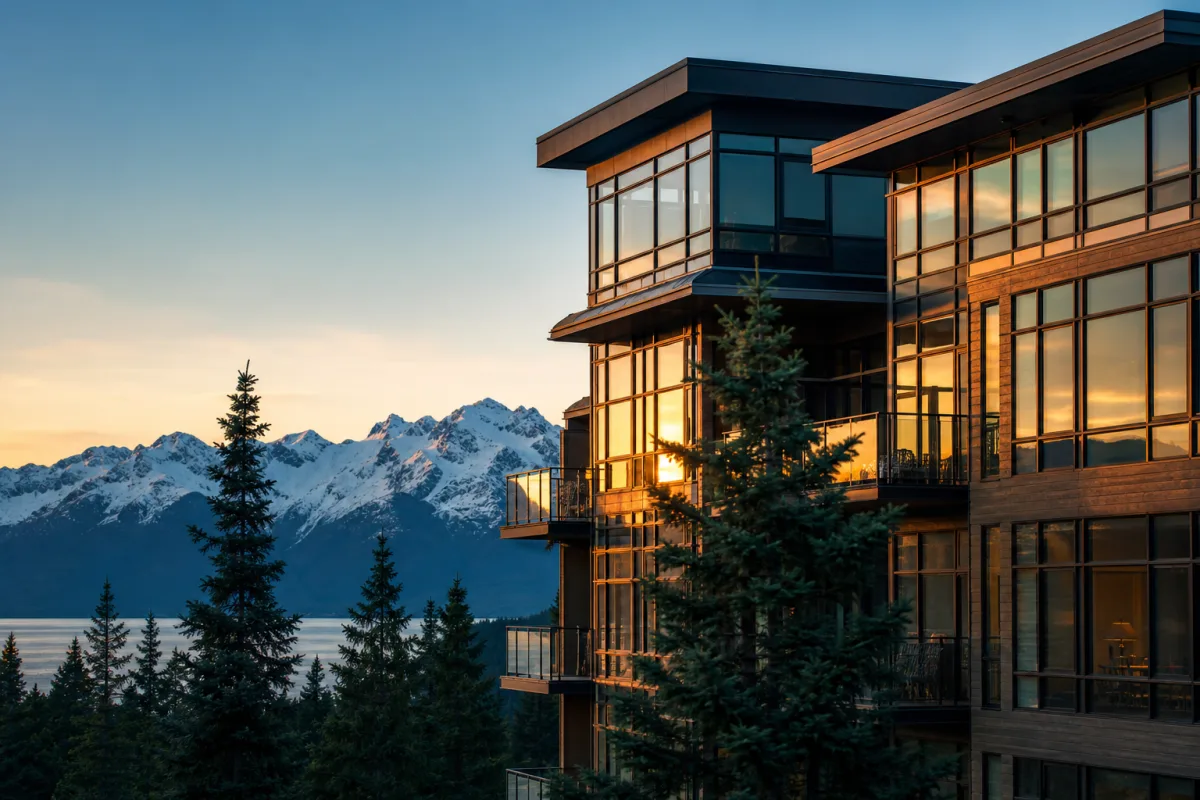
Financing a condominium in Alaska involves several steps that don’t apply to single-family home purchases. Before you fall in love with an Anchorage or Juneau condo and submit an offer, you need to know whether the building qualifies for the loan type you plan to use. Using a thorough alaska condominium mortgage checklist before committing can save you weeks of wasted effort—and prevent the frustrating scenario of being unable to close because the complex doesn’t meet lender requirements.
This guide walks through every item on that checklist, organized by loan type.
Why Condos Require Special Mortgage Qualification
When you buy a condo, you’re not just buying your individual unit—you’re buying into the entire homeowners association (HOA) structure. Your unit’s financing eligibility depends on the financial health, legal structure, and composition of the entire complex.
Lenders have specific “warrantability” standards that must be met before they’ll approve financing. FHA has its own condo approval list. Fannie Mae and Freddie Mac have separate criteria for conventional loans. VA maintains its own approved condo registry. If the complex doesn’t meet these standards, financing options are limited—often to portfolio lenders, which carry higher rates.
The Alaska Condominium Mortgage Checklist
✅ 1. Determine the Loan Type You Plan to Use
Your loan type dictates which approval requirements apply. Start here:
- FHA loan: The complex must be on HUD’s approved condo list or you must pursue FHA Single Unit Approval (also called spot approval). Not all buildings qualify for either.
- VA loan: The complex must be on VA’s approved condo list. VA approval requirements are similar to FHA but maintained separately.
- Conventional loan (Fannie Mae/Freddie Mac): The complex must meet Fannie/Freddie “warrantability” standards, including owner-occupancy ratios, delinquency thresholds, and litigation status.
- Portfolio/non-QM loan: If none of the above apply, portfolio lenders can sometimes finance non-warrantable condos, but at higher rates.
✅ 2. Check FHA Condo Approval Status (if using FHA)
Use HUD’s searchable database to verify whether the condo complex has current FHA approval. FHA approvals expire every three years and must be renewed.
If the complex is not FHA-approved: Request Single Unit Approval (SUA) through your lender. FHA’s SUA allows individual units in non-approved complexes to qualify, subject to specific criteria about the building’s financial health and owner-occupancy ratio.
For FHA eligibility details, see our Alaska FHA loan guide.
✅ 3. Verify Owner-Occupancy Ratio
Lenders require a minimum percentage of units to be owner-occupied (rather than rented). Standard guidelines:
- Conventional (Fannie/Freddie): Typically 50%+ owner-occupied for established projects; can be lower for new construction in some cases
- FHA (SUA): At least 35% of units owner-occupied
- VA: Similar requirements to FHA
Request the HOA’s most recent owner vs. renter unit count. High rental concentration in a complex is a red flag for multiple reasons beyond financing: it can affect resale value, HOA engagement, and property maintenance quality.
✅ 4. Review HOA Financial Health
This is where many Alaska condo purchases run into problems. Request and review:
- Reserve fund study: Is the reserve adequately funded? A reserve that covers less than 10% of the estimated replacement cost for major components is considered underfunded and will likely cause conventional financing to be declined.
- Current budget and financials: Look for operating deficits or recent special assessments.
- Delinquency rate: More than 15% of units being delinquent on HOA dues will typically disqualify the building for conventional financing.
- Special assessments: Any pending or recently levied special assessments should be disclosed. You don’t want to close on a condo and immediately receive a $10,000 assessment notice.
✅ 5. Check for Active Litigation
A condominium complex with pending litigation—particularly litigation involving the HOA or common elements—is disqualifying for FHA, VA, and conventional financing in most cases. Portfolio lenders may be an option, but litigation creates legal uncertainty about the property’s value and your ownership rights.
Ask for HOA meeting minutes from the past 12–24 months and ask the listing agent directly whether any litigation is pending.
✅ 6. Confirm Commercial Space Ratio
Conventional guidelines limit the proportion of a mixed-use condo building that can be commercial space (shops, offices, restaurants in the same building). Buildings with more than 25–35% commercial space may not meet Fannie/Freddie guidelines.
✅ 7. Confirm No Single-Entity Ownership Concentration
If one individual or entity owns more than 10% of the total units in a complex, conventional lenders may decline. This most commonly affects newer small-building developments where a developer hasn’t sold out all units.
✅ 8. Confirm Certificate of Occupancy for New Construction
For newly constructed or converted condo complexes, confirm the Certificate of Occupancy (CO) has been issued. Financing a unit in a building without a CO creates significant legal and practical risks.
Alaska-Specific Condo Considerations
Anchorage market: Anchorage has the largest concentration of condo inventory in Alaska, ranging from downtown high-rises to mid-rise and garden-style complexes in South Anchorage, Midtown, and the Hillside. Many established complexes have maintained FHA or VA approval. Confirm status for any specific complex before making assumptions.
Juneau condos: Juneau’s condo inventory includes waterfront and mountain-view units with premium pricing. The small market size can make warrantability analysis more complex—some complexes have lower unit counts where single-entity concentration concerns may arise.
Fairbanks condos: Extreme cold weather creates unique common element maintenance challenges. Review reserve fund documentation carefully for heating system capital reserves—boilers and heat systems serving entire buildings in Interior Alaska represent major capital replacement items.
What to Do If a Complex Doesn’t Qualify
If your target condo complex fails the checklist, you have several options:
- Request FHA Single Unit Approval. Your lender can submit for SUA if the complex meets basic FHA criteria, even without full complex approval.
- Explore portfolio financing. Some Alaska credit unions and portfolio lenders will finance non-warrantable condos. Rates are typically higher, but the financing is available.
- Negotiate with the HOA. If the issue is non-renewed FHA approval, sometimes the HOA can pursue re-approval quickly. This requires HOA board cooperation.
- Reconsider the property. If the complex has serious financial health issues (low reserves, high delinquencies, litigation), the financing barrier may be the market’s way of signaling a problem.
For a comprehensive overview of Alaska condo financing, see our Alaska condo financing guide.
Ready to Get Pre-Approved for Your Alaska Condo?
Ready to explore your options? Get a free home loan quote from Premier Mortgage (NMLS# 1168048).
Premier Mortgage (NMLS# 1168048) can review condo complex eligibility before you commit to an offer—saving time and preventing surprises mid-transaction.
Frequently Asked Questions
Does every Alaska condo need FHA approval for me to use an FHA loan?
No. If the complex doesn’t have blanket FHA approval, you can pursue FHA Single Unit Approval (SUA) for your specific unit. SUA allows individual units in non-approved buildings to qualify for FHA financing as long as the building meets basic HUD criteria. The approval process typically takes 1–2 weeks.
What is a non-warrantable condo and can I finance one in Alaska?
A non-warrantable condo is one that doesn’t meet Fannie Mae or Freddie Mac guidelines—due to high investor concentration, HOA financial issues, litigation, or other factors. You generally cannot use conventional (Fannie/Freddie) or government-backed financing for non-warrantable condos. Portfolio lenders and some credit unions may still provide financing, typically at higher rates.
How do I check if an Alaska condo complex is FHA approved?
Visit the HUD Condo Approval Database at the HUD website and search by project name or address. FHA approvals are updated regularly and expire every three years. Always verify current status rather than relying on a previous approval you may have heard about.
What HOA reserve percentage should I look for when buying an Alaska condo?
Most lenders look for the HOA reserve to be funded at a level equivalent to at least 10% of the annual budget or consistent with a current reserve study. A reserve study comparing current funding against projected replacement costs gives you the most accurate picture. Alaska HOAs should have robust reserves specifically for heating systems, roof replacement, and exterior envelope maintenance given the climate demands.
Can I use VA financing for a condo in Alaska?
Yes, if the complex has VA approval. VA maintains its own approved condo list separate from FHA’s database. Not all FHA-approved complexes have VA approval, and vice versa. Have your lender check VA approval status for your specific complex. If the complex isn’t VA-approved, pursuing VA condo project approval is possible but requires HOA cooperation.
Ready to Take the Next Step?
Get a free home loan quote today through our trusted partner.
Or call 9078411600
Disclaimer: This article is for informational purposes only and does not constitute financial, mortgage, legal, or tax advice. Interest rates, loan programs, eligibility requirements, and fees are subject to change without notice and may vary based on your individual circumstances. Alaska Home HQ is not a lender, broker, or financial institution. All loan applications are processed by Premier Mortgage (NMLS: 1168048). We may have a business relationship with Premier Mortgage and may receive compensation when you use their services through our links. Consult a licensed mortgage professional before making financial decisions. Terms of Service · Privacy Policy