Alaska Unpatented Mining Claim Mortgage
An Alaska unpatented mining claim mortgage runs into the title before it runs into the credit. An unpatented federal mining claim is a possessory right to look for and extract locatable minerals on federal land. The Bureau of Land Management’s Alaska mining-claim guide says that right is restricted to exploration, extraction, and development of the mineral deposit. It compares the possessory right to an easement, with the United States holding paramount title, until a mineral patent passes title to the patentee. The surface is not the claimant’s private property. A standard home loan is a lien on a house and land the borrower owns. There is no fee title here for that lien to attach to.
This is not the reserved-minerals page. That page is a patented parcel, where the surface owner holds the fee and someone else reserved the minerals. The owner of that surface can often mortgage the surface, with a title exception for the minerals. An unpatented claim is the opposite stack: the United States holds the land, and the claimant holds a mining possession. The land-purchase page is how people finance a fee parcel. A claim sale is not that purchase.
Alaska Home HQ is educational. It is not a lender and it is not BLM. Rates vary. Subject to credit approval.
Why an Alaska unpatented mining claim mortgage has nothing to attach to
BLM’s mining-claims page describes a mining claim as a parcel where the claimant has asserted a right of possession and a right to develop and extract a discovered, valuable mineral deposit. The page says that right does not include exclusive surface rights. The Alaska guide adds the practical pieces. The public has a conditional right to cross the claim for recreation and to reach federal land beyond it. Permanent or mobile structures, and equipment storage, need prior approval from an authorized federal official. A cabin, a shed, or a trailer that showed up because “it’s our claim” may be surface use BLM has not approved. An unapproved building does not ripen into a homestead.
The guide also says federal mining claims are considered real property in the sense that the interest can be bought, sold, transferred, leased, willed, or inherited. That sentence is about the claim interest. It is not a statement that the buyer receives a warranty deed to the land. The transfer path in the guide runs through the local recording district first, then to BLM, with the claim name and the BLM serial number on the document. BLM describes a quitclaim of the claim. A quitclaim of a possessory interest delivers whatever claim the seller had, if the claim is still active. It does not deliver fee simple the seller did not hold.
A claim that is closed on BLM’s books gives the buyer no rights. The guide is plain about maintenance. Fees and filings that are missed can forfeit the claim, and an appeal has its own rules and deadlines. Paying a private seller for a “mining property” without the serial number and a current BLM status check is how people buy a closed file. The Fairbanks public room is one of the places the Alaska guide names, along with the Alaska State Office, for recorded transfers. Status is a BLM record. A handshake and a set of corner posts are not the record.
Mineral patent is the step that would move fee title from the United States to the claimant. The Alaska guide says a patent moratorium has been in effect since 1994, and that the federal government will not issue new federal patents until the moratorium ends. A claim that was not patented stays unpatented. A parcel patented before the moratorium is a different property. If that patent reserved minerals, you have left this page and you are on the reserved-minerals page. If the patent passed the surface and the minerals, you may have ordinary fee land, and the loan is an ordinary land or house loan, checked by the title commitment rather than by a BLM serial number.
The house on the claim is still on federal land
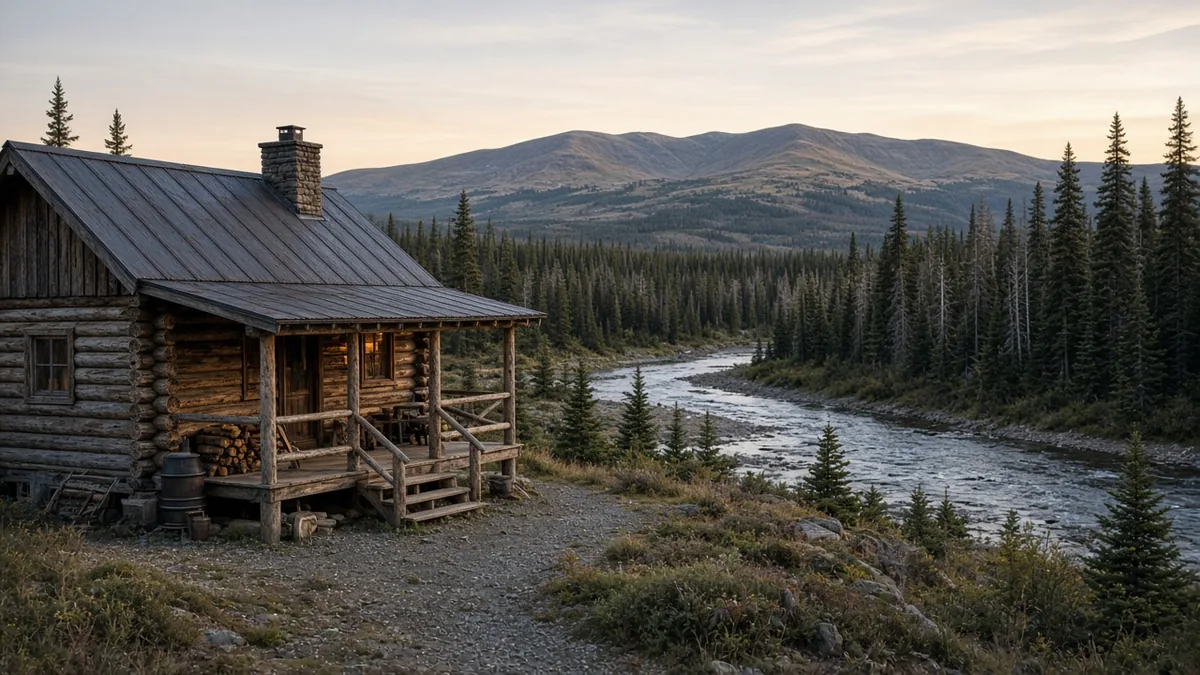
People find a cabin, a cache, and a driveway, and they shop it like a remote homesite. The photograph is not the estate. If the cabin sits on an unpatented claim, the land under it is federal. BLM’s guide says the possessory right does not include abandoned equipment, artifacts, or old buildings unless those items were purchased from the past owners of the items. Buying the claim and buying a building someone else owns can be two transactions, and neither one is a fee deed to the acreage.
Even a structure the claimant owns, placed with federal approval for mining purposes, sits on land the United States holds. Agency home loans, the loans Fannie Mae and Freddie Mac buy and the loans FHA, VA, and USDA insure or guarantee, are written for residential real estate the borrower owns or, in some programs, leases under a lease the program accepts. An unpatented claim is not fee ownership. It is not a residential ground lease from a tribe or a government landlord with a term and a mortgagee-protection clause those programs describe. The claim is a mineral possession. A deed of trust drafted as if the borrower owned the lot does not create the ownership. Title insurance on a fee estate will not be issued for an estate that is not fee.
That is the underwriting point. Credit, income, and a down payment do not cure the title. A lender that cannot foreclose on a house and land the borrower owns does not have the collateral a standard mortgage assumes. If the goal is a house you can mortgage, the goal is a fee parcel, or another estate a residential program actually accepts. The land-purchase guide is the fee-land conversation.
State mining claims are a parallel trap. Alaska state land open to location is administered by the Department of Natural Resources, not by BLM. A state claim is also not fee title to the surface. It has its own recordings and its own rent or fees. Sending a state claim’s ADL number to BLM, or a federal serial number to DNR, produces a “not found” that people misread as a clerical error. Match the landowner first. Federal land, federal claim, BLM. State land, state claim, DNR. Private patented land is neither, and a mining claim cannot be located on land that is not open to location.
What a buyer can still verify
Before any money moves, get the serial number, the claim name, the location, and BLM’s status. Read whether the case is active or closed. Read the local recorded transfer so the seller is the claimant of record. Read whether a structure was approved or is just present. None of those steps produces a mortgageable fee estate. They stop a buyer from paying for a void claim or for a cabin the seller does not own.
A patented homesite nearby, with a house on a surveyed lot, can be a normal purchase in the same mining district. The Fairbanks area has both federal claims and ordinary subdivisions. The driveway that connects them does not put them in one title. The commitment’s legal description is the divider. If it describes a lot, block, and subdivision, or a surveyed aliquot with a patent to a private owner, you are off this page. If it describes an unpatented lode, placer, or mill site by BLM serial number, you are on this page, and the loan to ask about is not a standard house mortgage.
The Permanent Fund Dividend can be saved toward a fee-land purchase somewhere else. It does not patent a claim, and BLM’s moratorium is not lifted by a down payment.
Ready to explore your options? Get a free home loan quote from Premier Mortgage (NMLS# 1168048).
Frequently Asked Questions
Can the claim itself be collateral for a home loan?
The claim is a possessory mineral interest. BLM’s Alaska guide says the United States holds paramount title until a mineral patent, and that new federal patents are not being issued during the moratorium in place since 1994. A standard residential mortgage is a lien on fee ownership or another estate the program accepts, and the claim interest is not that estate. Transferring the claim by the quitclaim BLM describes does not change the answer.
What if the cabin was built years ago and everyone treats it as private?
Age and local custom do not convey the surface. The Alaska guide says structures and equipment storage need prior approval from a federal official, and that the possessory right does not include abandoned buildings unless you bought those items from their owner. A cabin can be personal property someone owns, sitting on federal land. Neither fact is a patented homesite.
Is this the same as buying land with minerals reserved to the state?
Reserved minerals on a patented surface mean the surface owner has fee title and the deed or patent excepts the minerals. That surface can be the collateral, subject to the exception. An unpatented claim means there is no surface fee in the claimant at all. Read the reserved-minerals page for the first case and this page for the second.
How do I know the seller still owns the claim?
BLM keeps the case by serial number. The Alaska guide says a transfer is recorded in the local recording district and then filed with BLM, and that a closed claim gives no rights. Ask for the serial number and check the status before you pay. A map posted at the trailhead is not the case file.
Are state mining claims any easier to mortgage?
A state claim on state land is also not fee title, and DNR administers it. The owner of the surface is the state, not the locator. The financing problem is the same kind of problem, with a different agency. This article stays on the federal unpatented claim because that is the BLM estate people confuse with a deed.
Ready to Take the Next Step?
Get a free home loan quote today through our trusted partner.
Or call 9078411600
Disclaimer: This article is for informational purposes only and does not constitute financial, mortgage, legal, or tax advice. Interest rates, loan programs, eligibility requirements, and fees are subject to change without notice and may vary based on your individual circumstances. Alaska Home HQ is not a lender, broker, or financial institution. All loan applications are processed by Premier Mortgage (NMLS: 1168048). We may have a business relationship with Premier Mortgage and may receive compensation when you use their services through our links. Consult a licensed mortgage professional before making financial decisions. Terms of Service · Privacy Policy