Alaska USDA Loan Eligible Areas: Zero-Down Homes Guide
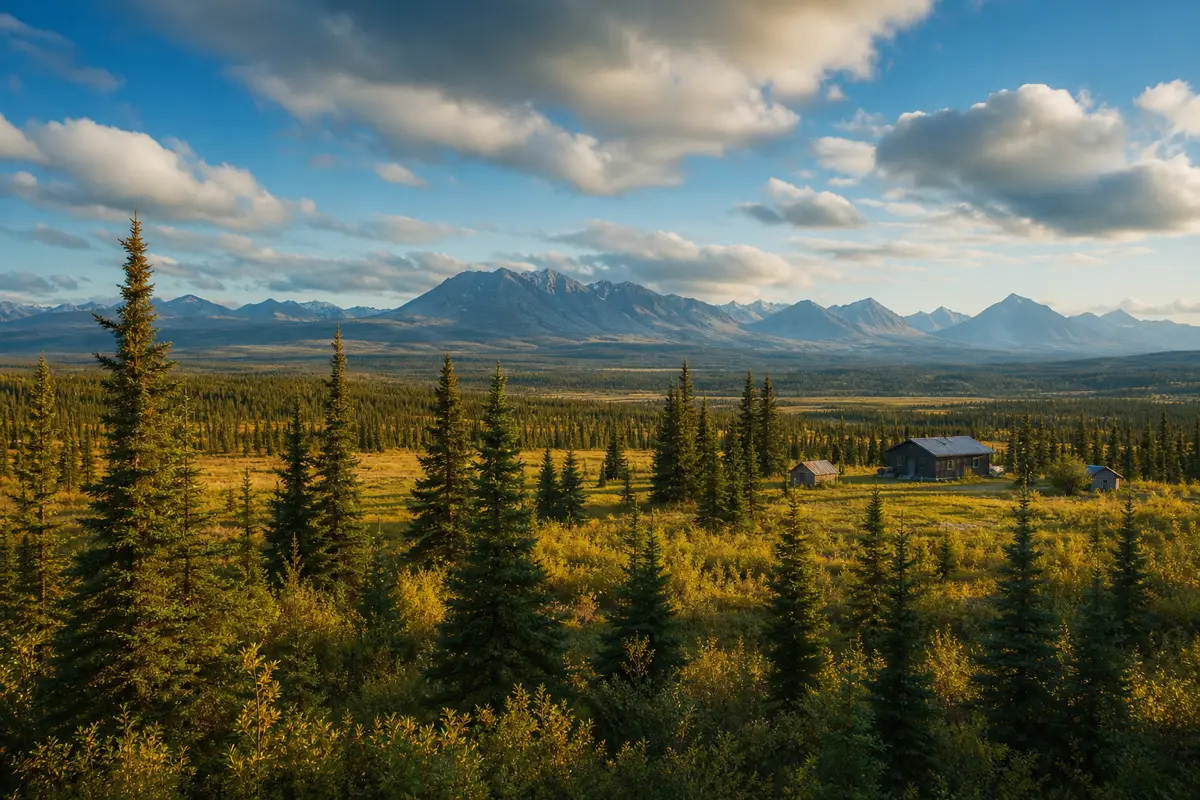
USDA Rural Development loans offer something that’s increasingly rare in Alaska’s real estate market: zero down payment. For buyers purchasing homes in eligible rural areas, a USDA loan can mean owning a home with no down payment, competitive rates, and no private mortgage insurance.
The catch is that USDA loans are geographically restricted — not every Alaska address qualifies. This guide helps you understand which Alaska communities are USDA-eligible, how income limits work, and exactly how to verify whether a specific property qualifies.
What Makes USDA Loans Unique
USDA Rural Development’s Section 502 Guaranteed Loan Program provides home loans through approved lenders with a government guarantee. Key benefits:
- Zero down payment — 100% financing on eligible properties
- No private mortgage insurance — USDA charges an upfront guarantee fee (1% of loan amount) and an annual fee (0.35% of balance), both of which are lower than FHA mortgage insurance for most borrowers
- Competitive rates — USDA loans typically carry rates similar to conventional loans
- Income limits — Unlike FHA, USDA does have household income limits
- Geographic restrictions — Only properties in USDA-designated rural areas qualify
Alaska USDA Eligible Areas: An Overview
USDA eligibility is determined by the USDA’s published eligibility maps, which designate areas as rural based on population density and distance from urban centers. In Alaska, a surprisingly large portion of the state — and many communities that don’t feel “rural” — qualify.
Broadly eligible regions and communities in Alaska:
Matanuska-Susitna Borough: Much of the Mat-Su Valley — areas outside the city limits of Wasilla and Palmer — qualifies for USDA loans. Communities like Big Lake, Houston, Willow, Talkeetna, and rural areas around Wasilla and Palmer are often USDA-eligible even though they’re in the Anchorage metro area’s orbit.
Kenai Peninsula Borough: Sterling, Funny River, Anchor Point, Ninilchik, Clam Gulch, Kasilof, and rural areas around Soldotna and Kenai often qualify. Properties within Soldotna and Kenai city limits typically don’t qualify.
Fairbanks North Star Borough: Many areas surrounding Fairbanks — North Pole outskirts, Salcha, Ester, rural areas along the Badger Road corridor — may qualify, though properties within Fairbanks city limits do not.
Southeast Alaska: Many communities in Southeast Alaska outside of Juneau’s urban area may qualify. Smaller communities like Sitka’s outlying areas, Ketchikan suburbs, and smaller Southeast communities are often eligible.
Southcentral and Kodiak: Parts of the Kodiak road system and communities outside Kodiak’s urban area may qualify.
Rural Alaska communities: The vast majority of rural and remote Alaska communities qualify, though in practice, USDA loans face practical challenges in fly-in communities due to appraisal availability and lender coverage.
Typically NOT eligible (within urban limits):
- Anchorage proper (Anchorage Bowl)
- Fairbanks city
- Wasilla city limits
- Palmer city limits
- Soldotna city limits
- Kenai city limits
- Juneau urban area (partially)
How to Verify USDA Eligibility for a Specific Alaska Property
The only reliable way to confirm USDA eligibility is through the USDA’s official tool:
- Visit https://eligibility.sc.egov.usda.gov
- Select “Single Family Housing Guaranteed” under “Guaranteed Single Family Housing Eligibility”
- Enter the specific property address
- The map will show whether that parcel is in a USDA-eligible area
This matters because eligibility isn’t just about the community — it’s about the specific address. A property on one side of a city limit line may qualify while one 500 feet away doesn’t.
Important: USDA eligibility maps are periodically updated as census data changes. An area that was eligible in 2020 may not be eligible in 2026 if population has grown enough. Always verify current eligibility rather than relying on older maps or word-of-mouth.
Alaska USDA Income Limits 2026
USDA loans have household income limits — unlike FHA, you can have income that’s too high to qualify. USDA limits are set at 115% of the area median income (AMI) and vary by household size and county/borough.
For Alaska, 2026 USDA income limits are generally:
| Borough/Area | 1-4 Person Household | 5-8 Person Household |
|---|---|---|
| Anchorage/Mat-Su | ~$138,000 | ~$182,000 |
| Kenai Peninsula | ~$128,000 | ~$169,000 |
| Fairbanks | ~$130,000 | ~$172,000 |
| Southeast Alaska (varies) | ~$118,000-$135,000 | ~$156,000-$179,000 |
These are approximate benchmarks — actual limits may differ. The USDA eligibility portal shows current income limits by county/borough at the same time you verify property eligibility.
USDA counts household income — not just the income of the borrowers on the loan. All adult residents’ income may need to be counted. This is a common source of confusion and can disqualify applicants who look at only the borrowers’ income without accounting for other adults in the home.
USDA Property Requirements
Not every property in a USDA-eligible area automatically qualifies. The property must:
- Be a primary residence (no investment properties or vacation homes)
- Be a decent, safe, and sanitary dwelling (standard minimum property requirements)
- Meet standard FHA/USDA minimum property guidelines
- Have functioning utilities: adequate water, sewer/septic, and heat
- Have road access (paved or adequate year-round access)
In Alaska, properties with private wells and septic systems are common and generally acceptable for USDA loans, provided the well water test and septic system meet minimum standards.
Challenges in rural Alaska: Properties with deferred maintenance, wood stove as the only heat source, shared driveways, or unusual Alaska-specific features (permafrost foundations, seasonal road access) may need additional review. Talk to your lender about property condition early.
USDA vs. Other Zero-Down Programs in Alaska
USDA zero down is most directly comparable to VA zero down for Alaska veterans. Key differences:
| Feature | USDA | VA |
|---|---|---|
| Who qualifies | Any income-eligible buyer in rural area | Veterans and active duty |
| Geographic limit | Rural areas only | Anywhere |
| Income limit | Yes — household income caps | No |
| Mortgage insurance | Upfront 1% + annual 0.35% | Funding fee (waived for disability) |
| Credit score min | Typically 640+ (lender standard) | 580+ (VA guidelines; lenders vary) |
For Alaska veterans in rural areas, both USDA and VA options may be available — running a comparison is worthwhile since VA has no income limits and the funding fee is sometimes lower than USDA fees for veteran borrowers.
Getting Started with a USDA Loan in Alaska
- Verify the specific property address on the USDA eligibility map
- Confirm your household income is below the applicable limit
- Get pre-approved through a USDA-approved lender
- Complete the standard application and documentation process
Ready to explore USDA zero-down buying in Alaska? Get a free quote from Premier Mortgage (NMLS# 1168048).
Get Your Free USDA Loan Quote →
For AHFC programs that can stack with USDA, see our AHFC loan programs guide. First-time buyers can find the complete purchase framework in our Alaska first-time homebuyer guide.
Frequently Asked Questions
Are any Anchorage neighborhoods USDA-eligible?
The Anchorage Bowl (Municipality of Anchorage’s primary urban area) is generally not USDA-eligible. However, some areas of the Eagle River and Chugiak communities (which are part of the Municipality of Anchorage but geographically separate and rural in character) may have USDA-eligible parcels. Always verify the specific address rather than assuming by neighborhood or community name.
What credit score do I need for a USDA loan in Alaska?
USDA itself doesn’t set a minimum credit score, but USDA-approved lenders typically require 640+ as their overlay. Some lenders may work with 620+ on an exception basis with strong compensating factors. USDA is generally more flexible on credit than conventional loans but less flexible than FHA.
Can I use USDA and AHFC together in Alaska?
In some cases, USDA and AHFC programs can be combined, though the specific product combinations vary and AHFC programs primarily apply to FHA, VA, and conventional loans. Ask your lender specifically whether AHFC programs are available for USDA-eligible properties in your area.
Does USDA cover manufactured homes in rural Alaska?
USDA does have programs for manufactured homes on permanent foundations. The requirements are more specific — the manufactured home must be classified as real property and meet USDA’s property standards. Some rural Alaska properties use modular or manufactured construction; confirm with your lender whether the specific property type and condition qualify.
How long does a USDA loan take to close in Alaska?
USDA loans require USDA’s Rural Development office to issue a loan note guarantee, which adds a step compared to conventional or FHA loans. Alaska USDA loans typically take 30-45 days to close, sometimes longer during peak seasons when USDA processing is backlogged. Budget more time than you would for a conventional loan.
Ready to Take the Next Step?
Get a free home loan quote today through our trusted partner.
Or call 9078411600
Disclaimer: This article is for informational purposes only and does not constitute financial, mortgage, legal, or tax advice. Interest rates, loan programs, eligibility requirements, and fees are subject to change without notice and may vary based on your individual circumstances. Alaska Home HQ is not a lender, broker, or financial institution. All loan applications are processed by Premier Mortgage (NMLS: 1168048). We may have a business relationship with Premier Mortgage and may receive compensation when you use their services through our links. Consult a licensed mortgage professional before making financial decisions. Terms of Service · Privacy Policy