Alaska VA Renovation Loan Basics
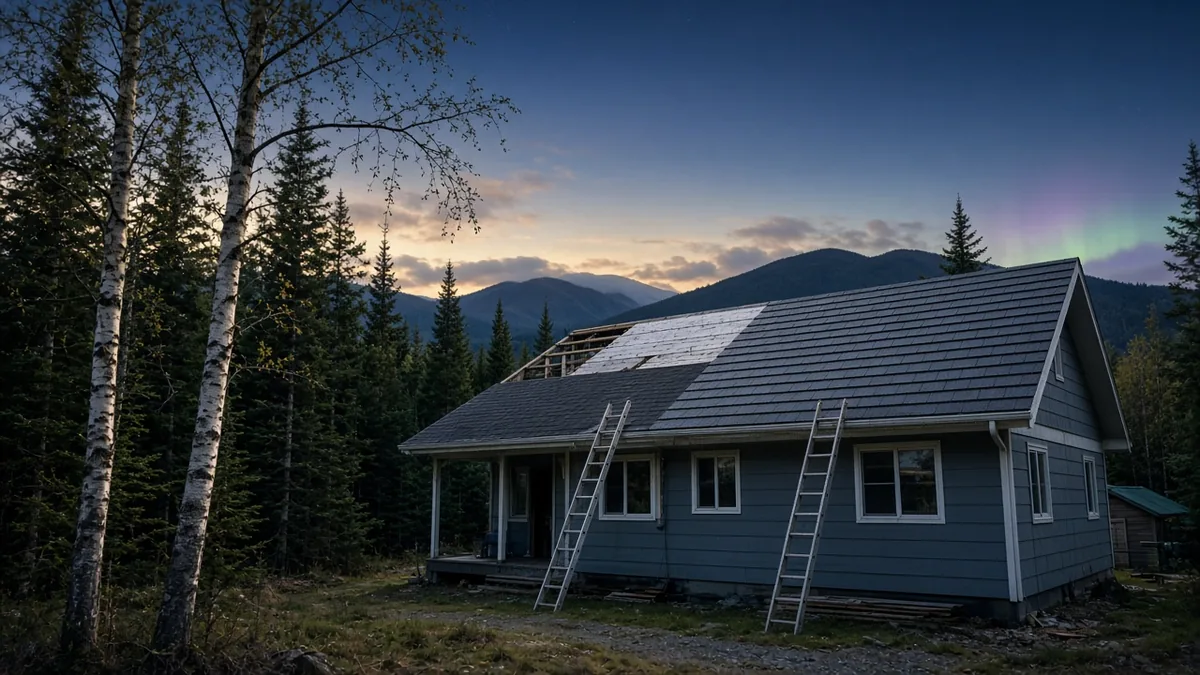
An Alaska VA renovation loan is the alteration-and-repair path VA describes for a home that needs work, folded into a VA purchase or a VA cash-out refinance. VA’s home loan page is the front door for the benefit. The detail sits in VA’s Home Loan Guaranty Buyer’s Guide, which says the words alteration, repair, renovation, and improvement are interchangeable for this purpose. It is not an FHA 203(k). The agencies, the forms, the builder rules, and the repair paperwork are different.
Veterans and service members buying around Eagle River, near JBER, and at other Alaska stations see older houses that fail a first walk-through: a roof, a boiler, a foundation crack, wiring that has been “improved” by three owners. A conventional listing that says “cash only” is sometimes a house a VA alteration-and-repair loan can still consider, if a lender who actually closes this product will take the file. VA’s buyer guide says not all lenders are willing or able to close these loans, and that few have deep experience with them.
Alaska Home HQ is educational. It is not VA and it is not a lender. The guide is the source for the program description below. A loan officer confirms what that investor is closing this month.
How an Alaska VA renovation loan is different
The FHA 203(k) guide is the other renovation search people land on. FHA 203(k) is an FHA product with FHA consultants, FHA forms, and FHA property rules. A contractor who has done 203(k) work still has to fit VA’s builder registration on a VA file. A borrower who qualifies for one program may not be using the other. Mixing the names in the contract creates a file nobody can underwrite.
VA’s buyer guide says VA can guarantee an alteration-and-repair loan in two settings. One is a purchase of the property. The other is a cash-out refinance of a residence the Veteran already owns and occupies as a home. For a purchase, the guide says VA guarantees the lesser of the acquisition cost or the as-completed value from the VA appraiser. For that refinance, the guide says the as-completed value may be used.
The guide says improvements may be included in the value and finished after closing. Loan proceeds are paid to the builder or contractor during the work. The lender obtains the borrower’s written approval before each disbursement or draw.
The work, the guide says, is the kind ordinarily found on similar property of comparable value in the community, and it brings the home up to VA’s minimum property requirements. The guide points readers to Chapter 12 of the Lenders Handbook for those requirements. Examples the guide lists include roof, foundation, floors, plumbing, electrical, and HVAC. That list is illustrative. It is not a cap on imagination, and it is not permission for a project the appraiser says does not belong on a comparable house.
A ground-up build is a different chapter of the same guide, the construction loan. This article is the alteration-and-repair path for an existing house. The guide also describes an energy-efficiency option with its own escrow. That option is not this loan. Ask the lender which VA product the contract is actually using.
Builder, draws, and change orders
The guide says the borrower may choose the builder or contractor, and that the builder obtains a VA builder identification number. The lender may add its own requirements, including license, bond, and insurance under state and local rules. In Alaska that local layer includes whoever permits the work: a city, a borough, or neither, depending on the lot. A builder who is excellent at remote cabins and unregistered with VA cannot draw VA renovation funds until that registration is in place. Ask early. The guide points to VA’s builder instructions and a VA list rather than to a real estate ad.
Draws are not a handshake. Written borrower approval comes before each payment to the contractor. In a Fairbanks January or an Anchorage chinook week, the work may not match the calendar in the bid. Weather slips the schedule. It does not skip the approval. A winter roof and a July roof are different site conditions. Build the bid for the season you will actually build in.
Change orders, the guide says, are paid out of pocket. A change made after the appraisal is not added to the new loan unless the appraisal is updated. The appraiser approves change orders in advance so value is not lost. The lender contacts the appraiser if an update is required. An extra appraisal charge is possible. Decide the kitchen layout before the appraiser measures the as-completed house, or budget cash for the change.
The guide says a contingency reserve is not required, and that a lender may consider one when the project warrants it. The guide prints a maximum for that reserve. This article does not restate a repair-cap percent. Read the buyer guide for the reserve figure, and ask the lender whether this project will hold one. Unused reserve funds are handled differently on a purchase than on a refinance. The guide says that on a purchase, unused reserve goes to principal unless the borrower paid it in cash at closing, in which case it can be returned. On a refinance, the guide says unused reserve may be returned or applied to principal at the borrower’s discretion.
Acquisition cost on a purchase, in the guide’s addition, is the contract price, the alteration and repair cost, any contingency reserve, inspection fees, title-update fees, and permits. Leave the percent discussion on VA’s page. Use the addition so the household sees that permits and inspections are part of the project, not a surprise in June.
Alaska houses, stations, and the rest of the file
JBER, Eielson, Clear, and Coast Guard duty in places like Kodiak put VA buyers in very different housing stocks. The guide to buying near JBER is the local geography. The VA military guide is the Certificate of Eligibility, entitlement, and the ordinary guaranty. Alteration and repair still sits on top of eligibility. A COE does not register the builder.
The fixer-upper loan guide compares the wider menu, including FHA and conventional renovation choices. Use it to see why a VA borrower might still look at another product, and why a non-Veteran cannot use this VA path at all.
Minimum property requirements are the habitability line. A house that is not safe or sanitary does not become acceptable because the renovation budget is large. The work has to be the work the appraiser and the lender can document, finished to the standard the guide describes before VA’s guaranty steps line up with a completed project. Ask the lender which inspections happen before closing and which happen at the final draw.
Occupancy follows the product. The cash-out path in the guide is a home the Veteran already owns and occupies. A purchase has its own occupancy rules under the VA loan the lender is closing. A rental the buyer will not live in is outside that sentence. Investment property is a different product, covered in other guides, and it is not this one.
Funding fee, residual income, and credit standards still apply. The residual-income guide is the worksheet many VA files use beside ordinary income documents. This page does not quote a funding-fee percentage or an interest rate. VA and the lender quote those on a live file. Terms vary. Subject to credit approval.
A Permanent Fund Dividend can sit in savings for closing cash or for a change order the loan will not finance. It is not a builder registration, and it is not entitlement.
Not every older house belongs on this product. VA’s guide tells readers to count the full cost, including permits, labor, structural work, debris, finance costs, and scope changes that appear after the walls are open. Alaska remodels are famous for the second problem behind the first. A structural engineer or an inspector, which the guide suggests considering, is cheaper than a foundation discovered in December.
Ready to explore your options? Get a free home loan quote from Premier Mortgage (NMLS# 1168048).
How to shop the lender and the house together
Ask each lender, in plain words, whether they close VA alteration-and-repair loans in Alaska, not only VA purchase loans on move-in-ready houses. Ask whether your builder can get a VA builder identification number before the Notice of Value. Ask how draws will be approved when you are on shift or out of town. A remote signer is a separate question for the title company. The renovation agreement still needs the approvals the guide describes.
Ask the seller for a repair list that matches a bid, not a vibe. The appraiser will describe as-completed value from a scope. A vague “borrower will renovate” line gives the appraiser nothing to value.
Compare that path with a house that already meets VA minimum property requirements and needs no escrow. Sometimes the cheaper house is the one that does not need this product. Sometimes the house near Eagle River that needs a roof is the one that fits the household, and the alteration-and-repair structure is why a VA buyer can bid. Both can be true. The buyer guide’s warning stands: shop for a lender that has done the loan.
Frequently Asked Questions
Is a VA renovation loan the same as FHA 203(k)?
No. FHA 203(k) is an FHA program. The Alaska VA renovation loan in this article is VA’s alteration-and-repair guaranty, used with a VA purchase or a VA cash-out refinance of a home the Veteran already owns and occupies. The forms, the builder registration, and the agency are different.
Do all VA lenders close renovation loans?
VA’s buyer guide says they do not. Many lenders close ordinary VA purchases and do not close alteration-and-repair files. Ask the question before you write an offer that depends on draws to a contractor.
Can the contractor be anyone the buyer likes?
The buyer chooses the contractor, and VA’s guide says that contractor obtains a VA builder identification number. The lender may also require licensing, bonding, and insurance that fit Alaska and the local permitting authority. An unregistered builder can still be hired for work you pay outside the loan. VA draws are a different rule.
Can I add a change order to the loan later?
The buyer guide says change orders are paid out of pocket, and that work added after the appraisal is not financed unless the appraisal is updated. The appraiser looks at change orders in advance. Budget cash, or lock the scope before the appraisal.
Does this article set a maximum repair percentage?
No. VA’s buyer guide discusses a contingency reserve and tells readers it is not required. The reserve figure is on that guide. This page does not restate a repair-cap percent. Ask the lender whether your project will include a reserve at all.
Ready to Take the Next Step?
Get a free home loan quote today through our trusted partner.
Or call 9078411600
Disclaimer: This article is for informational purposes only and does not constitute financial, mortgage, legal, or tax advice. Interest rates, loan programs, eligibility requirements, and fees are subject to change without notice and may vary based on your individual circumstances. Alaska Home HQ is not a lender, broker, or financial institution. All loan applications are processed by Premier Mortgage (NMLS: 1168048). We may have a business relationship with Premier Mortgage and may receive compensation when you use their services through our links. Consult a licensed mortgage professional before making financial decisions. Terms of Service · Privacy Policy