Construction Loans in Alaska: Build Your Dream Home
Construction Loans in Alaska: Build Your Dream Home
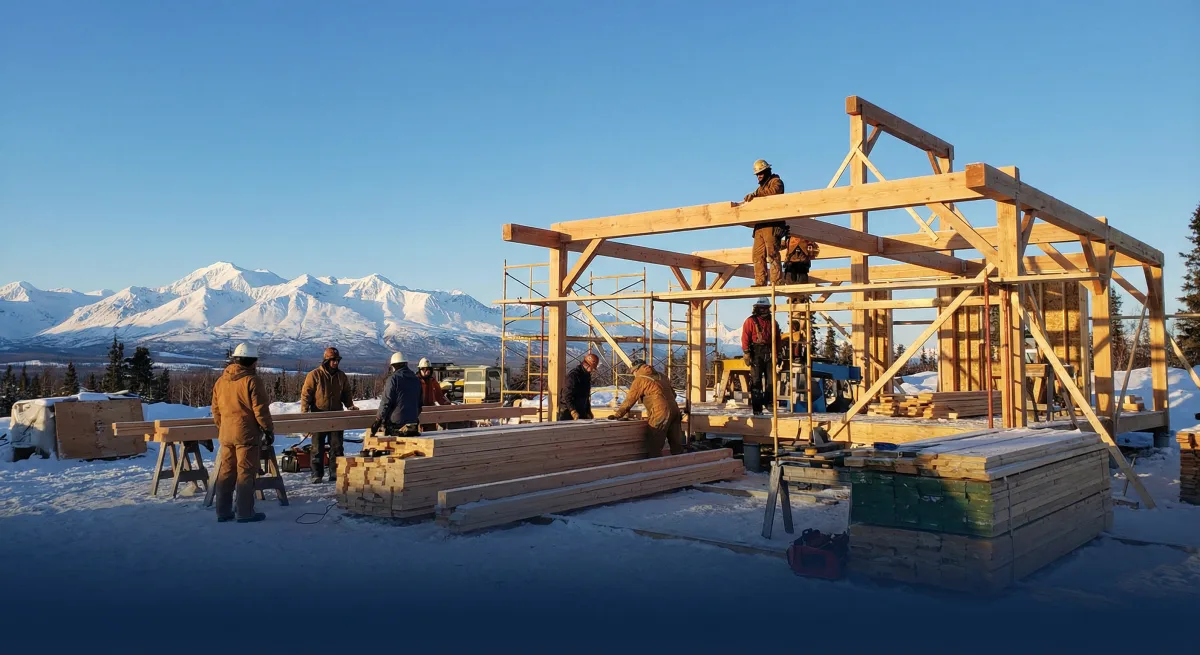
Building a home in Alaska offers the chance to create exactly the living space you want — designed for the climate, the views, and your lifestyle. But financing new construction works differently from buying an existing home, and Alaska’s unique building environment adds additional layers of complexity. From short building seasons to remote land parcels, understanding how construction loans work can help you plan a successful build.
Whether you’re looking at a lot in Fairbanks, the Mat-Su Valley, or a more rural part of the state, this guide walks through everything you need to know about financing your Alaska construction project.
How Construction Loans Work
Unlike a traditional mortgage where you borrow a lump sum to buy an existing home, construction loans finance the building process itself. The money is disbursed in stages — called “draws” — as construction progresses, with the lender typically inspecting work at each stage before releasing the next payment.
Construction-to-Permanent Loans (One-Time Close)
This is the most common approach for homebuyers building their primary residence. A construction-to-permanent loan combines the construction financing and the permanent mortgage into a single loan with one closing.
How it works:
- You close on the loan before construction begins
- During building, you make interest-only payments on the amount drawn
- Once construction is complete (typically verified by a certificate of occupancy), the loan automatically converts to a standard mortgage
- You begin making regular principal-and-interest payments
Advantages:
- Single set of closing costs
- Rate lock available at the start (protecting against rate increases during construction)
- Simpler process with one application and one closing
- Your permanent rate and terms are known from the beginning
Stand-Alone Construction Loans (Two-Time Close)
With this approach, you take out a separate short-term construction loan for the building phase, then refinance into a permanent mortgage once construction is complete.
How it works:
- Close on a construction loan (typically 12-18 months)
- Make interest-only payments during construction
- When building is complete, apply for and close on a separate permanent mortgage
- Use the permanent mortgage to pay off the construction loan
Advantages:
- May offer more flexibility during construction
- Ability to shop for the best permanent mortgage rates at completion
- May be the only option with some lenders or for complex projects
Disadvantages:
- Two sets of closing costs
- Risk of rate changes between construction and permanent financing
- Must qualify for both loans
- Additional time and paperwork
Alaska Construction Loan Requirements
Qualifying for a construction loan in Alaska involves meeting requirements beyond what’s needed for a standard mortgage purchase.
Borrower Requirements
- Credit score: Typically 680+ (higher than many purchase loan minimums)
- Down payment: Usually 20-25% of the total project cost (land + construction)
- Debt-to-income ratio: Generally 43% or lower
- Cash reserves: 6+ months of projected payments
- Income documentation: Standard mortgage documentation plus potentially more
Project Requirements
- Licensed, insured builder: Most lenders require a licensed general contractor. Owner-builder projects are much harder to finance.
- Detailed construction plans: Architect or designer plans with specifications
- Fixed-price construction contract: Lenders want to see a firm contract with the builder
- Itemized budget: A detailed cost breakdown for all phases of construction
- Construction timeline: A realistic schedule from groundbreaking to completion
- Permits: Evidence that building permits are obtainable
Land Requirements
If you don’t already own the land:
- Some construction loans include land purchase in the financing
- The land typically serves as collateral during construction
- Lenders may require a land appraisal in addition to the projected home appraisal
- Undeveloped parcels may require additional documentation (access, utilities, well/septic feasibility)
For guidance on purchasing property, see our guide on buying land in Alaska.
Alaska’s Building Season Challenges
One of the most significant factors in Alaska construction financing is the limited building season. This affects timelines, costs, and loan structure.
The Short Build Window
- Southcentral Alaska (Anchorage, Mat-Su): Primary building season runs approximately May through October, though some work continues through winter
- Interior Alaska (Fairbanks): Active construction typically May through September, with extreme cold limiting winter work
- Southeast Alaska (Juneau, Ketchikan): Weather allows longer building seasons, but rain can cause delays
What This Means for Your Loan
- Extended timelines: What might take 6-8 months in the Lower 48 may take 10-14 months or longer in Alaska
- Longer construction loan terms: Lenders familiar with Alaska typically offer 12-18 month construction periods
- Seasonal cost variations: Some materials and labor may cost more during peak building season
- Winter work premiums: If construction extends into winter, heated enclosures and cold-weather work practices increase costs
Foundation Considerations
Alaska’s permafrost, frost heave, and extreme temperatures require specialized foundation approaches:
- Driven piles: Common in areas with permafrost or poor soil conditions
- Frost-protected shallow foundations: Engineered for cold climates
- Adjustable foundations: Allow leveling as ground conditions shift
- Insulated foundations: Critical for energy efficiency and preventing frost penetration
Foundation work significantly impacts project cost and timeline, and lenders will want to see that your plans account for Alaska’s ground conditions.
AHFC Construction Financing Options
The Alaska Housing Finance Corporation (AHFC) offers programs that may support new construction:
- AHFC mortgage programs: Some AHFC loan products can be used for new construction with approved builders
- Energy efficiency incentives: AHFC’s Building Energy Efficiency Standard (BEES) rating system may offer interest rate reductions for energy-efficient new construction
- Rural construction support: Certain programs target housing development in rural Alaska communities
Contact AHFC directly or work with an AHFC-approved lender to explore current construction financing options. Program details and availability change periodically.
Construction Costs in Alaska
Building costs in Alaska are typically higher than the national average due to several factors:
Cost Factors
| Factor | Impact |
|---|---|
| Material shipping | +15-30% above Lower 48 prices |
| Limited contractor availability | Higher labor rates, especially during peak season |
| Short building season | Extended project timelines |
| Cold-weather construction | Heated enclosures, special techniques |
| Foundation requirements | Permafrost, frost heave mitigation |
| Energy code compliance | Enhanced insulation, air sealing |
| Remote site access | Road building, equipment transport |
Approximate Cost Per Square Foot (2026)
- Urban areas (Anchorage, Fairbanks): $250-$400+ per square foot
- Suburban areas (Mat-Su, Kenai): $225-$375+ per square foot
- Rural areas: $300-$500+ per square foot (highly variable based on access)
These figures are general estimates and vary significantly based on:
- Home design complexity and finishes
- Site conditions (slope, soil, access)
- Builder availability and demand
- Material choices (local vs. shipped)
- Utility connections vs. off-grid systems
Budget Buffer
Financial advisors and experienced builders typically recommend a contingency budget of 10-20% above your construction estimate. In Alaska, where weather delays, shipping complications, and unexpected site conditions are common, this buffer is particularly important.
The Construction Draw Process
Understanding how funds are released during construction helps you plan your cash flow:
Typical Draw Schedule
- Foundation (15-20%): Released after foundation completion and inspection
- Framing (20-25%): After structural framing, roof decking, and rough openings
- Mechanical rough-in (15-20%): Plumbing, electrical, HVAC rough installation
- Insulation and drywall (10-15%): After insulation inspection and drywall completion
- Interior finishes (15-20%): Cabinets, flooring, fixtures, painting
- Final (5-10%): After final inspection, certificate of occupancy, and punch list completion
Draw Inspections
Before releasing each draw, the lender typically sends an inspector to verify:
- Work described in the draw request has been completed
- Work meets building code and plan specifications
- Materials on-site match the budget specifications
- The project is progressing on schedule
Choosing a Builder in Alaska
Your choice of builder is one of the most critical decisions in the construction process — and lenders evaluate your builder as part of the loan approval.
What Lenders Look For
- Valid Alaska contractor’s license
- Adequate insurance (general liability, workers’ compensation)
- Track record of completed projects
- Financial stability
- References from prior clients and subcontractors
What You Should Evaluate
- Experience building in Alaska’s climate
- Familiarity with your specific area (soil conditions, codes, logistics)
- Communication style and project management approach
- Quality of past work (visit completed homes if possible)
- Subcontractor relationships and reliability
- Warranty terms and post-completion support
Red Flags
- Unwillingness to provide references
- No fixed-price contract or vague cost estimates
- Requesting large upfront payments before work begins
- No evidence of insurance or licensing
- History of abandoned or significantly delayed projects
Tips for a Successful Alaska Construction Project
-
Start planning early: Begin at least 12-18 months before your desired move-in date. Design, permitting, and financing all take time.
-
Design for the climate: Invest in energy-efficient design from the start — proper insulation, air sealing, and heating system selection save money for decades.
-
Secure your land first: If possible, purchase land before applying for a construction loan. This simplifies financing and demonstrates commitment.
-
Get multiple builder bids: Compare at least three builders on both price and qualifications. The lowest bid isn’t always the best value.
-
Plan for winter: If your project will span a winter, budget for the additional costs of cold-weather construction.
-
Document everything: Keep detailed records of all communications, change orders, payments, and inspections.
-
Visit the site regularly: Regular site visits help catch issues early and keep the project on track.
For an overview of all the costs involved in getting to closing day, review our Alaska closing costs guide.
Ready to Build?
Building a home in Alaska is a significant undertaking, but the result — a custom home designed for your lifestyle and Alaska’s unique environment — can be deeply rewarding. The right financing partner understands Alaska’s construction landscape and can guide you through the process.
Get a Construction Loan Quote →
Frequently Asked Questions
How much do I need for a down payment on a construction loan in Alaska?
Most construction loans in Alaska require 20-25% of the total project cost (land + construction) as a down payment. If you already own the land free and clear, the equity in the land may count toward your down payment, potentially reducing the additional cash needed.
Can I be my own builder (owner-builder) and get a construction loan?
Owner-builder construction loans exist but are difficult to obtain. Most lenders require a licensed general contractor to manage the project, as this reduces the lender’s risk. If you have significant construction experience and can demonstrate competence, some portfolio lenders or credit unions may consider owner-builder financing.
How long does it take to build a house in Alaska?
A typical custom home in Alaska takes 10-14 months from groundbreaking to move-in, though complex projects or remote locations may take longer. The limited building season is the primary factor — a project started in May may need to pause some exterior work during winter months before completing the following spring.
What happens if construction costs exceed the budget?
If costs exceed your original budget, you may need to cover the difference out of pocket, as the construction loan is based on the approved budget and appraised value. This is why a 10-20% contingency buffer is strongly recommended. Change orders during construction should be documented and approved by both you and the lender.
Does AHFC offer construction loans?
AHFC offers mortgage programs that may be used for new construction with approved builders and plans that meet AHFC’s Building Energy Efficiency Standard (BEES). AHFC programs may offer competitive rates and energy efficiency incentives. Contact AHFC directly or an approved lender for current program details and availability.
Ready to Take the Next Step?
Get a free home loan quote today through our trusted partner.
Or call 9078411600
Disclaimer: This article is for informational purposes only and does not constitute financial, mortgage, legal, or tax advice. Interest rates, loan programs, eligibility requirements, and fees are subject to change without notice and may vary based on your individual circumstances. Alaska Home HQ is not a lender, broker, or financial institution. All loan applications are processed by Premier Mortgage (NMLS: 1168048). We may have a business relationship with Premier Mortgage and may receive compensation when you use their services through our links. Consult a licensed mortgage professional before making financial decisions. Terms of Service · Privacy Policy