Heating Costs and Alaska Mortgage Qualifying
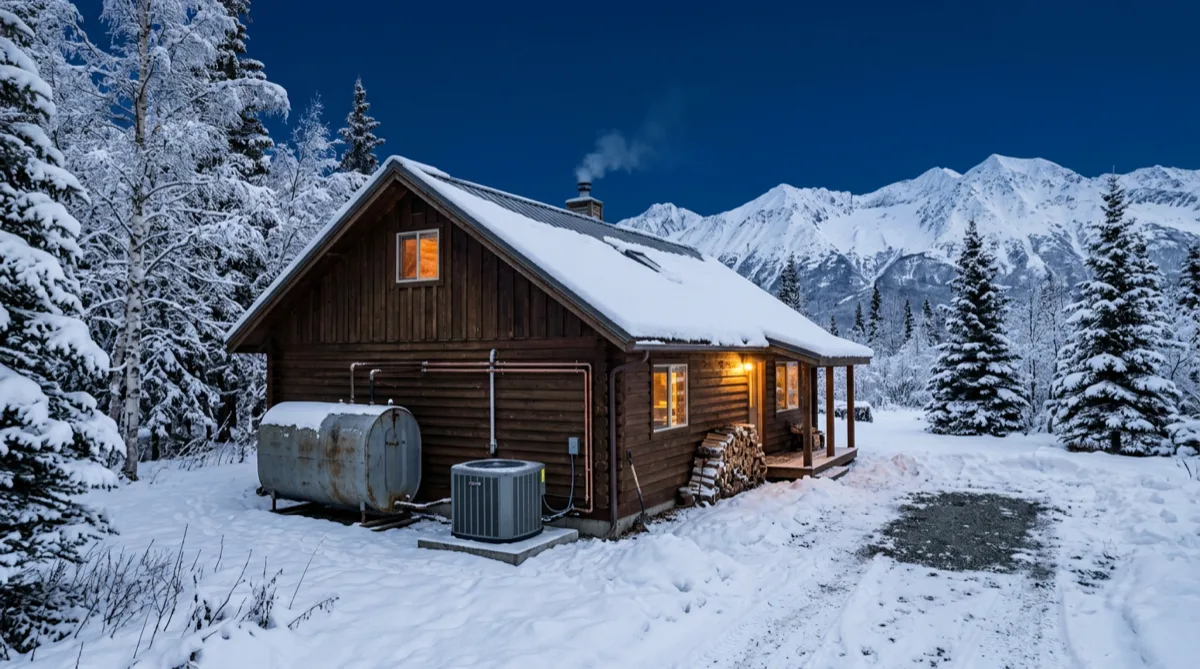
Alaska Heating Costs and Mortgage Qualification: What Lenders Consider
Alaska homebuyers sometimes get a mortgage approval that looks solid on paper, move in, and then face genuine cash flow challenges once the first oil delivery arrives in November. This isn’t a lender oversight — it’s a gap between how mortgages are qualified (based on PITI and existing debt) and the full cost of living in Alaska.
This guide explains how lenders calculate your qualifying ratios, why heating costs matter even though they’re not in PITI, and how to build a realistic budget for Alaska homeownership.
How Standard Mortgage Qualification Works
Mortgage qualification uses two debt-to-income ratios:
Front-end DTI (housing ratio): (Principal + Interest + Taxes + Insurance) ÷ Gross Monthly Income
Lenders target:
- Conventional: 28% front-end
- FHA: 31% front-end
- VA: No formal front-end limit; residual income is the primary test
- AHFC: Follows program guidelines, typically 33%
Back-end DTI (total debt ratio): (All monthly debt payments including housing) ÷ Gross Monthly Income
Lenders target:
- Conventional: 43-45%
- FHA: Up to 50% with compensating factors
- VA: 41% guideline with flexibility
- USDA: 41-44%
What’s not in these calculations: utilities, groceries, childcare, internet, vehicle maintenance, or anything that isn’t a recurring debt payment. In most states, this isn’t a major issue — utility costs are a modest percentage of a housing budget. In Alaska, it can be significant.
Alaska Heating Cost Reality by Region
The following are realistic annual heating cost estimates for Alaska homes of average size (1,400-1,800 sq ft) and average efficiency, based on typical fuel costs and consumption:
| Region | Primary Fuel | Estimated Annual Cost | Monthly Average |
|---|---|---|---|
| Anchorage (natural gas) | Natural gas | $1,800–$3,000 | $150–$250 |
| Anchorage (heating oil) | #2 fuel oil | $3,000–$4,500 | $250–$375 |
| Mat-Su Valley (heating oil/propane) | Heating oil | $3,500–$5,000 | $290–$415 |
| Fairbanks (heating oil) | #2 fuel oil | $5,000–$8,000 | $415–$665 |
| Fairbanks (natural gas, GVEA service) | Natural gas | $2,500–$4,000 | $210–$335 |
| Rural communities (no fuel competition) | Heating oil | $6,000–$12,000+ | $500–$1,000+ |
| Homes with modern heat pumps | Electricity | $1,200–$2,500 | $100–$210 |
These are estimates; actual costs depend on home size, insulation quality, heating system efficiency, fuel prices, and occupant behavior.
Fairbanks heating costs are the most dramatic example: a home burning $7,000/year in heating fuel adds $583/month to the effective housing cost — an amount that would require roughly $24,000 in additional gross annual income to support at a 29% front-end ratio.
How VA Loans Address This: Residual Income
The VA loan program is the most Alaska-sensitive of the major loan types when it comes to cost of living, because of its residual income requirement.
Residual income is the monthly income remaining after all debt payments (not just housing) are accounted for. The VA requires borrowers to have a minimum residual income amount based on family size and geographic region.
For the “West” region (which includes Alaska):
| Family Size | Minimum Residual Income |
|---|---|
| 1 person | $390/month |
| 2 persons | $654/month |
| 3 persons | $788/month |
| 4 persons | $888/month |
| 5 persons | $921/month |
These are minimums — a borrower in Fairbanks with a $600/month heating bill has much less practical residual income than the same borrower in Anchorage with a $150/month bill. VA underwriters may apply more scrutiny to Alaska borrowers in high-heating-cost areas.
Lenders May Require a Utility Supplement Calculation
Some Alaska lenders add an informal utility budget step to their qualification analysis, particularly for FHA and VA loans in areas with known high heating costs. This isn’t a universal requirement, but it reflects sound underwriting practice.
If a lender reviews a Fairbanks property and knows the home uses heating oil, they may ask about the monthly heating estimate or pull historical utility data from the utility disclosure (which sellers are required to provide in Alaska’s real estate disclosures).
If your heating costs would push your effective housing expense above the informal 35-38% threshold that many lenders apply in high-cost-of-living markets, expect questions. Having your utility numbers ready — or choosing a property with a heat pump or natural gas system — supports a stronger application.
Choosing Heating System Matters for Approval
From a mortgage qualification perspective, the home’s heating system type is a meaningful variable:
Heat pump (cold-climate rated): Modern cold-climate heat pumps (Mitsubishi, Bosch, Daikin rated to −25°F or below) run on electricity and can produce 2-4 units of heat per unit of electricity consumed. In Anchorage and Southcentral where electricity is somewhat competitive with fuel oil, heat pump operating costs can be dramatically lower — potentially $1,200-$2,000/year vs. $3,500-$5,000 for oil heat.
Natural gas (where available): Anchorage is the primary Alaska city with a natural gas distribution grid. Natural gas heating in Anchorage is typically the most cost-effective option — $1,800-$3,000/year for an average home. Not available in most other Alaska communities.
Heating oil (most common in rural/Mat-Su/Fairbanks): The most widely used fuel but subject to fuel oil price volatility. Costs track global oil prices and can shift significantly year to year.
Wood heat (supplement): Many Alaska homeowners supplement with wood stoves or outdoor wood boilers. Effective cost reduction but adds wood procurement and storage logistics.
When shopping for homes, the heating system type is a meaningful financial variable — not just a comfort preference. Factor it into your total housing cost analysis.
Building Your True Alaska Housing Budget
Here’s the full monthly cost picture for an Alaska homebuyer:
| Cost Component | Example (Anchorage, $400K Home, 6.75%, 10% down) |
|---|---|
| Principal + Interest | $2,330/month |
| Property taxes | ~$430/month |
| Homeowners insurance | ~$175/month |
| PITI Total | ~$2,935/month |
| Heating (natural gas) | +$200/month |
| Electricity | +$120/month |
| Water/sewer | +$100/month |
| True housing cost | ~$3,355/month |
This example shows why budgeting only PITI understates Alaska housing costs by roughly 14-15% in a favorable case (Anchorage with natural gas). In a Fairbanks heating oil case, the gap is larger.
Premier Mortgage (NMLS# 1168048) works with Alaska buyers to build realistic housing budgets before pre-approval — so the number you get is one you can actually live with.
Get a free home loan quote from Premier Mortgage (NMLS# 1168048)
Frequently Asked Questions
Do lenders include heating costs in Alaska mortgage qualification?
Standard mortgage qualification (DTI ratios) does not include utility costs like heating. However, VA loans require a residual income test that effectively captures whether enough income remains after all debt payments for living expenses. Some Alaska lenders informally apply a utility supplement analysis for properties with known high heating costs. The gap between qualified payment and true housing cost is a practical budget concern even when lenders don’t flag it.
How much should I budget for heating costs in Alaska?
Budget $150-250/month for natural gas in Anchorage, $250-415/month for heating oil in Southcentral, and $415-665/month for heating oil in Fairbanks, averaged across the year. New cold-climate heat pumps can reduce costs to $100-210/month in Anchorage-area homes. Rural Alaska heating costs can be significantly higher, especially in communities without road access for fuel delivery.
Does the VA loan program account for Alaska’s high utility costs?
VA loans don’t explicitly adjust for heating costs in DTI calculations, but the residual income requirement provides a living-cost buffer. Borrowers must have minimum monthly residual income after all debts based on family size and the West region’s standards. A VA underwriter may apply additional scrutiny to Alaska borrowers with high anticipated utility costs if residual income is marginal.
Do sellers have to disclose heating costs in Alaska?
Alaska real estate disclosure laws require sellers to disclose known material defects, but there’s no universal mandate to disclose specific utility costs. However, some Alaska purchase agreements include a utility disclosure section, and it’s entirely reasonable to request 12 months of utility bills from sellers as part of your due diligence before finalizing a purchase.
Does a heat pump reduce my mortgage qualifying risk in Alaska?
Not directly — the mortgage qualification calculation doesn’t change based on heating system. But practically, a home with a modern cold-climate heat pump has lower projected utility costs, which leaves more monthly cash flow after your mortgage payment. This makes your budget more realistic and sustainable, and may be a factor in lender discussions about property suitability in high-cost-of-living Alaska markets.
Ready to Take the Next Step?
Get a free home loan quote today through our trusted partner.
Or call 9078411600
Disclaimer: This article is for informational purposes only and does not constitute financial, mortgage, legal, or tax advice. Interest rates, loan programs, eligibility requirements, and fees are subject to change without notice and may vary based on your individual circumstances. Alaska Home HQ is not a lender, broker, or financial institution. All loan applications are processed by Premier Mortgage (NMLS: 1168048). We may have a business relationship with Premier Mortgage and may receive compensation when you use their services through our links. Consult a licensed mortgage professional before making financial decisions. Terms of Service · Privacy Policy