Multi-Family Property Loans in Alaska
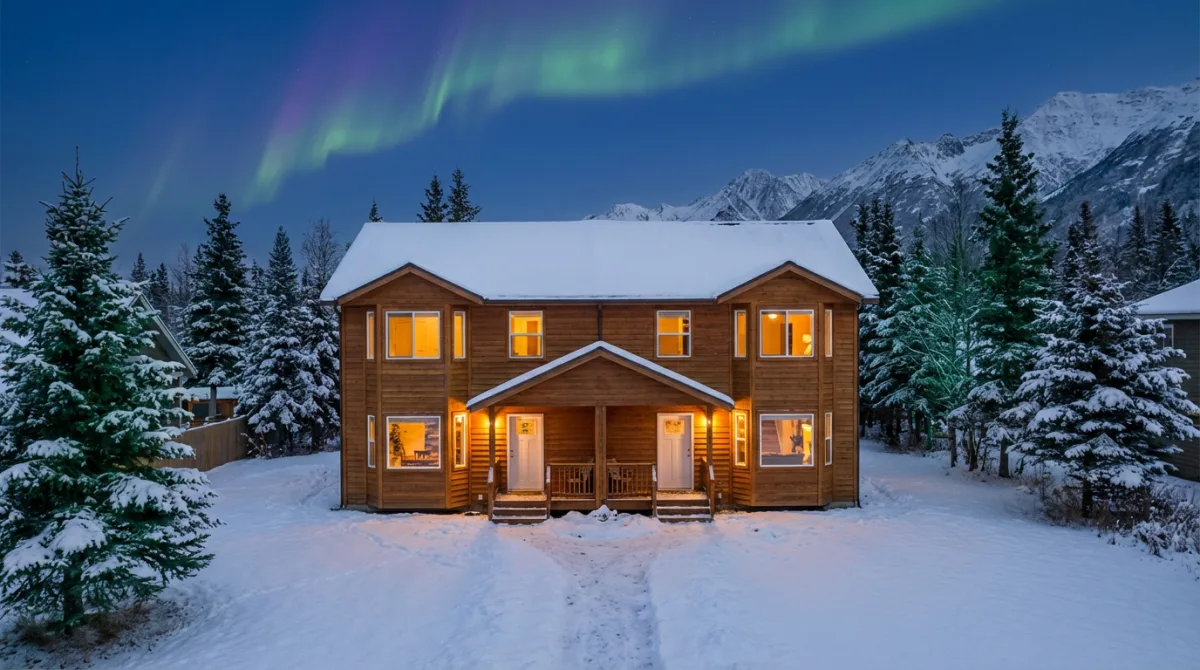
Multi-Family Property Loans in Alaska
Purchasing a duplex, triplex, or fourplex in Alaska is one of the most compelling strategies for building wealth through real estate — especially when you combine owner-occupied financing with Alaska’s strong rental demand. Multi-family loans in Alaska open the door to “house hacking,” where you live in one unit and rent the others, effectively having your tenants help cover your mortgage payment.
Alaska’s rental market benefits from unique demand drivers: military families on temporary assignments, seasonal workers, university students in Fairbanks and Anchorage, and a chronic shortage of available housing in many communities. For buyers who understand the financing options and market dynamics, a multi-family property may offer both a place to live and a path to financial independence.
What Qualifies as a Multi-Family Property?
For residential financing purposes, multi-family properties include:
- Duplex (2 units): Two separate living spaces under one roof or on one property
- Triplex (3 units): Three separate units
- Fourplex (4 units): Four separate units
Properties with 1–4 units are classified as residential real estate and qualify for residential mortgage programs (FHA, VA, conventional, USDA). Once you exceed four units, the property is classified as commercial real estate and requires commercial financing with entirely different terms.
This distinction is critical because residential financing offers dramatically better terms — lower interest rates, longer amortization periods, lower down payments, and access to government-backed programs.
Owner-Occupied vs. Investment Multi-Family Financing
How you intend to use the property determines which financing programs are available and what terms you’ll receive.
Owner-Occupied (You Live in One Unit)
If you plan to live in one unit as your primary residence, you may access:
- FHA loans with as little as 3.5% down
- VA loans with zero down payment
- Conventional loans with as little as 5%–15% down
- Lower interest rates than investment property loans
- Rental income from other units may help you qualify
Investment Property (Non-Owner-Occupied)
If you won’t live in the property:
- Minimum 15%–25% down payment typically required
- Interest rates typically 0.5%–0.75% higher than owner-occupied
- Stricter underwriting requirements
- May need documented landlord experience with some programs
- No access to FHA or VA financing
The financial advantages of owner-occupied financing are substantial, which is why house hacking has become such a popular strategy.
FHA Multi-Unit Financing in Alaska
FHA loans are arguably the most powerful tool for multi-family buyers because they combine a low down payment with the ability to use rental income for qualification.
FHA Multi-Unit Loan Limits in Alaska
Alaska’s high-cost loan limits are significantly higher than standard FHA limits. For multi-unit properties, FHA limits increase with each additional unit:
| Property Type | Alaska FHA Limit (approximate) |
|---|---|
| 1 unit | Check current year HUD limits |
| 2 units (duplex) | Higher than single-family |
| 3 units (triplex) | Higher than duplex |
| 4 units (fourplex) | Highest residential limit |
Alaska’s elevated limits make it possible to finance multi-unit properties in Anchorage and other markets where prices may exceed standard national limits.
FHA Self-Sufficiency Test (3–4 Unit Properties)
For triplexes and fourplexes, FHA requires that the property pass a “self-sufficiency test.” The net rental income from all units (including the one you’ll occupy) must exceed the mortgage payment. This test is designed to ensure the property’s rental income can support the debt.
How it works:
- Appraiser determines fair market rent for all units
- Total rent is reduced by a vacancy factor (typically 25%)
- Net rental income must equal or exceed the monthly mortgage payment (PITI)
This test can be challenging in markets where rents don’t fully support purchase prices, but Alaska’s strong rental market often works in the buyer’s favor.
Using Rental Income to Qualify
For FHA multi-unit purchases, you may count up to 75% of the projected rental income from the units you won’t occupy toward your qualifying income. This can substantially increase the loan amount you qualify for.
Example:
- You earn $6,500/month from your primary job
- The duplex’s second unit generates $1,800/month rent
- Qualifying income: $6,500 + ($1,800 × 0.75) = $7,850/month
This additional income can be the difference between qualifying and falling short, particularly in Alaska’s higher-priced markets.
VA Multi-Unit Loans
Active-duty service members and veterans can use their VA loan benefit to purchase multi-family properties (up to 4 units) with zero down payment — arguably the most powerful multi-family financing tool available.
VA Multi-Unit Requirements
- You must occupy one unit as your primary residence
- The property must meet VA Minimum Property Requirements
- VA loan limits for multi-unit properties are higher than single-family limits
- No mortgage insurance required (a VA funding fee applies)
For military families stationed at JBER, Fort Wainwright, or Coast Guard bases throughout Alaska, a VA-financed duplex or triplex can provide housing with the added benefit of rental income that may cover most or all of the mortgage payment.
Conventional Multi-Unit Loans
Conventional loans for multi-family properties are available with owner-occupied or investment designations:
Owner-Occupied Conventional
- Down payment: 15% for 2-unit, 25% for 3–4 unit properties (varies by lender)
- PMI: Required below 20% equity on the entire property
- Rental income: May use 75% of projected rental income to qualify
- Conforming limits: Alaska’s high-cost limits apply
Investment Conventional
- Down payment: 15%–25% depending on unit count and lender
- Interest rates: Premium over owner-occupied rates
- Reserves: Lenders typically require 6+ months of mortgage payments in reserves
- Experience: Some lenders prefer borrowers with landlord experience
House Hacking in Alaska: Strategy and Benefits
House hacking — living in one unit of a multi-family property while renting the others — is one of the most accessible real estate investment strategies, and Alaska’s market conditions make it particularly viable.
How House Hacking Works in Practice
- Purchase a duplex, triplex, or fourplex using owner-occupied financing (low down payment, best rates)
- Move into one unit as your primary residence
- Rent the remaining units at market rates
- Use rental income to offset your mortgage payment, reducing or eliminating your net housing cost
- Build equity through mortgage paydown and potential appreciation
Alaska-Specific House Hacking Advantages
Strong rental demand: Military PCS cycles, seasonal workers, university populations, and Alaska’s overall housing shortage create consistent rental demand in Anchorage, Fairbanks, and the Mat-Su Valley.
High BAH rates: Military tenants often receive generous Basic Allowance for Housing, supporting strong rental rates in communities near military installations.
PFD offset: The Alaska Permanent Fund Dividend provides all residents — including tenants — with annual income that can support rent payments, adding a unique layer of stability to the rental market.
Appreciation potential: Alaska markets have shown steady appreciation, building equity in your multi-family property over time.
House Hacking Numbers Example (Anchorage Duplex)
Consider a duplex purchase in Anchorage:
- Purchase price: $425,000
- FHA down payment (3.5%): $14,875
- Monthly mortgage (PITI + MIP): approximately $3,100
- Rental income (second unit): $1,700/month
- Your net housing cost: approximately $1,400/month
Compare that net cost to renting a comparable single-family home in Anchorage at $2,000–$2,500/month, and the financial advantage becomes clear — plus you’re building equity and gaining landlord experience.
Alaska Rental Market Overview
Understanding Alaska’s rental market helps you evaluate multi-family investment potential:
Anchorage
Alaska’s largest city offers the deepest rental market. Military families, healthcare workers, oil industry professionals, and university-affiliated tenants create diverse demand. Vacancy rates in desirable areas tend to remain low, supporting consistent rental income.
Fairbanks
Eielson AFB expansion and University of Alaska Fairbanks create rental demand. Winter conditions and extreme temperatures affect property management costs but also create barriers to new construction, supporting existing rental values.
Mat-Su Valley
Wasilla and Palmer have experienced significant population growth, and rental demand has followed. Lower purchase prices compared to Anchorage may offer better cash-flow potential for multi-family investors.
Juneau
Limited housing supply in Alaska’s capital creates strong rental demand, but the small market and geographic constraints limit multi-family inventory.
Property Management Considerations
Owning a multi-family property means being a landlord. While house hacking lets you live on-site (which simplifies management), you should prepare for:
- Tenant screening: Background checks, income verification, and reference checks
- Lease management: Alaska landlord-tenant law governs security deposits, eviction procedures, and maintenance obligations
- Maintenance: Alaska’s climate creates unique maintenance demands — ice dam prevention, heating system upkeep, snow removal, and insulation maintenance
- Accounting: Rental income is taxable, but property expenses (mortgage interest, property taxes, insurance, repairs, depreciation) may be deductible
- Vacancy planning: Budget for periods between tenants
First-Time Buyer Multi-Family Strategy
If you’re a first-time homebuyer in Alaska, a multi-family property can be your first step into both homeownership and real estate investing simultaneously. FHA and VA programs make this accessible with low or no down payment, and the rental income helps you afford more property than you could with a single-family home alone.
Start Your Multi-Family Property Search
Whether you’re a first-time buyer exploring house hacking or an experienced investor expanding your portfolio, the first step is understanding your financing options and getting pre-approved.
Explore multi-family financing with Premier Mortgage → (NMLS #1168048)
Frequently Asked Questions About Multi-Family Loans in Alaska
Can I buy a duplex with an FHA loan in Alaska?
Yes. FHA loans allow you to purchase properties with up to four units, provided you occupy one unit as your primary residence. The minimum down payment is 3.5%, and Alaska’s higher FHA loan limits make it possible to finance duplexes in Anchorage and other markets. You may also use projected rental income from the second unit to help qualify for the loan.
How much do I need for a down payment on a multi-family property?
Down payment requirements depend on the loan type and occupancy. For owner-occupied properties: FHA requires 3.5%, VA requires zero, and conventional typically requires 15%–25% depending on unit count. For investment properties (non-owner-occupied), expect 15%–25% down on a conventional loan. Owner-occupied financing offers the most favorable terms.
Can rental income help me qualify for a multi-family mortgage?
Yes, most loan programs allow you to count a portion of projected rental income toward your qualifying income. FHA and conventional loans typically count 75% of the fair market rent from units you won’t occupy. VA loans also consider rental income. This additional income can significantly increase the loan amount you qualify for.
Is house hacking legal in Alaska?
House hacking — living in one unit of a multi-family property while renting the others — is completely legal and is actually the intended use case for owner-occupied multi-unit financing. You must genuinely occupy one unit as your primary residence to use owner-occupied loan programs. There is no requirement for how long you must occupy before eventually moving out, though lenders generally expect at least 12 months of primary occupancy.
What are the tax benefits of owning a multi-family property in Alaska?
Multi-family property owners may deduct mortgage interest, property taxes, insurance, maintenance, and depreciation on the rental portion of the property. Alaska has no state income tax, so these deductions apply to your federal tax return. The rental income is taxable, but deductible expenses often offset a significant portion. Consult a tax professional to understand how multi-family ownership fits into your overall tax strategy.
Ready to Take the Next Step?
Get a free home loan quote today through our trusted partner.
Or call 9078411600
Disclaimer: This article is for informational purposes only and does not constitute financial, mortgage, legal, or tax advice. Interest rates, loan programs, eligibility requirements, and fees are subject to change without notice and may vary based on your individual circumstances. Alaska Home HQ is not a lender, broker, or financial institution. All loan applications are processed by Premier Mortgage (NMLS: 1168048). We may have a business relationship with Premier Mortgage and may receive compensation when you use their services through our links. Consult a licensed mortgage professional before making financial decisions. Terms of Service · Privacy Policy