Permafrost Foundations and Alaska Mortgages
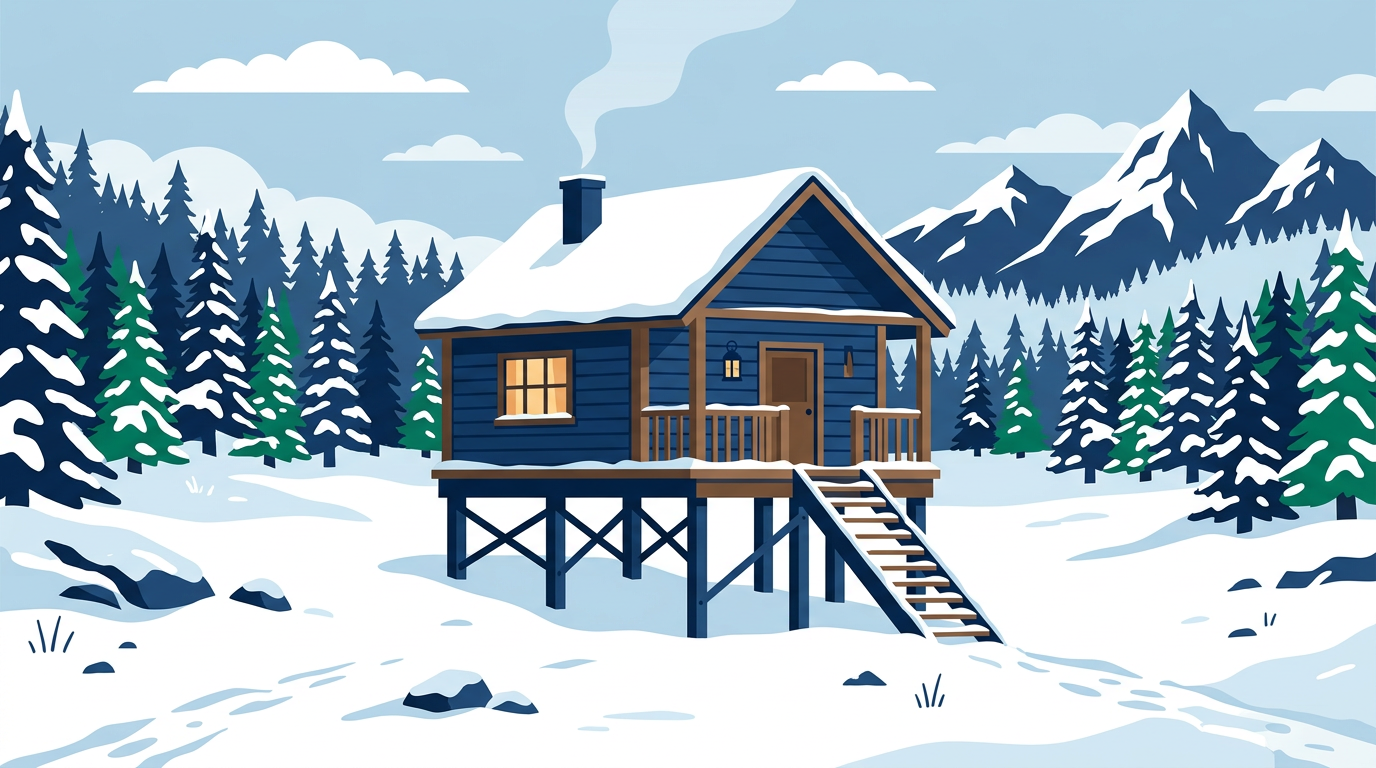
Permafrost is a defining feature of much of Alaska’s landscape — and a defining challenge for homebuyers and lenders in areas where it is present. Understanding how permafrost affects foundations, appraisals, and mortgage qualification is essential for anyone buying a home in Interior Alaska, Northern Alaska, or rural communities built on permafrost terrain.
What Is Permafrost and Where Does It Exist in Alaska?
Permafrost is ground that remains at or below 32°F (0°C) continuously for two or more years. In Alaska, permafrost underlies roughly 85% of the state’s total land area, with continuous permafrost (present everywhere at depth) in the Interior and Arctic regions and discontinuous permafrost (present in patches) in Southcentral areas including parts of the Mat-Su Valley and even some locations on the Kenai Peninsula.
Fairbanks sits squarely in continuous permafrost country. Interior Alaska communities — Tok, Glennallen, Delta Junction, and smaller villages — are similarly affected. In Anchorage and the Mat-Su Valley, permafrost is present in some locations but not universally, particularly on south-facing slopes that receive more solar heating.
Why Permafrost Creates Foundation Challenges
The problem is not permafrost itself — frozen ground is actually very stable. The problem is thawing permafrost. When heat from a building transfers into the ground, it thaws the frozen soil below. Thawed soil loses its load-bearing capacity, causing the structure above to settle, tilt, and eventually suffer structural damage.
This is why homes in Fairbanks and other permafrost-affected areas are built on pilings (steel or timber) driven deep below the permafrost surface, with a ventilated air gap between the structure’s floor system and the ground. The air gap prevents building heat from reaching the soil. Some buildings incorporate thermosyphons — passive refrigeration devices that actively cool the ground below the foundation during winter to maintain its frozen state.
Homes built without proper permafrost engineering — or older structures whose foundation systems have degraded — exhibit specific warning signs: sloping floors, sticking doors, cracked interior walls, visible settlement at the structure’s perimeter. Buyers should treat any of these signs as flags requiring engineering evaluation, not cosmetic fixes.
How Permafrost Affects the Appraisal Process
When an appraiser evaluates a home on permafrost-affected terrain, they must assess:
Foundation type and apparent condition. The appraiser notes the foundation system — pilings, thermosyphons, elevated floor — and its visible condition. Any visible settlement, tilting, or structural distortion raises concerns that may require an engineering report before the appraisal can be completed.
Comparable sales. In markets like Fairbanks where pile foundations are ubiquitous, the presence of a pile foundation itself is not a negative value indicator — it is the norm. Appraisers use comparable sales of similar foundation types and note adjustments only when one property has a more recently upgraded or obviously deteriorated system relative to comps.
Disclosure of known issues. Alaska’s seller disclosure requirements obligate sellers to reveal known material defects, including foundation-related issues. If the seller has disclosed prior settlement events or foundation repairs, the appraiser will note this and may adjust value accordingly.
For government-backed loans (FHA, VA), the appraiser must also satisfy minimum property standards. A home with visible structural distress related to permafrost settlement may fail minimum property standards, requiring repairs or an engineering certification before the loan can close.
Mortgage Qualification on Permafrost Properties
Conventional Loans
Conventional loans (Fannie Mae / Freddie Mac) have the most flexibility on property condition, as long as the home is livable and the foundation appears structurally sound. If the appraisal does not flag foundation concerns, conventional underwriting proceeds normally.
If the appraisal does flag concerns and orders an engineering report, the underwriter reviews the engineer’s findings. A property with a functioning pile foundation that shows no active settlement and an engineer who certifies its adequacy can close on a conventional loan without major complications.
FHA Loans
FHA appraisers in Alaska are specifically trained to evaluate elevated and pile foundations. HUD guidance acknowledges pile foundations as an accepted foundation type in areas where soil conditions require them. The key requirement is that the foundation must be adequately supporting the structure and show no signs of active settlement or structural distress.
FHA has specific requirements for crawlspace access and vapor barriers. Homes with enclosed air gaps beneath the floor may require documentation that the space is properly ventilated and does not create conditions for moisture accumulation.
VA Loans
VA appraisers apply similar standards to FHA in evaluating Alaska foundations. For military buyers at Fort Wainwright or Eielson AFB looking at Fairbanks-area properties with pile foundations, the evaluation process is well-established. The VA requires that foundations provide adequate structural support and that the property meets basic habitability standards — which properly engineered pile foundations in good condition satisfy.
For more on VA loan programs serving Alaska military buyers, see our guide to VA loans in Fairbanks, Alaska.
What Buyers Should Do Before Closing on a Permafrost Property
Hire a structural engineer for any property with visible settlement. Do not rely on the appraiser alone to evaluate a foundation in distress. A licensed structural engineer can inspect the pilings, measure tilt or settlement rates, and provide a written assessment of the foundation’s current condition and prognosis. This typically costs $800–$1,800 but is money well spent before committing to a purchase with potential foundation issues.
Review the seller’s disclosure and maintenance records. Ask specifically whether the pilings have been tested or serviced, whether any thermosyphons are present and functional, and whether there has been any documented settlement in the past ten years.
Understand the long-term risk. Alaska’s climate is warming at roughly twice the rate of the global average, according to data from the National Oceanic and Atmospheric Administration. This warming accelerates permafrost thaw, particularly for discontinuous permafrost in Southcentral Alaska. Properties on marginal permafrost areas face increasing foundation stability risk over longer ownership horizons.
Ask the appraiser’s source on comps. For Fairbanks properties, understanding which comparable sales the appraiser used and how similar their foundation types are to the subject property helps you evaluate whether the appraisal value reflects the subject property’s specific foundation condition.
Home Insurance Considerations
Standard homeowners insurance in Alaska does not cover ground movement or foundation damage caused by permafrost thaw — these are classified as earth movement and excluded from typical policies. Separate earth movement or foundation coverage may be available from specialty insurers as an endorsement, though it tends to be expensive and have significant coverage limitations.
Buyers purchasing in known permafrost areas should read homeowners insurance exclusions carefully and consult with an Alaska insurance professional about what coverage options exist. For more on Alaska homeowners insurance requirements for mortgage purposes, see our guide to Alaska homeowners insurance requirements.
Ready to Explore Fairbanks or Interior Alaska Homes?
Permafrost-affected properties require an informed buyer and an experienced lender. Premier Mortgage (NMLS# 1168048) works with buyers across Interior Alaska and understands the unique financing considerations that come with pile foundation properties.
Frequently Asked Questions
Do Alaska mortgage lenders finance homes on permafrost?
Yes. FHA, VA, conventional, and AHFC-backed loans all finance homes with pile foundations designed for permafrost conditions. The key requirement is that the foundation must be in structurally sound condition and actively supporting the structure without distress. Lenders in Fairbanks and Interior Alaska regularly close loans on pile foundation properties — it is the standard construction type in those markets.
Does permafrost affect a home’s appraised value in Alaska?
Pile foundations themselves do not reduce value in permafrost markets like Fairbanks — they are the expected and required construction type and are reflected in local comparable sales. Foundation distress (visible settlement, tilting, structural cracks) does negatively impact appraised value and may require resolution before a government-backed loan can close. A well-maintained pile foundation in a functioning condition is a neutral factor in the appraisal.
What is a thermosyphon and do all Alaska homes have them?
A thermosyphon is a passive heat exchange device installed alongside pilings to keep the surrounding soil frozen during periods when outside temperatures are warm enough to allow heat to migrate into the ground. Not all pile foundation homes use thermosyphons — many older structures rely solely on the ventilated air gap design. Thermosyphons are more common in high-risk permafrost areas and in newer construction. Their presence indicates the builder specifically engineered the foundation for long-term permafrost stability.
Can I get flood or earth movement insurance on a permafrost-affected Alaska home?
Standard homeowners insurance excludes earth movement, including permafrost settlement. Specialty coverage for ground movement exists from some carriers but tends to be expensive, difficult to obtain, and limited in coverage scope. Buyers concerned about long-term permafrost risk should price this coverage before closing, not after. An independent Alaska insurance agent is the best resource for current market options.
What inspections should I request on an Alaska home with a pile foundation?
At minimum, request a standard home inspection from a licensed Alaska home inspector who will document the visible condition of the foundation system and any signs of settlement or distortion. If there is any visible settlement — sloping floors, sticking doors, exterior perimeter distortion — add a structural engineer’s foundation-specific inspection. The additional cost ($800–$1,800) is low relative to the risk of purchasing a home with active foundation problems.
Ready to Take the Next Step?
Get a free home loan quote today through our trusted partner.
Or call 9078411600
Disclaimer: This article is for informational purposes only and does not constitute financial, mortgage, legal, or tax advice. Interest rates, loan programs, eligibility requirements, and fees are subject to change without notice and may vary based on your individual circumstances. Alaska Home HQ is not a lender, broker, or financial institution. All loan applications are processed by Premier Mortgage (NMLS: 1168048). We may have a business relationship with Premier Mortgage and may receive compensation when you use their services through our links. Consult a licensed mortgage professional before making financial decisions. Terms of Service · Privacy Policy