Remote Mortgage Closings in Alaska
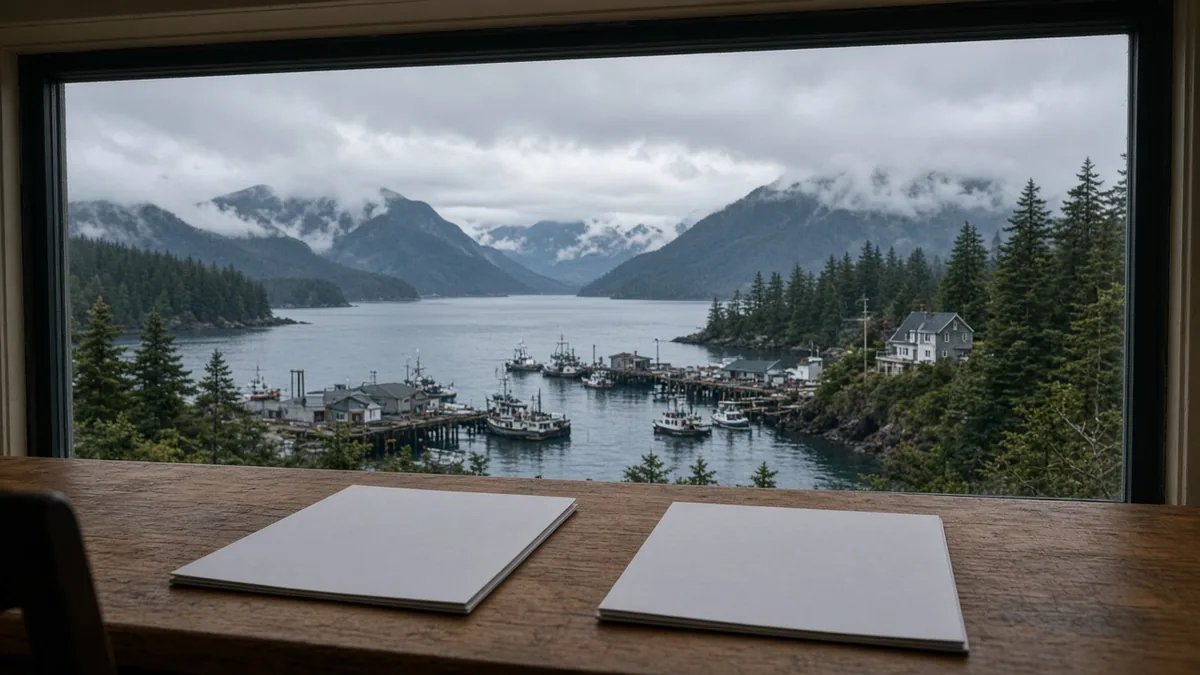
An Alaska remote mortgage closing means you sign the loan without sitting in the title office that prepared the file. The house may be in Kodiak, Sitka, Bethel, or on a road system you are not on. The lender may be in Anchorage. The signing might be a mobile notary, a different title desk, a mailed package, or a video notarization. Which of those is allowed is a question for the title company, using the lender’s closing instructions. This article does not cite a notarization statute. Ask the title company what the instructions permit on this loan.
Alaska’s geography makes the question ordinary. Weather cancels flights. A recording district is not a suggestion. Internet in a village may not carry a video signing on the day you hoped. None of that is solved by assuming a phone app is legal and acceptable to the investor.
The CFPB Closing Disclosure explainer says lenders are required to provide the Closing Disclosure three business days before the scheduled closing. Use those days to read the loan terms, the cash to close, and the spelling of every name. A remote signer has less room to fix a surprise at a table across the hall from the closer.
Alaska Home HQ is educational. It is not a title company, a notary, or a lender.
How an Alaska remote mortgage closing is signed
Ask the title company, early, which methods the closing instructions allow. The menu in real Alaska files looks like this.
A mobile notary, or a signing agent, meets you where you are. In a hub town that may be an office. In a smaller place it may be the library, a school, or a kitchen, if a commissioned notary can get there. Weather and schedules decide whether “mobile” is actually available this week.
A signing at a different title office is the town-to-town version. You are in Juneau, the file is in Anchorage, and a local desk handles the signatures under instructions from the office that will record. That is still an in-person notarization. It is remote only in the sense that you are not at the recording office.
Mailed documents still happen. They need time in both directions, a notary at your end who matches the instructions, and a plan for a lost envelope. A barge community and a road-system suburb do not share a mail clock.
Remote online notarization, a video session with a notary in another place, is available on some loans and refused on others. The lender and the title company both have to allow it. A state rule, a lender overlay, and the title company’s own policy can point different directions. Because this page will not invent a statute, the only operational answer is the one the title company gives in writing for this file. If they say the investor wants ink in front of a notary who is in the room, a video call is not a workaround.
Identification is part of the same instructions. The name on the ID, the name on the Closing Disclosure, and the name on the deed need to match. A military ID, a state license, and a passport are not interchangeable just because all three are in the drawer. Ask which ID the notary is told to accept.
The three business days, and the wire
The CFPB page gives you three business days with the Closing Disclosure before the scheduled closing. On a remote file, build travel into that window. If the numbers change and the lender has to issue a new disclosure, the date can move. Ask the lender what change would reset the clock. Do not book a nonrefundable seat on the assumption the first disclosure is the last one.
Cash to close is the figure on that disclosure. The cash-to-close guide explains why it moves when taxes, insurance, or credits move. The CFPB explainer says you typically bring a cashier’s check or a wire, and that you ask the closing agent how they want to be paid. Get the wire instructions from the title company by a method you already trust, such as a call to a number you looked up yourself. A last-minute email that “updates” the routing number is a fraud pattern closers warn about in every state. Alaska’s distance makes the pressure worse, because you cannot walk down the hall to confirm.
The closing timeline checklist is the ordinary sequence from contract to recording. Remote signing inserts travel, mail, and notary availability into that sequence. Recording still happens in a recording district. A package signed in Kodiak may record in a different office than a package signed in Fairbanks. Ask when the deed and the deed of trust are expected to record, and what has to arrive before the lender will fund.
Funding and recording are not the same minute. Ask whether you get keys at signing, at funding, or at recording. On a remote purchase, the seller, the agent, and the signer may be in three places. Someone local needs authority to release the house. Spell that out before you fly.
Powers of attorney, PCS moves, and bush logistics
A power of attorney is a lender question, not a blog permission. Some loans allow a specific POA for closing. Some refuse. Some allow it only on a form the investor provides, signed before a notary while you are still at the old duty station. Ask the lender before you leave. A general POA from years ago is a weak document to discover in the rejection pile.
The PCS buying guide is the military move into the state. People also close while they are leaving Alaska. Both shapes need the signing plan before the household goods ship. JBER, Eielson, and Coast Guard cutters do not pause for a notary who missed the flight.
Bush logistics are practical. A notary may need a seat on the same plane you are on. Internet for a video signing may depend on a school network or a clear sky. Power outages happen. If the instructions require a video session, ask what the backup is when the link drops. If the instructions require ink, ask who brings the stamp to the village and what it costs. Those costs may be part of closing costs or a separate bill. Ask which.
Occupancy affidavits still get signed. An owner-occupant loan still means what the program says it means, even if you signed from a hotel. A job-offer or remote-work purchase is a different topic from a remote signing. You can live in the house and sign far away, or you can be a remote worker buying a house you will occupy. Tell the lender the truth about both. The words sound alike and the underwriting is not alike.
Some rural properties may fit a USDA loan. The signing method does not relax the property rules, the income rules, or the access rules. A video notarization does not create legal access or a working well.
What to confirm in writing
Ask the title company for the signing method in an email you can forward to the lender. Ask the notary’s name, the place, and the ID rule. Ask the cash-to-close figure and the payment method. Ask the recording district and the expected funding time. Ask what happens if weather slips the signing by a day, and whether the rate lock, if you have one, has a calendar of its own. This page does not quote a rate. Locks expire on their own terms. A missed plane can be a lock problem. Ask.
Read the note and the deed of trust on the disclosure days, not on the tarmac. The CFPB explainer is built for that reading: names, loan amount, cash to close, and the escrow for taxes and insurance. A remote closing compresses the moment where you would otherwise say “wait” in a conference room. The wait has to happen earlier.
Alaskans use Permanent Fund Dividend savings as part of cash to close on ordinary purchases. Wire that money with the same care as any other closing wire, from instructions you verified. A dividend does not change the notary rule.
Ready to explore your options? Get a free home loan quote from Premier Mortgage (NMLS# 1168048).
The day of signing
Be where you told the notary you would be, with the ID they asked for, and with a way to receive a corrected page if the lender has one. Phones die in the cold. Bring the charger. Do not sign a page you cannot read because the plane is boarding. A delayed signing is inconvenient. A signed error is a recording.
Afterward, ask for a copy of what you signed and for the recording information when it exists. The deed of trust in the public index is the end of the closing, not the moment the notary stood up.
People close Alaska loans from fishing boats, from barracks, and from kitchen tables in Kodiak every month. The files that go well are the ones where the title company, not a group text, named the signing method before anyone bought a ticket.
Frequently Asked Questions
Can every Alaska loan close by video?
No. Some lenders and some title companies allow remote online notarization, and some require a notary in the room or ink on mailed pages. Ask the title company what the closing instructions allow. This article does not cite a notarization statute.
How early do I see the Closing Disclosure?
The CFPB says lenders provide it three business days before the scheduled closing. Remote travel belongs inside that planning window. A changed disclosure can move the date. Ask the lender what kind of change resets the clock.
How do I send the down payment from out of town?
The CFPB explainer says buyers typically use a cashier’s check or a wire, and that the closing agent says which one. Get wire instructions from the title company through a phone number you looked up, not from an unexpected email. The cash-to-close guide covers why the figure moves.
Will a power of attorney let someone else sign for me?
Ask the lender before you travel. Some loans accept a specific closing POA on their form. Some do not. An old general POA is not a safe assumption. Get the answer while you can still sign in person.
Does a remote signing change what the loan requires of the house?
No. Access, wells, occupancy, and the program’s property rules are unchanged because you signed somewhere else. The notary method is a closing mechanic. The collateral is still the house.
Ready to Take the Next Step?
Get a free home loan quote today through our trusted partner.
Or call 9078411600
Disclaimer: This article is for informational purposes only and does not constitute financial, mortgage, legal, or tax advice. Interest rates, loan programs, eligibility requirements, and fees are subject to change without notice and may vary based on your individual circumstances. Alaska Home HQ is not a lender, broker, or financial institution. All loan applications are processed by Premier Mortgage (NMLS: 1168048). We may have a business relationship with Premier Mortgage and may receive compensation when you use their services through our links. Consult a licensed mortgage professional before making financial decisions. Terms of Service · Privacy Policy