Alaska New Construction Homes: Buyer's Guide
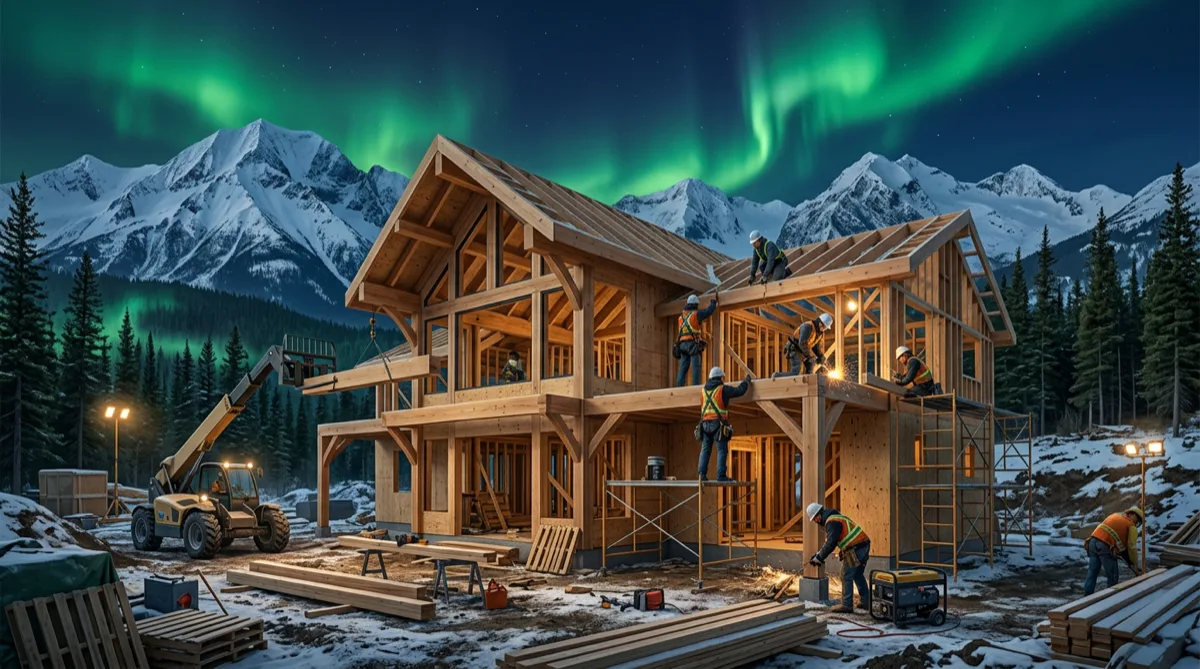
New construction homes are a growing segment of Alaska’s housing market, particularly in the Matanuska-Susitna Valley where land availability supports subdivision development. For buyers tired of competing over aging inventory with deferred maintenance, a new build offers a compelling alternative — brand-new systems, modern energy standards, and a chance to customize your home from the ground up.
But buying new construction in Alaska involves distinct processes, financing tools, and considerations that differ significantly from purchasing an existing home. This guide covers what you need to know before signing a purchase contract with a builder.
Where New Construction Is Happening in Alaska
Alaska’s new construction market is concentrated in areas with available land, infrastructure, and growing populations:
Mat-Su Valley (Wasilla, Palmer, Big Lake): The most active new construction market in the state. Lower land costs than Anchorage, room to build subdivisions, and growing demand from families priced out of Anchorage drive consistent builder activity. Subdivisions continue to expand along the Parks Highway corridor and in areas like Butte, Sutton, and Houston.
Eagle River and Chugiak: Close proximity to Anchorage and JBER makes this corridor attractive for military families and commuters. New infill development and smaller subdivisions are common here. Prices are higher than Mat-Su but lower than Anchorage proper.
Anchorage (limited): Land constraints limit new construction in Anchorage to infill projects, lot splits, and a small number of custom builds. Turnkey subdivisions are rare within the Anchorage bowl. Most “new” homes in Anchorage are spec builds on individual lots.
Fairbanks area: New construction in the Fairbanks North Star Borough is available but requires careful attention to foundation engineering for extreme cold and permafrost considerations.
Alaska New Construction Price Ranges
New construction in Alaska is expensive. The combination of material shipping costs, short building season, skilled labor shortages, and energy code requirements drives per-square-foot costs well above the national average:
- Entry-level new build (1,200–1,600 sq ft, basic finishes): $350,000–$500,000 in Mat-Su Valley; $450,000–$650,000 in Eagle River; $500,000–$700,000 in Anchorage
- Mid-range (1,800–2,400 sq ft, mid-grade finishes): $550,000–$750,000 in Mat-Su; $650,000–$900,000 in Anchorage
- Custom or premium builds: $800,000–$1.5M+ depending on location and finishes
Land costs vary significantly. A platted lot in a Wasilla subdivision may run $80,000–$150,000. An Anchorage infill lot can reach $250,000–$400,000.
For a full breakdown of Alaska construction costs, see our cost to build a house in Alaska guide.
Financing a New Construction Home in Alaska
New construction homes require different financing approaches than existing homes. The primary options:
Builder Financing vs. Your Own Lender
Many Alaska builders have relationships with preferred lenders who offer buyer incentives — closing cost credits, rate buydowns, or design center allowances in exchange for using the builder’s lender. These deals can be valuable, but compare the total cost carefully. The preferred lender’s rate may be higher than what an independent lender offers.
You are never required to use the builder’s lender, but some incentives are contingent on it.
Construction-to-Permanent Loans
For custom homes or spec builds not yet complete, a construction-to-permanent loan funds the build and then converts to a standard mortgage at completion. The process:
- You receive loan approval for both the construction phase and the permanent mortgage
- During construction, you draw from the loan as work milestones are completed
- You typically pay interest only on drawn funds during construction
- At certificate of occupancy, the loan converts to a standard fixed-rate mortgage
Construction loans require more documentation and lender oversight than standard mortgages. Plan for a 60–90 day pre-approval process.
Standard Purchase Mortgage (Completed Homes)
For move-in-ready new construction, the financing process is the same as buying any existing home — FHA, VA, conventional, or AHFC programs all apply. The main difference is that the appraisal uses the plans and specs (for homes not yet built) or a standard comparable-sale approach (for completed homes).
AHFC for New Construction
AHFC programs are available for new construction. The First Home and First Home Limited programs can be layered with new construction purchases, including spec builds from Alaska builders. The AHFC energy efficiency interest rate reduction is particularly valuable for new builds, which typically achieve higher energy ratings than older homes.
AHFC’s Energy Rebate Program provides rebates of up to $10,000 for qualifying energy-efficient new construction — a meaningful offset to the higher purchase price.
What to Watch for in a New Construction Contract
Alaska’s new construction contracts favor builders. Key points to review before signing:
Earnest money and deposits: Builder contracts often require non-refundable deposits of $5,000–$20,000+. Understand the conditions under which you forfeit this money.
Price escalation clauses: Material costs fluctuate. Many Alaska builder contracts include clauses allowing the price to increase if lumber, insulation, or other materials cost more by the time of construction. Cap clauses can limit your exposure.
Completion timeline and delays: Alaska’s short construction season (roughly May through September for exterior work) means delays are common. Understand what happens if the builder misses the completion date and how this affects your interest rate lock.
Warranty terms: New construction typically includes a builder’s warranty — typically 1 year for workmanship, 2 years for mechanical systems, and 10 years for structural defects. Understand what is covered and who handles warranty claims.
Lot premiums: In subdivisions, certain lots (corner lots, larger lots, cul-de-sac locations, wooded lots) carry premiums. These are negotiable in some cases.
New Construction Home Inspection
Even new homes benefit from an independent inspection. Builder inspections and city inspections are not the same as a buyer’s home inspection. A qualified inspector can catch:
- Insulation gaps that will affect energy efficiency
- Mechanical systems that are not functioning as designed
- Grading and drainage issues that will cause problems after the first winter
- Minor construction defects the builder should correct before closing
Schedule your independent inspection before the final walkthrough — not after closing.
Seasonal Timing for New Construction in Alaska
Alaska’s climate creates a natural new construction cycle:
- Spring (April–May): Permits filed, lots broken, foundations poured
- Summer (June–August): Primary framing and exterior work
- Fall (September–October): Interior work, insulation, mechanical systems
- Winter (November–March): Interior finishing, final inspections, closings
The ideal time to buy a to-be-built home is spring, locking in your purchase price before construction begins. By fall, move-in-ready inventory from summer builds becomes available — good for buyers who want to see the finished product before buying.
Should You Buy New Construction in Alaska?
New construction is worth considering if:
- You want modern energy systems (heat pumps, triple-pane windows, superior insulation)
- You need a home in warranty for the first several years
- You want to customize finishes and layout
- You are willing to live in a newer subdivision farther from Anchorage to get a reasonable price
It may not be the right choice if:
- You need to move quickly (construction timelines often slip)
- You prefer established neighborhoods with mature landscaping and schools
- You want the price negotiating leverage that comes with existing homes
Thinking about a new construction purchase? Get pre-approved before you visit any builder — knowing your budget protects you from falling in love with a spec home that is $100,000 over your range. Premier Mortgage (NMLS# 1168048) can help you understand your options.
Frequently Asked Questions
Are there new home builders in the Mat-Su Valley?
Yes. The Mat-Su Valley is Alaska’s most active new construction market. Several builders operate subdivisions in and around Wasilla, Palmer, and Big Lake, offering spec homes, semi-custom builds, and fully custom homes on available lots. Prices are generally lower than Anchorage for comparable square footage due to lower land costs.
Can I use an FHA loan for new construction in Alaska?
Yes. FHA loans can be used for new construction homes in Alaska, including spec homes and newly completed builds. If the home is not yet built, you would need a construction-to-permanent loan product. For completed new construction, a standard FHA purchase mortgage applies with the same $557,750 loan limit.
Does AHFC offer programs for new construction buyers in Alaska?
Yes. AHFC’s First Home, First Home Limited, and Veterans Mortgage programs are available for new construction purchases. The AHFC energy efficiency interest rate reduction is especially applicable to new builds, which often qualify for higher energy ratings. AHFC also offers a rebate program for newly constructed energy-efficient homes.
How long does it take to build a new home in Alaska?
Construction timelines vary by builder, complexity, and weather. A standard new construction home in the Mat-Su Valley typically takes 6–12 months from permit to certificate of occupancy. Custom builds and larger homes take longer. Factor in the short Alaska building season — exterior work stops in late fall and cannot resume until spring.
What is the Alaska AHFC energy rebate for new construction?
AHFC’s Residential Energy Rebate Program provides rebates of up to $10,000 for new construction homes that achieve qualifying energy ratings. The rebate amount depends on the home’s energy performance rating (HERS score). Higher efficiency homes earn larger rebates. Contact AHFC directly for current program status and eligibility requirements.
Ready to Make Your Move?
Get pre-approved for your home loan first — it gives you a competitive edge. Need a listing agent? We can help.
Or call 9078411600 · or email contact@akhomehq.com
Disclaimer: This article is for informational purposes only and does not constitute financial, mortgage, legal, or tax advice. Interest rates, loan programs, eligibility requirements, and fees are subject to change without notice and may vary based on your individual circumstances. Alaska Home HQ is not a lender, broker, or financial institution. All loan applications are processed by Premier Mortgage (NMLS: 1168048). We may have a business relationship with Premier Mortgage and may receive compensation when you use their services through our links. Consult a licensed mortgage professional before making financial decisions. Terms of Service · Privacy Policy