Alaska Property Boundary Disputes: What Buyers Should Know
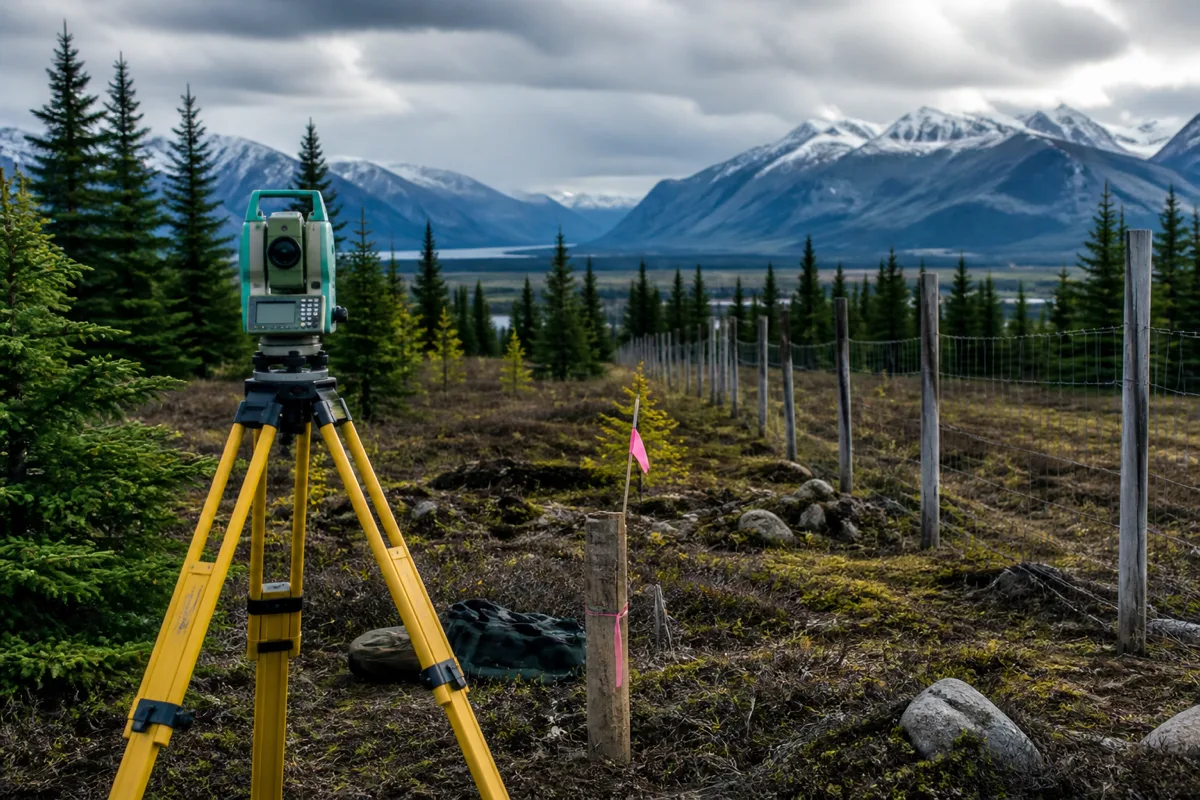
Alaska’s vast, often lightly-surveyed rural land means boundary questions come up more often here than in tightly platted urban subdivisions elsewhere. If you’re buying a property with any hint of boundary ambiguity — an old fence that doesn’t quite match the legal description, a neighbor’s shed that looks like it might cross the line, or simply no visible corner markers — it’s worth understanding what you’re dealing with before you close.
What Corner Monuments Are and Why They Matter
A corner monument is the physical marker — historically a metal pin, pipe, or in older surveys sometimes a natural feature — placed at a property’s legal corner points during an official survey. In many rural and older-platted Alaska parcels, original monuments have shifted, been removed, or were never precisely placed to modern standards. This means the fence line that’s stood for 40 years might not actually match the legal boundary described in your deed, even if everyone has treated it as the boundary the whole time.
Common Sources of Boundary Disputes
- Encroachments — a structure, driveway, or fence that crosses onto a neighboring parcel, sometimes unknowingly built years or decades earlier.
- Ambiguous legal descriptions, particularly in older or informally subdivided rural parcels where metes-and-bounds descriptions reference natural features (a creek, a stand of trees) that have shifted or disappeared over time.
- Conflicting historical surveys, where two surveys of the same area, done at different times by different surveyors, don’t perfectly agree.
- Adverse possession claims, where long-term, open use of a strip of land by a neighbor could create a legal claim to that land under certain circumstances, separate from what the deed says.
Why This Matters Before You Buy, Not After
Boundary problems are far easier and cheaper to resolve before you own the property than after. A title company can identify some boundary red flags during a title search, but title insurance typically doesn’t guarantee exact boundary locations unless you specifically purchase an ALTA survey-based endorsement, and even then, resolving an active dispute after closing is a different (and more expensive) process than addressing it as a contingency during your purchase.
What to Do If You Spot a Potential Issue
- Order a current boundary survey before closing if anything looks uncertain — a fence that seems oddly placed, a shared driveway with no clear easement, or a legal description that references vague natural landmarks.
- Ask the seller directly about any known boundary history, including past disputes with neighbors, which sellers are generally required to disclose if known.
- Talk to a real estate attorney if a survey reveals a genuine discrepancy, before you’re contractually committed to closing.
- Consider an ALTA survey and matching title endorsement for rural or larger parcels where boundary precision matters more, especially if you’re planning to build, subdivide, or fence the property later.
Undeveloped and lightly-surveyed rural parcels carry other due diligence considerations worth researching separately, beyond boundary questions alone.
A Reasonable Expectation
Most Alaska property transactions close without any boundary issue at all, especially in established, platted subdivisions with modern surveys on file. But for rural, older, or informally described parcels, a modest investment in a current survey before closing can prevent a much larger headache — legal, financial, or with a neighbor — down the road.
Consulting a real estate attorney or licensed surveyor is recommended for any specific boundary concern.
Have questions about financing a rural Alaska property? Get a free home loan quote from Premier Mortgage (NMLS# 1168048).
Frequently Asked Questions
Does title insurance cover boundary disputes in Alaska?
Standard title insurance covers some boundary-related issues but typically doesn’t guarantee exact boundary locations unless you add an ALTA survey-based endorsement — ask your title company about this option for rural or larger parcels.
What should I do if a survey reveals my neighbor’s fence is on my property?
Talk to a real estate attorney before closing if you’re still in the purchase process, or before taking any action if you already own the property — resolving encroachments can range from a simple agreement to a more formal legal process depending on the situation.
How much does a boundary survey typically cost in Alaska?
Costs vary significantly based on parcel size, terrain, and how much historical research is needed to locate original monuments — get quotes from a couple of licensed Alaska surveyors for your specific property.
Can adverse possession really transfer part of my land to a neighbor?
Under certain state-law conditions involving long-term, open, and continuous use, it’s legally possible, though the specific requirements are detailed and vary by circumstance — consult a real estate attorney if this concern applies to your situation.
Are boundary issues more common in rural Alaska than in cities like Anchorage?
Generally yes, since rural and older parcels are more likely to have informal historical surveys, natural-feature legal descriptions, and less precise original monument placement compared to modern platted urban subdivisions.
Ready to Make Your Move?
Get pre-approved for your home loan first — it gives you a competitive edge. Need a listing agent? We can help.
Or call 9078411600 · or email contact@akhomehq.com
Disclaimer: This article is for informational purposes only and does not constitute financial, mortgage, legal, or tax advice. Interest rates, loan programs, eligibility requirements, and fees are subject to change without notice and may vary based on your individual circumstances. Alaska Home HQ is not a lender, broker, or financial institution. All loan applications are processed by Premier Mortgage (NMLS: 1168048). We may have a business relationship with Premier Mortgage and may receive compensation when you use their services through our links. Consult a licensed mortgage professional before making financial decisions. Terms of Service · Privacy Policy