Alaska Real Estate Market in 2026: Trends & Data
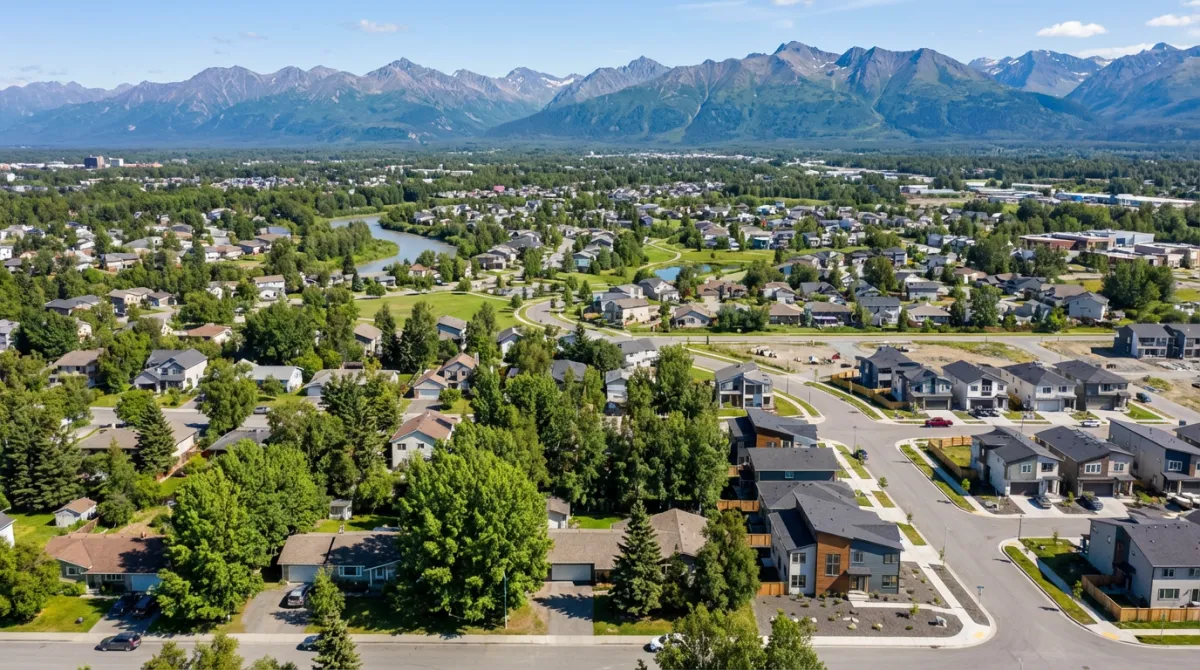
Alaska’s real estate market in 2026 is in a transitional phase. After years of tight inventory and steadily climbing prices, the market is showing early signs of balance — though it’s far from a buyer’s paradise in most areas. Mortgage rates, seasonal patterns, military transfers, and new construction activity are all shaping the landscape. Here’s what the data says and what it means for buyers and sellers navigating Alaska’s housing market this year.
Statewide Overview
Alaska’s median home price sits in the range of $386,000 to $415,000 depending on the month and data source. That’s up modestly from 2025, reflecting steady but not explosive price appreciation. The days of double-digit annual price gains seen during the pandemic-era housing boom have largely subsided across the state.
Key statewide metrics:
- Median sale price: $386,000–$415,000
- Average days on market: 45–65 days (varies significantly by city and season)
- Active inventory: Up roughly 10–15% compared to early 2025
- Months of supply: 2.5–3.5 months (still favoring sellers in most markets)
Anything under 4 months of supply is generally considered a seller’s market. Alaska is hovering just below that threshold statewide, though individual cities tell very different stories.
Median Prices by City
| City | Approximate Median Price | Year-Over-Year Change |
|---|---|---|
| Anchorage | $487,000 | +2–3% |
| Wasilla | $540,000 | +3–5% |
| Palmer | $400,000 | +2–4% |
| Eagle River | $435,000 | +1–3% |
| Fairbanks | $310,000 | +1–2% |
| Juneau | $490,000 | +2–3% |
| Homer | $430,000 | +3–5% |
| Kenai/Soldotna | $295,000 | +1–3% |
Wasilla continues to post some of the strongest appreciation in the state, driven by new construction and buyers seeking more space than Anchorage offers. Fairbanks remains the most affordable major market, though the military’s influence on demand keeps prices stable rather than declining.
Inventory and Days on Market
One of the biggest stories in Alaska real estate through 2025 and into 2026 has been inventory recovery. After years of historically low inventory levels, active listings have climbed as more homeowners decide to sell and new construction comes online.
Inventory trends:
- Anchorage: Active listings up roughly 12% from early 2025. Days on market averaging 40–55 days.
- Mat-Su Valley (Wasilla/Palmer): Inventory still tight in the sub-$450K range. New construction absorbing much of the demand. Days on market averaging 30–45 days for well-priced homes.
- Fairbanks: Inventory has increased more meaningfully — up 15–20% year over year. Days on market averaging 55–70 days.
- Kenai Peninsula: Moderate inventory gains. The Kenai/Soldotna corridor remains accessible for budget-conscious buyers.
Homes that are priced correctly and show well still sell quickly, especially during the summer months. Overpriced listings are sitting longer than they did in 2023 or 2024, which may signal that buyers are being more selective as affordability pressure increases.
Interest Rates and Affordability
Mortgage rates remain one of the most significant factors in Alaska’s 2026 market. Rates have been fluctuating in the mid-to-upper 6% range for conventional 30-year fixed mortgages, with some weeks touching the low 7s.
What this means for buyers:
On a $400,000 loan at 6.75%, your monthly principal and interest payment would be approximately $2,594. At 6.25%, that drops to $2,463 — a difference of roughly $131/month or $1,572/year. Small rate changes create meaningful affordability differences.
Alaska buyers have an advantage most states don’t: AHFC loan programs with below-market rates. If you qualify, AHFC’s First Home Limited program may offer rates significantly below what you’d find on the open market. That rate gap can translate into tens of thousands of dollars in savings over the life of a loan.
For buyers on a budget, programs like FHA (3.5% down) and USDA (zero down in eligible rural areas) help offset the impact of higher rates by reducing the cash needed upfront. Many Mat-Su Valley communities, the Kenai Peninsula, and much of the Fairbanks area remain USDA-eligible.
Buyer’s Market or Seller’s Market?
The answer depends on where you’re looking.
Markets Still Favoring Sellers
- Anchorage (South Anchorage, Hillside, Eagle River): Premium neighborhoods with strong school districts continue to see competitive offers, especially during summer. Inventory has improved but still sits below pre-pandemic norms.
- Wasilla: New construction is adding supply, but demand from Anchorage commuters keeps pace. Well-priced homes under $500K typically generate multiple offers in peak season.
Markets Approaching Balance
- Midtown and Downtown Anchorage: Condo and townhome markets are seeing longer days on market and more price negotiations. Buyers have more leverage here than in the single-family segments.
- Fairbanks: Rising inventory and stable demand are creating a more balanced market. Buyers willing to purchase in winter may find favorable conditions.
- Kenai Peninsula: Affordable pricing and moderate demand create a relatively balanced market. Sellers can still expect reasonable offers on well-maintained homes.
Where Buyers May Find Opportunity
- Winter purchases statewide: Alaska’s seasonal market dynamic means that fall and winter bring less competition. Motivated sellers who haven’t sold during the summer rush may be more willing to negotiate on price or concessions.
- Fairbanks in winter: With the highest inventory gains and the harshest winter conditions reducing buyer activity, Fairbanks in December through February may be the most favorable buying environment in the state.
New Construction Activity
New home construction in Alaska has picked up, particularly in the Mat-Su Valley and parts of south Anchorage. Builders are responding to demand for modern, energy-efficient homes that address Alaska’s unique climate challenges.
Trends in new construction:
- Energy efficiency: New builds are increasingly featuring high-performance insulation, heat recovery ventilation (HRV) systems, and triple-pane windows. These features reduce the heating cost gap that plagues older Alaska homes.
- Mat-Su Valley growth: Wasilla and Palmer continue to see the most new construction activity in the state. Subdivisions with modern amenities are attracting buyers from Anchorage who want more space.
- Modular and prefab: Rising construction costs have driven interest in modular and prefabricated homes. Several builders now offer these options configured for Alaska’s climate, with proper snow load engineering and cold-weather insulation.
- Lot availability: Buildable lots are becoming scarcer in Anchorage proper, pushing new construction toward the Valley, Eagle River, and outlying areas.
New construction typically commands a premium of 10–15% over comparable existing homes, but the energy efficiency savings can offset a significant portion of that premium over time.
Military Impact on the Market
Alaska’s military installations — primarily JBER in Anchorage/Eagle River and Fort Wainwright/Eielson AFB near Fairbanks — create a steady cycle of buyers and sellers driven by PCS (Permanent Change of Station) orders. This military turnover adds consistent demand and supply to local markets.
Key military market dynamics:
- PCS season (May–August): Aligns with Alaska’s peak selling season, amplifying summer demand. Military families arriving on orders need housing quickly, often competing with civilian buyers for limited inventory.
- VA loan prevalence: A significant share of transactions near military installations involve VA financing. Sellers in Eagle River, Mountain View, Government Hill, and Fairbanks should expect VA loan offers — which come with zero down payment and specific appraisal requirements. See our VA loans guide for details.
- BAH (Basic Allowance for Housing): Military housing allowances influence what service members can afford. Current BAH rates for Anchorage and Fairbanks support purchases in the $350K–$500K range depending on rank and family size.
What to Watch for the Rest of 2026
Several factors will shape Alaska’s housing market through the remainder of the year:
- Mortgage rate trajectory: If rates ease below 6.5% for any sustained period, expect a jump in buyer activity and potential price acceleration. If rates push above 7% again, affordability pressure will likely slow price growth and extend days on market.
- Seasonal inventory surge: The spring and summer months should bring the largest wave of new listings. Buyers who are pre-approved and ready to move will have the best selection of the year.
- Oil industry activity: Alaska’s economy still ties to oil. Activity on the North Slope and any shifts in production plans ripple through housing demand, particularly in Fairbanks and Anchorage.
- State budget and PFD: The size of the Permanent Fund Dividend and broader state fiscal health influence consumer confidence and, indirectly, housing demand.
Advice for Buyers in 2026
- Get pre-approved now. Don’t wait for rates to drop — rising inventory means more selection, and pre-approval positions you to act quickly when the right home appears.
- Explore AHFC programs. Below-market rates from Alaska Housing Finance Corporation can meaningfully reduce your monthly payment compared to conventional market rates.
- Consider off-season buying. Less competition in fall and winter may yield better prices and more willing sellers.
- Don’t overextend. Factor in Alaska’s higher heating costs, insurance premiums, and property taxes when calculating your real monthly housing cost.
Advice for Sellers in 2026
- List in spring. April through July typically generates the most buyer activity and the highest sale prices.
- Price accurately. Overpriced homes are sitting longer than they did in 2023–2024. Work with an agent who knows your local market and can position your home competitively.
- Invest in presentation. In a market where buyers have more choices, homes that show well and address deferred maintenance sell faster and for more money.
If you’re thinking about selling your Alaska home, reach out to us at contact@akhomehq.com or visit our contact page to discuss your options.
Whether you’re buying or selling in 2026, preparation is everything. Buyers — get pre-approved and know your budget before the spring listings hit. The market rewards those who are ready.
Get Pre-Approved with Premier Mortgage →
Frequently Asked Questions
Is the Alaska real estate market going up or down in 2026?
The Alaska market is showing moderate appreciation in most areas, driven by limited inventory and steady demand from military relocations and in-state migration. Anchorage and the Mat-Su Valley are seeing the most activity. Price growth is more modest than in overheated lower-48 markets, making Alaska a relatively stable market for buyers and sellers.
Is it a buyer’s or seller’s market in Alaska in 2026?
Most Alaska communities lean toward a seller’s market due to low inventory, particularly for move-in-ready homes under $500,000. However, the imbalance is not as extreme as in major lower-48 metros. Buyers who are pre-approved and flexible on timing can still find good opportunities, especially during the fall and winter months.
What is the median home price in Anchorage in 2026?
The median home price in Anchorage hovers around $380,000 to $420,000 depending on the quarter and data source. Prices are slightly higher in South Anchorage and Hillside and lower in East Anchorage and Muldoon. Condo and townhome prices are more accessible, typically ranging from $200,000 to $300,000.
Are homes in the Mat-Su Valley cheaper than Anchorage?
Yes, the Mat-Su Valley — Wasilla, Palmer, and surrounding areas — generally offers prices 10–20% below Anchorage for comparable homes. The tradeoff is a longer commute for those working in Anchorage, typically 45 minutes to an hour each way. The valley has seen significant growth and new construction in recent years.
How does military activity affect Alaska’s housing market?
Military installations — JBER in Anchorage and Fort Wainwright and Eielson AFB near Fairbanks — create consistent housing demand through PCS rotations. This stabilizes rental and sales markets near bases. VA loan usage is significantly higher in Alaska than the national average, and military-friendly neighborhoods near bases tend to hold their value well.
Ready to Make Your Move?
Get pre-approved for your home loan first — it gives you a competitive edge. Need a listing agent? We can help.
Or call 9078411600 · or email contact@akhomehq.com
Disclaimer: This article is for informational purposes only and does not constitute financial, mortgage, legal, or tax advice. Interest rates, loan programs, eligibility requirements, and fees are subject to change without notice and may vary based on your individual circumstances. Alaska Home HQ is not a lender, broker, or financial institution. All loan applications are processed by Premier Mortgage (NMLS: 1168048). We may have a business relationship with Premier Mortgage and may receive compensation when you use their services through our links. Consult a licensed mortgage professional before making financial decisions. Terms of Service · Privacy Policy