Best Places to Live in Alaska for Families
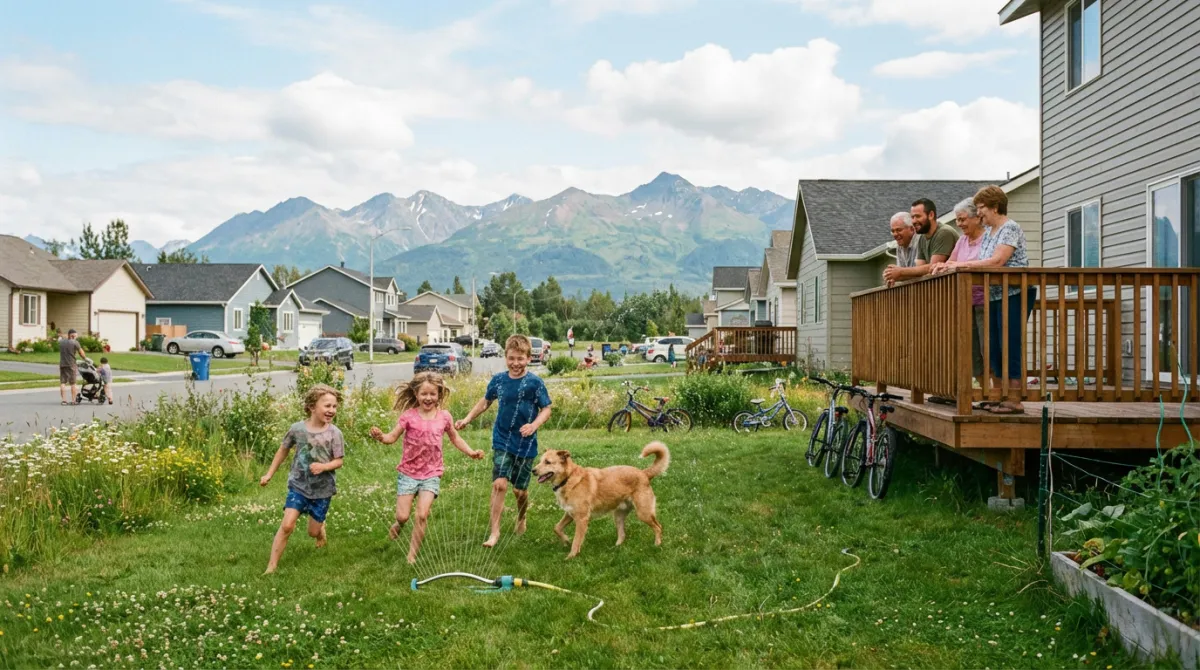
Raising a family in Alaska isn’t for everyone — but for the families who choose it, there’s nothing quite like it. Kids grow up fishing, hiking, skiing, and exploring some of the most stunning landscape on Earth. Communities tend to be tight-knit, schools are often smaller and more personal, and the pace of life in most Alaska cities feels a few clicks slower than the Lower 48 frenzy.
The question isn’t whether Alaska is good for families. It’s which Alaska community is the right fit for yours.
This guide breaks down the most family-friendly cities and towns on the road system, covering schools, safety, housing costs, outdoor recreation, and the intangible community feel that matters most when you’re putting down roots.
What Makes a City Family-Friendly in Alaska?
Before diving into specific cities, here’s what we evaluate:
- Schools: District size, test scores, extracurricular options, and teacher retention
- Safety: Crime rates relative to Alaska averages (Alaska overall trends higher than the national average, but many communities are well below state norms)
- Housing affordability: Can a middle-income family buy a home?
- Outdoor recreation: Access to trails, fishing, skiing, and kid-friendly activities
- Community: Youth sports leagues, community events, churches, and the general feeling of neighborliness
- Access to services: Healthcare, shopping, childcare availability
No Alaska city checks every box perfectly. But several come remarkably close.
Anchorage: Urban Amenities, Alaska Style
Anchorage is the default answer for families who want the broadest range of services, schools, and activities without leaving Alaska.
Schools: The Anchorage School District is the state’s largest, serving roughly 43,000 students across 90+ schools. That size brings both advantages (wide range of programs, AP courses, arts, sports) and challenges (some schools perform better than others). Several charter schools and private schools offer alternatives. The district’s magnet programs — including STEM and language immersion — are popular with engaged families.
Safety: Anchorage’s overall crime rate is higher than the national average, but this varies enormously by neighborhood. Hillside, South Anchorage, Sand Lake, and parts of Midtown are considered safe, family-oriented areas. Do your homework on specific neighborhoods before buying.
Housing: Median price around $487,000. A wide range of options from older ranches to new construction. Municipal water, sewer, and natural gas are available in most neighborhoods, keeping utility costs manageable.
Recreation: Tony Knowles Coastal Trail, Kincaid Park, Flattop Mountain, Alyeska Ski Resort (40 minutes away), and municipal sports leagues for every age. Anchorage’s parks and trail system is genuinely world-class.
Best for: Families who need urban infrastructure — diverse schools, healthcare specialists, shopping, restaurants, airport access — without giving up Alaska’s outdoor lifestyle.
Eagle River: The Suburban Sweet Spot
Eagle River sits 15 miles north of downtown Anchorage, technically within the Municipality of Anchorage but with a distinctly small-town identity. It’s one of the most popular family communities in the state.
Schools: Eagle River kids attend Anchorage School District schools, but the neighborhood schools (Eagle River Elementary, Homestead Elementary, Eagle River High School) have strong reputations. Smaller class sizes compared to central Anchorage schools.
Safety: Eagle River consistently reports lower crime rates than Anchorage proper. The community has a neighborhood-watch culture that families appreciate.
Housing: Median around $435,000. A mix of established neighborhoods and newer developments. Some homes sit on larger lots with mountain views. Well-maintained community parks and playgrounds throughout.
Military families: Eagle River is extremely popular with JBER (Joint Base Elmendorf-Richardson) families. The base is a short commute, and the community is accustomed to the rhythms of military life — PCS transitions, deployments, and the support networks that come with a large military-adjacent population. Military buyers may want to explore VA loan options for zero-down purchasing power.
Recreation: Eagle River Nature Center, hiking trails into Chugach State Park, the Eagle River bike path, youth hockey and skiing programs.
Best for: Military families, families who want a suburban feel with easy access to Anchorage, and anyone who values community safety.
Wasilla: Space to Spread Out
Wasilla is the commercial center of the Mat-Su Valley, about 45 minutes north of Anchorage. It’s been one of Alaska’s fastest-growing communities for over a decade, and families are a big reason why.
Schools: The Matanuska-Susitna Borough School District serves the valley. Wasilla has several well-regarded elementary, middle, and high schools. The district offers vocational programs, and the community college (Mat-Su College, a UAA branch) provides dual-enrollment options for high schoolers.
Safety: Wasilla’s crime rates have been a concern in some areas, but newer residential developments on the outskirts tend to be quiet and safe. As with any growing community, choosing the right neighborhood matters.
Housing: Median around $540,000, driven by new construction and larger lots. That number can be misleading — older homes and fixer-uppers in the $350,000–$450,000 range are available. Many Wasilla-area properties fall within USDA loan eligibility zones, potentially qualifying for zero-down financing.
Recreation: Wasilla is the gateway to Hatcher Pass, one of Alaska’s best year-round recreation areas (hiking, skiing, berry picking). The valley has extensive lake access — Wasilla Lake, Big Lake, and dozens of smaller lakes for fishing and swimming in summer.
Best for: Families who want more land, newer homes, and a more rural setting while still having access to big-box shopping and Anchorage amenities within an hour’s drive.
Palmer: Small-Town Heart
Palmer sits at the base of the Chugach and Talkeetna mountain ranges, about 10 miles east of Wasilla. It’s a smaller, quieter alternative with a strong agricultural heritage and a tight-knit community.
Schools: Palmer shares the Mat-Su Borough School District with Wasilla. Palmer High School has a solid reputation, and the surrounding elementary schools are well-liked by families. The annual Alaska State Fair, held in Palmer each August, is a community institution that kids look forward to all year.
Safety: Palmer generally reports lower crime rates than Wasilla. The downtown area has a walkable, small-town feel that’s rare in Alaska.
Housing: Median around $400,000. You’ll find a mix of older homes near downtown, farms and acreage on the outskirts, and newer subdivisions. Like Wasilla, many Palmer-area properties may qualify for USDA loans.
Recreation: Colony Days community celebration, the State Fair, Matanuska Glacier access, Lazy Mountain trail, and some of the best farm-fresh produce in Alaska during summer. Palmer’s farming community means kids can participate in 4-H, FFA, and agricultural programs that are hard to find elsewhere in the state.
Best for: Families who want genuine small-town community, agricultural lifestyle options, and mountain-town aesthetics at a more accessible price point.
Juneau: Capital City, Community Feel
Juneau is Alaska’s capital and one of the most geographically unique cities in North America — no road connects it to the rest of the state. You get in and out by air or ferry.
Schools: Juneau School District is mid-sized, serving about 4,800 students. Thunder Mountain High School and Juneau-Douglas High School anchor the secondary level. Schools benefit from smaller class sizes and a strong sense of community involvement. The University of Alaska Southeast campus provides educational resources and college-prep opportunities.
Safety: Juneau’s crime rate sits below the state average. The geographic isolation creates a community where people know each other, which tends to foster a safer environment.
Housing: Median around $490,000, but inventory is consistently tight. Homes sell quickly when they come on the market. The limited buildable land (hemmed in by mountains, glaciers, and water) keeps supply constrained. This is a patience market — you may need to wait for the right property.
Recreation: Mendenhall Glacier, Tongass National Forest hiking, whale watching, fishing, skiing at Eaglecrest, and kayaking. Juneau’s natural setting is spectacular, and the outdoor opportunities for families are endless.
Considerations: The isolation factor is real. Leaving town means a flight or a multi-hour ferry ride. Groceries and goods cost more because of limited access. Some families love the contained, close-knit quality; others find it limiting after a few years. State government jobs provide economic stability.
Best for: Families connected to state government or who value a tight-knit, outdoorsy community and don’t mind geographic isolation.
Soldotna and Kenai: The Affordable Outdoor Paradise
Soldotna and Kenai sit on the Kenai Peninsula, about 150 miles south of Anchorage. These sister cities offer some of the most affordable family-friendly living in southcentral Alaska.
Schools: The Kenai Peninsula Borough School District serves both cities. Soldotna High School and Kenai Central High School are competitive, with strong athletics programs (especially in wrestling and cross-country running). Schools are small enough that teachers know students by name.
Safety: Both cities have relatively low crime rates compared to Anchorage and Fairbanks. The communities are small enough that neighborhoods feel secure and connected.
Housing: Kenai median ~$295,000 | Soldotna median ~$310,000. These are among the most affordable markets in southcentral Alaska. Many properties are USDA-eligible. Natural gas from the Peninsula’s own fields keeps heating costs lower than most other rural areas — a significant long-term savings.
Recreation: This is the draw. The Kenai River is one of the most famous salmon fishing rivers in the world. Kids grow up fishing, dipnetting, clamming, and exploring. Winter brings snowmachining, skiing, and skating. The lifestyle here is deeply outdoor-oriented.
Best for: Families who prioritize affordability, outdoor recreation, and a slower pace of life. Great for families where at least one parent works remotely or in the local fishing/oil-services/tourism economy.
Honorable Mentions
Homer
Homer sits at the end of the Sterling Highway on Kachemak Bay. The arts community, natural beauty, and “end of the road” vibe attract families who want something different. Schools are small and involved. Housing median ~$430,000. Limited inventory. Check out Homer for more.
Kodiak
An island community with a fishing-based economy and a Coast Guard base. Families stationed at the base or working in seafood processing find a tight-knit community with excellent outdoor recreation. Accessible only by air or ferry.
Fairbanks
Fairbanks is affordable ($310,000 median) and has a strong community, but the extreme winters (-40°F) make it a tougher sell for some families. Military families stationed at Fort Wainwright or Eielson AFB often thrive here, especially with VA loan benefits making homeownership accessible. Fairbanks families tend to be hardy, self-reliant, and deeply connected to their neighbors.
Tips for Families Buying in Alaska
- Visit in winter. If possible, visit your target city during winter before committing. The summer version of any Alaska town is dramatically different from the winter version.
- Check school ratings by specific school, not district. District averages hide significant variation between individual schools.
- Factor in heating costs. A home with natural gas heat could save you $200+/month compared to fuel oil. That’s $2,400/year that stays in your family’s budget.
- Look into AHFC programs. The Alaska Housing Finance Corporation offers below-market mortgage rates and down payment assistance. For first-time buyers, AHFC can save you tens of thousands over the life of your loan.
- Save your PFDs. A family of four can accumulate $5,000–$8,000+ per year in Permanent Fund Dividends. Directed into a savings account, that’s a down payment fund that builds itself.
- Talk to local parents. Online forums, community Facebook groups, and school PTA pages give you the unfiltered perspective on what family life is actually like in each community.
Ready to find your family’s Alaska home? Start by getting pre-approved so you know exactly what you can afford in the communities that interest you most.
Frequently Asked Questions
What is the best city in Alaska for families with kids?
Anchorage offers the broadest combination of schools, activities, healthcare, and job opportunities, making it the most popular choice for families. The Mat-Su Valley — particularly Wasilla and Palmer — provides more affordable housing and a rural feel while still offering access to Anchorage amenities within an hour’s drive.
Are Alaska schools good for families?
School quality varies significantly across Alaska. Anchorage and the Mat-Su Borough have the largest school districts with the most program options, including AP courses, arts, and athletics. Smaller communities may have limited extracurricular offerings. Research specific school ratings and visit campuses if possible before choosing a neighborhood.
Is Alaska safe for families?
Safety varies by community and neighborhood. Many Alaska towns are tight-knit with low crime rates, while certain urban areas have higher property crime. Research neighborhood-level crime statistics, talk to local residents, and visit the community at different times of day. Anchorage’s South Anchorage and Hillside neighborhoods are consistently rated among the safest.
What outdoor activities are available for families in Alaska?
Alaska offers unmatched outdoor recreation for families — hiking, fishing, skiing, snowboarding, dog sledding, wildlife viewing, and camping. Most communities have trail systems, public parks, and organized youth outdoor programs. Access to public lands is a major draw for families who prioritize an active, outdoor lifestyle.
How much house can a family afford in Alaska?
Affordability depends on income, debt, and location. A household earning $100,000 annually can typically qualify for a $350,000 to $450,000 home depending on the loan type and current rates. The Mat-Su Valley and Kenai Peninsula offer more home for the money than Anchorage, while Juneau and Kodiak tend to be more expensive.
Ready to Make Your Move?
Get pre-approved for your home loan first — it gives you a competitive edge. Need a listing agent? We can help.
Or call 9078411600 · or email contact@akhomehq.com
Disclaimer: This article is for informational purposes only and does not constitute financial, mortgage, legal, or tax advice. Interest rates, loan programs, eligibility requirements, and fees are subject to change without notice and may vary based on your individual circumstances. Alaska Home HQ is not a lender, broker, or financial institution. All loan applications are processed by Premier Mortgage (NMLS: 1168048). We may have a business relationship with Premier Mortgage and may receive compensation when you use their services through our links. Consult a licensed mortgage professional before making financial decisions. Terms of Service · Privacy Policy