How to Find a Real Estate Agent in Alaska
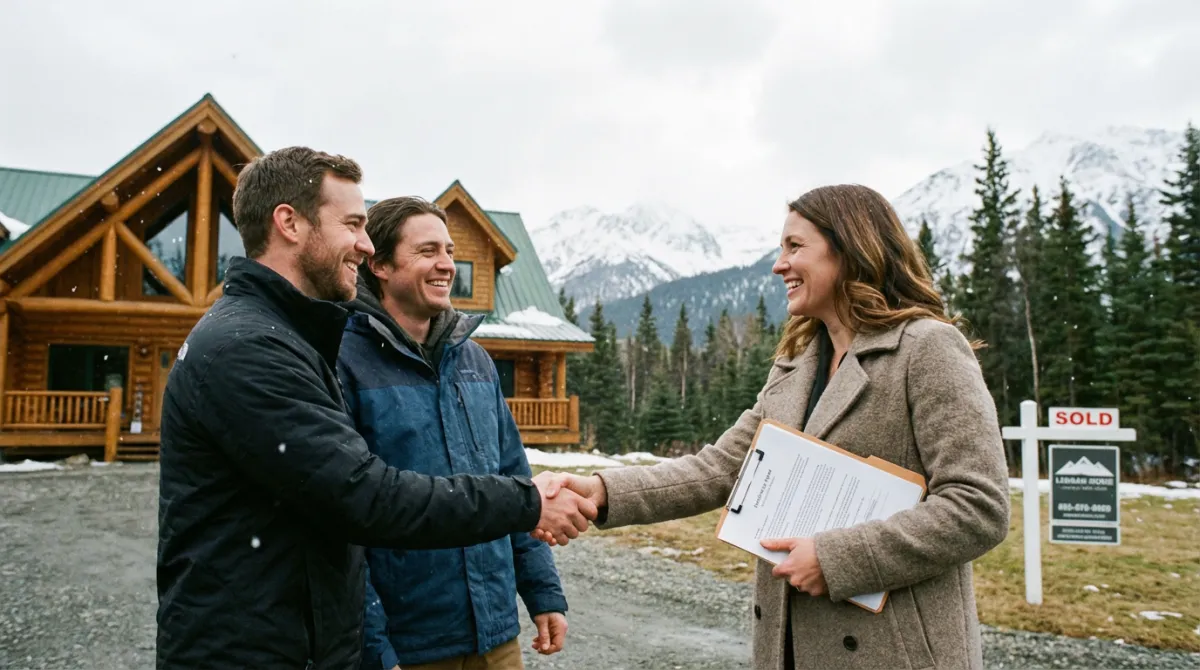
Finding the right real estate agent matters everywhere, but in Alaska it matters more. The Last Frontier throws curveballs that agents in the Lower 48 never deal with — permafrost under foundations, properties accessible only by boat or bush plane, septic systems in frozen ground, heating systems that can make or break your monthly budget, and borough regulations that vary wildly from one community to the next.
A good Alaska agent doesn’t just show you houses. They keep you from buying the wrong one.
Why Local Expertise Is Non-Negotiable
In most Lower 48 markets, a competent agent from the next county over can still do a solid job. In Alaska, the gap between a local expert and a generalist can cost you tens of thousands of dollars — or leave you stuck with a property that doesn’t work.
Here’s what Alaska-specific knowledge looks like in practice:
Rural Property Challenges
A significant portion of Alaska homes sit on rural parcels with:
- Private wells and septic systems instead of municipal water and sewer
- Unpaved or privately maintained roads that may not be plowed in winter
- Easement issues — some properties require crossing other people’s land to access
- Off-grid power — solar, wind, or generator-dependent in remote locations
- No natural gas service — heating oil, propane, or wood heat only
An experienced local agent knows which neighborhoods have these characteristics, what they mean for your daily life and budget, and how they affect resale value. They’ll also know which issues are dealbreakers for certain loan types — USDA and FHA loans, for example, have property condition requirements that some rural Alaska homes may not meet without repairs.
Winter Access and Seasonal Limitations
Some Alaska properties look completely different in summer versus winter. That charming driveway becomes a sheet of ice. That scenic creek floods the yard during breakup. That road the borough doesn’t maintain becomes impassable in February.
A local agent who has sold in the area through multiple seasons knows these patterns. They can tell you which properties have reliable year-round access and which ones become isolated when the snow flies. This isn’t information you’ll find on Zillow.
Permafrost and Foundation Issues
In Fairbanks and interior Alaska, permafrost is a genuine concern. When permanently frozen ground thaws — whether from climate shifts or heat from a building — the ground shifts and can damage foundations, crack walls, and destroy structural integrity.
An agent experienced in Fairbanks or interior markets will steer you toward properties with appropriate foundation designs (post-and-pad, for example) and away from homes with visible settling issues. They’ll also recommend inspectors who specialize in permafrost-related assessment.
Borough-Specific Rules
Alaska doesn’t have a uniform statewide building code. Regulations vary by borough, and some unincorporated areas have minimal regulation at all. Your agent needs to know:
- Which boroughs require building permits and inspections
- Local zoning restrictions on accessory dwelling units, outbuildings, and home-based businesses
- Flood zone designations that affect insurance requirements
- Title and survey quirks specific to Alaska land (state patents, federal land adjacency, native corporation lands)
Buyer’s Agent vs. Listing Agent
Understanding the difference protects your interests.
Buyer’s Agent
A buyer’s agent represents you — the person purchasing the home. Their job is to:
- Find properties that match your criteria
- Provide market comparisons to help you offer a fair price
- Negotiate on your behalf
- Identify potential problems with properties before you commit
- Guide you through inspections, appraisals, and closing
In Alaska, a buyer’s agent is especially valuable because they can flag Alaska-specific issues (heating systems, well/septic, access, permafrost) that you might not think to investigate.
Buyer’s agents are typically free to the buyer. Their commission is paid by the seller from the sale proceeds. There’s no good reason not to have one working on your side.
Listing Agent
The listing agent represents the seller. Their goal is to sell the property at the best price and terms for their client. If you contact the listing agent directly about a home they’ve listed, you’re essentially negotiating without representation.
Dual agency — where one agent represents both buyer and seller — is legal in Alaska but generally not in your best interest as a buyer. You want someone whose only loyalty is to you.
What to Look For in an Alaska Agent
Not all agents are created equal, and Alaska’s unique market makes certain qualities more important than others.
Local Market Knowledge
This is the big one. You want an agent who actively works in the specific city or borough where you’re buying. An Anchorage agent may not know the Kenai Peninsula market, and a Fairbanks agent may not understand Juneau’s inventory constraints.
Ask: “How many transactions have you closed in [city/area] in the past 12 months?” Active local agents typically close 10–30+ transactions per year in their primary market.
Experience with Your Loan Type
If you’re using a VA loan, USDA loan, or AHFC program, your agent needs to understand these programs. They should know:
- Which properties meet VA or USDA minimum property requirements
- How AHFC transactions differ from conventional closings
- Which appraisal requirements apply to your loan type
- How to navigate the longer timelines that government-backed loans sometimes require
Military buyers at JBER or Fort Wainwright: look for agents who specifically market to military families. They’ll be fluent in VA loans, BAH calculations, and PCS timelines. Our VA loans guide covers the lending side — your agent handles the property side.
Rural Property Experience
If you’re looking at properties outside city limits — acreage, waterfront, off-grid, or homes on well and septic — you need an agent who has handled these types of transactions. Rural Alaska real estate involves land surveys, easement verification, water quality testing, septic inspections, and sometimes environmental assessments that don’t come up in typical suburban transactions.
Communication Style
Alaska’s market can move slowly in winter and fast in summer. You want an agent who communicates proactively, responds within a reasonable timeframe, and keeps you updated without needing to chase them. Ask about their preferred communication method and response time expectations upfront.
Questions to Ask Before Hiring an Agent
Use these questions to evaluate candidates:
- How long have you been licensed in Alaska, and where do you primarily work?
- How many homes did you help buy or sell in this area last year?
- Have you worked with [VA/USDA/AHFC/FHA] loans before? How many?
- What are the biggest pitfalls buyers face in this market? (Their answer reveals local knowledge.)
- Can you recommend local home inspectors, lenders, and title companies? (Good agents have a network.)
- How do you handle properties with well/septic, easement issues, or limited winter access?
- What’s your availability during winter months? (Some part-time agents slow down significantly in the off-season.)
- Will I be working with you directly, or will I be handed off to an assistant or team member?
The answers to questions 4 and 6 are the most revealing. An agent who can rattle off specific local pitfalls — permafrost in North Pole, flooding near the Chena River in Fairbanks, tidal erosion in Homer — knows their market. An agent who gives vague, generic answers may not.
How Agents Work with Lenders
Your real estate agent and your lender are the two most important people in your homebuying process, and how well they work together directly affects your experience.
The Pre-Approval Connection
Most experienced agents won’t take you house hunting until you have a pre-approval letter. This isn’t gatekeeping — it’s practical. A pre-approval tells your agent your price range, your loan type, and any property restrictions tied to your financing. It also makes your offers stronger because sellers know you can actually close.
Get pre-approved first, then find your agent. Or, ask your agent for lender referrals — experienced agents know which lenders close reliably and which ones cause delays.
During the Transaction
Once you’re under contract, your agent and lender coordinate on:
- Appraisal scheduling and access — The lender orders the appraisal; the agent facilitates access to the property.
- Inspection contingency timelines — Your agent negotiates repair requests or price adjustments based on inspection findings; your lender needs to know if the purchase price changes.
- Document requests — Lenders frequently need additional documentation during underwriting. Your agent keeps the transaction moving while you handle lender requests.
- Closing coordination — Both parties align on the closing date, walk-through scheduling, and final document preparation.
A good agent-lender relationship means fewer surprises, faster problem-solving, and a smoother path to closing.
Where to Find Alaska Real Estate Agents
Referrals
The best agents come through personal referrals. Ask coworkers, neighbors, or friends who’ve recently bought in your target area. Military families: tap your unit’s relocation assistance program or ask other families at your installation who they used.
Online Platforms
- Realtor.com and Zillow have agent directories with reviews and transaction history.
- Alaska MLS — Your agent will have access to the Alaska Multiple Listing Service, which has the most comprehensive and up-to-date property listings in the state.
- Local brokerage websites — Firms like Prior & Prior, Berkshire Hathaway HomeServices Alaska Realty, RE/MAX, and Jack White Real Estate have strong presences across Alaska.
Alaska-Specific Resources
- Alaska Association of Realtors: alaskarealtors.com — Find licensed agents by area.
- Military relocation programs: JBER and Fort Wainwright both offer relocation assistance that includes vetted real estate agent referrals.
The Right Order of Operations
Here’s the sequence that sets you up for the smoothest homebuying experience:
- Get pre-approved. Know your budget and loan type before you start looking. This focuses your search and strengthens your offers.
- Choose your target area. Narrow down to 1–2 cities or neighborhoods. Research schools, commute times, and community fit.
- Interview 2–3 agents. Use the questions above. Pick the one with the best local knowledge and communication style.
- Start touring homes. With pre-approval in hand and a knowledgeable agent at your side, you’re in a position to move quickly on the right property.
- Make an offer with confidence. Your agent handles negotiations, your lender handles financing, and you focus on finding your Alaska home.
Step one: get pre-approved. Knowing your budget and loan options puts you in the strongest position to work with an agent and make competitive offers.
Need help finding an agent? We connect buyers with experienced Alaska real estate professionals who know the local market. Email contact@akhomehq.com or visit our contact page.
Frequently Asked Questions
How do I find a good real estate agent in Alaska?
Start by asking for referrals from friends, coworkers, or your lender. Look for agents with experience in your target area — an agent who specializes in Anchorage may not know the Mat-Su Valley market well. Interview at least two or three agents and ask about their recent transaction volume, average days on market, and familiarity with Alaska-specific issues like well water, septic systems, and rural properties.
Do I need a buyer’s agent when purchasing a home in Alaska?
While not legally required, a buyer’s agent provides representation, negotiation expertise, and knowledge of Alaska’s unique real estate conditions. The seller typically pays the buyer’s agent commission, so there is usually no direct cost to the buyer. Having an agent who understands Alaska’s inspection requirements, military relocation timelines, or rural property challenges is especially valuable.
What should I look for in an Alaska real estate agent?
Prioritize local market knowledge, responsiveness, and experience with your property type. If you are buying rural land, the agent should understand well and septic evaluations, road access issues, and zoning restrictions. For military buyers, look for agents with Military Relocation Professional certification who understand PCS timelines and VA loan requirements.
How much does a real estate agent cost in Alaska?
Buyer’s agents are typically compensated through the seller’s commission, which runs 5–6% of the sale price split between both agents. As a buyer, you generally do not pay your agent directly. If you are selling, budget for this commission as part of your closing costs and discuss the rate upfront with your listing agent.
Can I buy a home in Alaska without an agent?
You can, but it is not recommended — especially for out-of-state buyers or first-time purchasers. Alaska’s real estate market has unique considerations including rural property access, extreme weather disclosures, and borough-specific regulations. An experienced local agent helps you avoid costly mistakes and navigate the closing process efficiently.
Ready to Make Your Move?
Get pre-approved for your home loan first — it gives you a competitive edge. Need a listing agent? We can help.
Or call 9078411600 · or email contact@akhomehq.com
Disclaimer: This article is for informational purposes only and does not constitute financial, mortgage, legal, or tax advice. Interest rates, loan programs, eligibility requirements, and fees are subject to change without notice and may vary based on your individual circumstances. Alaska Home HQ is not a lender, broker, or financial institution. All loan applications are processed by Premier Mortgage (NMLS: 1168048). We may have a business relationship with Premier Mortgage and may receive compensation when you use their services through our links. Consult a licensed mortgage professional before making financial decisions. Terms of Service · Privacy Policy