Moving to Alaska: A Homebuyer's Guide
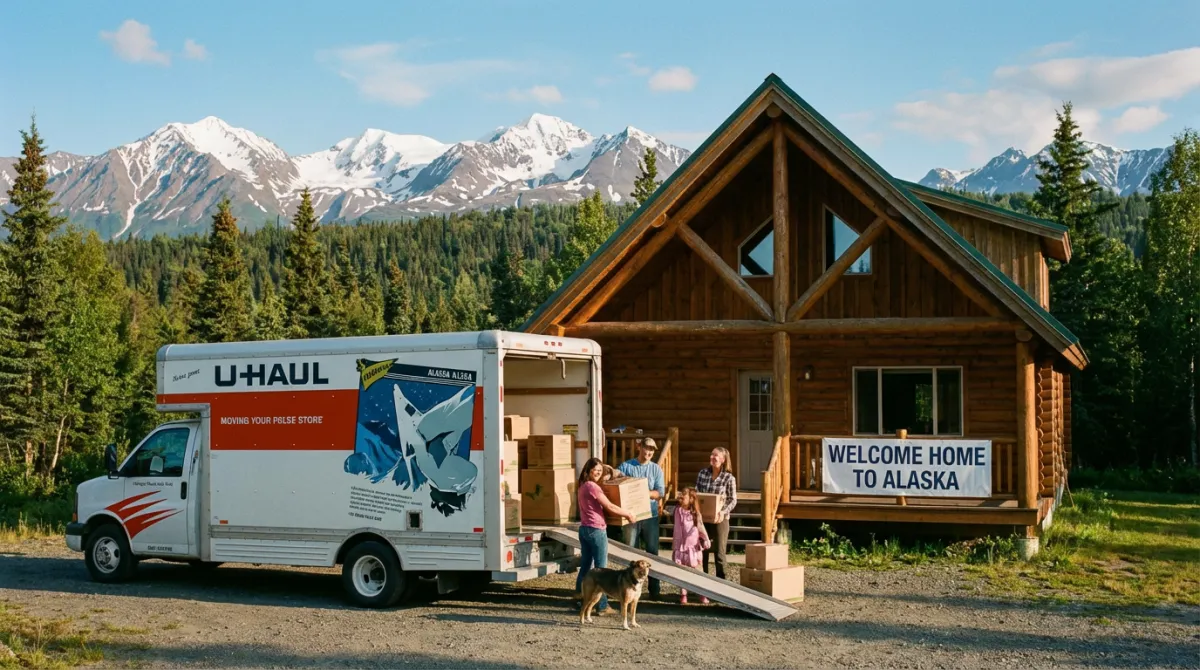
People move to Alaska for a hundred different reasons — a job on the Slope, a military PCS to JBER, a lifelong dream of living somewhere wild, or just the realization that they’re tired of traffic, crowds, and HOA drama. Whatever brought you here, buying a home in Alaska is a different experience than anywhere else in the country. This guide covers what you actually need to know before you make the leap.
No sugarcoating. No tourism brochure fluff. Just the reality of what it’s like to plant roots in the Last Frontier.
The Cost of Living Reality Check
Alaska’s cost of living runs higher than the national average, but it’s not as extreme as many people expect — especially if you pick the right community.
Where it costs more:
- Groceries: Expect to pay 25–40% more than the Lower 48 on food, depending on where you live. Anchorage is the most affordable; rural bush communities can be double or triple.
- Utilities: Heating is the big one. Winter heating bills can run $200–$500+ per month depending on home size, insulation, and fuel type. Natural gas (available in Anchorage and parts of the Mat-Su Valley) is cheapest. Fuel oil and propane cost significantly more.
- Shipping: Anything that needs to be shipped up — furniture, vehicles, building materials — costs more.
Where it costs less (or breaks even):
- No state income tax. Alaska is one of a handful of states with zero state income tax.
- No state sales tax. Though some cities and boroughs levy local sales taxes (typically 2–7%).
- The Permanent Fund Dividend (PFD). Every qualifying Alaska resident receives an annual dividend from the state’s oil wealth fund. The amount varies year to year — it’s been as high as $2,072 and as low as $992 in recent years. For a family of four, that’s potentially $4,000–$8,000 per year in your pocket.
- Housing in certain markets. While Anchorage and Juneau are pricey, cities like Fairbanks and Kenai offer median home prices well below the national average.
The net effect depends heavily on where you settle. A family in Anchorage with natural gas heat and PFD income may find their overall cost of living comparable to many mid-tier U.S. cities. A family in a remote bush community will feel the squeeze.
Climate and Darkness: What to Actually Expect
This is the thing most newcomers underestimate. It’s not the cold that gets you — it’s the darkness.
Winter
- Anchorage: December days get about 5.5 hours of daylight. Temperatures typically range from 10°F to 25°F. Cold but manageable.
- Fairbanks: Only about 3.7 hours of daylight at the solstice. Temperatures routinely hit -20°F to -40°F. This is the real deal.
- Juneau: Milder temperatures (25°F–35°F) but heavy rain and snow. Southeast Alaska is wet, not as cold.
Summer
Here’s where Alaska pays you back. Anchorage gets nearly 20 hours of daylight in June. Fairbanks effectively never gets dark. Summer in Alaska is unlike anything you’ve experienced — endless daylight, 60°F–75°F days, wildflowers, fishing, hiking. People who survive Alaska winters will tell you summer makes it all worth it.
The Adjustment
Seasonal Affective Disorder (SAD) is real and common. Many Alaskans use light therapy lamps, vitamin D supplements, and stay active during winter. The communities are built around winter activities — skiing, snowmachining, hockey, fat tire biking. If you hibernate inside from October to April, you’ll struggle. If you embrace winter, you’ll thrive.
Popular Cities for Newcomers
Not every Alaska city is a fit for every newcomer. Here’s an honest look at the most common landing spots.
Anchorage
Alaska’s largest city (roughly 290,000 people) and the state’s economic center. Anchorage has the most job opportunities, the best access to healthcare and schools, and the widest selection of housing. The airport is a major cargo hub with direct flights to the Lower 48. If you want Alaska life with urban conveniences, Anchorage is the default choice.
Median home price: ~$487,000
Wasilla and Palmer (Mat-Su Valley)
The fastest-growing area in Alaska. Wasilla and Palmer sit about 45 minutes north of Anchorage and offer larger lots, newer construction, and a more rural feel. Many families move here for the space and relative affordability — though new construction has pushed Wasilla’s median above Anchorage in some months. Many Mat-Su properties may qualify for USDA zero-down loans, which is a significant advantage for buyers.
Median home prices: Wasilla ~$540,000 | Palmer ~$400,000
Fairbanks
Alaska’s second-largest city and the gateway to the interior. Fairbanks is the most affordable urban market in the state, with a median around $310,000. The military presence at Fort Wainwright and Eielson Air Force Base is substantial. If you’re being stationed there, check out our VA loans guide — zero-down VA loans are heavily used in Fairbanks. Be aware: winters are brutal. -40°F is not unusual. Permafrost is a real consideration when buying property.
Median home price: ~$310,000
Juneau
Alaska’s capital is beautiful, tight-knit, and geographically isolated — no road connects Juneau to the rest of the state. You fly or take the ferry. The economy revolves around state government, tourism, and fishing. Housing inventory is limited, and prices reflect it. Juneau works best for people with a job secured in advance, especially in state government.
Median home price: ~$490,000
Kenai and Soldotna
On the Kenai Peninsula, about 150 miles south of Anchorage. These twin cities offer some of the most affordable housing in southcentral Alaska, a strong fishing and outdoor recreation culture, and a growing local economy. Many properties here are USDA-eligible. Natural gas from the Peninsula’s own gas fields keeps heating costs lower than many other areas.
Median home price: Kenai ~$295,000
The Job Market
Alaska’s economy runs on a few major pillars. Understanding them helps you pick where to live and how stable your income may be.
- Oil and gas: Still the backbone. Slope jobs pay well but often involve rotational schedules (two weeks on, two weeks off). Many oil workers live in Anchorage, Wasilla, or Kenai and commute to the North Slope.
- Military: Joint Base Elmendorf-Richardson (JBER) in Anchorage, Fort Wainwright and Eielson AFB near Fairbanks, and Coast Guard stations throughout Southeast Alaska. Military and defense-related jobs are a major employment sector.
- Healthcare: Alaska’s aging population and geographic spread create steady demand for healthcare workers. Anchorage, Fairbanks, and Juneau have the largest hospital systems.
- Fishing and seafood processing: Seasonal and year-round jobs, especially on the Kenai Peninsula, Kodiak, and in Bristol Bay.
- State and federal government: Juneau (state capital), Anchorage (federal agencies), and throughout the state.
- Tourism: Growing, but heavily seasonal (May–September).
- Remote work: The pandemic accelerated remote work in Alaska. Reliable internet is available in Anchorage, Fairbanks, Juneau, and the Mat-Su Valley. Rural areas vary widely.
If you’re moving without a job lined up, Anchorage offers the broadest opportunity. If you’re military, your assignment dictates your location — but you still get to choose whether to rent or buy.
Road System vs. Bush Communities
This distinction matters more in Alaska than in any other state.
Road system communities — Anchorage, Fairbanks, Wasilla, Palmer, Kenai, Soldotna, Homer, Seward, Valdez — are connected by highways. You can drive to stores, schools, and services. Goods arrive by truck. Building materials are available locally. These communities function similarly to small-to-mid-size cities in the Lower 48, just with more moose.
Bush communities — Bethel, Nome, Barrow (Utqiagvik), Kotzebue, Dillingham, and hundreds of villages — are accessible only by plane or boat. Everything from groceries to gasoline must be flown or barged in. Housing costs and availability are dramatically different. A gallon of milk can cost $10+. Construction costs can be double or triple road-system prices.
For most newcomers, the road system is where you’ll land. Bush Alaska is a fundamentally different lifestyle that typically draws people with specific job commitments (teachers, healthcare workers, public safety) or deep community ties.
Renting vs. Buying: Which Makes Sense?
This depends on how long you plan to stay and how quickly you can get oriented.
Renting first makes sense if:
- You’re new to Alaska and haven’t picked a long-term city yet
- You’re on a military assignment shorter than 3 years
- You need time to learn the market and neighborhoods
- You haven’t saved for a down payment yet
Buying makes sense if:
- You’re planning to stay 3+ years
- You’ve identified your target city and neighborhood
- You can get pre-approved for a mortgage
- You want to build equity instead of paying a landlord
Alaska’s rental market can be tight, especially in Anchorage and Juneau. Monthly rents for a 3-bedroom in Anchorage typically run $1,800–$2,500. In many cases, a mortgage payment on a comparable home is similar — which tips the math toward buying if you plan to stay.
For military families doing a 3–4 year assignment at JBER or Fort Wainwright, buying often makes financial sense. BAH (Basic Allowance for Housing) frequently covers a mortgage payment, and you build equity during your tour. VA loans require zero down payment and no PMI, making the entry barrier minimal. Our VA loans guide covers everything military buyers need to know.
Alaska-Specific Homebuying Considerations
A few things that catch newcomers off guard:
- Heating system type matters. Natural gas is cheapest. Fuel oil and propane are common outside Anchorage. Electric heat is the most expensive. Always ask about heating costs before buying.
- Well and septic are common. Outside Anchorage proper, many homes are on private wells and septic systems. Get them inspected.
- Permafrost (Fairbanks and interior). Foundation issues from thawing permafrost are real and expensive. Hire a local inspector.
- Seasonal access. Some rural properties have seasonal road access only. Understand how you’ll get to your home in January before you commit.
- AHFC programs. The Alaska Housing Finance Corporation offers below-market mortgage rates and down payment assistance that you won’t find in other states. Always check AHFC before going with a national lender.
- The PFD as savings. Your annual Permanent Fund Dividend can be directed toward a down payment fund. A couple saving PFDs for 2–3 years can accumulate a meaningful amount.
Making the Move
Once you’ve decided on a city and secured financing, here’s the practical side:
- Shipping your vehicle: The Alaska Marine Highway (ferry) runs from Bellingham, WA to Haines or Whittier. Driving the Alaska Highway from Dawson Creek, BC is roughly 1,500 miles of mostly two-lane road. Many people ship vehicles via barge to Anchorage.
- Household goods: If you’re military, the DoD handles your move. Civilians typically hire a moving company that ships goods via barge from Tacoma or Seattle to Anchorage. Budget 2–4 weeks for transit.
- Establishing residency: You’re considered an Alaska resident for PFD purposes after living in the state for a full calendar year. Apply for your PFD every year — it’s free money.
Ready to make Alaska home? The first step to buying is knowing what you can afford. Get pre-approved and start your home search with a clear budget.
Need help finding the right neighborhood or agent? Email contact@akhomehq.com or visit our contact page.
Frequently Asked Questions
How much does it cost to move to Alaska?
Moving costs vary widely based on your origin and the amount of belongings. A full-service move from the lower 48 to Anchorage typically costs $8,000 to $20,000 for a three-bedroom household. Shipping a vehicle via the Alaska Marine Highway or freight adds $1,500 to $4,000. Many newcomers reduce costs by selling bulky furniture and repurchasing after arrival.
What is the best city to move to in Alaska for jobs?
Anchorage has the broadest job market and the most housing options, making it the most common landing spot for newcomers. Fairbanks offers opportunities in military, education, and resource extraction. Juneau is the state capital with government jobs but has limited road access. Your best fit depends on your industry and lifestyle preferences.
Do you really get paid to live in Alaska?
Alaska residents receive an annual Permanent Fund Dividend from the state’s oil wealth savings. The amount varies each year but has historically ranged from $1,000 to $3,200 per person. You must establish residency and live in Alaska for a full calendar year before your first eligible PFD application.
Is the cost of living in Alaska higher than the rest of the U.S.?
Yes. Groceries, utilities, and housing all cost more in Alaska than the national average, with rural areas being significantly more expensive than Anchorage. However, Alaska has no state income tax and no state sales tax, which partially offsets the higher costs. Many employers also offer cost-of-living adjustments or housing allowances.
What should I know about Alaska winters before moving?
Alaska winters bring extreme cold, limited daylight, and heavy snowfall depending on your location. Anchorage averages around 75 inches of snow per year, while Fairbanks regularly sees temperatures below -40°F. A reliable vehicle with winter tires, a properly maintained heating system, and cold-weather gear are non-negotiable essentials.
Ready to Make Your Move?
Get pre-approved for your home loan first — it gives you a competitive edge. Need a listing agent? We can help.
Or call 9078411600 · or email contact@akhomehq.com
Disclaimer: This article is for informational purposes only and does not constitute financial, mortgage, legal, or tax advice. Interest rates, loan programs, eligibility requirements, and fees are subject to change without notice and may vary based on your individual circumstances. Alaska Home HQ is not a lender, broker, or financial institution. All loan applications are processed by Premier Mortgage (NMLS: 1168048). We may have a business relationship with Premier Mortgage and may receive compensation when you use their services through our links. Consult a licensed mortgage professional before making financial decisions. Terms of Service · Privacy Policy