Tiny House in Alaska: Zoning and Financing Guide
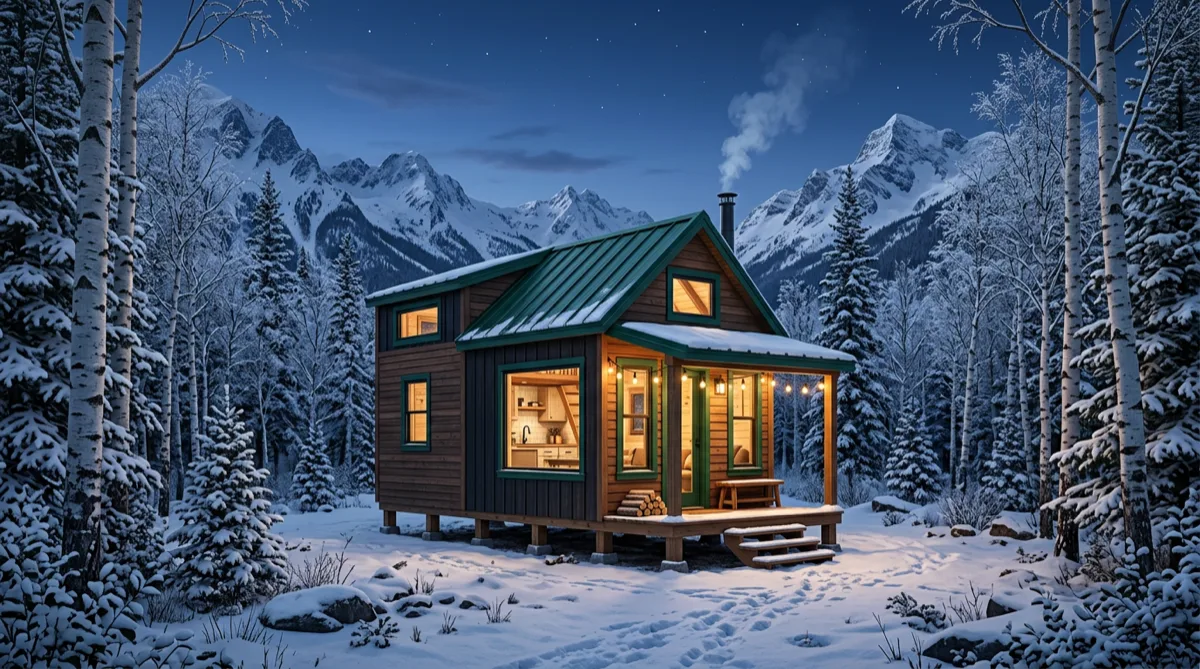
The tiny house movement has arrived in Alaska — but the state’s diverse patchwork of local zoning codes and its extreme climate create unique challenges for aspiring tiny home owners. Whether you envision a 400-square-foot cabin in the Mat-Su Valley, an off-grid tiny home near Palmer, or a compact ADU behind your main Anchorage property, understanding the legal and financial landscape is essential before you invest.
Defining “Tiny House” in Alaska
The term “tiny house” generally refers to dwellings under 400 square feet. In Alaska, tiny homes fall into several categories with different regulatory treatment:
- Tiny house on a foundation: A permanent structure on a lot. Treated as a single-family dwelling and subject to minimum square footage requirements
- Tiny house on wheels (THOW): A wheeled structure treated more like an RV in most Alaska jurisdictions. Cannot be a permanent residence under most borough codes
- Accessory Dwelling Unit (ADU): A secondary living unit on a property that has a primary residence — guest houses, in-law suites, detached units
- Remote cabin: A structure on a remote parcel, often outside organized borough jurisdiction
Each category faces different rules, and the rules vary significantly by location.
Zoning Regulations by Alaska Region
Anchorage Bowl
The Municipality of Anchorage allows ADUs and secondary suites on properties with a primary residence. The minimum size for a habitable dwelling in Anchorage is generally 220 square feet for studio units, with ceiling height minimums. Tiny homes on foundations are permitted if they meet the building code — which is Alaska’s adaptation of the International Building Code (IBC) rather than the International Residential Code (IRC), meaning some typical tiny house construction methods require special approval.
Tiny houses on wheels are not recognized as permanent dwellings in Anchorage and cannot be used as primary residences on private lots (as opposed to RV parks).
Mat-Su Borough
The Matanuska-Susitna Borough has more flexibility than Anchorage but still requires minimum standards for habitable structures. Unincorporated Mat-Su areas follow the borough’s Title 17 zoning regulations, which allow structures as small as 150–200 square feet in rural residential zones.
The Borough does not have a single tiny home ordinance — some subdivisions have CC&Rs (covenants, conditions, and restrictions) that impose minimum square footage requirements regardless of what the borough allows. Always check CC&Rs before purchasing a lot for a tiny home build.
Fairbanks North Star Borough
The Fairbanks Borough is one of the more permissive jurisdictions for alternative housing. Many rural residential zones allow structures with no minimum square footage, provided they meet basic habitability standards. Extreme cold adds practical constraints — insulation, heating, and foundation requirements for permafrost areas are rigorous regardless of dwelling size.
Rural Areas (Outside Organized Boroughs)
Approximately 58% of Alaska land is outside organized borough boundaries, in the Unorganized Borough. Here, there are essentially no zoning restrictions — only state building code requirements apply, and code enforcement is minimal. This makes rural Alaska one of the most tiny-house-friendly environments in the country for off-grid applications.
Foundation Considerations for Alaska Tiny Homes
Alaska’s climate creates foundation challenges that tiny homes on foundations must address:
Frost heave: The ground freezes and expands in winter, then thaws in spring. Foundations must extend below the frost line (4–5 feet in Anchorage; 8–10 feet in Fairbanks) or use an engineered approach to resist frost heave.
Permafrost: In areas with permafrost — including much of Interior and Northern Alaska — foundations must either avoid thawing the permafrost (using thermosyphons or ventilated air gaps) or rest above the active layer. Permafrost engineering adds cost to even small structures.
Pile foundations: Helical or driven piles are common for small structures in rural Alaska, allowing construction in areas where conventional foundations are impractical. They are durable, relatively fast to install, and can support tiny home structures effectively.
Conventional slab-on-grade and basement foundations work in Southcentral Alaska (Anchorage, Mat-Su) but are not appropriate for Interior or North Slope locations.
Financing a Tiny House in Alaska
This is where many tiny home dreams encounter their biggest obstacle. Most traditional mortgage products have minimum loan amounts or square footage requirements that exclude tiny homes.
Conventional mortgages: Fannie Mae and Freddie Mac require a minimum 400 square foot living area for a home to qualify as real property. Tiny homes under 400 square feet may not qualify.
FHA loans: FHA has a minimum 400 square foot requirement for the primary living area. This creates a challenging threshold for tiny homes, though some lenders apply it flexibly depending on layout.
VA loans: VA does not have an explicit minimum square footage requirement, but properties must meet VA’s Minimum Property Requirements, including adequate living space. The practical threshold in many lenders’ overlays is 400+ square feet.
Portfolio loans: Community banks and credit unions that hold loans on their own books (rather than selling to agencies) may finance smaller-than-standard dwellings. Terms are less standardized and rates are typically higher.
Construction loans: A construction-to-permanent loan through a portfolio lender is often the most viable path for building a tiny home on land you own.
Personal loans and owner financing: For very small purchases (under $100,000), personal loans or seller financing may be practical alternatives to a mortgage.
Cash purchase: Many tiny home buyers in Alaska purchase their structure outright. A 300-square-foot pre-built tiny home can range from $40,000 to $120,000 depending on finishes and build quality.
For remote Alaska land with a tiny structure, owner financing from private sellers is common — see our Alaska land with owner financing guide.
ADU as a Practical Tiny Home Strategy
One of the most financially viable paths to tiny home living in Alaska is building an Accessory Dwelling Unit on a lot that already has or will have a primary residence. Benefits:
- ADUs are treated as real property additions and can be financed through renovation loans or construction-to-permanent products
- The primary residence serves as collateral, making lender approval easier
- Many Alaska boroughs are actively loosening ADU regulations to address housing shortages
- An ADU can generate rental income to offset your mortgage payment
In Anchorage, ADUs are permitted in most single-family residential zones, with design standards that allow for small but functional living units. In the Mat-Su, ADU-friendly rural residential zones give considerable design flexibility.
What to Research Before Building a Tiny Home in Alaska
Before purchasing land or contracting a builder:
- Verify the zoning designation: Call the borough planning department and confirm whether tiny homes (with the specific square footage you are planning) are permitted on the parcel.
- Check CC&Rs: Privately governed subdivisions may have minimum square footage requirements that override borough zoning.
- Confirm utility access: Off-grid tiny homes need a plan for water (well), waste (composting toilet or septic), and power (solar, generator, or grid connection).
- Consult a foundation engineer: Especially important in permafrost-prone areas or on remote parcels with unknown soil conditions.
- Research financing early: Talk to a lender before designing your tiny home — knowing the square footage minimums for your preferred loan product may influence your design choices.
Looking for help exploring loan options for alternative Alaska properties? Premier Mortgage (NMLS# 1168048) can discuss what programs are available for your specific situation.
Frequently Asked Questions
What is the minimum square footage for a home in Alaska?
Minimum square footage varies by jurisdiction. Anchorage requires approximately 220 square feet for studio units. The Mat-Su Borough allows as small as 150–200 square feet in some rural residential zones. Much of rural Alaska (the Unorganized Borough) has no minimum. Always verify with the local planning department before purchasing land.
Can I put a tiny house on wheels on private land in Alaska?
In most organized Alaska boroughs, tiny houses on wheels are classified as recreational vehicles and cannot be used as permanent primary residences on private residential land. They may be allowed in designated RV parks. In the Unorganized Borough (rural Alaska), there are effectively no zoning restrictions, making THOW living more feasible.
Are FHA loans available for tiny homes in Alaska?
FHA has a minimum property standard that generally requires the primary living area to be at least 400 square feet. Tiny homes under this threshold do not qualify for standard FHA financing. Some buyers build to exactly 400+ square feet to access FHA — a design decision that requires planning your layout carefully.
What foundation is best for a tiny home in Alaska?
The best foundation depends on your location. In Southcentral Alaska (Anchorage, Mat-Su), standard concrete perimeter foundations or slab-on-grade work well. In Interior Alaska with permafrost, helical or driven piles that don’t disturb the permafrost are common. Consult a licensed Alaska structural engineer before selecting a foundation type for your specific parcel.
How do I finance an off-grid tiny home in Alaska?
Off-grid tiny homes in remote Alaska are most commonly purchased with cash, owner financing, or portfolio loans from community lenders. Standard government-backed mortgages have property requirements (road access, utilities, minimum size) that many off-grid properties do not meet. If the property is remote, confirming insurability and lender acceptance early in the process saves significant time.
Ready to Make Your Move?
Get pre-approved for your home loan first — it gives you a competitive edge. Need a listing agent? We can help.
Or call 9078411600 · or email contact@akhomehq.com
Disclaimer: This article is for informational purposes only and does not constitute financial, mortgage, legal, or tax advice. Interest rates, loan programs, eligibility requirements, and fees are subject to change without notice and may vary based on your individual circumstances. Alaska Home HQ is not a lender, broker, or financial institution. All loan applications are processed by Premier Mortgage (NMLS: 1168048). We may have a business relationship with Premier Mortgage and may receive compensation when you use their services through our links. Consult a licensed mortgage professional before making financial decisions. Terms of Service · Privacy Policy