Alaska Construction Loan Draw Schedule Guide
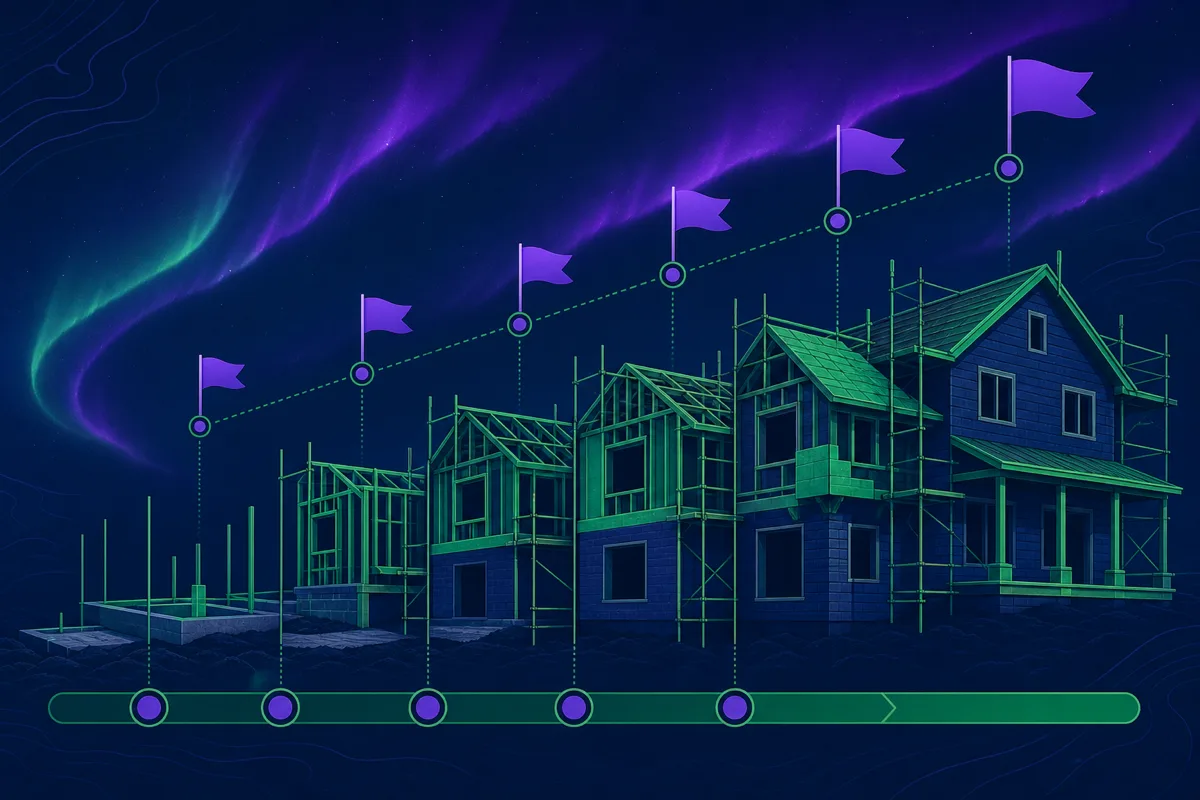
Unlike a standard mortgage that disburses the full loan amount at closing, a construction loan releases funds in stages tied to completed work — called a draw schedule. Understanding how draws work is essential for Alaska builders and buyers navigating a short construction season and remote-area logistics.
Why Draws Exist Instead of a Lump Sum
Lenders release construction funds incrementally to manage risk on both sides. The lender confirms work is actually progressing before releasing more money, and the borrower avoids paying interest on funds that haven’t been used yet, since interest during construction typically accrues only on the amount actually drawn, not the full approved loan.
The Typical Draw Schedule Structure
While exact percentages vary by lender and project, a common Alaska construction draw schedule looks something like:
- Site preparation and foundation — roughly 10-15% of the loan
- Framing and roofing — roughly 20-25%
- Rough mechanical (plumbing, electrical, HVAC) — roughly 15-20%
- Insulation and drywall — roughly 10-15%
- Interior finishes (flooring, cabinets, trim) — roughly 15-20%
- Final completion and certificate of occupancy — remaining balance, roughly 10-15%
Some lenders use more granular schedules with 8-10 draw stages, especially for larger custom builds; others use simpler 4-5 stage schedules for standard builder-grade construction.
How the Inspection Process Works
Before each draw is released, the lender sends an inspector (or relies on a third-party inspection service) to confirm the corresponding phase of work is actually complete. In Alaska, this creates unique logistical considerations:
Remote property access matters. If your build site is off the main road system or requires significant travel time, inspection scheduling can take longer than in urban areas — build extra time into your project timeline expectations, especially outside peak summer months.
Short building season compresses everything. Alaska’s construction window is effectively May through September for most exterior work, meaning draw requests often bunch together as contractors race to complete framing and exterior work before winter weather halts progress. Talk to your lender about how they handle draw timing during this compressed schedule.
Weather delays are common and expected. Alaska lenders experienced in construction lending generally build in reasonable flexibility for weather-related delays, but confirm this explicitly rather than assuming — some construction loan agreements have strict timeline requirements that can trigger penalties or default provisions if delays aren’t communicated and documented.
Interest-Only Payments During Construction
Most construction loans require interest-only payments during the build phase, calculated only on the amount actually drawn — not the full approved loan amount. This keeps your carrying costs manageable while the home isn’t yet livable, but be prepared for your payment to increase with each successive draw as more of the loan balance becomes active.
Converting to Permanent Financing
Most Alaska construction loans are “construction-to-permanent” structures, meaning the loan automatically converts to a standard long-term mortgage once construction is complete and a certificate of occupancy is issued — without requiring a second closing or additional closing costs. Confirm this structure with your lender, since some construction-only loans require a completely separate refinance into permanent financing, which means a second round of closing costs and underwriting.
What Contractors Need to Know About Draws
If you’re working with a builder, make sure their payment expectations align with the draw schedule — a contractor expecting payment faster than the draw schedule releases funds can create serious cash flow friction mid-project. Review the draw schedule together with your contractor before signing a construction contract, not after breaking ground.
Documentation Needed for Each Draw
Typical draw requests require:
- A completed draw request form specifying the amount and phase
- Photos or an inspection report confirming the corresponding work is done
- Lien waivers from subcontractors and suppliers for work already paid, protecting against mechanic’s liens later
- Sometimes a title update confirming no new liens have been recorded against the property
Keeping this documentation organized throughout the build prevents delays at each draw request.
Combining With AHFC Rural Construction Programs
For remote Alaska builds, AHFC offers construction financing options that can work alongside standard draw structures — see our guide on Alaska new construction loan process for how these programs compare to conventional construction-to-permanent loans.
Ready to explore construction financing for your Alaska build? Get a free home loan quote through our trusted partner, Premier Mortgage (NMLS# 1168048).
Frequently Asked Questions
How many draws are typical in an Alaska construction loan?
Most Alaska construction loans use 4-10 draw stages depending on the lender and project complexity, tied to specific completed phases like foundation, framing, mechanical rough-in, and final completion.
Do I pay interest on the full construction loan amount immediately?
No, typically interest is charged only on the amount actually drawn at each stage, not the full approved loan amount. Your payment increases as more of the loan balance becomes active through successive draws.
How does Alaska’s short building season affect the draw schedule?
The compressed May-through-September exterior work window often causes draw requests to bunch together as contractors race to finish framing and exterior work before winter. Discuss timeline flexibility for weather delays with your lender before construction begins.
Does my construction loan automatically become a regular mortgage when the home is finished?
Many Alaska construction loans are structured as “construction-to-permanent,” automatically converting to standard long-term financing once a certificate of occupancy is issued, without a second closing. Confirm this structure with your specific lender, since some loans require a separate refinance instead.
What documentation do I need for each construction draw?
Typical requirements include a draw request form, photos or an inspection report confirming the completed phase, lien waivers from subcontractors for paid work, and sometimes an updated title search confirming no new liens have been recorded.
Ready to Take the Next Step?
Get a free home loan quote today through our trusted partner.
Or call 9078411600
Disclaimer: This article is for informational purposes only and does not constitute financial, mortgage, legal, or tax advice. Interest rates, loan programs, eligibility requirements, and fees are subject to change without notice and may vary based on your individual circumstances. Alaska Home HQ is not a lender, broker, or financial institution. All loan applications are processed by Premier Mortgage (NMLS: 1168048). We may have a business relationship with Premier Mortgage and may receive compensation when you use their services through our links. Consult a licensed mortgage professional before making financial decisions. Terms of Service · Privacy Policy