Alaska Land and Utilities: Financing Off-Grid Property
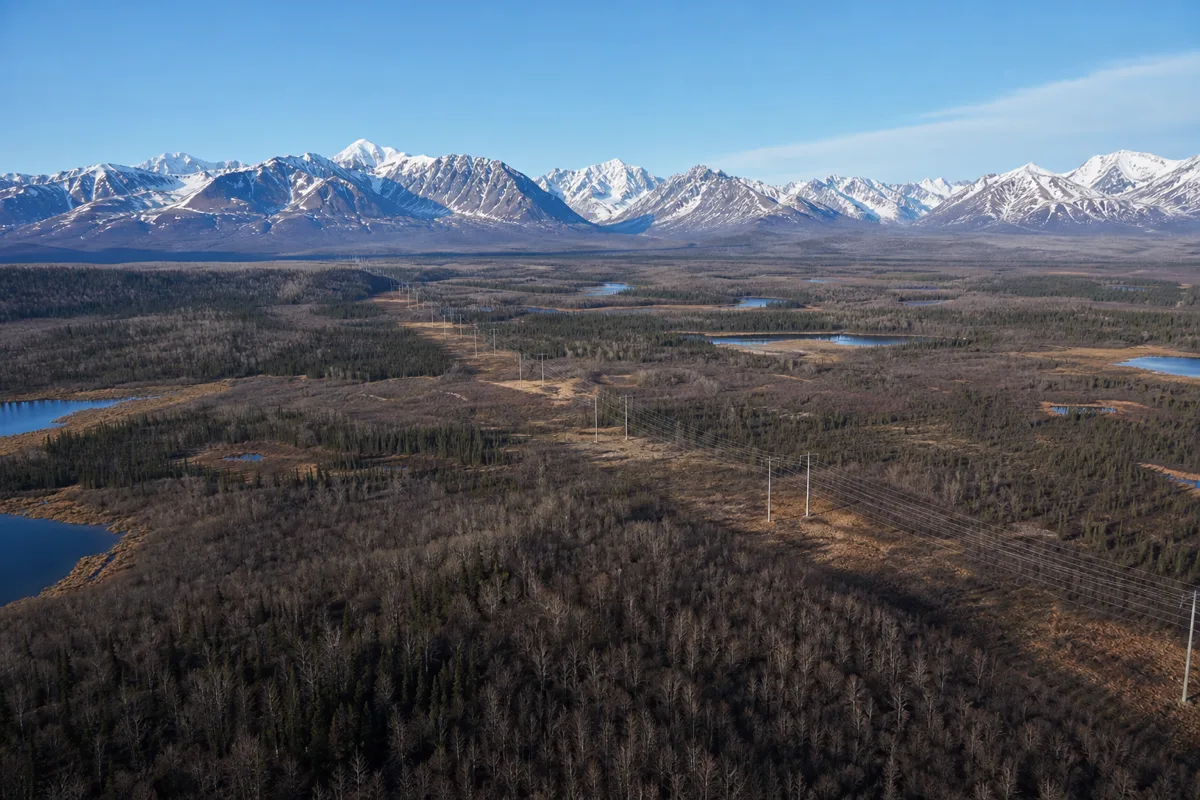
Alaska land purchases require different financing than standard home purchases. Most Alaska land is sold without utilities — no municipal water, no sewer connection, no natural gas. Understanding the cost of establishing utilities, the loan products available for raw land, and how lenders evaluate parcels without infrastructure is essential before committing to land ownership in Alaska.
Types of Alaska Land Parcels and Their Utility Status
Municipal/Borough lots (Anchorage, Wasilla, Fairbanks): Lots within city or borough service areas typically have access to municipal water and sewer connections. The connection cost ranges from $8,000–$25,000+ depending on the municipality and distance to the main line. These parcels are the easiest to finance because appraisers can use comparable improved lots.
Subdivision lots (private road systems): Many Mat-Su Valley and Kenai Peninsula subdivisions have developed road systems but require individual well and septic for each parcel. Common in communities like Houston, Big Lake, Nikiski, and Fritz Creek. These parcels are well within standard land loan parameters.
Remote parcels (off-road system): Land accessible only by ATV trail, floatplane, or boat. Standard lenders typically will not finance these parcels at all — they fall outside conventional and FHA appraisal guidelines. Cash purchase or seller financing are the primary options.
State land purchases: Alaska’s DNR regularly auctions state land parcels through competitive bidding and over-the-counter sales. These are often raw parcels requiring full utility development. Standard financing is rarely available at time of purchase — most DNR land buyers pay cash then finance construction after infrastructure is installed.
Land Loan Products for Alaska
Raw Land Loans
Traditional lenders (banks, credit unions) offer raw land loans as portfolio products — meaning they are held on the lender’s books, not sold to secondary market buyers. These loans carry significantly different terms than home purchase loans:
- Down payment: 25%–50% required (some rural parcels require 50% down)
- Interest rates: Typically prime + 1%–3% above standard mortgage rates
- Loan terms: Often 5–15 year terms rather than 30 years
- Use restrictions: Some lenders require a clear development plan or building timeline
Alaska land loan lenders include First National Bank Alaska, Northrim Bank, and Alaska USA FCU. Not all branches offer rural land loans — ask specifically for the commercial/construction lending department.
Lot Loans (Improved Lots)
Lots with existing road access and utility stubs available (even if not yet connected to the parcel) are considered “improved lots” — easier to finance with better terms:
- Down payment: 20%–30%
- Rates: More competitive than raw land
- Availability: More lenders participate in improved lot loans
USDA Section 502 Direct Loan (Land + Construction)
USDA’s Section 502 Direct Loan program — specifically the single-family housing program — may allow qualified low-to-moderate income buyers to finance land plus construction in rural areas in a single loan. This is distinct from the more common USDA Guaranteed loan program. Section 502 Direct requires very low to moderate income and is administered directly by USDA Rural Development, not through private lenders. Contact the USDA Alaska Rural Development office in Palmer for eligibility and availability.
Seller Financing
Many Alaska land sellers, particularly for rural parcels that lenders won’t finance conventionally, are open to seller financing — also called a land contract, contract for deed, or owner-carried note. Terms are negotiated directly:
- Down payment typically 10%–25%
- Interest rate negotiable (commonly 6%–9%)
- Term often 3–10 years with a balloon payment
- Buyer typically holds equitable title; seller retains legal title until payoff
Seller financing is particularly common for remote Alaska parcels and for buyers who plan to build within a few years and then refinance into a permanent construction-to-perm loan.
Cost of Installing Utilities on Alaska Land
Before purchasing unimproved Alaska land, budget the following infrastructure costs:
Well Drilling
Drilling a water well in Alaska costs $8,000–$30,000+ depending on depth to aquifer, soil conditions, and access. Mat-Su Valley wells typically reach water at 80–200 feet depth. Remote or rocky terrain can require drilling to 400+ feet. Always commission a well feasibility study from a licensed Alaska driller before purchasing a parcel if well water is your intended source.
The Alaska Department of Environmental Conservation (DEC) maintains a well database searchable by address — useful for evaluating typical well depths in a target area.
Septic System Installation
Installing a septic system in Alaska ranges from $12,000–$40,000+ depending on soil percolation rates, system type required, and site access. In Mat-Su Valley areas with high water tables or poor drainage, advanced treatment systems (ATUs) are required by DEC — these cost $25,000–$40,000+ compared to $12,000–$18,000 for standard gravity systems.
Require a soil perc test or evaluate existing soil reports before purchasing a parcel for which you plan a standard septic system.
Off-Grid Power Options
Outside utility-served areas, power options include:
Solar + Battery: A cabin-sized system (1,500–3,000 watts of panels + battery bank) costs $20,000–$45,000 installed. Alaska’s long summer days allow significant solar production, but winter darkness requires either oversized battery capacity, a propane/diesel generator backup, or grid connectivity.
Generator-primary systems: Many Alaska rural properties run on a quality diesel or propane generator as primary power. Budget $8,000–$15,000 for an appropriately sized whole-home generator, plus fuel costs and regular maintenance.
Utility cooperative extension: In areas served by cooperatives (Chugach Electric, Matanuska Electric, etc.), a utility extension to a new parcel may cost $5,000–$50,000+ depending on distance to the nearest transformer, terrain, and whether underground or overhead installation is required. Get a utility extension cost estimate before purchasing.
Road Access
If a parcel does not have a maintained road to the boundary, budget for access road construction. In Alaska’s terrain, road construction costs range from $15,000–$100,000+ per mile depending on terrain, drainage requirements, and whether permits are needed for wetland crossings.
Total Infrastructure Cost Example
For a raw 5-acre parcel in the Mat-Su Valley:
| Item | Estimated Cost |
|---|---|
| Well (150-foot depth) | $12,000 |
| Conventional septic system | $15,000 |
| Power — generator + initial solar | $25,000 |
| Driveway (0.25 mile) | $8,000 |
| Total estimated infrastructure | $60,000 |
This is before any structure is built. Include this in your total project budget when evaluating the economics of raw land purchase vs. buying an improved property.
Financing Land Plus Construction
Once land is purchased and infrastructure is installed, or if purchasing a lot in a developed subdivision, a construction-to-permanent loan can finance the building of a home. See our Alaska construction loan guide for details on how these loans work, draw schedules, and qualification requirements.
For buyers in the Mat-Su Valley considering land purchase and eventual home construction, the Mat-Su Valley home loans guide provides region-specific context.
Questions about financing land in Alaska? Premier Mortgage (NMLS# 1168048) can help evaluate your situation and identify whether a lot loan, construction loan, or other product fits your goals.
Frequently Asked Questions
Can I get a mortgage on raw land in Alaska?
Raw land loans are available from Alaska portfolio lenders (community banks, credit unions) but require 25%–50% down payment, carry higher interest rates than home purchase loans, and are not available from all lenders. Standard FHA, VA, and conventional programs do not finance raw, unimproved land without an existing structure or under-construction home.
How much does a well cost in Alaska?
Alaska well drilling costs range from $8,000 to $30,000+ depending on depth to aquifer, soil and rock conditions, site access, and location. Mat-Su Valley wells commonly reach water at 80–200 feet. Rocky terrain and remote sites can require drilling to 400+ feet at substantially higher cost. Always consult with a licensed Alaska driller about site-specific estimates before purchasing undeveloped land.
Can I finance land and construction in a single loan in Alaska?
Yes — construction-to-permanent loans allow you to finance land (if not already owned), construction costs, and the permanent mortgage in a single loan that converts to a standard 30-year mortgage after construction is complete. Requirements include approved contractor plans, cost estimates, and qualifying income. See our Alaska construction loan guide for details.
Is seller financing common for Alaska land?
Yes. Particularly for remote parcels that standard lenders won’t finance, seller financing (land contract or contract for deed) is a common transaction structure. Sellers are often open to it for the passive income it generates. Terms are fully negotiated — typically 10%–25% down, 6%–9% interest rate, and a 5–10 year term with a balloon payment requiring refinancing or payoff.
What permits do I need to develop land in Alaska?
Development requirements vary by borough and location. In the Matanuska-Susitna Borough, you typically need a site plan, well and septic permits (from DEC), a building permit (from the borough), and potentially a wetland fill/crossing permit from the Army Corps of Engineers if wetlands are present. Check with the relevant borough planning and building department before purchasing to understand permitting requirements for the specific parcel.
Ready to Take the Next Step?
Get a free home loan quote today through our trusted partner.
Or call 9078411600
Disclaimer: This article is for informational purposes only and does not constitute financial, mortgage, legal, or tax advice. Interest rates, loan programs, eligibility requirements, and fees are subject to change without notice and may vary based on your individual circumstances. Alaska Home HQ is not a lender, broker, or financial institution. All loan applications are processed by Premier Mortgage (NMLS: 1168048). We may have a business relationship with Premier Mortgage and may receive compensation when you use their services through our links. Consult a licensed mortgage professional before making financial decisions. Terms of Service · Privacy Policy