Alaska Missing Certificate of Occupancy Mortgage
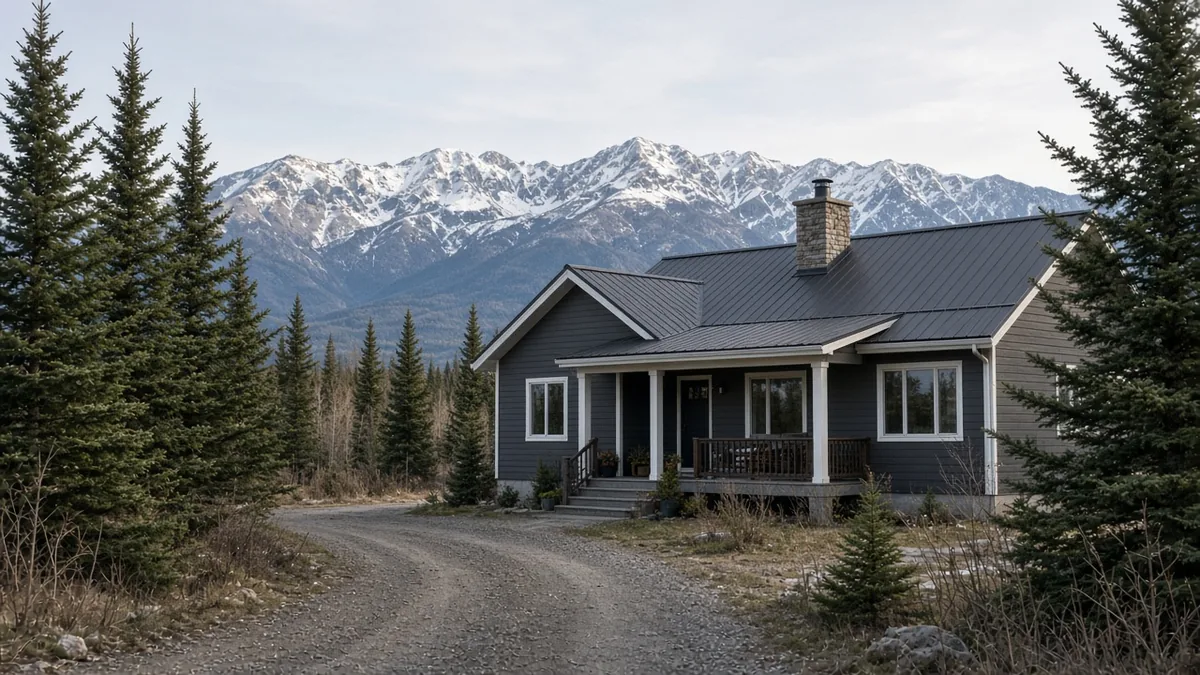
An Alaska missing certificate of occupancy mortgage is a loan file on a house that looks finished, and may already have people living in it, where the city or borough that issues certificates did not issue one for that building. The permit may have been opened and then left short of the final inspections. Or the finals were done in some trades and the certificate was not picked up. The house is not a construction project waiting on the next draw. The construction-loan guide is the draw schedule for a house still being built. The house is also not a permitted home with a later room that did not have its own permit. The unpermitted-addition guide is that case. This page is the missing certificate on the finished dwelling itself.
Alaska Home HQ is educational. It is not a lender and it is not a building department. Rates vary. Subject to credit approval.
What an Alaska missing certificate of occupancy mortgage is missing
A certificate of occupancy is the building official’s statement that the building may be occupied. It comes after the inspections that jurisdiction requires, not after the drywall looks done. Which office issues it depends on where the house stands. Alaska does not run one statewide residential building permit. Anchorage, the City of Fairbanks, and a borough that has not adopted the same code will not hand you the same piece of paper.
In the Municipality of Anchorage, Development Services publishes Handout AG.15 on certificates of occupancy. The handout puts the job of calling for inspections, clearing comments, paying fees, and picking up the certificate on the owner, the builder, or the general contractor. For a new single-family or duplex residence, the handout asks for a structural final that says the work is okay for a structural certificate, an electrical final, a mechanical or plumbing final, two certified as-builts signed by a registered land surveyor, zoning finals where the plan review required them, and, when the house has an on-site well or wastewater system, an approved on-site report. That on-site report is Anchorage’s own checklist item for its certificate. It is not a federal housing-agency distance rule, and it is not a restatement of a state environmental setback. The certificate is missing until those pieces are in and the office issues the paper.
The City of Fairbanks Building Department’s FAQ says a certificate of occupancy cannot be issued until a final inspection has been performed and approved. The city’s inspection list says a final inspection and a certificate of occupancy or a certificate of completion is required prior to occupancy, and that the person who did the work calls for the inspection. That is the city limits of Fairbanks. The Fairbanks North Star Borough issues zoning permits across a wider area. A zoning permit is not the city’s certificate of occupancy. A house in the borough, outside the city, can be legal under borough zoning and still have no City of Fairbanks certificate, because the city was not the building department for that lot.
The Matanuska-Susitna Borough’s building and renovating page states that residential properties that are triplexes or smaller are exempt from the fire and life-safety plan review it describes, and that the exemption ends if a business is established in the structure. The borough’s permit steps say a certificate of occupancy is issued after a final inspection on work that went through that review. A small house that was exempt does not enter that path. No certificate exists because the office does not issue one.
The finished house, not the draw and not the addition
A construction loan releases money in draws as inspections pass. The certificate, if the jurisdiction issues one, often arrives at the end, when the house is complete and the loan converts or pays off the construction financing. If the draws are still open and the kitchen is not in, you are on the construction-loan page. The missing-certificate case assumes the house is built. The lender’s question is whether a finished building was cleared for occupancy by the government that requires the clearance.
An unpermitted addition assumes a primary building that was allowed, plus later work that was not. A sunroom, a garage apartment, or a second story built without a permit is that file. The appraiser may have to exclude the space or the underwriter may condition a permit and a final. The original house can still have its certificate. If the whole house did not receive a certificate in a city that requires one, the condition is about the house, not about a wing.
People live in houses in both conditions for years. Occupancy and a clean loan file are not the same fact. Anchorage’s process and Fairbanks’ inspection note both tie legal occupancy to the certificate or the final approval. A seller’s tenure is not the certificate. The building department’s file is the record: open permit, expired permit, finals approved, certificate issued, or no permit on record at all.
A conditional certificate, where the city issues one, is still that city’s document. It may limit what is approved. The underwriter reads what the city allowed. The paper has to be in the file before that decision is real.
What the loan file does with the gap
Agency appraisals describe whether the property is complete and whether the use appears legal. An appraiser is not the building official. A note that a certificate could not be confirmed becomes a condition. The usual ways through it are narrow. Get the certificate before closing, by finishing the inspections the city still requires. Or get a letter from the building official that the house is approved for occupancy, or that this jurisdiction does not issue a certificate for this kind of residence. Or find that the property does not fit the program while the certificate is outstanding. Which path is open depends on the city file and on the lender’s guidelines. A borrower cannot choose the letter path in Anchorage if Anchorage’s handout says the certificate is how that city closes out a new house.
Work required to pass a final is cash, or a repair escrow the lender and the program allow. It is not a reason to reopen a construction-draw loan on a house that was finished years ago. Buyers who need the seller to finish the work put that in the contract with a deadline that matches the inspection calendar. Winter in Anchorage slows exterior finals. A closing date set without the inspector’s lead time is how the certificate misses funding.
The Permanent Fund Dividend can be saved toward closing cash or toward the repairs a final inspection exposes. It does not cause the building department to issue a certificate. Only the inspections and the paperwork on that city’s list do that. The loan still needs the insurance the lender requires. A policy does not replace the certificate, and the certificate does not replace the policy.
If the house is in a borough that exempts small residences, say so with the borough’s own page, and give the underwriter that citation instead of a blank folder. A “missing” document and a “not issued here” document look the same in an empty email. They are not the same condition. The address decides which one you have. Anchorage and the City of Fairbanks are the worked examples above because their pages say they issue the certificate. Another city with its own building department follows its own close-out. Ask that department, in writing, before anyone tells the lender the paper does not exist.
Ready to explore your options? Get a free home loan quote from Premier Mortgage (NMLS# 1168048).
Frequently Asked Questions
Can I close if the permit is still open?
An open permit means the building department has not closed the file. In Anchorage and in the City of Fairbanks, the certificate follows the final inspections, so an open permit and a missing certificate are often the same problem. The lender’s condition is cleared by the city’s approval or by a written statement that no certificate applies. A seller’s note that the work “is basically done” does not close the permit.
Is a borough zoning permit the same as a certificate of occupancy?
A zoning permit says the use and the placement fit the zoning rules of that borough. A certificate of occupancy says the building official has cleared the building to be occupied under the building code that city enforces. The Fairbanks North Star Borough zoning permit is not the City of Fairbanks certificate. Using one to answer a request for the other keeps the condition open.
What if the builder left years ago?
The Anchorage handout leaves the certificate with the owner as well as the builder. The current owner can call for the remaining inspections, pay outstanding fees, and correct what the inspector writes up. The original contractor does not have to be the person who finishes the file. The city will still inspect what is there now.
Does a missing certificate mean the addition is illegal?
Not by itself. This page is the certificate for the finished house. An added room or apartment that did not have a permit is the unpermitted-addition file, even when the original house has a certificate. One open original permit and one later unpermitted wing are two conditions, and a lender can list both.
Will every rural Alaska house have this problem?
Many boroughs do not issue a residential certificate for a small house. The Matanuska-Susitna Borough’s published exemption for a triplex or smaller is one example. The missing-certificate loan problem is a finished house in a jurisdiction that does issue certificates and did not issue one here. Match the address to the building department before you treat a rural house as an Anchorage file.
Ready to Take the Next Step?
Get a free home loan quote today through our trusted partner.
Or call 9078411600
Disclaimer: This article is for informational purposes only and does not constitute financial, mortgage, legal, or tax advice. Interest rates, loan programs, eligibility requirements, and fees are subject to change without notice and may vary based on your individual circumstances. Alaska Home HQ is not a lender, broker, or financial institution. All loan applications are processed by Premier Mortgage (NMLS: 1168048). We may have a business relationship with Premier Mortgage and may receive compensation when you use their services through our links. Consult a licensed mortgage professional before making financial decisions. Terms of Service · Privacy Policy