Alaska Modular Home Loans: What Buyers Should Know
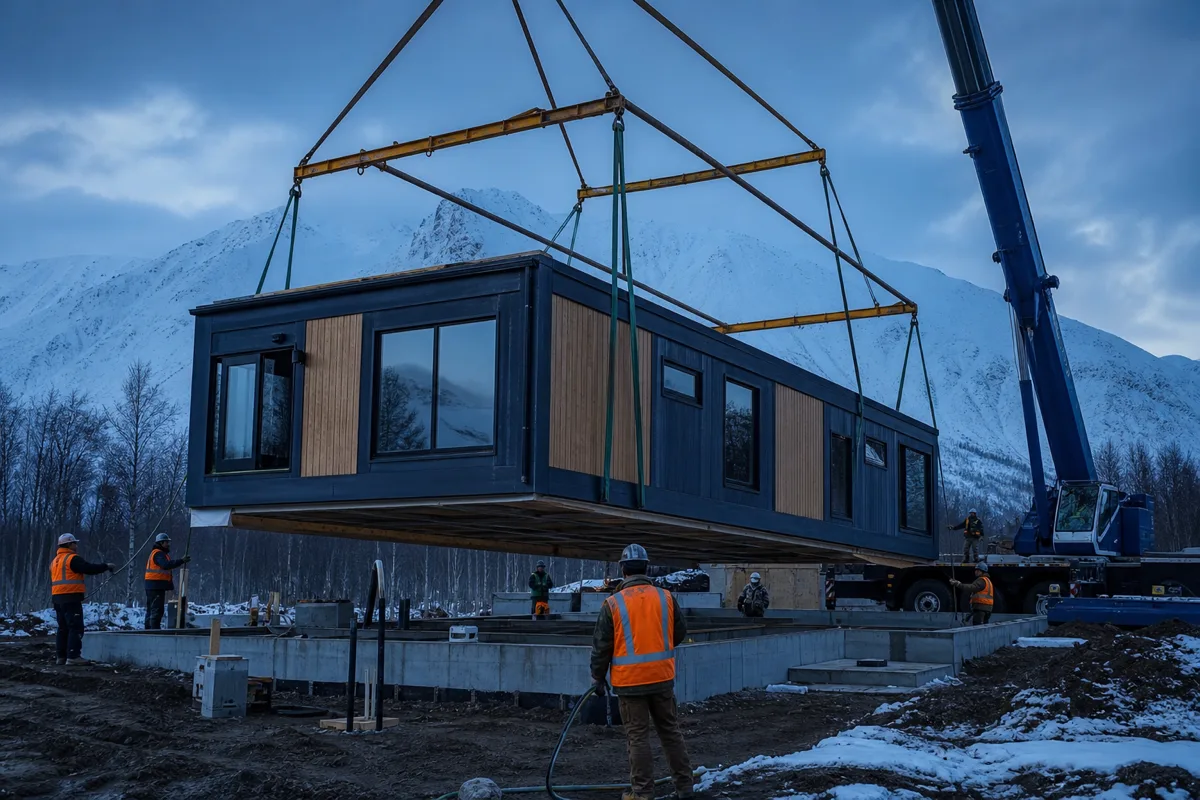
Modular homes are an increasingly practical option for Alaska buyers. Built off-site in factory-controlled conditions, then transported and assembled on a permanent foundation, they can be constructed faster and often for less cost than traditional stick-built homes — significant advantages in Alaska where the building season is short and labor costs are high.
But Alaska modular home loans require understanding a critical distinction: how your home is built and titled determines which loan programs you can use.
Modular vs. Manufactured: An Important Distinction
These terms are often used interchangeably but they mean very different things for financing:
Modular homes:
- Built to local/state building codes (same codes as site-built homes)
- Set on a permanent foundation (crawl space, basement, or concrete slab)
- Titled as real property (real estate)
- Eligible for FHA, VA, conventional, and USDA financing on the same terms as site-built homes
Manufactured homes (HUD code homes, commonly called “mobile homes”):
- Built to federal HUD standards (different from local building codes)
- Can be on permanent or non-permanent foundations
- May carry a title as personal property (chattel) rather than real estate
- Have more limited financing options with stricter requirements
For the purpose of this guide, we’re discussing modular homes — factory-built homes that meet local building codes and are installed on permanent foundations. If you’re financing a manufactured home, see our Alaska manufactured home loans guide for the separate rules that apply.
Financing Modular Homes in Alaska
Once a modular home is placed on a permanent foundation and receives a certificate of occupancy, lenders generally treat it identically to a site-built home. This opens all standard financing options:
FHA loans: 3.5% down with 580+ credit score. The statewide Alaska FHA limit of $557,750 applies. The home must be on a permanent foundation and titled as real estate.
VA loans: Zero down for eligible veterans and active duty. The modular home must meet VA Minimum Property Requirements — primarily adequate foundation, utilities, and habitability standards. Extremely popular with Alaska military families who want to build in the Mat-Su Valley or near military installations.
Conventional loans: 5-20%+ down depending on program. Alaska’s $1,249,125 conforming limit applies. Fannie Mae and Freddie Mac treat factory-built homes that meet local building codes as equivalent to site-built.
USDA loans: Zero down for eligible rural areas. Alaska has extensive USDA eligibility — much of the Mat-Su Valley, Kenai Peninsula, Fairbanks Borough periphery, and Southeast Alaska communities qualify. The home must be permanently installed and meet USDA property standards.
AHFC programs: Alaska Housing Finance Corporation’s programs apply to modular homes meeting their standards. Energy efficiency programs — important for Alaska — reward highly insulated modular designs.
Requirements for Modular Home Financing in Alaska
Regardless of loan type, lenders require:
- Local building permits — the modular manufacturer must pull permits with the local municipality or borough
- Permanent foundation — concrete perimeter, crawl space, or full basement; pier foundations require additional documentation
- Real property titling — the home must be titled as real estate (not as a vehicle or personal property)
- Manufacturer certification — documentation that the home was built to Alaska’s applicable building code
- Certificate of occupancy — issued by the local building department after inspection
Alaska-specific note: In rural areas or unincorporated boroughs where building departments are less active, documentation requirements may vary. Lenders will typically require an independent inspection confirming code compliance in lieu of a formal CO.
The Alaska Modular Home Construction Loan
If you’re building a new modular home on land you own, you’ll need a construction loan to fund the process. The structure is similar to traditional construction financing:
- Land purchase (if not already owned)
- Site preparation, foundation, utility connections
- Modular home manufacturing (factory payment — typically 30-50% of home cost paid at delivery)
- Site assembly, hookups, finishing work
- Final inspection, CO, conversion to permanent mortgage
Key difference from traditional construction: Because the modular components are built in a factory, the timeline is typically 30-60 days shorter than a site-built home — a significant advantage given Alaska’s compressed building season.
Popular modular manufacturers serving Alaska include companies with distribution from Washington state and the Pacific Northwest, with delivery via ferry and trucking to most Alaska road communities. Remote communities may require barge delivery — factor this into your budget.
For an overview of construction financing options, see our Alaska construction loan guide.
Alaska Modular Home Costs
According to NAHB data and Alaska builder reports, modular homes in Alaska typically cost:
- Factory components: $80-$130 per square foot (varies significantly by finish level)
- Site preparation and foundation: $25,000-$80,000 depending on soil conditions
- Delivery and crane placement: $10,000-$30,000 depending on location
- Site finishing (utility hookups, decks, etc.): $20,000-$50,000
A 1,500 sq ft modular home in the Mat-Su Valley might run $240,000-$350,000 all-in, compared to $350,000-$500,000 for a comparable stick-built home. The savings can be substantial.
Mat-Su Borough and Kenai Peninsula are two of Alaska’s most popular modular home markets because they combine lower lot costs than Anchorage proper with good road access for delivery.
See our Mat-Su Valley home loans guide for financing options specific to the Wasilla/Palmer area. For Kenai Peninsula buyers, our Kenai Peninsula housing market guide provides current pricing context.
Ready to explore modular home financing in Alaska? Get a free quote from Premier Mortgage (NMLS# 1168048).
Frequently Asked Questions
Are modular homes harder to finance than stick-built in Alaska?
No — properly titled modular homes on permanent foundations qualify for the same loan programs as site-built homes. Lenders treat them identically for FHA, VA, conventional, and USDA purposes. The key requirement is permanent foundation and real property titling. Financing complications typically arise only when a “modular” home is actually titled as personal property or doesn’t meet local building codes.
Can I use a VA loan to buy a modular home in Alaska?
Yes. VA loans are available for modular homes that meet VA Minimum Property Requirements and are permanently affixed to the land. For Alaska veterans and active duty service members — especially those near JBER or Eielson — VA is often the best financing option because of the zero down payment benefit. The builder must be VA-registered if it’s new construction.
What’s the difference between a modular home and a manufactured home for financing purposes?
The most important difference is how the home is built and titled. Modular homes are built to local building codes and titled as real estate — they qualify for standard mortgage financing. Manufactured homes are built to HUD codes and may be titled as personal property (chattel), which limits them to chattel loans with higher rates and shorter terms, or real property loans if permanently affixed and the title is converted. Always confirm which type you’re purchasing before applying for financing.
How long does it take to build a modular home in Alaska?
The modular components are typically built in 8-14 weeks at the factory. Site preparation (clearing, foundation, utilities) may begin concurrently. Assembly and site finishing take another 4-8 weeks. Total timeline from order to certificate of occupancy is typically 4-6 months — significantly faster than traditional construction and better suited to Alaska’s short building season.
Does AHFC offer programs for modular homes in Alaska?
Yes. AHFC programs apply to modular homes meeting AHFC’s standards for energy efficiency and construction quality. AHFC’s energy efficiency interest rate reductions are particularly relevant for modular construction — factory-built homes often achieve higher energy efficiency ratings than comparable site-built homes, qualifying for larger rate reductions under AHFC’s tiered program.
Ready to Take the Next Step?
Get a free home loan quote today through our trusted partner.
Or call 9078411600
Disclaimer: This article is for informational purposes only and does not constitute financial, mortgage, legal, or tax advice. Interest rates, loan programs, eligibility requirements, and fees are subject to change without notice and may vary based on your individual circumstances. Alaska Home HQ is not a lender, broker, or financial institution. All loan applications are processed by Premier Mortgage (NMLS: 1168048). We may have a business relationship with Premier Mortgage and may receive compensation when you use their services through our links. Consult a licensed mortgage professional before making financial decisions. Terms of Service · Privacy Policy