Buying New Construction in Alaska: 2026 Guide
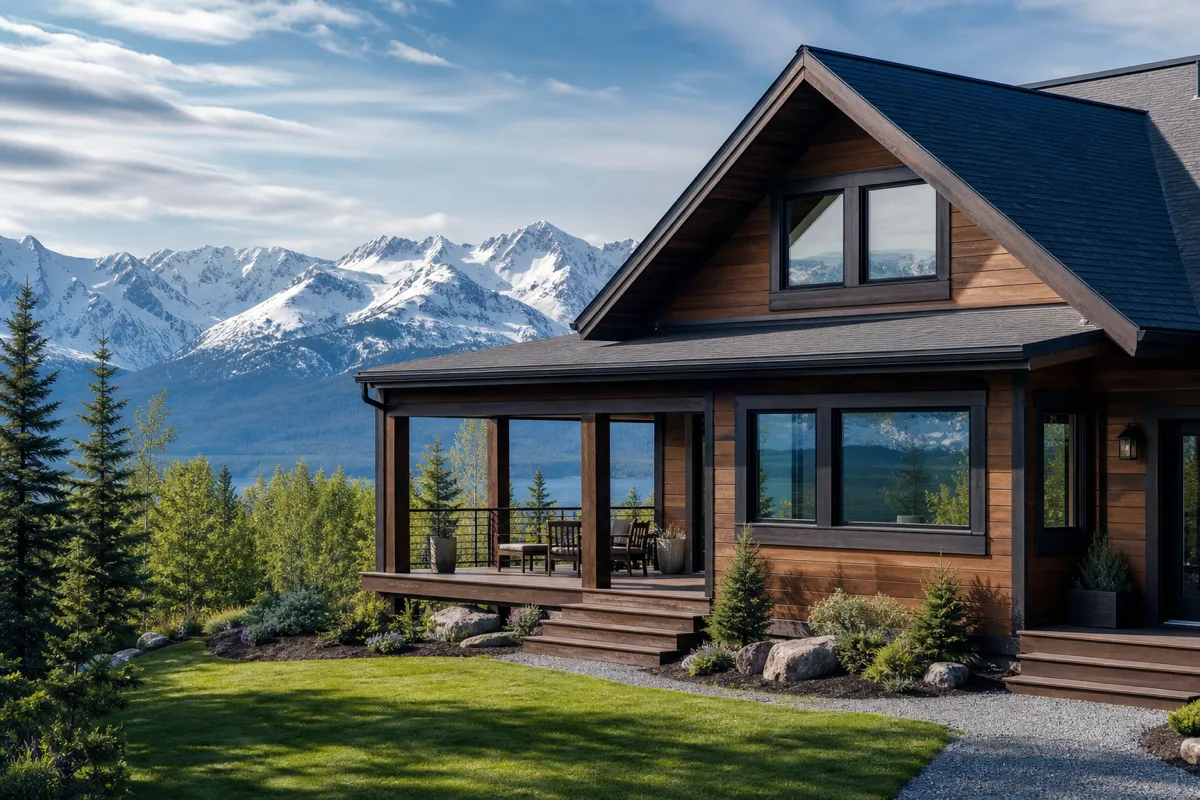
Buying a newly built home in Alaska is distinct from buying existing construction — different financing considerations, different timelines, and a different negotiating dynamic. In 2026, Alaska’s new construction market is concentrated in the Mat-Su Valley, greater Anchorage, and select Fairbanks neighborhoods, with builders offering incentives to move inventory in a still-elevated rate environment.
Here’s what Alaska buyers need to know about new construction financing this year.
Alaska New Construction vs. Building Your Own
First, a clarification: “new construction mortgage” in this guide refers to buying a home from a builder who has already built or is building the home speculatively. This is different from a construction loan (where you hire a builder to construct a custom home on land you own). See our Alaska construction loan guide for the build-from-scratch scenario.
Buying from a builder is simpler — you’re purchasing a finished or near-finished product, and financing closes the same way as a resale purchase once the home is complete.
Builder Incentives in Alaska’s 2026 Market
Alaska builders — particularly in the Mat-Su Valley where most new construction activity is concentrated — have continued offering buyer incentives in 2026 to move homes in a rate-sensitive market. Common incentives include:
Rate buydowns: Builders subsidize a temporary or permanent interest rate reduction. A 2-1 buydown (where the rate is 2% below market in year one, 1% below in year two, then at market) is common. Some builders offer permanent rate buydowns (points paid at closing to reduce your rate for the life of the loan).
Closing cost contributions: Builder pays some or all of your closing costs — typically $5,000-$15,000. In Alaska where closing costs run $8,000-$20,000 on a typical purchase, this is meaningful.
Upgraded finishes at no cost: Appliance packages, flooring upgrades, or landscaping included in the base price.
Price reductions on spec homes: Completed homes sitting on the market longer than 90 days often carry price flexibility.
Important: Builder incentives typically require you to use the builder’s preferred lender. You can negotiate to use your own lender, but the incentives may not transfer. Evaluate whether the rate and terms through the builder’s lender are competitive — sometimes they are, sometimes they aren’t. Always get a competing quote before committing.
New Construction Financing Options in Alaska
New construction homes qualify for all standard financing:
FHA loans: Popular for Alaska first-time buyers purchasing new construction. FHA’s 3.5% down and flexible credit requirements apply. The home must pass FHA appraisal (which includes MPR inspection). For brand-new construction meeting Alaska building codes, FHA approval is typically smooth.
VA loans: Excellent option for Alaska military families buying new construction near JBER or in the Mat-Su Valley. Zero down, no PMI. Builder must pull the required permits and meet VA MPRs — typically straightforward for new construction.
Conventional loans: Most Alaska new construction buyers use conventional financing, particularly for higher-priced homes above the $557,750 FHA limit. Alaska’s $1,249,125 conforming limit covers the vast majority of new construction.
AHFC programs: AHFC’s new construction energy efficiency incentives are particularly relevant here — new homes meeting higher energy efficiency tiers qualify for significant rate reductions. Mat-Su Valley builders building to Tier 5 standards can save buyers 1.5% below standard AHFC rates.
Rate Lock Considerations for Alaska New Construction
This is one of the most important new construction financing issues. If you sign a purchase agreement with a builder today and the home won’t be complete for 6-9 months, you face interest rate risk — rates could rise significantly before you close.
Standard rate locks typically last 30-60 days — useless for a 9-month build timeline.
Extended rate locks are available but costly — lenders charge 0.25-1.0% of the loan amount for locks beyond 60 days. On a $500,000 loan, a 9-month extended lock might cost $2,500-$5,000.
Builder float-down options: Some builder-lender partnerships offer “float-down” products — you lock a rate today, but if rates drop, you get the lower rate at closing (usually once, within 60 days of completion). Evaluate carefully.
Alternative approach: Don’t lock until 60-90 days before completion. Accept rate risk but avoid lock extension costs. Works better in stable or declining rate environments.
New Construction Contract Terms to Review
Unlike resale purchases, new construction contracts can be complex. Before signing:
- Completion timeline: Is it binding? What are delays and what compensation do you receive?
- Price escalation clauses: Some builders include clauses allowing price increases for material cost escalation. Resist these or cap them clearly.
- Buyer default clause: What happens to your earnest money if financing falls through? New construction contracts sometimes have limited refundability.
- Change order process: How are upgrades priced? Get all upgrade pricing in writing before contract signing.
- Warranty terms: Alaska builders should provide minimum structural warranties (1-2 year workmanship, 10-year structural). Alaska’s climate makes this particularly important — freeze-thaw cycles stress foundations and envelopes.
Popular New Construction Areas in Alaska
Mat-Su Valley (Wasilla/Palmer/Sutton): The most active new construction market in Alaska. Lower land costs than Anchorage, strong builder presence, and growing infrastructure. Typical new construction prices: $380,000-$600,000 for 3-4 bedroom homes. See our Mat-Su Valley home loans guide for details.
Greater Anchorage (Eagle River, South Anchorage, Chugiak): Less new construction inventory than the Valley, higher prices. New homes in Eagle River typically start at $500,000+. See our Eagle River real estate guide for context.
Fairbanks periphery: New construction in areas like Moose Creek, Salcha, and North Pole. Extreme cold climate construction adds insulation and HVAC requirements that are built into responsible new construction at these latitudes.
Ready to explore new construction financing options in Alaska? Get a free quote from Premier Mortgage (NMLS# 1168048).
Frequently Asked Questions
Can I negotiate with Alaska home builders?
Yes — particularly on spec homes (homes the builder has already completed or nearly completed). Builders with completed inventory are motivated to close quickly. Incentives like closing cost contributions, rate buydowns, and appliance upgrades are all negotiable. Base price is less negotiable on pre-construction sales; more negotiable on completed spec homes with longer days on market.
Do I need a home inspection on new construction in Alaska?
Yes. New construction homes should receive an independent inspection before closing — separate from the builder’s construction inspections and the lender’s appraisal. Alaska’s climate creates specific issues: air sealing, insulation installation quality, and mechanical system commissioning are critical in sub-zero temperatures. An experienced Alaska home inspector who knows new construction is worth the $400-600 fee.
How long does it take to buy new construction in Alaska?
If you’re buying a completed spec home, the timeline is similar to resale — 30-45 days from accepted offer to closing. If the home is under construction, timeline depends on the build stage and completion date, typically 3-9 months. Pre-construction purchases (signing before construction begins) can take 9-18 months in Alaska given the limited building season.
Do new construction homes in Alaska appraise at the contract price?
Usually yes for well-priced homes in active markets. Appraisers use recent sales of comparable homes and cost-approach analysis. In fast-moving markets where new construction prices are rising, some homes may appraise at or below contract price. If the appraisal comes in low, you’ll need to renegotiate the price, pay the difference in cash, or walk away (per your contract terms).
What energy efficiency standards apply to new Alaska construction?
New residential construction in Alaska must meet the Alaska Residential Building Energy Efficiency Standard (ABEES). AHFC’s energy rating tiers provide a further incentive structure — homes meeting Tier 5 or above qualify for the maximum AHFC rate reduction. Look for a blower door test result and ask the builder for the home’s HERS (Home Energy Rating System) score, which quantifies energy efficiency on a 0-100 scale.
Ready to Take the Next Step?
Get a free home loan quote today through our trusted partner.
Or call 9078411600
Disclaimer: This article is for informational purposes only and does not constitute financial, mortgage, legal, or tax advice. Interest rates, loan programs, eligibility requirements, and fees are subject to change without notice and may vary based on your individual circumstances. Alaska Home HQ is not a lender, broker, or financial institution. All loan applications are processed by Premier Mortgage (NMLS: 1168048). We may have a business relationship with Premier Mortgage and may receive compensation when you use their services through our links. Consult a licensed mortgage professional before making financial decisions. Terms of Service · Privacy Policy