Alaska Post Foundation Mortgage
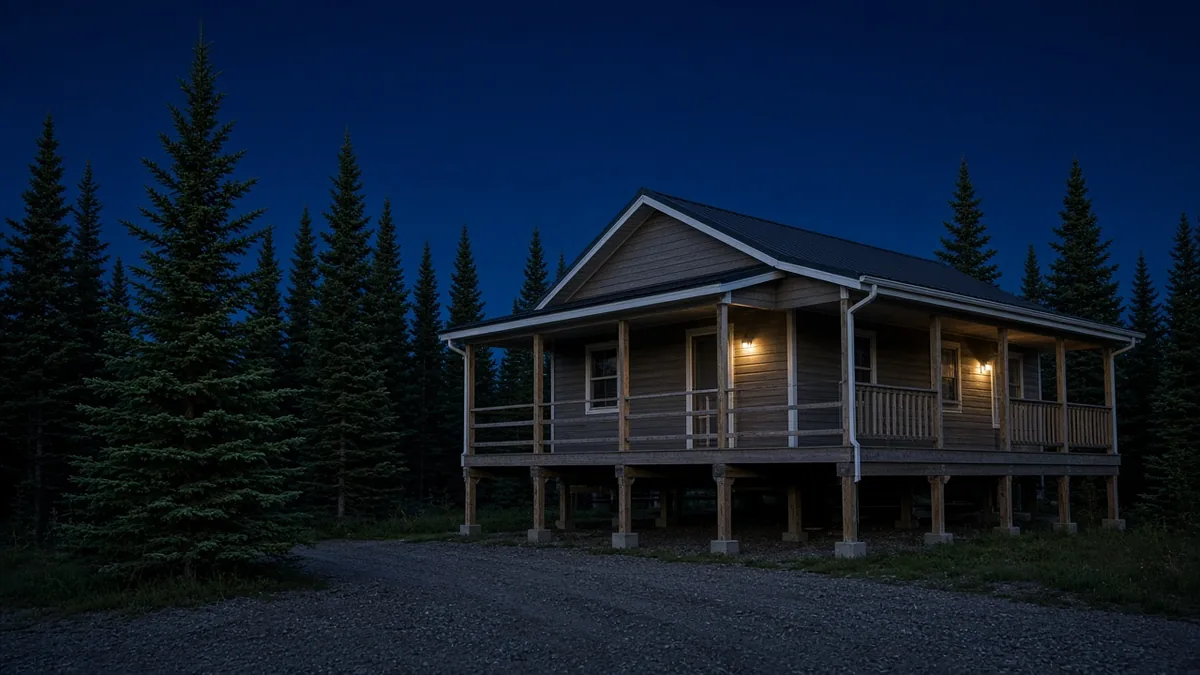
An Alaska post foundation mortgage file is a loan on a site-built house that sits on posts, piers, or concrete blocks instead of a full basement wall. The house is raised for snow, for a crawl space, for ventilation, or because that is how the builder put it up. The appraiser and the lender are asking whether that support is permanent, sound, and acceptable collateral. This is not the permafrost foundation mortgage article. Permafrost work is about frozen ground, thaw, and the engineering that goes with it. A post foundation can exist where permafrost is not the issue at all. Plenty of Wasilla-area houses are on posts in ordinary soils.
Alaska Home HQ is educational. It is not a lender and it is not a structural engineer. HUD’s handbook 4000.1 is the FHA property-standards framework mortgagees use, including the expectation of a sound, marketable dwelling. It does not publish a single Alaska post size in this sentence, and this page will not invent one. Local code, the plans, and a qualified inspector outrank a guess.
What an Alaska post foundation mortgage inspection is trying to see
The questions are plain. What are the posts or blocks bearing on? Are they anchored, or are they sitting loose? Is the wood rotten, crushed, or shoved out of plumb by frost? Is there skirting that sheds water without trapping it? Can someone get under the house to see the floor structure? A skirt that is screwed shut so nobody can look is a reason to open it, not a reason to skip the crawl.
Blocks that were meant as a temporary set, with no real footing, read differently from piers that were laid out, anchored, and kept. A house that started as a cabin on rounds and grew bedrooms without a matching foundation is a common Alaska file. The appraiser photographs what is there. The underwriter compares those photos to what that loan program will take. “It’s been fine” is not a footing.
Manufactured homes have a separate permanent-foundation conversation, aimed at tying a manufactured house to a foundation that meets that program’s guide. A site-built house on posts is not that booklet. Do not hand the lender a manufactured-home foundation checklist and call a stick-built house done. The manufactured home financing guide is the other path. Use it when the label on the house is manufactured. Use this page when carpenters framed the walls on site.
Condition, frost, and remaining life
Frost heave moves poorly supported posts. This article will not state a statewide frost depth, because the number changes with the town and the soil, and a wrong number is worse than none. What the file needs is evidence the posts are not walking: plumb lines, intact connections, doors that still close, and a crawl space that is not a new hill of soil. An engineer’s letter helps when the appraiser or the lender asks for one. It does not help when it describes a different house.
Rot at the ground line is the other Alaska classic. A post that looks thick at eye level and is soft where it meets the pad will show up in a screwdriver test. Budget the repair if several posts are in that shape. A price that assumes the structure is permanent, plus a crawl space that says otherwise, is how renegotiation starts.
Remaining economic life on the appraisal can shrink when the support is near the end. The remaining economic life appraisal page is about the loan term versus that opinion. Replacing posts can be the repair that lets an appraiser revise a comment. Painting the skirt does not.
Insulation belongs in the floor system when the belly of the house is open to winter air. Lenders are not designing your heat bill, but an uninsulated floor over an open crawl can show up as condition, as moisture, and as a house that is hard to live in. The appraiser’s photos of missing insulation are facts. Bring invoices if the floor was insulated and the skirt hides the work.
What to gather before the appraiser arrives
Clear the crawl space enough that an adult can see the posts. Dogs, stored fuel, and a collapsed skirt are access problems. If a post is buried in junk, the photo will say “could not view,” and the condition will say the same.
Collect what you have:
- Any original foundation sketch or permit
- Invoices for post replacements, anchors, or a new skirting job
- A note of which posts were done and which are original
- Photos taken in daylight with the skirt open, before snow closes the crawl
If you are the buyer, put foundation access in the inspection. A seller who will not open the skirt is telling you something. If you are the seller, open it before the appraiser’s appointment so the report is about the posts, not about a locked panel.
Additions on new posts next to an old house on different posts need a clear story. The appraiser may treat the addition as living area only when it is finished and on a comparable permanent support. A room on blocks that do not match the rest is a condition, not a bonus.
A Permanent Fund Dividend can help pay for post repairs you choose to make. It does not substitute for the photos. Document the funds if you use them at closing, separate from the construction invoices.
How lenders tend to decide
The lender wants a dwelling that is real estate, that will stand for the term, and that an insurer will cover. A house on posts can be all of those. A house on loose blocks, with daylight under a corner and a floor that bounces, may not. Ask the lender early if you already know the house is on posts, and ask what they want to see. Surprising the underwriter with the crawl-space photos at the end is how conditions pile up.
Alaska Housing Finance Corporation programs are educational and separate. Premier Mortgage (NMLS# 1168048) does not offer AHFC loans. Property standards still apply on any program you do use.
Rates vary. Subject to credit approval. The posts are part of the property qualification, not a footnote under the interest conversation.
Ready to finance a house that stands on posts or blocks? Get a free home loan quote from Premier Mortgage (NMLS# 1168048).
Frequently Asked Questions
Are post foundations allowed on Alaska mortgages?
They can be, when the posts or blocks are a real, permanent support for a site-built house and the appraiser can document condition. Loose or temporary stacking is a different fact. Permafrost engineering is a different article. Ask the lender with photos before you assume a raised house is ineligible, and before you assume it is automatically fine.
Is a post foundation the same as a manufactured-home foundation?
No. Manufactured housing follows a permanent-foundation path tied to that kind of home. A site-built house framed on posts is judged as site-built construction. Mixing the checklists confuses the file, so confirm the house type from the label and the building record rather than from daylight underneath.
What if some posts are rotten?
The lender and the appraiser will treat that as condition. Repairs, an engineer’s letter, or a price change are the usual tools. A short remaining economic life can follow if the support is failing. Replacing the bad posts and documenting the work is more useful than arguing that the house has stood so far, and subject to the property qualifying.
Do I have to enclose the crawl space with skirting?
Skirting is common and useful for weather, animals, and heat loss. Whether a specific loan file requires it depends on the program, the appraiser’s comments, and local code. A skirt that hides rot is not a repair. If you install skirting, leave a way to inspect the posts later, and ask the lender what they need to see rather than building a solid wall the night before the appraisal.
Will frost heave cause a loan denial by itself?
Frost movement is a condition question, not a slogan. This page does not state a frost-depth number. If the posts are plumb, connected, and on real pads, the file may proceed. If the house has racked and the posts have walked, expect repairs or a decline on property grounds, and an engineer who has seen the crawl space is the person to describe the movement, and the lender decides whether the result is acceptable collateral.
Ready to Take the Next Step?
Get a free home loan quote today through our trusted partner.
Or call 9078411600
Disclaimer: This article is for informational purposes only and does not constitute financial, mortgage, legal, or tax advice. Interest rates, loan programs, eligibility requirements, and fees are subject to change without notice and may vary based on your individual circumstances. Alaska Home HQ is not a lender, broker, or financial institution. All loan applications are processed by Premier Mortgage (NMLS: 1168048). We may have a business relationship with Premier Mortgage and may receive compensation when you use their services through our links. Consult a licensed mortgage professional before making financial decisions. Terms of Service · Privacy Policy