Rainwater Catchment and an Alaska Mortgage
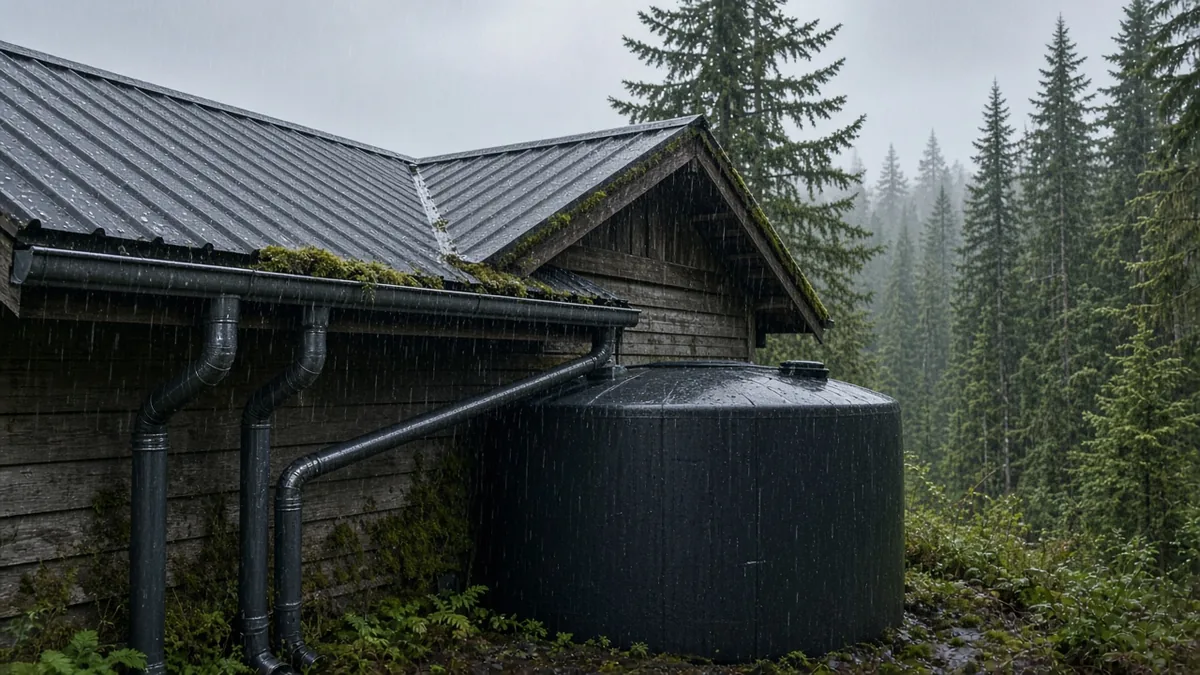
Rainwater catchment on an Alaska mortgage is a roof, gutters, and a cistern that are the house’s drinking water. In Southeast communities it is an ordinary system, not a hobby. Ketchikan, parts of Prince of Wales, and plenty of houses off a city main have lived this way for years. The loan question is whether the program and the health authority accept that system on this house, and whether the appraisal describes water that actually arrives at the tap.
Alaska Home HQ is educational. It is not a lender and it is not the Department of Environmental Conservation. Subject to credit approval. Water that is trucked in is the hauled water page. A community system with a bill is the community water page. A cabin with no pressurized water is the dry cabin page. This page is roof water stored on site and piped into the house.
Rainwater catchment on an Alaska mortgage
An archived HUD field guide on individual water systems says properties served by cisterns were not acceptable for mortgage insurance, with a waiver path for an existing property more than one year old in an area where cisterns are typical. That waiver path, in the archived guide, did not extend to new or proposed construction. The page is old field material, and it is not the only rule a current file is written to. It is the reason Southeast buyers hear two opposite rumors: that cisterns are banned, and that cisterns are fine because everyone has one. Both rumors skip the step that matters. The lender applies the handbook section it uses now, and it asks whether this community is a place where roof catchment is the normal supply.
The Ketchikan homes guide is the local housing context. It is not a water-engineering manual. A house in town on a municipal main is not this article, even in a rainy city. A house whose only water is the roof is this article. The listing should say which.
HUD Handbook 4000.1 still expects water quality to meet the health authority with jurisdiction when an individual supply is part of the property standards. This page does not restate a contaminant table and does not convert a federal number into a DEC rule. The health authority’s letter, or a lab result that authority accepts, is the quality document. The appraiser does not bottle the sample as a hobby. The appraisal process is a visit to see that the house has a working supply and to describe it.
What the system actually is
Rain falls on a roof, moves through gutters, and lands in a tank. A first-flush or a filter may dump the dirtiest water. Treatment after the tank may include filtration and disinfection. A pump sends water to the fixtures. A pressure tank keeps the pump from short-cycling. None of those parts is optional in a house that is supposed to have ordinary plumbing. A barrel under a downspout that someone carries in buckets is closer to hauled water than to a plumbed catchment system. Describe the one that is installed.
Quantity is the Southeast question people understate because the region is wet. Dry weeks happen. A small tank and a large household run out. The lender and the appraiser are not required to guess “it rains enough.” Photos of the tank, a note of its capacity from the manufacturer plate if it is still readable, and the owner’s experience of the driest month are the practical record. This page does not state a gallons-per-person rule. A copied rule from another climate would be a false precision. If the health authority or the loan program states a capacity test, the lender should cite that test rather than a round number from a forum.
The roof is part of the water system. A roof that is falling apart is a water-quality problem and a structure problem. Moss, debris, and a patchwork of uncoated metal are things the inspector can see. So is a gutter that discharges into the woods instead of the tank. The purchase contract should say whether catchment conveys, the same way it says whether a generator conveys. A seller who plans to take the pump and the treatment rack is selling a different house from the one in the photos.
How the appraisal and the underwriter split the work
The appraiser reports the source and whether the fixtures work. If the power is off or the pump is locked out, handbook practice is to say the system was not observed and to avoid pretending it was. A vacant Southeast house with the pump off for the winter is a common version of that gap. Turn the system on for the inspection and the appraisal, or expect a “subject to” that costs a week.
The underwriter asks whether the source is eligible on this program and whether the health letter is in the file. Older field guidance pushed cisterns toward a waiver on existing homes in places where they are typical, and away from new construction. A current overlay may be stricter or looser. Get the answer while the inspection period is open. A cash buyer can accept a system a given loan program will not. A financed buyer cannot, and the seller should know which buyer they are talking to.
Hauled water as a backup in a dry month does not make the house a hauled-water house, and it does not make the cistern irrelevant. Say how often the tank is actually filled by a truck. If the honest answer is “most of the winter,” you may be on the hauled-water page with a roof that helps in the wet months. Mislabeling is how the wrong checklist shows up.
What to put in the offer
Identify the water as roof catchment with an on-site cistern. Attach photos of the roof, the gutters, the tank, and the treatment equipment. Ask for any health-authority letter the seller already has, and order whatever the lender still needs before you waive inspection. Name the equipment that stays. If a repair to the gutter or the tank is required for the lender, put that scope in the contract with a person who can do the work in a place where parts arrive by barge.
A buyer who wants a loan should line up the program before falling for a view. Rates vary and are subject to credit approval. Premier Mortgage (NMLS# 1168048) can look at a catchment system as a property question and tell you whether the program being used will treat it as the primary water supply.
Frequently Asked Questions
Can a house on rainwater catchment get a mortgage in Southeast Alaska?
It can, when the loan program accepts a cistern as the water supply and the health authority accepts the water. Archived HUD field guidance treated cisterns as generally not acceptable, with a waiver idea for existing homes more than a year old in places where cisterns are typical, and not for new construction. That archive is not a substitute for the section your lender is using now. Ask for that section while you still have an inspection period.
Is roof catchment the same as hauled water?
No. Hauled water is delivered by truck, and roof catchment collects rain on site. Some houses do a bit of both in a dry stretch, and the lender needs the checklist that matches the supply you actually rely on. A community water bill is a third system and a third page.
Does the appraiser test the cistern water?
The appraiser reports the source and whether the plumbing works. Water quality belongs to the health authority or a laboratory that authority accepts, and a photo of the tank is not that letter. Order the letter the lender named. Turn the pump on before the appraisal on a vacant house, or the report will say the supply was not observed.
What equipment has to stay with the house?
Whatever the purchase contract says stays. Pumps, filters, and treatment racks are easy to load in a skiff, and a seller may think of them as personal gear. If they leave, the buyer may be financing a house with a dry cistern and no way to pressurize it. Write the equipment into the contract, and walk through it at the final inspection the way you would walk through a stove.
Are new cabins on catchment treated like older houses?
Archived HUD field material drew a line between existing homes, where a waiver might be discussed in a cistern community, and new construction, where that waiver was not offered. Current program rules may differ. A brand-new catchment system is not “typical” just because the island has older cisterns. Ask the lender about new construction separately from an existing house before you build the water plan into the plans.
Ready to Take the Next Step?
Get a free home loan quote today through our trusted partner.
Or call 9078411600
Disclaimer: This article is for informational purposes only and does not constitute financial, mortgage, legal, or tax advice. Interest rates, loan programs, eligibility requirements, and fees are subject to change without notice and may vary based on your individual circumstances. Alaska Home HQ is not a lender, broker, or financial institution. All loan applications are processed by Premier Mortgage (NMLS: 1168048). We may have a business relationship with Premier Mortgage and may receive compensation when you use their services through our links. Consult a licensed mortgage professional before making financial decisions. Terms of Service · Privacy Policy