Alaska Two Dwellings on One Lot Mortgage
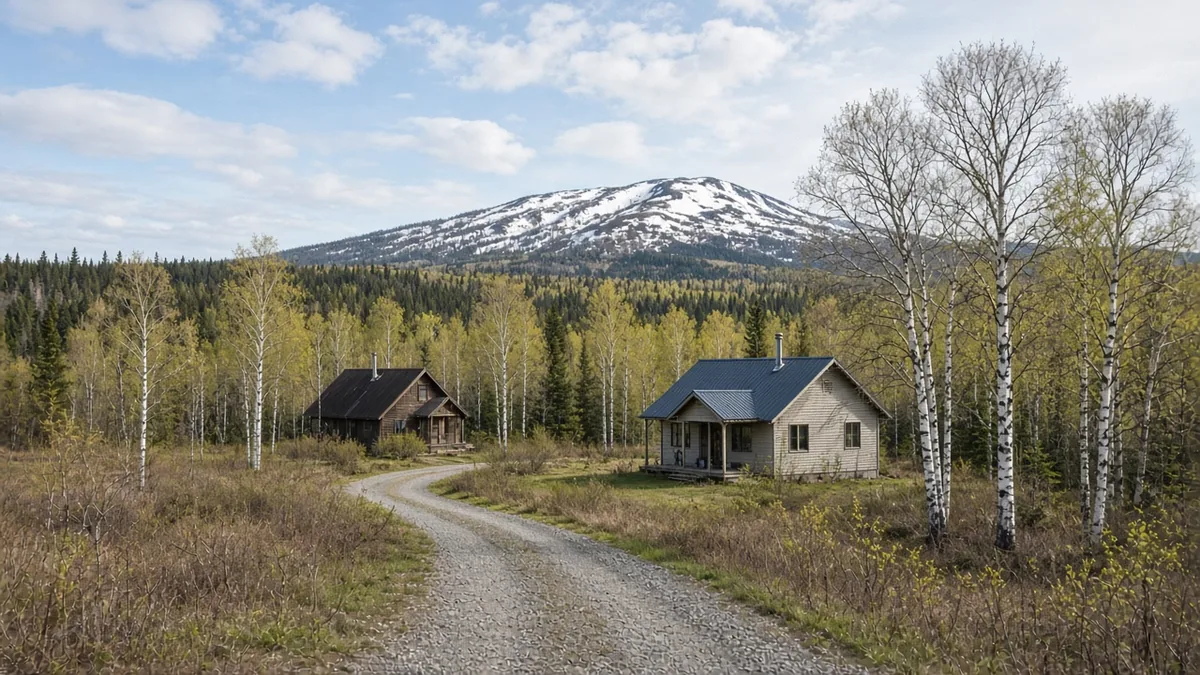
An Alaska two dwellings on one lot mortgage is a loan on a single tax parcel that already has two legal residences. Both buildings are dwellings in the zoning and permit record. One deed covers the land and both houses. One deed of trust, if the loan is made, attaches to that same legal description. You are not financing the blue house and leaving the brown house out. The parcel is the collateral.
This is not the accessory dwelling guide. An ADU is accessory to a primary home, and that guide is where the accessory rules live. This is also not the unpermitted-addition guide. That page is work that did not receive a permit in a place that requires one. Two legal residences means the local government allowed both. A tax photo that shows two roofs is not the permission. The permit file is.
Alaska Home HQ is educational. It is not a lender. Rates vary. Subject to credit approval.
What an Alaska two dwellings on one lot mortgage uses as collateral
Borough and city assessors bill one account when there is one legal description. The account may list two residential buildings, two addresses, or a house and a “second residence.” The assessed value is a tax figure. It is not the appraisal the lender uses, and it is not proof the second building is a legal dwelling. The legal description on the deed is the thing the deed of trust will cite. If that description is one lot, the lien covers the lot. Fences, driveways, and which sibling lives in which house do not split the collateral.
Splitting them is a platting act. The borough or city that controls subdivisions has to approve a plat that creates two lots, the plat has to be recorded, and the assessor has to end up with two accounts. After that, each lot can have its own loan, if each lot has access, utilities, and a dwelling the program accepts. Until the plat records, a lender cannot take a mortgage on “the north house” as if it were already a separate parcel. A survey sketch in a kitchen drawer is not a recorded plat.
The Fairbanks North Star Borough requires a zoning permit before excavation, construction, relocation, or installation for a new use. That permit is about whether the use is allowed on the lot. It is one borough’s rule. Anchorage, the Matanuska-Susitna Borough, the Kenai Peninsula Borough, and other governments each use their own zoning. A second house that was legal when it was built can remain legal when the code later changes, often as a nonconforming use, and the file that shows the approval is the file the underwriter wants. A second house that was not allowed is the unpermitted case, even if both buildings have been on the tax roll for years. The tax roll records what the assessor sees. Zoning records what was allowed.
Local codes differ on what counts as a dwelling. Many treat a space with its own place to cook, sleep, and bathe as a separate dwelling unit, and treat a bedroom over a garage without those pieces as something else. The label on the listing, “guest cabin” or “shop with a loft,” does not control. The code definition and the permit do. If the second building meets the local definition of a dwelling and it was approved, you are on this page. If it was approved as an accessory dwelling unit, you are on the ADU page, and the loan may stay a one-unit loan with an accessory unit under that program’s rules. If nobody approved it, you are on the unpermitted page. Three labels, three files. The middle one is this article: two legal residences, neither of them written up as a mere accessory.
Two units, one loan, and who lives where
When both buildings are dwelling units and neither is classified as an ADU, the appraisal usually counts a two-unit property. The form, the comparable sales, and the loan program’s rules for a two-unit property replace the one-unit rules. Loan-to-value limits, reserve requirements, and mortgage insurance can differ from a single house. Those numbers change with the program and the year. This article does not quote them. The lender applies the current matrix to a two-unit primary residence or to whatever occupancy the borrowers actually have.
Occupancy is the fork. A buyer who will live in one dwelling and not rent the other still has two dwellings on the parcel. The empty house does not disappear from the unit count because it is vacant. A buyer who will live in one and rent the other may be an owner-occupant of a two-unit property. Rent on the second dwelling is not automatically added, dollar for dollar, to qualifying income. Each program has a method, often a lease, a history, or a market-rent figure from the appraisal, and often a haircut. The investment-property guide is the file where the buyer will not live in either dwelling. Do not use that guide’s down-payment assumptions for a house you will occupy, and do not use a primary-residence assumption for a pair of rentals.
A relative living in the second house rent-free is common on Alaska acreage. There may be no rental income to document. The unit still counts. The gift of a place to live is not a lease, and the appraiser walks both buildings.
Comparable sales are the hard part in a place like Soldotna or on a large Mat-Su lot. Sales of one house on one lot are everywhere. Sales of two legal houses on one tax parcel are fewer. The appraiser may use two-unit sales from farther away, or one-unit sales with an adjustment the report has to explain. A thin set of comps can come back below the contract price. That is an appraisal result, not a sign the second house “doesn’t count.” It counts, and the market evidence for the pair may be sparse.
Utilities can be shared or separate. Two electric meters do not create two lots. One well serving both houses is a water-use question and a well-agreement question, not a subdivision. One wastewater system sized for one house may not be sized for two. The wastewater approval needs to match the number of dwellings it was approved for.
The policy needs to name both dwellings. A policy written for one house, with the second house undisclosed, is the wrong policy, because the collateral is the whole parcel. Tell the insurer about both buildings before you bind the policy the loan will escrow.
How the contract describes the parcel
The purchase contract’s legal description needs to match the deed: one parcel, both structures included. A price that the buyer mentally split, half for each house, is still one price for one parcel. Personal property, a shop that is not a dwelling, fuel tanks, and outbuildings can be listed if the parties need them listed. The second house, if it is real property, is not personal property and does not get a bill of sale instead of a deed.
Sellers sometimes want one loan on the main house and a private note on the cabin. On one recorded lot, both houses are one legal description. The workable versions are one loan on the whole parcel, or a completed plat and then separate loans. A promise to “release the cabin later” is not a partial reconveyance. Partial releases, when a lender allows them, are written, and they require a new legal lot to release.
Buyers who want only one of the houses can include the time and the cost of platting, including access and utility splits the borough will require, before they write an offer that assumes the split is easy. Some lots cannot be split because of size, access, or wastewater. The offer then has to be for both dwellings or for neither.
The Permanent Fund Dividend can be saved toward a down payment. It does not plat the lot.
Ready to explore your options? Get a free home loan quote from Premier Mortgage (NMLS# 1168048).
Frequently Asked Questions
Can the lender ignore the second house if I will not rent it?
Vacancy does not erase a legal dwelling. If the permit file shows two residences, the appraisal counts two units whether or not the second house has a tenant. Rent-free use by family is still a second dwelling. It is simply a second dwelling with no rental income to document.
Is a duplex the same thing as two houses on one lot?
A duplex is often one building with two dwellings on one tax parcel, and two detached houses are two buildings on one tax parcel. Both can be two-unit properties for a loan. The difference is the improvement, not the lien. One deed of trust still covers the whole legal description either way.
What if the second building is a garage apartment?
The local code decides whether that apartment is an accessory dwelling or a second residence. An approved ADU stays on the ADU guide, and the loan may remain a one-unit loan under that program’s accessory rules. An approved second residence, not written as an ADU, is this page. An apartment nobody permitted is the unpermitted-addition page.
Can I get two loans if I only want to mortgage one house?
Two loans want two legal lots. Creating them is a subdivision plat through the borough or city, then a new deed for each lot. Until that plat is recorded, the collateral is the single parcel, and a standard mortgage encumbers both dwellings. A survey that is not recorded does not change the tax account.
Does the assessor’s value work as the appraisal?
The assessor values the account for taxes and may list both buildings. That number is not the appraisal report the lender orders, and it is not zoning approval. The appraisal inspects the dwellings and uses comparable sales. On a two-dwelling parcel those sales can be scarce, which is a reason to expect a careful report rather than a one-unit form.
Ready to Take the Next Step?
Get a free home loan quote today through our trusted partner.
Or call 9078411600
Disclaimer: This article is for informational purposes only and does not constitute financial, mortgage, legal, or tax advice. Interest rates, loan programs, eligibility requirements, and fees are subject to change without notice and may vary based on your individual circumstances. Alaska Home HQ is not a lender, broker, or financial institution. All loan applications are processed by Premier Mortgage (NMLS: 1168048). We may have a business relationship with Premier Mortgage and may receive compensation when you use their services through our links. Consult a licensed mortgage professional before making financial decisions. Terms of Service · Privacy Policy