Home Renovation in Alaska: Planning Guide
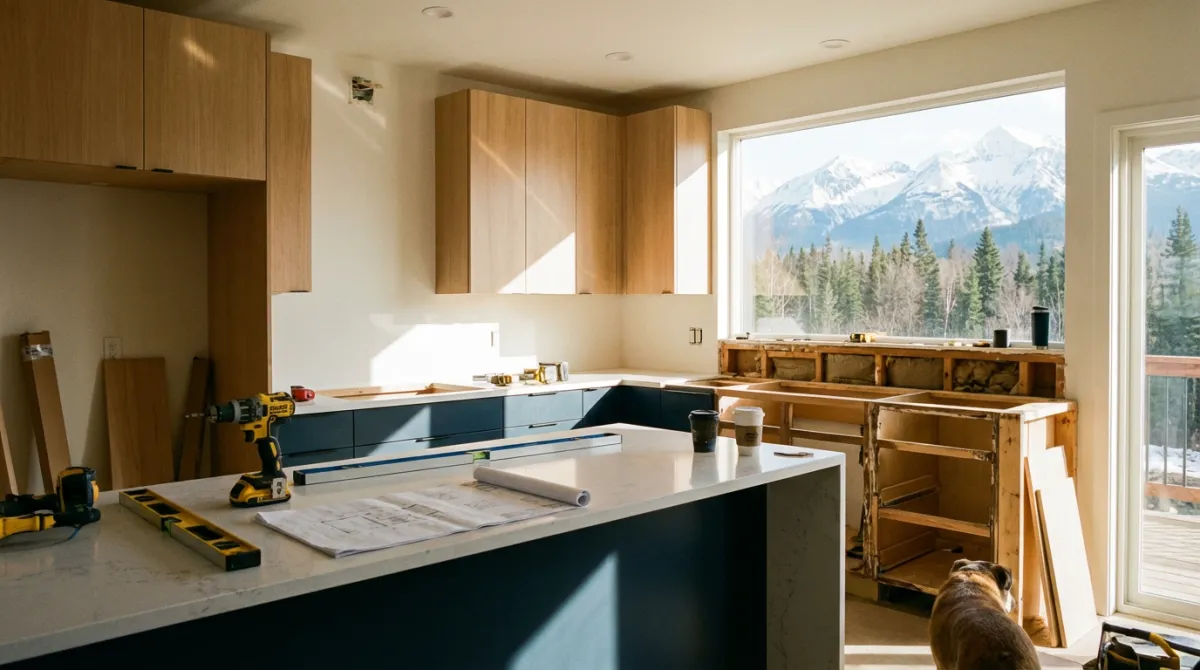
Renovating a home in Alaska takes more planning than it does in most of the country. The construction season is short. Materials cost more and take longer to arrive. Permitting requirements vary by borough. And the projects that matter most — insulation, windows, heating systems — aren’t the glamorous upgrades you see on TV renovation shows, but they’re the ones that keep your home livable through a seven-month winter at -20F and below.
That said, the right renovation can dramatically improve your comfort, cut your heating bills, and add real value to your home in a market where buyers pay a premium for homes that are already updated and winter-ready. Here’s how to approach it.
The Short Construction Season
Alaska’s construction season is widely considered to run from May through September, with the most productive window being June through August. That’s roughly 90 to 120 good working days, depending on your region and the weather.
What this means for homeowners:
- Contractors book up early. If you want a summer project, start contacting contractors in January or February. By April, the best crews are often fully committed.
- Delays compound quickly. A weather delay or material shortage that costs a week in June may push your project into September or October, when rain, shorter days, and dropping temperatures slow everything down.
- Interior work is year-round. Kitchen and bathroom remodels, flooring, painting, and other indoor projects aren’t constrained by season. If you can’t get on a contractor’s summer schedule, consider timing interior work for winter.
- Foundation and exterior work is strictly seasonal. Anything involving excavation, concrete, roofing, siding, or deck construction needs above-freezing temperatures and dry conditions. Attempting these in winter multiplies costs and risks.
In Fairbanks and Interior Alaska, the usable season may be slightly shorter due to later spring thaw and earlier fall freeze-up. On the Kenai Peninsula and in Southeast Alaska, rain can compress the dry working window even within the May-September range.
Material Costs and Shipping
Building materials in Alaska typically cost 20-40% more than the national average, and in rural or off-road-system communities, the premium can be much higher.
Why Materials Cost More
- Shipping — Most building materials arrive on barges from Seattle or are trucked up the Alaska Highway. Freight costs are baked into every sheet of plywood, every window, and every fixture.
- Limited local supply — Alaska has fewer lumberyards, building supply stores, and specialty distributors than most states. Less competition means higher prices.
- Seasonal demand spikes — Everyone builds at the same time (summer), which creates supply crunches for popular items like framing lumber, insulation, and roofing materials.
- Specialty items — Custom windows, high-efficiency heating equipment, and specialty finishes may need to be ordered from the lower 48 with lead times of 4-8+ weeks.
How to Manage Material Costs
- Order early. Place material orders by March or April for a summer project. This gives time for shipping and avoids the mid-season rush.
- Buy locally when possible. Local suppliers in Anchorage, Fairbanks, and Wasilla stock standard materials at better prices than having them shipped item by item.
- Consider alternatives. Where code allows, substitute materials that are readily available in Alaska for specialty items that require long-distance shipping.
- Factor freight into your budget. If you’re in a community off the road system — Bethel, Kodiak, Nome, or villages accessible only by air or barge — material shipping alone can add 30-60% to project costs. Budget accordingly.
Permitting by Borough
Permit requirements for home renovations vary significantly across Alaska’s boroughs and municipalities. There is no statewide residential building code — each jurisdiction sets its own rules.
Anchorage Municipality
- Permits required for structural work, electrical, plumbing, mechanical, and most exterior modifications
- Plan review required for projects above a threshold scope
- Inspections at multiple stages (foundation, framing, rough-in, final)
- Building Safety Division handles permits and inspections
Matanuska-Susitna Borough
- Less restrictive than Anchorage in unincorporated areas
- Permits generally required for new construction, additions, and commercial work
- Some residential renovations in unincorporated areas may not require permits — check with the borough planning department
- Incorporated cities within the borough (Wasilla, Palmer) have their own codes
Fairbanks North Star Borough
- Permits required for most structural, electrical, and plumbing work
- The borough has adopted the International Residential Code with local amendments
- Permafrost-related foundation requirements may apply in certain areas
Kenai Peninsula Borough
- Permit requirements vary by community and service area
- Some areas have minimal building code enforcement
- Check with the borough Community Development department
Rural and Unincorporated Areas
Many rural Alaska communities have limited or no building code enforcement. While this provides flexibility, it also means there’s no safety net. Unpermitted work that doesn’t meet basic standards can create safety hazards, insurance problems, and complications when selling. Even where permits aren’t required, building to code is a sound practice.
Popular Renovations for Alaska Homes
Not every renovation makes equal sense in Alaska. Here are the projects that deliver the most impact for Alaska homeowners.
Kitchen Remodel
Kitchens remain the most popular renovation nationally, and Alaska is no different. A kitchen remodel can range from a cosmetic refresh (new countertops, cabinet refacing, fixtures) to a full gut-and-rebuild.
- Cosmetic update: $10,000–$25,000
- Mid-range remodel: $25,000–$50,000
- High-end remodel: $50,000–$100,000+
Kitchen remodels are interior work and can be done year-round. They also tend to deliver strong returns in the Alaska market — updated kitchens are consistently cited by real estate agents as a top factor in buyer interest. For more on how housing costs and values work in Alaska, see our cost of living and housing guide.
Bathroom Remodel
Bathroom renovations are another high-impact project. In Alaska, considerations beyond aesthetics include:
-
Heated floors — Radiant floor heating in bathrooms is popular and practical in cold climates
-
Ventilation — Proper exhaust fans are critical to prevent moisture buildup, which is a bigger concern in tightly sealed Alaska homes
-
Plumbing access — If your bathroom shares a wall with an exterior or unheated space, rerouting plumbing may be advisable to reduce freeze risk
-
Basic bathroom remodel: $8,000–$20,000
-
Mid-range to high-end: $20,000–$50,000+
Insulation Upgrades
This may not be the flashiest renovation, but it’s often the most impactful for Alaska homes. Upgrading insulation — particularly in the attic, walls, and crawlspace — directly reduces heating costs and improves comfort.
- Can qualify for AHFC energy rebates
- Often the highest ROI improvement for Alaska homeowners
- See our detailed insulation guide for types, costs, and R-value requirements
Window Replacement
Single-pane and older double-pane windows are major sources of heat loss in Alaska homes. Upgrading to triple-pane, low-E, argon-filled windows can noticeably reduce drafts and heating costs.
- Cost per window: $500–$1,500 installed, depending on size and type
- Full home replacement (15-20 windows): $10,000–$25,000
- Look for windows with a U-factor of 0.25 or lower for Alaska’s climate
- May qualify for AHFC energy rebates when combined with other efficiency upgrades
Deck and Outdoor Living
Alaska’s long summer days make decks and outdoor living spaces highly valued. A well-built deck that takes advantage of midnight sun and mountain views is a genuine lifestyle upgrade.
- Pressure-treated wood deck: $5,000–$15,000
- Composite decking: $10,000–$25,000
- Use materials rated for freeze-thaw cycles — composite decking generally holds up better than wood in Alaska’s climate
- All deck construction should happen during the summer building season
- Footings must extend below the frost line (typically 42-60 inches in most of Alaska)
Financing Your Renovation
How you pay for a renovation matters as much as what you renovate. Alaska homeowners have several financing options:
Home Equity Line of Credit (HELOC)
A HELOC lets you borrow against the equity in your home. It works like a revolving credit line — you draw funds as needed and only pay interest on what you use.
- Best for: Phased projects or uncertain total costs
- Typical rates: Variable, tied to prime rate
- Requirement: Sufficient home equity (typically 15-20% after the HELOC)
For a deeper look at how HELOCs work in Alaska, see our HELOC options guide.
Cash-Out Refinance
A cash-out refinance replaces your current mortgage with a new, larger loan and gives you the difference as cash. This can make sense if current rates are favorable and you have significant equity.
- Best for: Large, well-defined projects with a fixed budget
- Consideration: You’re refinancing your entire mortgage, so the rate on the new loan matters a lot
- More details: Cash-Out Refinance Guide for Alaska Homeowners
AHFC Home Energy Loan
AHFC offers financing specifically for energy efficiency improvements. If your renovation includes insulation, windows, heating systems, or other energy upgrades, this program may offer favorable terms.
Personal Savings
If you can pay cash, you avoid interest costs entirely. Many Alaska homeowners save up over one or two winters and tackle a project in the following summer. This approach also gives you maximum flexibility with contractor selection and project scope.
ROI: What Renovations Return in the Alaska Market
Return on investment for renovations in Alaska doesn’t always mirror national averages. The Alaska housing market has its own dynamics:
| Renovation | Estimated ROI (Alaska) |
|---|---|
| Insulation / energy upgrades | 70–100%+ |
| Kitchen remodel (mid-range) | 60–80% |
| Bathroom remodel | 55–75% |
| Window replacement | 60–85% |
| New deck | 50–70% |
| Siding replacement | 55–75% |
Energy efficiency improvements tend to deliver higher ROI in Alaska than nationally because heating costs are such a large part of homeownership here. A home with documented energy upgrades, a recent AHFC energy rating, and verifiably low heating costs is significantly more attractive to Alaska buyers than one without.
Cosmetic upgrades still matter — a dated kitchen or worn-out bathroom will turn off buyers — but function wins over form when temperatures are hitting -40F.
Working With Contractors in Alaska
Finding and managing contractors in Alaska has its own set of challenges:
- Start early. Contact contractors 3-6 months before you want work to begin. For summer exterior work, that means reaching out by January.
- Get multiple bids. At least three, ideally from contractors who have done similar work in your area.
- Check references and past work. Ask for references from Alaska projects — experience with local conditions matters more than general credentials.
- Define the scope clearly. A detailed written scope of work and contract protects both parties. Include timelines, payment schedules tied to milestones, and how change orders will be handled.
- Verify licensing and insurance. Requirements vary by borough, but at minimum, your contractor should carry liability insurance and workers’ compensation.
- Communicate regularly. Alaska weather and supply issues create disruptions. A contractor who communicates proactively about delays is worth far more than one who gives you the lowest bid and then goes silent.
For buyers who want to know what to look for — or avoid — when purchasing a home that may need renovation, our guide to buying a house in Alaska covers inspection red flags and negotiating repair credits.
Start With What Matters Most
Not every renovation needs to happen at once. If you’re prioritizing, start with the improvements that protect your home and reduce operating costs: insulation, windows, heating system maintenance, and addressing any structural or moisture issues. Those aren’t Instagram-worthy upgrades, but they’re the ones that make your home comfortable, efficient, and resilient through an Alaska winter.
Once the essentials are handled, turn your attention to the projects that improve daily living — a modern kitchen, an updated bathroom, or a deck that lets you soak up those 20 hours of summer daylight.
Planning a major home project? A HELOC or home equity loan from Premier Mortgage can fund renovations, repairs, and upgrades at competitive rates. Premier Mortgage | NMLS# 1168048 | Equal Housing Lender
Frequently Asked Questions
How much does a home renovation cost in Alaska?
Renovation costs in Alaska run 20–40% higher than the national average due to material shipping costs, shorter construction seasons, and limited contractor availability. A kitchen remodel in Anchorage typically ranges from $30,000 to $80,000 depending on scope. Getting detailed written estimates from multiple contractors before committing is essential.
What is the best time of year to renovate a home in Alaska?
Summer — May through September — is the optimal renovation window because of longer daylight hours, warmer temperatures, and better material delivery logistics. Interior projects can be done year-round, but exterior work like siding, roofing, and foundation repairs should be scheduled during the frost-free months.
Do I need a permit for home renovation in Alaska?
Permit requirements vary by municipality. In Anchorage, permits are required for structural changes, electrical and plumbing work, and additions. Minor cosmetic updates like painting and flooring typically do not need permits. Check with your local building department before starting any project to avoid fines or issues at resale.
What renovations add the most value to an Alaska home?
Energy efficiency upgrades — insulation, windows, heating systems — offer the highest return in Alaska because buyers prioritize low utility costs. Updated kitchens and bathrooms also add strong value. Outdoor improvements like decks and garages are valued but should be built to withstand Alaska’s climate to avoid premature deterioration.
How do I find a reliable contractor for my Alaska renovation?
Alaska does not have a statewide contractor licensing system, which makes due diligence especially important. Verify general liability insurance and workers’ compensation coverage, check references from prior Alaska projects, and get at least three written estimates. Word-of-mouth referrals from other Alaska homeowners remain one of the most reliable vetting methods.
Finance Your Home Improvement Project
A HELOC or home equity loan from Premier Mortgage lets you tap your home's value to fund renovations, repairs, and upgrades at competitive rates.
Or call 9078411600
Disclaimer: This article is for informational purposes only and does not constitute financial, mortgage, legal, or tax advice. Interest rates, loan programs, eligibility requirements, and fees are subject to change without notice and may vary based on your individual circumstances. Alaska Home HQ is not a lender, broker, or financial institution. All loan applications are processed by Premier Mortgage (NMLS: 1168048). We may have a business relationship with Premier Mortgage and may receive compensation when you use their services through our links. Consult a licensed mortgage professional before making financial decisions. Terms of Service · Privacy Policy