Home Insulation Guide for Alaska Homes
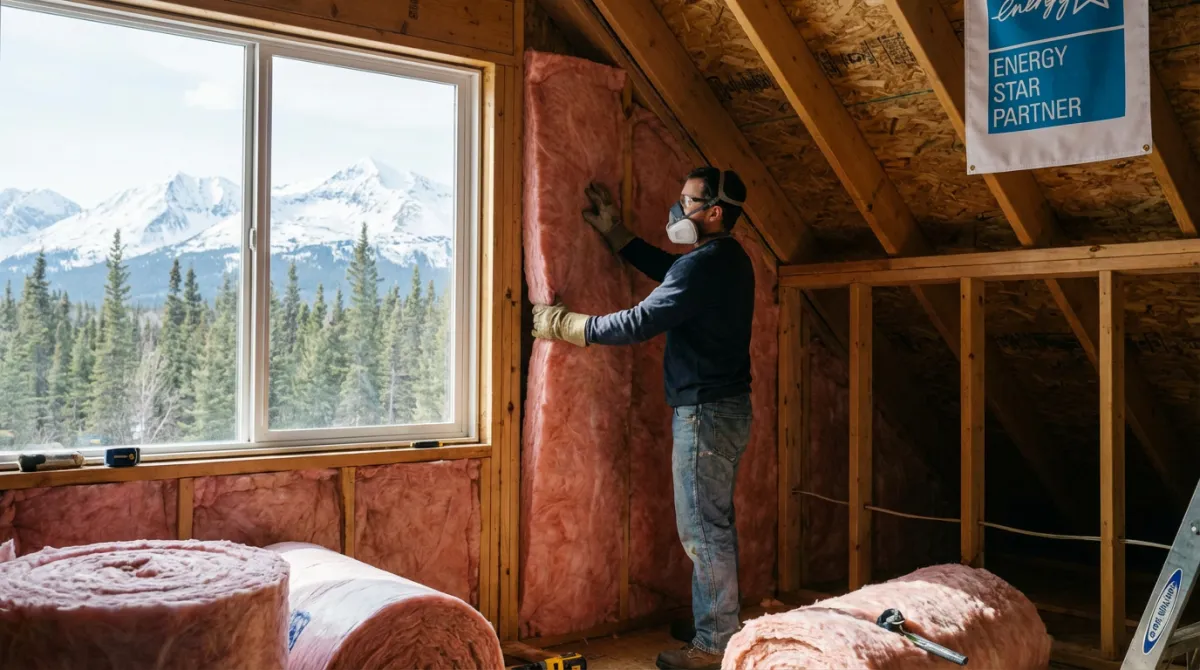
Heating an Alaska home through a seven-month winter is expensive. For many homeowners, the single most effective way to lower that bill is improving insulation. The difference between a well-insulated home and one with gaps, thin batts, or outdated materials can be hundreds of dollars a month when temperatures drop to -20F or below — and in Interior Alaska, those temperatures are routine.
This guide covers what Alaska homeowners need to know about insulation: the R-values your climate zone demands, the types of insulation that perform best in extreme cold, where to focus your upgrades, and how to take advantage of AHFC energy rebates that can offset the cost.
Why Insulation Matters More in Alaska
Heat loss follows physics. Warm air moves toward cold air, and in Alaska, the temperature difference between inside and outside can exceed 100 degrees Fahrenheit. A home heated to 68F with -40F outside creates a 108-degree differential — far beyond what homes in the lower 48 typically face.
That differential drives heat through every weak point in your building envelope: thin attic insulation, uninsulated walls, poorly sealed crawlspaces, single-pane windows, and gaps around penetrations. The harder your heating system works to replace that lost heat, the more you pay.
According to the Alaska Housing Finance Corporation (AHFC), heating costs in Alaska typically range from $2,500 to $5,000+ per year depending on fuel source, home size, and — critically — insulation quality. Upgrading insulation is often the highest-return investment an Alaska homeowner can make.
R-Value Requirements by Alaska Climate Zone
R-value measures insulation’s resistance to heat flow. Higher R-values mean better thermal performance. Alaska’s building codes and energy standards set minimum R-values that are significantly higher than national averages.
Alaska falls primarily into IECC Climate Zones 7 and 8 — the coldest classifications in the United States. Here are the recommended minimum R-values for residential construction:
| Building Component | Zone 7 (Southcentral) | Zone 8 (Interior/North) |
|---|---|---|
| Attic / Ceiling | R-49 to R-60 | R-60+ |
| Walls (wood frame) | R-21 to R-30 | R-30 to R-40+ |
| Floor / Crawlspace | R-38 | R-38 to R-49 |
| Basement Walls | R-15 to R-21 | R-21+ |
| Rim Joist | R-21 | R-30 |
Many older Alaska homes — particularly those built before the 1980s — have insulation levels well below these targets. An attic with R-19 batts (common in homes from the 1970s) is performing at roughly one-third of what current standards call for. That gap translates directly into heat loss and higher utility bills.
What Zone Are You In?
- Zone 7 covers most of Southcentral Alaska, including Anchorage, the Kenai Peninsula, and parts of Southeast Alaska.
- Zone 8 covers Interior and Northern Alaska, including Fairbanks, the North Slope, and Western Alaska.
If you’re unsure, your borough’s building department or an AHFC-approved energy rater can confirm your zone.
Types of Insulation for Alaska Homes
Not all insulation performs equally in extreme cold. Here’s how the main types compare for Alaska applications.
Spray Foam Insulation
Spray foam is considered by many contractors to be the gold standard for Alaska homes. It comes in two varieties:
- Closed-cell spray foam — R-6 to R-7 per inch. Acts as both insulation and a vapor barrier. Excellent air sealing properties. Ideal for rim joists, crawlspaces, and areas where moisture control matters. More expensive but delivers superior performance per inch.
- Open-cell spray foam — R-3.5 to R-3.7 per inch. More affordable but requires a separate vapor barrier in cold climates. Better for interior wall cavities where moisture isn’t the primary concern.
Closed-cell spray foam is particularly effective in Alaska because it seals air leaks and blocks moisture simultaneously. Air leakage typically accounts for 25-40% of heat loss in a home — more than insulation gaps alone.
Typical cost: $1.50–$3.50 per square foot installed, depending on thickness and accessibility.
Blown-In Cellulose
Cellulose is made from recycled paper products treated with fire retardant. It’s blown into attics and wall cavities, filling gaps and settling around obstructions that batt insulation can’t reach.
- R-value: R-3.2 to R-3.8 per inch
- Best for: Attic floors, retrofitting existing wall cavities
- Pros: Cost-effective, good coverage, recycled material
- Cons: Can settle over time (reducing effective R-value), absorbs moisture if vapor barrier fails
For attic upgrades, blown-in cellulose is often the most cost-effective way to reach R-49 or R-60. A 16- to 20-inch layer of cellulose on an attic floor can bring older homes up to current standards without major structural work.
Typical cost: $0.80–$1.50 per square foot for attic applications.
Rigid Foam Board
Rigid foam panels — typically EPS (expanded polystyrene), XPS (extruded polystyrene), or polyisocyanurate — provide continuous insulation on exterior walls, foundations, and under slabs.
- R-value: R-3.8 (EPS) to R-6.5 (polyiso) per inch
- Best for: Exterior wall sheathing, basement walls, under-slab insulation, foundation perimeters
- Pros: Continuous thermal break (no studs conducting heat), moisture resistant (XPS), high R-value per inch (polyiso)
- Cons: Must be covered with a fire barrier when used indoors, joints need taping/sealing
In Alaska, adding rigid foam to the exterior of a home during re-siding is a popular upgrade. A 2-inch layer of XPS (R-10) over existing wall sheathing, combined with the cavity insulation already in the walls, can bring total wall R-value into the R-30+ range.
Typical cost: $1.00–$2.50 per square foot for material; installation varies.
Structural Insulated Panels (SIPs)
SIPs are prefabricated panels consisting of an insulating foam core sandwiched between two structural facings (typically OSB). They’re used for walls, roofs, and floors in new construction.
- R-value: R-22 to R-45+ depending on panel thickness
- Best for: New construction, major additions, arctic-grade builds
- Pros: Extremely airtight, fast installation during Alaska’s short building season, consistent R-value with no thermal bridging
- Cons: Higher upfront cost, requires crane equipment for large panels, limited retrofit applications
SIPs are increasingly popular in Alaska new construction, particularly in rural areas where the short construction season (May through September) puts a premium on speed. A SIP shell can go up in days rather than weeks.
Fiberglass Batts
Standard fiberglass batts remain the most common insulation in existing Alaska homes, though they’re rarely the best performer.
- R-value: R-3.0 to R-3.8 per inch
- Best for: Standard wall cavities, attic floors (when properly installed)
- Cons: Gaps and compression reduce actual performance significantly. A batt that’s compressed, improperly cut, or installed around wiring and pipes can lose 20-40% of its rated R-value.
If your home has fiberglass batts in the attic, they may still be worth keeping — but adding blown-in cellulose on top of them is a common and effective strategy.
Where to Focus: Attic, Walls, and Crawlspace
Not every insulation upgrade delivers the same return. Here’s where to prioritize.
Attic (Highest Priority)
Heat rises, and in a poorly insulated attic, it keeps going — right through the roof. Attic insulation upgrades are typically the most cost-effective improvement because:
- Attic access is usually straightforward
- Blown-in insulation doesn’t require opening walls
- The temperature differential at the roof line is the largest in the home
- Bringing an R-19 attic to R-49 can reduce heating costs by 15-25%
Before adding insulation, seal all air penetrations in the attic floor: around plumbing stacks, electrical boxes, recessed lights, and the tops of interior walls. Air sealing before insulating dramatically improves performance.
Walls
Wall insulation retrofits are more invasive and expensive, but they matter — especially in older homes with 2x4 walls (limited to R-13 with fiberglass) when current standards call for R-21 to R-40.
Options for improving wall insulation include:
- Dense-pack cellulose blown into existing wall cavities through small holes (minimally invasive)
- Exterior rigid foam added during a re-siding project
- Interior rigid foam added during a remodel (reduces room dimensions slightly)
Crawlspace and Foundation
An uninsulated crawlspace is a massive heat sink. Options include:
- Insulating the crawlspace ceiling (the floor above) with batts or spray foam
- Insulating the crawlspace walls and sealing the space as a conditioned area
- Adding rigid foam to basement walls, either interior or exterior
In permafrost areas around Fairbanks and Interior Alaska, foundation insulation decisions are more complex. Insulating a foundation over permafrost can change the thermal balance of the soil underneath. Consult with a contractor experienced in permafrost construction before making changes.
Vapor Barriers in Cold Climates
Moisture management is critical in Alaska. Warm, humid interior air that migrates into cold wall or ceiling cavities can condense and cause rot, mold, and insulation failure.
In cold climates, the vapor barrier goes on the warm side of the insulation — facing the interior of the home. This prevents interior moisture from reaching the cold outer wall cavity where it would condense.
Key principles:
- Polyethylene sheeting (6-mil) on the warm side of walls and ceilings is standard practice in Alaska construction
- Closed-cell spray foam acts as its own vapor barrier and may eliminate the need for separate poly
- Never put a vapor barrier on both sides of a wall assembly — moisture that gets in must be able to dry in at least one direction
- Ventilate attics to allow any moisture that reaches the cold side to escape
Getting vapor barriers wrong in Alaska can cause more damage than no insulation at all. This is one area where hiring an experienced insulation contractor familiar with cold-climate building science typically pays for itself. If you’re unsure about your home’s current vapor management, an energy audit through AHFC can identify problems before they become expensive.
AHFC Energy Rebates for Insulation Upgrades
The Alaska Housing Finance Corporation offers rebates for energy efficiency improvements through its Home Energy Rebate Program. The program works like this:
- Get an energy audit — An AHFC-approved energy rater evaluates your home and assigns an energy rating (1 to 6 stars, with 6 being the most efficient).
- Make improvements — Complete eligible upgrades including insulation, air sealing, windows, and heating systems.
- Get a post-improvement audit — The rater returns to verify the work and assigns a new rating.
- Receive your rebate — The rebate amount depends on how many rating points your home gains. Typical rebates range from $3,000 to $10,000+.
Insulation upgrades are among the most common improvements funded through this program because they deliver measurable rating improvements. An attic insulation upgrade from R-19 to R-49 alone can move a home up one or more rating points.
The program is available to homeowners throughout Alaska, and the rebate can significantly offset the cost of professional insulation work. Check AHFC’s website for current program details, as funding and terms may change.
What Does Insulation Cost in Alaska?
Costs vary by region, accessibility, and insulation type. Here are rough ranges for common projects:
| Project | Typical Cost Range |
|---|---|
| Attic blow-in (1,500 sq ft) | $2,000–$4,500 |
| Wall dense-pack cellulose | $3,500–$7,000 |
| Crawlspace spray foam | $2,500–$6,000 |
| Exterior rigid foam (during re-side) | $4,000–$10,000+ |
| Full home spray foam package | $8,000–$20,000+ |
Rural areas and communities off the road system may see significantly higher costs due to material shipping. In remote parts of Western and Northern Alaska, material costs alone can be double what they are in Anchorage or the Mat-Su Valley.
For most homeowners, starting with an attic upgrade and air sealing delivers the best return per dollar spent. You can always tackle walls and crawlspaces in future phases.
Finding the Right Insulation Contractor
Insulation work in Alaska requires more than generic experience. The contractor you hire should understand cold-climate building science, vapor barrier placement, and the specific challenges of your region — whether that’s permafrost in the Interior, moisture in Southeast, or wind-driven snow in Western Alaska.
Look for contractors who:
- Are familiar with AHFC energy rebate requirements
- Have experience with your specific insulation type
- Can explain their approach to air sealing and vapor management
- Carry proper licensing and insurance for your borough
An insulation upgrade is one of the best investments you can make in an Alaska home. Done right, it pays for itself through lower heating bills, improved comfort, and a more durable building envelope. If your home was built before the 1990s and hasn’t had insulation work, there’s a good chance you’re leaving money on the table every winter.
For a broader look at keeping your home warm and efficient, check out our Alaska Home Heating Guide and our guide to winterizing your Alaska home.
Planning a major home project? A HELOC or home equity loan from Premier Mortgage can fund renovations, repairs, and upgrades at competitive rates. Premier Mortgage | NMLS# 1168048 | Equal Housing Lender
Frequently Asked Questions
What R-value insulation do I need for an Alaska home?
Alaska’s climate demands high R-values. The general recommendation for attics in Southcentral and Interior Alaska is R-49 to R-60. Walls should be R-21 to R-33 depending on construction type, and floors over unheated spaces need R-25 to R-38. Local energy codes and your specific climate zone determine the exact requirements.
How much does it cost to insulate a home in Alaska?
Insulating a full Alaska home ranges from $5,000 for targeted upgrades like attic blow-in to $20,000 or more for comprehensive wall, floor, and attic insulation. Spray foam costs more per square foot than fiberglass or cellulose but offers superior air sealing. AHFC and some utilities offer rebates or financing for energy efficiency upgrades.
What type of insulation works best in Alaska’s cold climate?
Closed-cell spray foam provides the highest R-value per inch and doubles as an air and moisture barrier, making it ideal for Alaska. Blown-in cellulose works well for attics and is more cost-effective. Fiberglass batts are the most affordable option but must be installed without gaps or compression to perform correctly in extreme cold.
Can I insulate my Alaska home myself?
DIY insulation is possible for attic blow-in and some batt installations, but spray foam requires professional equipment and training. Improper installation — gaps, compression, or incorrect vapor barrier placement — can trap moisture and cause mold or structural damage. Given Alaska’s extreme conditions, professional installation is recommended for most projects.
Does adding insulation reduce heating costs in Alaska?
Yes, significantly. Properly insulating an under-insulated Alaska home can reduce heating costs by 20–40% depending on the starting condition. In a state where annual heating bills can exceed $3,000 to $5,000, the payback period on insulation upgrades is often just 2–5 years.
Finance Your Home Improvement Project
A HELOC or home equity loan from Premier Mortgage lets you tap your home's value to fund renovations, repairs, and upgrades at competitive rates.
Or call 9078411600
Disclaimer: This article is for informational purposes only and does not constitute financial, mortgage, legal, or tax advice. Interest rates, loan programs, eligibility requirements, and fees are subject to change without notice and may vary based on your individual circumstances. Alaska Home HQ is not a lender, broker, or financial institution. All loan applications are processed by Premier Mortgage (NMLS: 1168048). We may have a business relationship with Premier Mortgage and may receive compensation when you use their services through our links. Consult a licensed mortgage professional before making financial decisions. Terms of Service · Privacy Policy