Plumbing for Alaska Homes: What Homeowners Need to Know
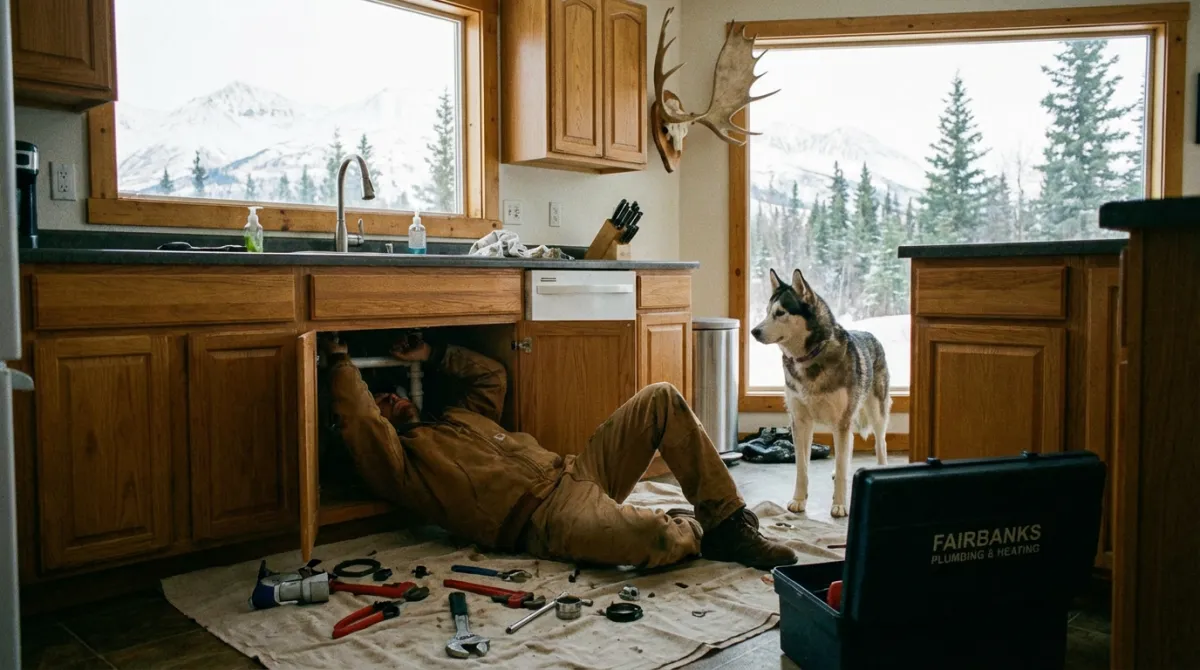
Plumbing in Alaska isn’t like plumbing anywhere else. Between permafrost that shifts the ground beneath your pipes, winter temperatures that routinely dip to -40F, well water systems loaded with iron and minerals, and septic tanks that the cold treats as a personal challenge — Alaska homeowners face a set of plumbing realities that most of the lower 48 never has to think about.
Whether you’re a new homeowner wondering why your water smells like metal or a long-time Alaskan trying to figure out why your heat trace system keeps tripping the breaker, this guide covers the plumbing issues that matter most in the Last Frontier.
Well Water Systems
Outside of Anchorage, Fairbanks, Juneau, and a handful of other municipalities with public water, most Alaska homes rely on private wells. In the Mat-Su Valley, the Kenai Peninsula, and virtually all rural areas, your water comes from the ground — and you’re responsible for maintaining the system that gets it into your house.
How Alaska Well Systems Work
A typical residential well system includes:
- The well itself — Drilled anywhere from 40 to 300+ feet deep depending on the water table and geology
- A submersible pump — Sits at the bottom of the well and pushes water up to the surface
- A pressure tank — Stores water under pressure so the pump doesn’t run every time you open a faucet
- A pressure switch — Turns the pump on and off to maintain pressure (typically 40-60 PSI)
- A pitless adapter — Connects the well casing to the underground water line, keeping the connection below the frost line
Common Well Issues in Alaska
- Low yield — Some areas, particularly in the Fairbanks region, have wells that produce limited gallons per minute. A storage tank system may be needed if your well can’t keep up with demand.
- Sediment and turbidity — Glacial silt, sand, and clay particles are common in Alaska groundwater and can clog fixtures, damage appliances, and wear out pump components.
- Iron and manganese — High mineral content is widespread. Orange staining on fixtures, metallic taste, and discolored laundry are telltale signs. Treatment systems (iron filters, water softeners) are often necessary.
- Pump failure — Submersible pumps typically last 8-15 years. Replacement involves pulling the pump from the well — a job that generally requires professional equipment.
Typical costs: Well pump replacement runs $1,500–$3,500 installed. A new well drilled in Southcentral Alaska may cost $8,000–$20,000+ depending on depth and site access.
Septic Systems
If you’re on well water, you’re almost certainly on septic too. Alaska’s rural character means tens of thousands of homes rely on on-site wastewater treatment rather than municipal sewer.
How Septic Works in Alaska’s Climate
A standard septic system has two main components:
- Septic tank — Holds wastewater while solids settle and bacteria break down organic matter
- Drain field (leach field) — Distributes treated effluent into the soil for final filtration
Alaska’s cold complicates both parts. Biological activity in the tank slows dramatically in cold temperatures, which means solids break down more slowly and tanks may need pumping more frequently than in warmer climates. Drain fields can freeze, especially in areas with shallow frost penetration or permafrost.
Septic Considerations for Alaska Homeowners
- Pump every 2-3 years — Many Alaska plumbing professionals recommend pumping more frequently than the national 3-5 year guideline because cold temperatures slow the biological process.
- Insulate exposed components — Tank lids, risers, and shallow distribution lines may need insulation to prevent freezing.
- Watch for permafrost — In permafrost areas, traditional drain fields don’t work well because the soil stays frozen and can’t absorb effluent. Alternative systems — mound systems, holding tanks, or engineered systems — are typically required. These cost more and need professional design.
- DEC permitting — The Alaska Department of Environmental Conservation (DEC) regulates septic system installation and repair. Permits are required for new installations and major modifications.
Typical costs: Septic tank pumping runs $350–$600 per visit. A new conventional septic system in Alaska may cost $15,000–$30,000. Engineered systems for challenging sites can exceed $40,000.
Permafrost and Your Pipes
Permafrost — ground that stays frozen year-round — underlies significant portions of Interior and Northern Alaska. For plumbing, permafrost creates two problems:
Ground Movement
When permafrost thaws (whether from climate change, construction disturbance, or heat from a building), the ground settles unevenly. This can:
- Crack water and sewer lines buried underground
- Shift pipe connections at the foundation
- Create bellies (low points) in drain lines that collect water and freeze
- Displace septic tanks and drain field components
Frozen Pipe Risk
In permafrost areas, the active layer (the soil that thaws seasonally) is often too shallow to bury pipes below the frost line. Water and sewer lines may run at depths where freezing is a real threat, even with insulation.
Solutions include:
- Heat trace cable — Electric cable that wraps around or runs alongside pipes to keep them above freezing (more on this below)
- Insulated utilidors — Above-ground or shallow-buried insulated conduits that carry water and sewer lines, common in rural communities
- Recirculation systems — Continuously moving water through supply lines to prevent standing water from freezing
If you’re buying a home in a permafrost area near Fairbanks or further north, ask specifically about the plumbing configuration. A home inspection should flag permafrost-related plumbing risks, but not every inspector has experience with these systems. Our guide to buying a house in Alaska covers what to look for during the inspection process.
Heat Trace Systems
Heat trace (also called heat tape) is an electric heating cable system that prevents pipes from freezing. In Alaska, it’s not optional for many homes — it’s essential infrastructure.
Where Heat Trace Is Used
- Water supply lines from the well or municipal connection to the house
- Drain lines running through unheated crawlspaces or near exterior walls
- Septic lines in areas with shallow burial depth
- Roof and gutter systems to prevent ice dams (a separate application but related technology)
Types of Heat Trace
- Self-regulating cable — Adjusts heat output based on pipe temperature. Uses more power when it’s colder, less when it’s warmer. More energy-efficient and less likely to overheat. This is the preferred type for most Alaska residential applications.
- Constant-wattage cable — Produces the same heat regardless of temperature. Simpler but less efficient and carries a higher risk of overheating if improperly installed.
Maintenance and Costs
Heat trace systems are electrical devices that wear out over time. Common issues include:
- Cable degradation from age, UV exposure, or rodent damage
- Thermostat or controller failure
- Tripped breakers (which may go unnoticed until a pipe freezes)
- High electricity costs during deep cold snaps
Self-regulating heat trace cable typically costs $3–$8 per linear foot for materials. Professional installation — including insulation, thermostats, and electrical connections — may run $500–$2,000+ depending on the length of pipe and accessibility. Consider budgeting for annual inspection of your heat trace system before freeze-up in October. A failed heat trace cable discovered in January at -30F is an emergency.
Water Treatment
Alaska groundwater is generally safe to drink, but it often needs treatment to be pleasant and to protect your plumbing fixtures and appliances.
Common Water Quality Issues
| Issue | Symptoms | Treatment |
|---|---|---|
| Iron / manganese | Orange or black staining, metallic taste | Iron filter, oxidation system |
| Hardness | Scale buildup, soap doesn’t lather, dry skin | Water softener |
| Sediment | Cloudy water, grit in fixtures | Sediment filter |
| Low pH (acidic water) | Blue-green staining on copper fixtures, pipe corrosion | Acid neutralizer |
| Bacteria | Required testing after new well or flooding | UV sterilizer, chlorination |
| Sulfur | Rotten egg smell | Aeration, carbon filtration |
If you’re on a private well, getting your water tested annually is a good practice. The Alaska DEC Drinking Water Program provides guidance on testing, and local labs in Anchorage and Fairbanks can process samples.
Typical costs: A basic whole-house filtration system runs $500–$1,500 installed. A comprehensive system addressing iron, hardness, and sediment may cost $3,000–$6,000+.
Seasonal Plumbing Considerations
Alaska’s extreme seasons create a maintenance rhythm that differs from the rest of the country.
Fall (September–October)
- Winterize exterior faucets — Shut off interior valves to outdoor hose bibs and drain the lines. A forgotten hose bib is one of the most common causes of frozen and burst pipes in Alaska.
- Inspect heat trace — Test every heat trace circuit before temperatures drop. Replace any damaged cable.
- Check crawlspace insulation — Verify that crawlspace vents are closed (or sealed) and pipe insulation is intact.
- Pump the septic tank if it’s due — don’t wait until the ground is frozen.
Winter (November–March)
- Monitor heat trace — Keep an eye on breakers serving heat trace circuits. If a breaker trips and you don’t notice, pipes can freeze within hours at -20F or below.
- Keep a slow drip on extremely cold nights if you have vulnerable supply lines, particularly in older homes without heat trace.
- Know your shut-off valve — If a pipe bursts, you need to stop the water fast. Make sure every household member knows where the main shut-off is and how to operate it.
Spring (April–May)
- Inspect for freeze damage — Check exposed pipes, fittings, and water heater connections for cracks or leaks that may have occurred during the winter.
- Turn on exterior faucets — Slowly open outdoor hose bibs and watch for leaks.
- Schedule septic pumping if the ground has thawed enough for the pumper to access the tank.
Summer (June–August)
- Well maintenance — Summer is the best time for well-related work: replacing pumps, treating for bacteria, or addressing yield issues.
- Drainage improvements — Grade landscaping away from the foundation and clear drainage paths before fall rains.
For a complete seasonal approach to home maintenance, see our guide to winterizing your Alaska home.
When to Call a Plumber
Some plumbing tasks are within reach for handy homeowners — replacing a faucet, snaking a minor drain clog, or adding pipe insulation. But Alaska’s climate makes many plumbing issues higher-stakes than they’d be in milder areas. A small leak in an unheated crawlspace at -30F can turn into a frozen, burst pipe and significant water damage in hours.
Call a professional for:
- Frozen pipes — Attempting to thaw pipes yourself with torches or heat guns can cause fires or pipe damage. Plumbers have the tools and experience to thaw safely.
- Well pump issues — Pulling and replacing a submersible pump requires specialized equipment.
- Septic problems — Sewage backups, failed drain fields, and permitting for repairs all need professional handling.
- Heat trace installation or repair — Improperly installed heat trace is a fire hazard and an electrical code issue.
- Water heater replacement — Especially if switching fuel types or upgrading capacity.
- Any work requiring permits — Your borough may require licensed plumbers for certain work. Check local codes.
Typical service call costs: A plumber’s service call in Alaska typically starts at $125–$200, with hourly rates ranging from $100–$175+. Emergency and after-hours calls may be significantly higher, particularly in rural areas where fewer plumbers are available.
Finding a Plumber in Alaska
Alaska’s geography means plumber availability varies dramatically. In Anchorage and the Mat-Su Valley, you’ll have plenty of options. In rural communities, you may have one — or none within driving distance.
When choosing a plumber, look for:
- Experience with Alaska-specific systems — Well pumps, septic, heat trace, and permafrost plumbing aren’t things every plumber handles
- Proper licensing — Requirements vary by borough; check with your local building department
- Emergency availability — A burst pipe at -40F can’t wait until Monday morning
- References from other Alaska homeowners — Word of mouth remains the most reliable way to find good tradespeople in Alaska
Planning a major home project? A HELOC or home equity loan from Premier Mortgage can fund renovations, repairs, and upgrades at competitive rates. Premier Mortgage | NMLS# 1168048 | Equal Housing Lender
Frequently Asked Questions
Do Alaska homes need special plumbing for cold weather?
Yes. Alaska homes require insulated pipes, heat tape on exposed lines, and often deeper-than-standard water and sewer line burial to stay below the frost line. Many homes also use circulating pump systems to keep hot water moving and prevent freezing in long pipe runs between the water heater and fixtures.
How much does a plumber cost in Alaska?
Plumbing rates in Alaska typically range from $100 to $200 per hour, with emergency and after-hours calls running higher. Remote locations outside Anchorage and Fairbanks may incur travel surcharges. Getting multiple quotes for non-emergency work is the best way to ensure fair pricing.
How do I find a licensed plumber in Alaska?
Alaska does not have a statewide plumbing license requirement, but Anchorage and some other municipalities require local trade licensing. Verify credentials through your local municipality, check insurance coverage, and read reviews from other Alaska homeowners. Asking for references from prior cold-climate jobs is especially important.
What plumbing issues are most common in Alaska homes?
Frozen and burst pipes are the most common cold-climate plumbing emergency. Other frequent issues include water heater failures due to mineral buildup from well water, sewer line freezing in improperly insulated installations, and sump pump failures during spring snowmelt. Routine maintenance catches most of these problems early.
Can I do my own plumbing work in Alaska?
Homeowners can perform basic plumbing repairs in most Alaska jurisdictions, but work involving gas lines, sewer connections, or new installations typically requires a permit and inspection. DIY errors in cold-climate plumbing can lead to catastrophic freeze damage, so err on the side of hiring a professional for anything beyond simple fixture replacements.
Finance Your Home Improvement Project
A HELOC or home equity loan from Premier Mortgage lets you tap your home's value to fund renovations, repairs, and upgrades at competitive rates.
Or call 9078411600
Disclaimer: This article is for informational purposes only and does not constitute financial, mortgage, legal, or tax advice. Interest rates, loan programs, eligibility requirements, and fees are subject to change without notice and may vary based on your individual circumstances. Alaska Home HQ is not a lender, broker, or financial institution. All loan applications are processed by Premier Mortgage (NMLS: 1168048). We may have a business relationship with Premier Mortgage and may receive compensation when you use their services through our links. Consult a licensed mortgage professional before making financial decisions. Terms of Service · Privacy Policy