Preventing Frozen Pipes in Alaska
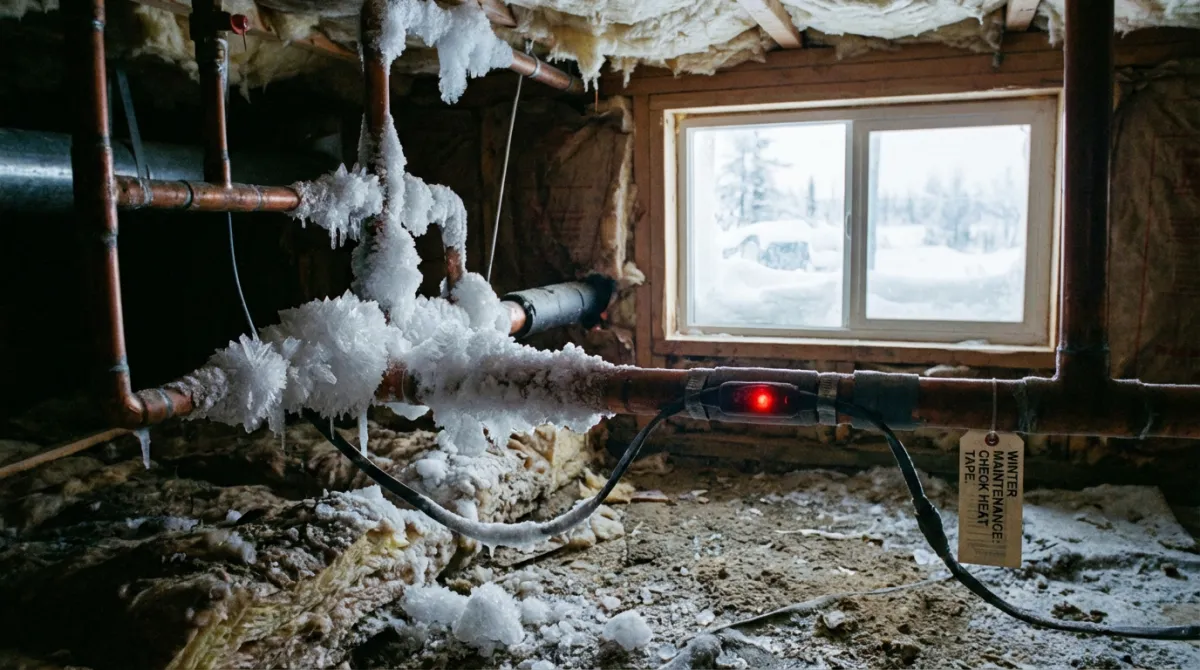
Frozen pipes are one of the most common and most costly winter emergencies in Alaska. When temperatures drop to -30°F or -40°F — which happens routinely in Fairbanks, the Interior, and parts of the Mat-Su Valley — water inside unprotected pipes can freeze solid within hours. When that ice expands, it builds pressure that can split copper, crack PVC, and burst fittings. A single burst pipe can release hundreds of gallons of water into your home before you notice, causing thousands of dollars in damage.
The good news: frozen pipes are almost entirely preventable. It takes some preparation, a little investment, and an understanding of where your home is vulnerable. This guide covers what works, what doesn’t, and what to do if prevention fails.
Why Pipes Freeze in Alaska
Pipes freeze when the temperature of the air surrounding them drops below 32°F long enough for the water inside to reach freezing. In most of the Lower 48, this happens during occasional cold snaps. In Alaska, these conditions can persist for weeks or months.
Factors that increase freeze risk:
- Pipes in exterior walls — especially north-facing walls with minimal insulation
- Pipes in unheated spaces — crawl spaces, garages, attics, unfinished basements
- Pipes near exterior openings — where cables, wires, or dryer vents penetrate the wall, letting cold air in
- Homes on pier-and-post foundations — common in permafrost areas, where the entire underside of the home is exposed to sub-zero air
- Wind chill — wind blowing across exposed pipes or through gaps in skirting dramatically accelerates heat loss
- Power outages — when the heating system shuts down and indoor temperatures drop
In Alaska’s extreme cold, even pipes inside heated walls can freeze if insulation is thin or if the home has significant air leaks. At -40°F, the temperature differential between your 68°F interior and the outdoors is over 100 degrees — a massive force working against you.
Prevention: What Actually Works
Heat Tape (Heat Cable)
Heat tape is the front line of defense for vulnerable pipes in Alaska. It’s an electric cable that wraps around or runs alongside a pipe and provides enough warmth to prevent freezing.
Two types:
- Self-regulating heat tape adjusts its heat output based on the surrounding temperature. It uses more energy when it’s colder and less when it’s warmer. It’s safer, more energy-efficient, and generally the better choice for Alaska applications. It won’t overheat even if sections overlap.
- Constant-wattage heat tape produces the same heat regardless of temperature. It’s cheaper but must be installed carefully — overlapping can create hot spots that may damage pipes or, in rare cases, start fires. It also requires a thermostat to cycle on and off.
Installation tips:
- Apply heat tape to the bottom of horizontal pipes (heat rises) and spiral it around vertical pipes
- Secure with cable ties or tape rated for the temperature range — don’t use standard electrical tape
- Always insulate over heat tape. The tape heats the pipe, and the insulation keeps that heat from dissipating into cold air. Without insulation, heat tape works much harder and uses more electricity.
- Connect to a GFCI-protected outlet. Heat tape in wet or damp environments (crawl spaces) should always have ground fault protection.
Cost: Self-regulating heat tape typically costs $5–$15 per linear foot. A professional installation on a typical home may run $500–$2,000 depending on how many pipe runs need protection.
Pipe Insulation
Insulation alone won’t prevent freezing in Alaska’s extreme cold — it only slows heat loss. But combined with heat tape or a consistent heat source, it’s essential.
- Foam pipe insulation (the black or gray tubes that snap around pipes) is the most common. Use at least 1-inch wall thickness for Alaska applications.
- Fiberglass pipe wrap provides higher R-values and is suitable for larger pipes or irregular shapes.
- Insulate every exposed pipe in unheated spaces — not just supply lines. Drain lines can freeze too, and a frozen drain pipe creates a backup problem that’s messy and difficult to resolve.
- Pay special attention to elbows, tees, and valves — these fittings are often left uninsulated, creating cold spots where ice can form.
Keep Cabinet Doors Open
During cold snaps, opening cabinet doors under kitchen and bathroom sinks allows warm room air to circulate around pipes that run through exterior walls. It’s simple, free, and effective as a supplemental measure.
This is especially important in older Alaska homes where plumbing may run through exterior walls with minimal insulation — a common construction shortcut that creates ongoing freeze risk.
Dripping Faucets
Keeping a slight drip running through faucets connected to vulnerable pipes can help prevent freezing. Moving water freezes at a lower temperature than standing water, and the continuous flow relieves pressure buildup that causes pipe bursts.
Practical notes:
- A drip from both hot and cold taps is more effective than cold only
- The drip doesn’t need to be heavy — a steady trickle is enough
- If you’re on a well with a pressure tank, be aware that continuous dripping causes the pump to cycle more frequently
- This is a supplement, not a substitute for heat tape and insulation. In sustained -40°F conditions, a drip alone may not prevent freezing in an exposed pipe
Thermostat Settings
- Never set your thermostat below 55°F, even when away. In Interior Alaska, 60°F is a safer minimum.
- Avoid deep temperature setbacks overnight or while at work. The energy saved by dropping to 58°F is quickly wiped out by the cost of a single burst pipe.
- If leaving home for an extended period during winter (vacation, work travel), consider having someone check the house daily, or install a temperature monitoring system that alerts you if indoor temps drop dangerously low. Remote temperature monitors cost $50–$150 and can send phone alerts.
Crawl Space and Skirting
Homes on raised foundations — pier and post, block, or piling — are especially vulnerable because pipes in the crawl space are exposed to outdoor temperatures.
- Insulate the crawl space perimeter (skirting) and seal it against wind infiltration. In Alaska, a well-sealed and insulated crawl space that captures some ground heat is typically better than a vented one.
- Add a heat source to the crawl space. A small electric heater on a thermostat, a heat lamp, or running a heating duct to the crawl space can keep temperatures above freezing.
- Insulate the underside of the floor above the crawl space with at least R-30 insulation, vapor barrier facing the warm side.
For more on preparing your home’s vulnerable areas for winter, see our winterization guide.
What to Do When Pipes Freeze
Despite your best efforts, pipes can still freeze — especially during extended cold snaps, power outages, or in areas of your home you didn’t realize were vulnerable. Here’s how to handle it.
Signs of a Frozen Pipe
- No water or reduced flow from a faucet
- Frost visible on an exposed pipe
- Unusual odors from a drain (frozen drain pipe backing up)
- Gurgling or banging sounds in the plumbing
Thawing a Frozen Pipe (DIY)
If you can locate the frozen section and it’s accessible:
- Open the faucet connected to the frozen pipe. As ice melts, water needs somewhere to go, and the flow helps melt remaining ice.
- Apply gentle heat starting from the faucet end and working toward the frozen section:
- Hair dryer or heat gun (on low)
- Electric heating pad wrapped around the pipe
- Towels soaked in hot water
- Portable space heater aimed at the area
- Never use an open flame — no propane torches, no blowtorches, no charcoal. This is how house fires start.
- Be patient. Thawing can take 30 minutes to several hours depending on the length of the frozen section and how cold it is.
When to Call a Plumber
Call a professional if:
- You can’t locate the frozen section
- The frozen pipe is inside a wall, ceiling, or floor and you can’t access it
- You see signs of a crack or split in the pipe
- Multiple pipes are frozen simultaneously (may indicate a heating system issue)
- The pipe doesn’t respond to gentle thawing after an hour
- Water is leaking — this means the pipe has already burst
Don’t wait on a suspected burst pipe. Shut off the main water supply immediately, then call a plumber.
Cost of Burst Pipe Repairs
The repair cost for a burst pipe itself may be relatively modest — often $200–$500 for a plumber to cut out the damaged section and replace it. But the water damage is where costs escalate:
| Damage Level | Typical Cost Range |
|---|---|
| Pipe repair only (caught quickly) | $200–$500 |
| Minor water damage (small area, caught within hours) | $1,000–$3,000 |
| Moderate water damage (flooring, drywall, some contents) | $3,000–$10,000 |
| Major water damage (structural, mold remediation) | $10,000–$50,000+ |
In Alaska, where contractors are in high demand and materials may need to ship from the Lower 48, repairs at the higher end of these ranges are not uncommon. Insurance may cover burst pipe damage, but policies vary — check yours before winter.
Special Considerations for Alaska
Permafrost Areas
In communities built on permafrost, water and sewer lines present unique challenges. Some homes use utilidors (insulated above-ground utility corridors) or have water delivery and holding tanks rather than buried pipes. If your home has a utilidor or arctic entry plumbing, maintenance of the heat source within that system is critical — failure means frozen lines.
Well Water Systems
Many Alaska homes outside municipal water systems rely on wells. The well pump, pressure tank, and supply lines between the well and the home are all vulnerable to freezing. Well pits (insulated underground enclosures around the wellhead) need to be properly sealed and heated. A well pump freeze-up can leave you without water until temperatures warm or a technician can access and thaw the equipment.
Vacation Homes and Cabins
If you have a seasonal cabin or a home that sits unoccupied during parts of winter:
- Winterize the plumbing completely — shut off water, drain all lines, add RV antifreeze to traps
- Or maintain heat — keep the heating system running at a minimum safe temperature with a remote monitoring system
- Splitting the difference (leaving water on but turning heat very low) is where many freeze disasters happen
Darkness and Monitoring
Alaska’s winter darkness — up to 20+ hours per day in Fairbanks — means you may not notice exterior issues like ice buildup on skirting, a failed heat tape circuit, or frost on pipes until the problem has progressed. Make it a habit to check vulnerable areas during the brief daylight hours, or use a flashlight/headlamp to do evening checks during extreme cold snaps.
Building for Prevention
If you’re building new or doing a major renovation, you can design out most freeze risk:
- Run plumbing through interior walls whenever possible, away from exterior surfaces
- Insulate exterior walls to R-21 or higher and ensure the vapor barrier is continuous
- Install dedicated circuits for heat tape so they’re not sharing breakers with other loads
- Add floor drains in areas where a pipe failure could cause significant damage (utility rooms, mechanical rooms)
- Consider a whole-house recirculation system that keeps hot water moving through pipes continuously
These measures cost more upfront but may save thousands in prevented damage and emergency repairs over the life of the home. If you’re evaluating a home purchase, plumbing location and freeze-prevention systems are worth asking about during the home buying process.
Find a Plumber Before You Need One
The worst time to search for a plumber is when water is spraying from a burst pipe at 2 a.m. on a -35°F January night. Identify a reliable plumber before an emergency happens. Keep their number in your phone and on your refrigerator.
Need to finance a plumbing upgrade or pipe replacement? A HELOC or home equity loan from Premier Mortgage can cover the cost of preventive plumbing work before freeze season. Premier Mortgage | NMLS# 1168048 | Equal Housing Lender
Frozen pipes are stressful, expensive, and disruptive — but they’re one of the most preventable winter problems in an Alaska home. A few hundred dollars in heat tape and insulation, combined with smart thermostat management and awareness of your home’s vulnerable spots, can save you from a repair bill that runs into the tens of thousands. In Alaska’s climate, pipe protection isn’t optional — it’s essential maintenance.
Frequently Asked Questions
At what temperature do pipes freeze in Alaska?
Pipes are at risk when exterior temperatures drop below 20°F, but in Alaska the real danger starts below 0°F — especially for pipes in unheated spaces like crawl spaces, garages, and exterior walls. Prolonged cold snaps at -20°F or below are when most pipe bursts occur, even in well-insulated homes.
How much does a frozen pipe repair cost in Alaska?
A simple thaw by a plumber runs $150 to $400, but if the pipe bursts, repair costs can range from $1,000 to $10,000 or more depending on the location and extent of water damage. Interior flooding from a burst pipe is one of the most common and expensive homeowner claims in Alaska.
Should I let my faucets drip to prevent freezing in Alaska?
Letting faucets drip during extreme cold is a proven preventive measure. A slow, steady drip relieves pressure in the pipe and keeps water moving, which makes freezing less likely. Focus on faucets fed by pipes that run through unheated or exterior-facing spaces.
Does heat tape actually work for Alaska homes?
Yes, self-regulating heat tape is one of the most effective tools for preventing frozen pipes in Alaska. It adjusts its heat output based on the surrounding temperature and can be applied to exposed pipes in crawl spaces, attics, and along exterior walls. Ensure the tape is UL-listed and installed according to manufacturer specifications.
What should I do if my pipes freeze in my Alaska home?
Turn off the main water supply immediately to limit damage if the pipe has cracked. Open the faucet to relieve pressure. Apply gentle heat using a hair dryer, heat lamp, or warm towels — never use an open flame. If you cannot locate or thaw the frozen section, call a licensed plumber before the pipe bursts.
Finance Your Home Improvement Project
A HELOC or home equity loan from Premier Mortgage lets you tap your home's value to fund renovations, repairs, and upgrades at competitive rates.
Or call 9078411600
Disclaimer: This article is for informational purposes only and does not constitute financial, mortgage, legal, or tax advice. Interest rates, loan programs, eligibility requirements, and fees are subject to change without notice and may vary based on your individual circumstances. Alaska Home HQ is not a lender, broker, or financial institution. All loan applications are processed by Premier Mortgage (NMLS: 1168048). We may have a business relationship with Premier Mortgage and may receive compensation when you use their services through our links. Consult a licensed mortgage professional before making financial decisions. Terms of Service · Privacy Policy