Alaska Mental Health Trust land
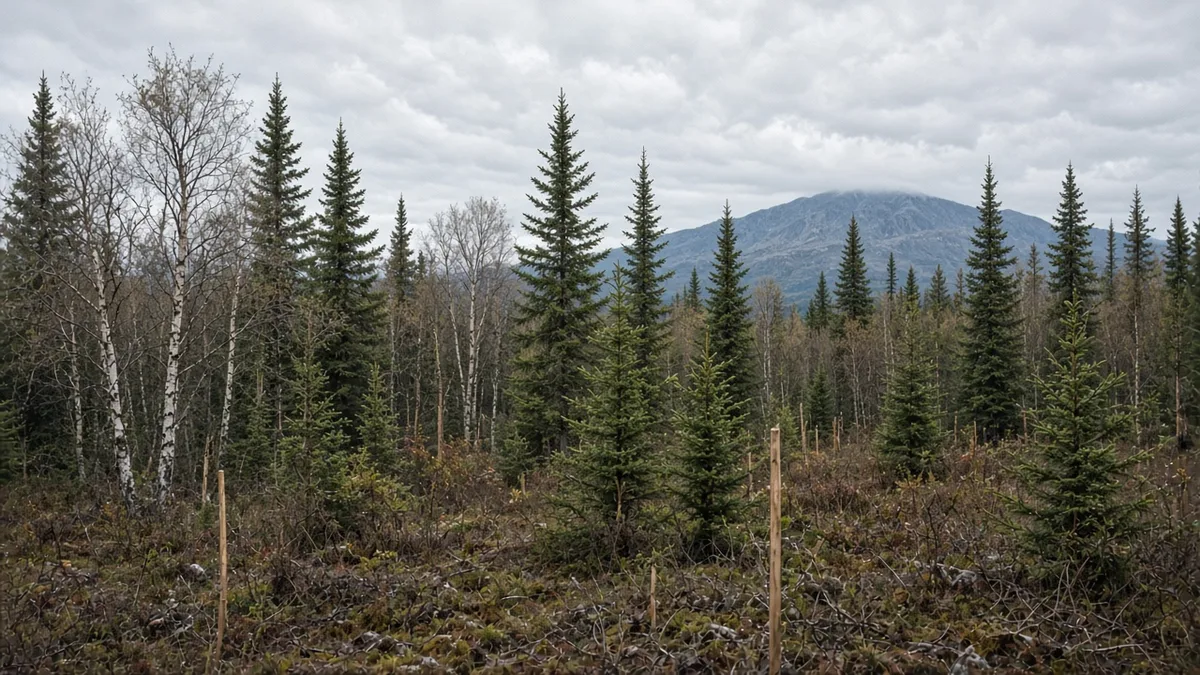
Alaska Mental Health Trust land is a separate estate. The Trust Land Office sells it to raise money for mental health trust beneficiaries. It is not the Department of Natural Resources catalog of general state land, and it is not a homestead. AS 38.05.801 says mental health trust land is managed consistent with the trust principles the Alaska Mental Health Enabling Act put on the state. 11 AAC 99.020 says that management is solely in the best interest of the trust and its beneficiaries, including long-term revenue from the land. A bargain for the buyer is not the mission.
DNR’s land-sales FAQ is the other door. DNR offers a sealed-bid auction of surveyed parcels, over-the-counter sales of auction leftovers, and the Remote Recreational Cabin Sites staking program. The same FAQ says the old homestead and homesite programs are gone. The homestead land page is that closed chapter. The state land sale page is the DNR offering. This page is the Trust offering. Alaska Home HQ is educational. It is not the Trust Land Office and it is not a lender. Rates vary. Subject to credit approval.
How Alaska Mental Health Trust land is sold
Disposal of trust land is competitive unless the executive director, after consulting the trust authority, writes a best-interest decision that a noncompetitive sale serves the beneficiaries, or an existing law that fits the trust rules allows a negotiated deal. That is 11 AAC 99.020(d). You do not nominate yourself into a quiet sale the way a rumor says. An application vests no rights. The office can reject it.
The Trust’s 2026 fall land sale procedures are a concrete example, not a permanent calendar. For that offering, sealed bids run from 10:00 a.m. on August 12, 2026, through 4:30 p.m. on November 16, 2026. The bid opening is 10:00 a.m. on November 18, 2026, at the Trust Land Office, 2600 Cordova Street, Suite 201, in Anchorage. You do not have to attend. A bidder has to be at least 18 on or before the opening date, current on any active Trust contract, and free of a Trust contract default in the past three years. Alaska residency is not required. A corporation can buy if it proves its status and the signer’s authority. DNR’s resident-only auction is a different rule book.
The bid deposit for that sale is at least 5 percent of the bid, or 10 percent if the parcel is in an alternate outcry round. The check is a cashier’s check, a money order, or the office’s card voucher, payable to the Trust Land Office. Personal checks are not a bid deposit. Collusion to hold the price down forfeits the deposit. An employee who got inside knowledge of the disposal at state expense is barred from bidding in the last 15 days.
There is no veteran discount. The procedures say the office does not offer the discount in AS 38.05.940, because a discount fights the duty to maximize long-term revenue. That statute gives an eligible veteran a once-in-a-lifetime 25 percent discount on the purchase price of state land sold under Title 38 and classified for a use other than commercial or industrial, and it does not apply the discount to survey costs, road costs, utility assessments, or other costs the commissioner finds reimbursable to the state. DNR’s FAQ describes that discount on DNR sales. That discount lives on the DNR side. Do not carry it into a Trust bid and then argue at the window.
Deed, minerals, and the contract that is not a mortgage
Trust parcels in that fall sale go by quitclaim deed, as-is and where-is. The office does not warrant title. The procedures say the mineral estate stays with the Trust when the Trust holds it, and they point buyers who want a title policy to buy one at their own expense. If the underlying title is not valid, the money paid to purchase the land is refunded, and the Trust’s further liability ends. That refund sentence is not a warranty that the driveway, the water, or the view will work. The mineral rights page is the reservation conversation. Read it before you picture a gravel pit as part of the purchase.
Legal access and a road are different. The procedures say access may be a section-line easement, a platted right-of-way, a trail, a navigable water body, or a crossing of unreserved state land, and that legal access may not be built, practical, or maintained. The section-line easement page is the statutory strip. The vacant land checklist is the visit. The office tells bidders to examine the parcel and to hire a surveyor to find the corners. A wrong turn onto the neighbor is your trespass, not a reason to redraw the lot.
Unsold fall-sale parcels may move to the Trust’s over-the-counter list. The procedures say those prices are typically marked up 30 percent above the auction minimum bid. That markup is a Trust OTC practice. DNR’s FAQ describes its own over-the-counter leftovers as available at appraised fair market value, first come, first served, including to nonresidents. Same English phrase, different agency, different price rule. Read the sheet for the parcel you are holding.
Financing through the Trust, on that 2026 sale, is a land contract, not a home loan. Within 30 days of the intent-to-award mailing, a buyer who wants the contract brings the down payment up to 10 percent of the price, pays a $500 processing fee, and returns the declaration form. Payoff instead of a contract is the price plus the same $500 fee. Contract interest is the Wall Street Journal prime rate on the first business day of the month the contract is sent, plus three percent, fixed for the term. The term cap depends on the amount financed: not more than 5 years from $2,000 to $9,999.99, 10 years from $10,000 to $14,999.99, 15 years from $15,000 to $19,999.99, and 20 years at $20,000 or more. At least $100 of principal is due each year. There is no prepayment penalty. The Trust will not subordinate to a construction lender. It stays in first position, or the buyer pays the contract off. That single rule is why a house loan on raw Trust land is a sequencing problem. The land purchase financing page is the mortgage side, and the property still has to qualify.
DNR’s FAQ describes a different contract: generally 5 percent down, a term up to 20 years, interest three points above prime, a nonrefundable handling fee of $360 for a person or $440 for a business plus a $45 recording fee, and payment in full when the amount left after the down payment is $2,000 or less. Those numbers are the general state-land contract. They are not the Trust contract. Neither number is a mortgage APR.
What a buyer does before the bid
Visit, or accept that you did not. The procedures say the bid is acceptance of the parcel as-is. Wetlands can require a U.S. Army Corps of Engineers permit before you build. An eagle nest is a U.S. Fish and Wildlife Service question, not a plat note you skip. Water and wastewater have to meet the Alaska Department of Environmental Conservation if you install a private system. Local taxes start once you hold the contract or the deed. The Trust does not promise neighbors will stay away, and DNR’s FAQ says the same about its own land: no guarantee of quality, and no promise of schools or fire protection on remote ground.
A Permanent Fund Dividend can be cash toward a down payment or a surveyor. It does not make a nonresident into a one-year Alaskan for a DNR auction, and the Trust sale does not use that residency test in the first place. It also does not move the Trust out of first lien position.
University land and borough land are third and fourth catalogs. DNR’s FAQ lists them so people stop asking the state for “the” land office. If the parcel number is an MHT number, you are in the Trust sale. If it is an ADL on a DNR brochure, you are in the other one.
Thinking about buying? Getting pre-approved helps you know your budget before you start shopping. Premier Mortgage (NMLS# 1168048) can help.
Frequently Asked Questions
Is Trust land the same as a DNR land auction?
No. The Trust Land Office sells Alaska Mental Health Trust land for the trust and its beneficiaries, while DNR sells general state land through its auction, over-the-counter list, and remote cabin staking program. Residency, the veteran discount, the deed, and the contract terms are written in different documents. Read the sheet that names the agency on the parcel you want.
Can a nonresident buy Alaska Mental Health Trust land?
The Trust’s 2026 fall sale procedures say a bidder does not have to be an Alaska resident or an Alaska corporation. DNR’s sealed-bid auction and its remote staking program are limited to people who meet that department’s one-year residency rule, with wider eligibility for over-the-counter parcels and for some commercial or agricultural auctions. The permission on one catalog does not transfer to the other.
Does the Trust offer the veteran land discount?
The Trust’s sale procedures say it does not offer the veteran discount, because a reduced price conflicts with managing the land for long-term revenue. DNR’s land-sales FAQ describes a once-in-a-lifetime veteran discount on its own sales. Bring the discount question to the agency that is actually selling the parcel.
Will a bank mortgage subordinate to the Trust contract?
The 2026 fall procedures say the Trust will not subordinate its interest to a construction lender. The buyer pays the Trust off or leaves the Trust in first position. A home loan that expects first lien on a house still to be built has to be planned around that sentence. Subject to credit approval and to the property qualifying.
Is this a homestead?
DNR’s FAQ says the state’s homestead and homesite programs no longer exist, and that the state does not give land away for living on it. Trust land is sold for the beneficiaries, usually by competitive bid, by quitclaim, as-is. A low bid is not a claim. It is an offer the office can reject.
Ready to Make Your Move?
Get pre-approved for your home loan first — it gives you a competitive edge. Need a listing agent? We can help.
Or call 9078411600 · or email contact@akhomehq.com
Disclaimer: This article is for informational purposes only and does not constitute financial, mortgage, legal, or tax advice. Interest rates, loan programs, eligibility requirements, and fees are subject to change without notice and may vary based on your individual circumstances. Alaska Home HQ is not a lender, broker, or financial institution. All loan applications are processed by Premier Mortgage (NMLS: 1168048). We may have a business relationship with Premier Mortgage and may receive compensation when you use their services through our links. Consult a licensed mortgage professional before making financial decisions. Terms of Service · Privacy Policy