Alaska Section Line Easement: Widths and Risk
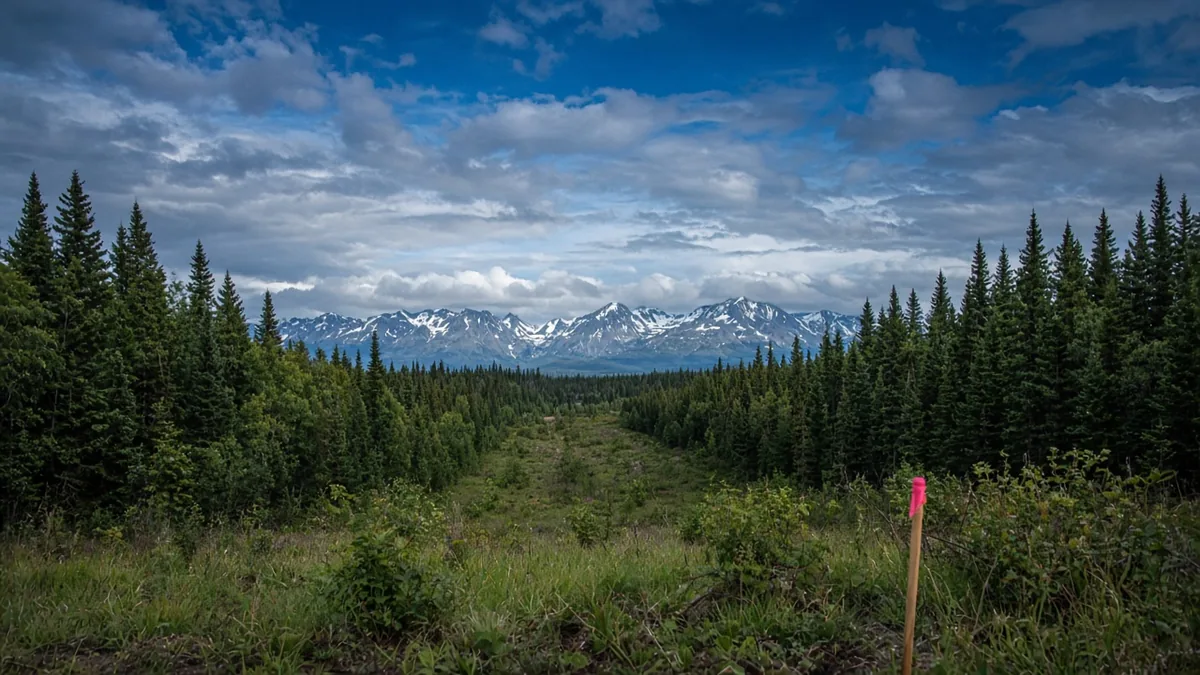
An Alaska section line easement is a public right-of-way that follows the rectangular survey grid — the one-mile section lines — not your driveway easement and not necessarily anything you will see in a casual title printout. DNR describes these as public rights-of-way 33, 50, 66, 83, or 100 feet wide. Many have never been built as roads. Many were never separately recorded against your lot. They still exist until vacated. 11 AAC 51.025 and AS 19.10.010 are the current reservation rules; older session laws set the historic widths.
If you are buying acreage outside Palmer, get pre-approved so a survey delay does not kill a lock while you argue about a 50-foot strip. Premier Mortgage (NMLS# 1168048) cannot vacate an easement, but a loan file waits when the well or the shop sits in a public right-of-way. Subject to credit approval; terms vary.
Why an Alaska section line easement surprises buyers
Section lines are a mapping system. The Territory and then the State accepted a public highway right-of-way along those lines during certain years, including through the federal R.S. 2477 offer on unreserved public land. You do not “create” the easement by driving an ATV. You also do not erase it by planting a spruce row.
11 AAC 51.025(b) is blunt: whether reserved by DNR or granted to the state, a section-line easement continues until vacated under 11 AAC 51.065, regardless of whether that easement is in use.
A title commitment that is silent is not the same as a vacation. Standard owner’s policies often except matters a survey would show. If you care where you can build a shop, fence a horse lot, or drill a well, you want a current survey and someone who will actually plot the section line. Our boundary survey guide covers monuments and encroachments; this article is the statutory strip that can sit on a line even when the neighbors have been friendly for 40 years.
Exact widths from 11 AAC 51.025 and the editor’s note
For new state disposals, 11 AAC 51.025(a) says DNR will reserve, in accordance with AS 19.10.010:
- 50 feet measured from the section line if that line is a boundary of the parcel
- 50 feet on each side (100 feet total) if the section line runs through the parcel
11 AAC 51.025(c) then preserves historic widths created by ch. 19, SLA 1923; ch. 123, SLA 1951; ch. 35, SLA 1953; and AS 19.10.010. The official editor’s note — published with the regulation — is the .gov source for the older numbers. It is guidance on calculation and does not rewrite any easement that already exists. Paraphrased from that note:
- Before April 6, 1923, section-line easements did not arise by statute on territorial public land
- April 6, 1923–January 17, 1949: 33 feet (ch. 19, SLA 1923) on qualifying territorial land or unappropriated, unreserved surveyed federal land
- January 18, 1949–March 25, 1951: no statutory section-line easement on territorial land; federal land had a similar gap through March 20, 1953
- March 26, 1951–June 30, 1960: 50 feet (ch. 123, SLA 1951) on qualifying territorial or state land
- March 21, 1953–December 14, 1968: 33 feet (ch. 35, SLA 1953) on qualifying unappropriated, unreserved surveyed federal land
- On or after July 1, 1960: 50 feet on surveyed or unsurveyed state land, as identified in AS 19.10.010
The same note says an easement, if any, may exist on each side of the line. Depending on land status on each side, total width may be 33, 50, 66, 83, or 100 feet. That is DNR’s list, not a blogger’s guess.
DNR’s vacation fact sheet repeats the same five totals and adds: not every section line has an easement. Existence depends on land status during the windows above. If the history is messy, a surveyor, title company, or attorney does the research.
What this looks like on a Mat-Su or Kenai parcel
You buy 2.5 acres off the Palmer–Wasilla grid. The plat looks clean. The shop your seller built in 1998 sits 20 feet from what the neighbor calls “the back line.” That back line is a section line. If a 50-foot reservation applies on your side, the shop may be in a public right-of-way even though nobody has ever built a road.
Consequences can include:
- A lender or insurer asking for a survey exception to be cleared
- A neighbor or the borough asking you not to block a route the public still has a right to use
- A vacation petition if you want the strip gone — which is not a weekend errand
Mat-Su zoning is a separate overlay. A section-line easement is state access, not a borough setback table. Do not treat a zoning setback number as the easement width. Cite 11 AAC 51.025 for the reservation; cite the borough only for borough rules.
Vacation is a state process
DNR’s fact sheet is the public how-to. Narrowing the strip is a partial vacation. Local platting still matters for notice and a recommendation, but AS 29.35.090 keeps municipalities from vacating R.S. 2477 rights-of-way, and AS 19.30.410 limits when a state agency may vacate. DNR looks for replacement access that is equal or better, statewide notice, and usually DOT&PF consent. 11 AAC 51.065 is the regulation path.
If a seller says “we vacated it years ago,” ask for the recorded vacation plat. A handshake trail relocation is not a vacation.
How buyers should handle it before they write
- Ask whether any boundary is a section line
- Order a survey that plots section lines, not only lot corners
- Have title explain whether the commitment excepts “matters of survey”
- Walk the strip. A built trail is evidence of use, not the only way the easement exists
- If a well, septic, or shop sits in the strip, price the risk or walk
Getting pre-approved keeps that extra week of survey work from becoming a financing emergency. Premier Mortgage (NMLS# 1168048) can hold a file while you wait on a surveyor; they cannot decide whether DNR will vacate. Get pre-approved before you spend the survey money on a house you cannot fund.
Sellers listing raw or lightly improved land can email contact@akhomehq.com or use the contact form. Bring the last survey if you have one.
What not to invent
Do not assume 33 feet because a blog said “four rods.” Do not assume 100 feet because a neighbor cleared that much. Do not assume zero because the plat is quiet. The regulation plus the editor’s note plus the land-status dates are the official width story. Anything more specific for your parcel is research, not a statewide number.
Thinking about buying acreage? Getting pre-approved helps you know your budget before you start shopping. Premier Mortgage (NMLS# 1168048) can help.
Frequently Asked Questions
Does every Alaska section line have a public easement?
No. DNR says existence depends on land status during the statutory windows collected in the 11 AAC 51.025 editor’s note. Unreserved federal land in a gap year, or land that was already appropriated, may have no statutory section-line easement. A surveyor or title researcher answers the parcel-level question.
How wide is an Alaska section line easement?
For current DNR disposals, 11 AAC 51.025(a) reserves 50 feet from a boundary section line, or 50 feet each side (100 feet total) if the line crosses the parcel. Historic totals listed by DNR are 33, 50, 66, 83, or 100 feet, depending on which law applied on each side of the line.
If nobody uses the strip, is the easement gone?
No. 11 AAC 51.025(b) says the easement continues until vacated under 11 AAC 51.065, whether or not it is in use. Lack of a road is normal. Vacation takes a petition, notice, and usually a replacement route.
Will a normal title policy protect me from a section line easement?
Often not, if the policy excepts survey matters or easements that would be disclosed by an accurate survey. Ask the title company in writing. An ALTA survey-based endorsement is a different product than a standard residential policy.
Can I build a shop on a section line if the borough issued a permit?
A local permit does not erase a state-held public easement. If the shop is in the reserved strip, you may still have an encroachment problem. Confirm location against a survey before you pour a slab, and do not treat borough zoning as a substitute for 11 AAC 51.025.
Ready to Make Your Move?
Get pre-approved for your home loan first — it gives you a competitive edge. Need a listing agent? We can help.
Or call 9078411600 · or email contact@akhomehq.com
Disclaimer: This article is for informational purposes only and does not constitute financial, mortgage, legal, or tax advice. Interest rates, loan programs, eligibility requirements, and fees are subject to change without notice and may vary based on your individual circumstances. Alaska Home HQ is not a lender, broker, or financial institution. All loan applications are processed by Premier Mortgage (NMLS: 1168048). We may have a business relationship with Premier Mortgage and may receive compensation when you use their services through our links. Consult a licensed mortgage professional before making financial decisions. Terms of Service · Privacy Policy