Barge Shipping Household Goods to Alaska
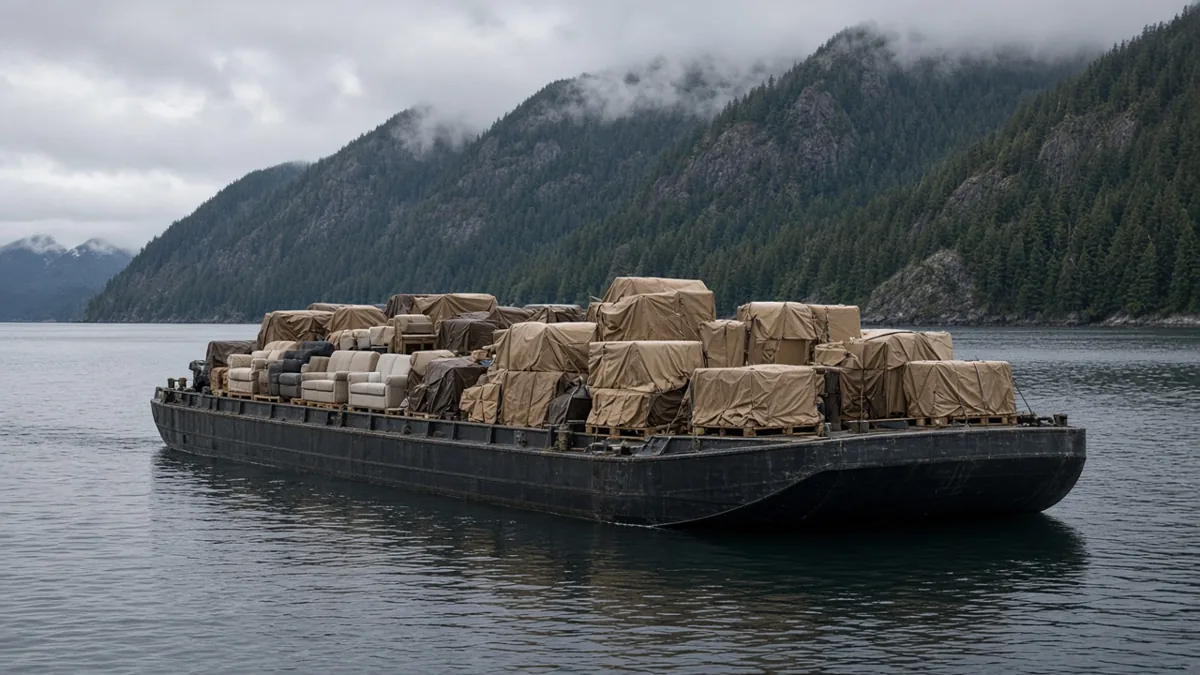
Barge shipping household goods to Alaska starts on a Puget Sound dock and ends when the boxes are in the house. Seattle and Tacoma are the usual doors. The closing date on a purchase contract is a different calendar. A sailing can leave on time and still miss the day you get the keys. Weather, a missed cutoff, or a second leg to a town off the road can do that.
The Port of Alaska about page says Southeast Alaska is primarily served by barges directly from Puget Sound. The same page says Matson vessels sail between Anchorage and Tacoma, and that Kodiak and Dutch Harbor are on that run. Barge terminals sit beside the port. The Alaska Railroad cargo yard is next to the docks. The page also says 75 percent of Alaskans live on the road system connected to Anchorage. That split is the map. A house in Juneau is a marine delivery. A house on the connected road system is a marine delivery plus a truck. A village off both is a third booking.
Alaska Home HQ is not a lender and not a brokerage. This guide explains the move. It does not publish a freight tariff. The carrier’s written quote is the price. Mortgage rates vary. Subject to credit approval.
What barge shipping household goods to Alaska has to cross
Water is the first leg for most household goods. Southeast communities have no highway to the Lower 48 and no highway to Anchorage. Barges from Puget Sound carry the couch, the washer, and the pallet of boxes. The port page is written from Anchorage. It still names the Southeast barge pattern. A Juneau, Ketchikan, or Sitka move uses that pattern.
Southcentral is the road-and-rail case. Cargo lands at Anchorage or at a nearby barge landing. A truck or the railroad can then reach the Mat-Su, the Kenai Peninsula, and Fairbanks. A container on the dock still has to become a container in a Palmer driveway. Ask the quote which leg ends at the terminal and which leg ends at the street address.
Off-road addresses add a carrier. Dutch Harbor and Kodiak appear on the scheduled Anchorage-to-Tacoma container service the port describes. Many smaller communities do not. Freight may sit at a hub until a smaller vessel or a plane has space. Book that onward leg when you book the first one. A hub arrival with nowhere to go becomes storage, and storage is a charge the first quote sometimes leaves blank.
The moving to Alaska guide is the wider relocation page. This one stays on the barge calendar and the closing calendar. Read both when the move and the purchase share a month.
Cutoffs, sailings, and the day you get the keys
Carriers publish cutoff times. Miss the cutoff and the goods wait for the next sailing. A weekly departure does not slide by one day. This page will not invent a transit time or a rate per pound. Ask the carrier for the cutoff, the departure, and the estimated arrival in writing. Ask what weather does to that arrival. Winter ice, a Gulf storm, and a closed dock are ordinary reasons a date moves.
A purchase contract carries at least two dates. Closing is when money and the deed change hands. Possession is when you may take the house. They can fall on the same day. They can be days apart. Line the freight up with possession, and still leave slack. A truck that needs the driveway on the morning of the keys is a tight plan.
The closing timeline checklist is the loan side of that week. Appraisal, title, and insurance have their own clocks. The barge does not wait because underwriting asked for one more document. Book freight after you have a possession date you trust. Keep a backup week when the carrier’s arrival is only an estimate.
A Permanent Fund Dividend can sit in savings for a move. It does not reserve a container. The dividend amount is set each year. Use the cash you actually hold, and take the freight number from the carrier’s quote.
Three destinations, one booking conversation
Sort the address before you compare quotes.
Southeast. The marine leg is the main leg. Juneau, Ketchikan, Sitka, and smaller panhandle towns take barges from Puget Sound. Delivery from the terminal to the house is another appointment. A steep driveway, a narrow street, or snow on the hill can stop a truck after the barge is already in. Ask who unloads, and ask whether that crew works in the dark. December afternoons end early.
Southcentral and the connected Interior. Anchorage, the Mat-Su, Kenai, Soldotna, and the road toward Fairbanks can take a container off a ship or a barge and finish by truck or rail. The port page puts the railroad yard beside the docks for that reason. Put the final street address on the quote. A dock receipt that says Anchorage still leaves Palmer, Wasilla, and North Pole as separate drives.
Off the road. A second carrier, a barge with a short open season, or an air move may finish the trip. Seasonal windows close. Storage at the hub is a line worth pricing before you ship the mattress. Ask for the onward plan in the same email as the Puget Sound booking. If the second carrier wants the goods palletized a certain way, pack to that rule the first time.
What the written quote needs to show
The quote is the tariff for your shipment. A website article cannot stand in for it. Ask the carrier to show these items in writing.
- Origin terminal, receiving hours, and how early you may deliver the goods
- Full container or a smaller palletized shipment, and who supplies the container
- Cutoff, sailing, and estimated arrival, plus the next sailing if you miss the cutoff
- Where your responsibility ends and the carrier’s responsibility ends
- The released value printed in the bill of lading, and the price of any extra coverage
- Items the carrier refuses, including hazardous goods
- Who loads at the origin and who unloads at the destination
- The final delivery address, including any second leg
- Storage charges if pickup slips or the house is not ready
Vehicles, boats, and ATVs are often booked apart from boxed household goods. Freeze-sensitive liquids need their own question. A container in January is a cold room. The carrier’s rules control what may ride inside it. Paint, cleaning chemicals, and propane bottles are common problems. Ask before you pack them.
Homeowner insurance on the new house usually starts at closing or at possession, under the policy you buy for the dwelling. Cargo on the water is a different contract. Read the bill of lading. Then decide whether you want separate cargo coverage. Alaska Home HQ does not sell that policy and does not set the released value. Keep medications, a week of clothes, and the closing papers with you. The barge is a poor place for the only copy.
How the move sits next to the loan
Pre-approval tells you what house payment a lender may support. It does not price the barge. Many buyers pay freight from savings, outside cash to close. Ask the lender which funds have to stay in the bank for the loan. Keep freight money identifiable if the underwriter will ask about a large transfer. A wire to a carrier the week of closing can look like missing cash unless the paper trail is clear.
You can close, take possession, and sleep on a floor while the container is still on the water. You can also ask the seller to move the possession date if the freight window is later than the keys. That change belongs in the purchase documents. Get the carrier’s written window before you agree to a hard move-in morning.
Sellers leaving the same week have the mirror problem. Their cutoff has to fit the day they hand over the house. A note through the contact form can start a financing conversation for the next purchase. It does not book a barge and it does not name an agent. Ship what is costly or hard to replace. Buy bulky, low-value items after you land when the carrier’s quote makes that obvious. Only that quote is a freight number.
Thinking about buying? Getting pre-approved helps you know your budget before you start shopping. Premier Mortgage (NMLS# 1168048) can help.
Frequently Asked Questions
How early should barge shipping household goods to Alaska be booked?
Book when you can put a possession date next to a carrier cutoff. A missed weekly sailing waits for the next departure. Ask for the cutoff, the departure, and the estimated arrival in writing, and leave a backup week for weather.
Does the house closing include the freight bill?
The closing statement covers the house. The barge invoice is the carrier’s bill. Many buyers pay it outside the mortgage. Ask your lender which cash has to remain for closing, and keep the freight quote separate so a wire to the carrier does not look like missing funds.
Can goods go to Juneau the same way they go to Anchorage?
Juneau is a Southeast delivery. The Port of Alaska page says Southeast is primarily served by barges from Puget Sound. Anchorage is the main inbound cargo port, with barge terminals beside it and roads beyond it. Use a quote that names the town, and add local delivery from that terminal to the house.
What if the address is off the road system?
Plan a second leg. A hub such as Anchorage, Kodiak, or Dutch Harbor may be only the first stop. A smaller vessel or an airplane may finish the trip, and that space can be limited. Book it with the first sailing, and ask what storage costs if the onward move slips.
Will a Permanent Fund Dividend pay for the barge?
A dividend can be part of the cash you save for freight. The state sets the amount each year. It does not reserve a container. Get the carrier’s quote, then see whether the cash you have covers the sailing, the delivery, and a delay.
Ready to Make Your Move?
Get pre-approved for your home loan first — it gives you a competitive edge. Need a listing agent? We can help.
Or call 9078411600 · or email contact@akhomehq.com
Disclaimer: This article is for informational purposes only and does not constitute financial, mortgage, legal, or tax advice. Interest rates, loan programs, eligibility requirements, and fees are subject to change without notice and may vary based on your individual circumstances. Alaska Home HQ is not a lender, broker, or financial institution. All loan applications are processed by Premier Mortgage (NMLS: 1168048). We may have a business relationship with Premier Mortgage and may receive compensation when you use their services through our links. Consult a licensed mortgage professional before making financial decisions. Terms of Service · Privacy Policy