Buying Investment Property in Alaska
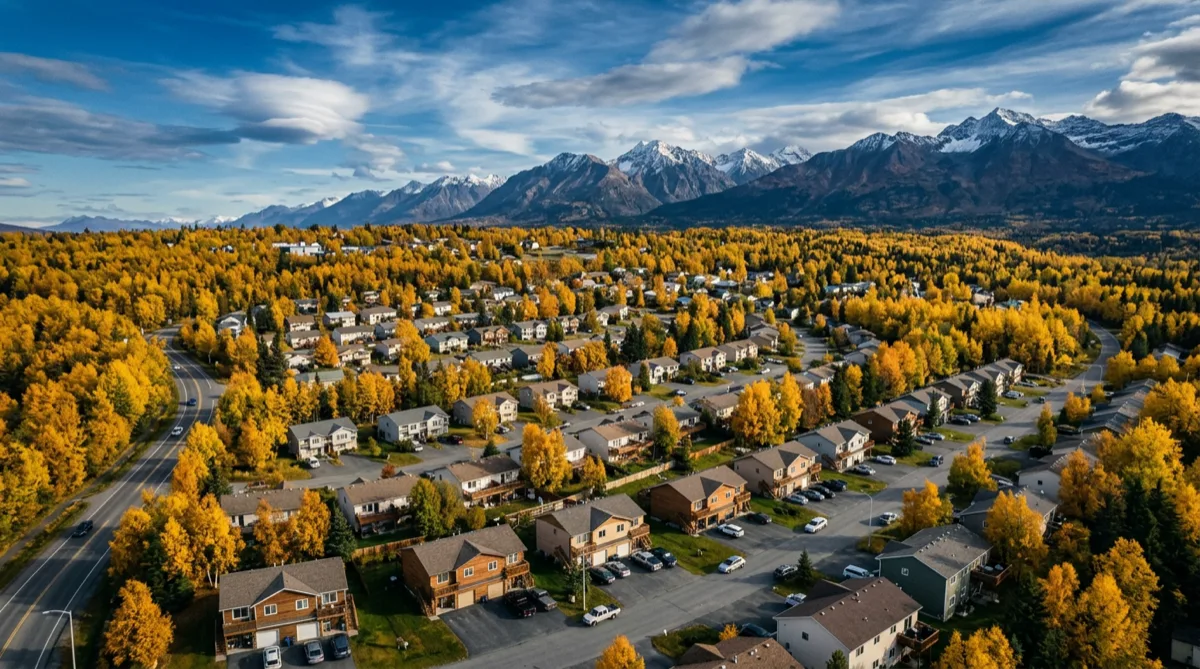
Alaska’s real estate market presents real opportunities for investors willing to understand its unique dynamics. Tight housing supply in most major markets, strong short-term rental demand driven by tourism, and a distinctive military / federal government tenant pool make Alaska investment properties worth examining.
Whether you’re considering a duplex in Anchorage, a rental in Fairbanks near Fort Wainwright, or a short-term rental in Homer or Ketchikan, this guide covers how investment property financing works in Alaska and what you need to know before buying.
Why Alaska for Investment Property?
Constrained supply: Unlike most Lower 48 markets, Alaska’s geography physically limits new housing development in many communities. Anchorage is bounded by the Chugach Mountains and Cook Inlet; Juneau and Ketchikan have virtually no buildable flat land. This supply constraint supports long-term property values.
Military/federal tenant pool: Alaska’s major installations — JBER, Eielson AFB, Fort Wainwright, Clear SFS — generate a steady pool of qualified tenants. Military tenants typically have reliable income (BAH) and are accustomed to 12-month leases. Fairbanks and Eagle River/Anchorage markets benefit significantly from this tenant base.
Tourism short-term rental demand: Alaska’s tourism season (May–September) creates strong short-term rental demand in gateway cities. Homer, Ketchikan, Juneau, and Anchorage all see elevated demand during summer from visitors to national parks, fishing lodges, and cruise ship itineraries.
PFD effect: Every Alaska resident receives the Permanent Fund Dividend annually. This provides a small but real income boost that helps tenants maintain financial stability — marginally reducing default risk for long-term landlords.
Financing Options for Investment Properties in Alaska
Investment property financing is more demanding than owner-occupied financing. Here’s what’s available:
Conventional Investment Property Loans
For a single-family rental or 2-4 unit property you won’t be living in, conventional loans are the standard path. Key requirements:
- Down payment: 15–25% for investment properties (not owner-occupied)
- Credit score: 680+ preferred; 720+ for the best rates
- Reserve requirement: 6 months of mortgage payments in reserve after closing
- Interest rates: Typically 0.5–1.0% higher than primary residence rates
Alaska’s $1,089,300 conforming limit covers virtually any residential investment property purchase.
FHA House Hacking (Owner-Occupied Multi-Unit)
The most accessible path for first-time real estate investors is the FHA “house hack” — buying a 2-4 unit property, living in one unit, and renting the others. Because you’re living in the property, it qualifies for owner-occupied FHA financing:
- Down payment: 3.5% with a 580+ credit score
- FHA limits: Up to $1,072,250 for a 4-unit property in Alaska
- Rental income: FHA counts 75% of market rents from the other units toward your qualifying income
In Anchorage or Fairbanks, a duplex with a strong rental unit can offset $1,000–$1,800 of your mortgage payment — making it one of the most powerful wealth-building moves available to Alaska buyers. See our Buying a Duplex in Alaska guide for the full house-hacking breakdown.
VA Investment Property (House Hacking)
Eligible veterans can use their VA benefit to purchase a 2-4 unit property, provided they intend to live in one unit. This is an even stronger version of house hacking:
- Zero down payment with full entitlement
- Rental income from other units helps qualify
- No PMI
The VA does require you to intend to occupy the property, but this is a powerful tool for veterans in Alaska’s military communities.
Portfolio and DSCR Loans
For investors purchasing their second or third property (or buying purely as non-owner investors), DSCR loans (Debt Service Coverage Ratio) don’t require personal income documentation — the loan qualifies based on the property’s rental income relative to the mortgage payment. These are typically available through non-QM or portfolio lenders, carry higher rates (0.5–1.5% above conventional), and require 20–30% down.
Best Alaska Markets for Investment Property
Anchorage
Alaska’s largest city offers the most liquidity and the largest tenant pool. Demand comes from government/professional tenants, university students (UAA), healthcare workers, and military families transitioning out of JBER. Cap rates in Anchorage tend to run 5–8% for residential rentals — lower than some markets but backed by stable demand. The Eagle River and Muldoon areas have historically been strong for multi-family investment.
Fairbanks
Fairbanks benefits from Fort Wainwright and Eielson AFB demand. Military families with BAH (Basic Allowance for Housing) make reliable tenants. The market is smaller but demand near the installations is consistent. UAF also generates some student rental demand.
Homer / Kenai Peninsula
Homer’s short-term rental market comes alive in summer. With king salmon fishing, Kachemak Bay State Park, and proximity to the Spit, short-term rentals can command $200–$400/night in peak season (June–August). Off-season demand drops significantly, so cash flow modeling must account for seasonality.
Mat-Su Valley (Wasilla / Palmer)
The Mat-Su Valley is Alaska’s fastest-growing area. Demand is driven by Anchorage workers who prefer suburban lifestyle and by Mat-Su’s lower home prices. Long-term rentals are the primary model here, with steady demand and more affordable entry prices than Anchorage.
Short-Term vs. Long-Term Rental Strategy
Short-term rentals (Airbnb / VRBO) offer higher gross revenue potential in tourism-heavy markets during peak season — but require active management, higher insurance (landlord + short-term rental policy), and compliance with local STR regulations. Anchorage and Juneau have STR regulations that may require permits. Research local ordinances before buying for STR purposes.
Long-term rentals provide predictable income and lower management burden. Military and government employee tenants in Fairbanks and Anchorage tend to be stable. Vacancy rates in Alaska’s major markets are generally low (3–6% in normal conditions), supporting consistent cash flow.
Alaska-Specific Investment Considerations
Heating systems: Investment properties in Alaska need reliable heating — oil, gas, or electric. Boiler or furnace failures in January are emergencies. Budget for mechanical system maintenance and replacement in your operating expense projections.
Property management: If you’re investing in Alaska from out of state, property management companies charge 8–12% of monthly rent. Good managers are worth the cost in a market where tenant relations and maintenance response matters.
Short season for exterior work: Contractors in Alaska are in high demand during the brief summer construction window. Budget timelines for renovations or exterior repairs and account for Alaska labor costs, which run 20–40% above Lower 48 equivalents.
Property taxes: Alaska boroughs and municipalities vary widely on property tax rates. Research the specific parcel’s tax history before buying.
Ready to explore your financing options for an Alaska investment property? Premier Mortgage (NMLS# 1168048) works with real estate investors across the state.
Also see our Alaska Real Estate Market 2026 overview and Cost of Living Alaska Housing guide for context on rental market dynamics.
Frequently Asked Questions
Can I use an FHA loan to buy a rental property in Alaska?
Only if you live in the property. FHA loans require owner-occupancy — you must live in the home as your primary residence. However, you can purchase a 2-4 unit property with FHA (3.5% down) and live in one unit while renting the others. This “house hack” strategy is one of the most effective ways to start investing in Alaska real estate with a small down payment.
What down payment do I need for a pure investment property in Alaska?
For a non-owner-occupied single-family or multi-unit investment property, conventional loans typically require 15% down for 2-unit properties and 25% for 3-4 unit or single-family rentals. DSCR and portfolio loans may have different requirements. VA and FHA don’t apply unless you’re living in the property.
Are short-term rentals (Airbnb) profitable in Alaska?
In the right location and season, yes. Markets like Homer, Ketchikan, Juneau, and parts of Anchorage can generate strong summer revenue from tourism. The challenge is seasonality — Alaska’s tourism season is concentrated in May–September. A short-term rental model in Alaska must account for 5–7 months of significantly lower occupancy. Profitability depends heavily on purchase price and carrying costs.
Is it a good time to buy investment property in Alaska?
Alaska’s constrained land supply, stable government employment base, and continued military presence support long-term investment fundamentals. The risk factors are elevated construction costs, cold climate maintenance demands, and the geographic concentration of demand in a handful of cities. For buyers with 3–5 year horizons, Alaska’s major markets have historically supported equity growth and stable rental income.
Do I need a property manager for an Alaska rental investment?
It depends on your location and involvement. If you live in Alaska and near the property, self-management is feasible with the right systems. If you’re investing remotely or managing multiple units, a professional property manager (typically 8–12% of gross rent) is worth the cost. Alaska maintenance emergencies in winter require fast response — a local manager with contractor relationships is valuable.
Ready to Make Your Move?
Get pre-approved for your home loan first — it gives you a competitive edge. Need a listing agent? We can help.
Or call 9078411600 · or email contact@akhomehq.com
Disclaimer: This article is for informational purposes only and does not constitute financial, mortgage, legal, or tax advice. Interest rates, loan programs, eligibility requirements, and fees are subject to change without notice and may vary based on your individual circumstances. Alaska Home HQ is not a lender, broker, or financial institution. All loan applications are processed by Premier Mortgage (NMLS: 1168048). We may have a business relationship with Premier Mortgage and may receive compensation when you use their services through our links. Consult a licensed mortgage professional before making financial decisions. Terms of Service · Privacy Policy