Fairbanks Alaska Winter Housing Market Guide
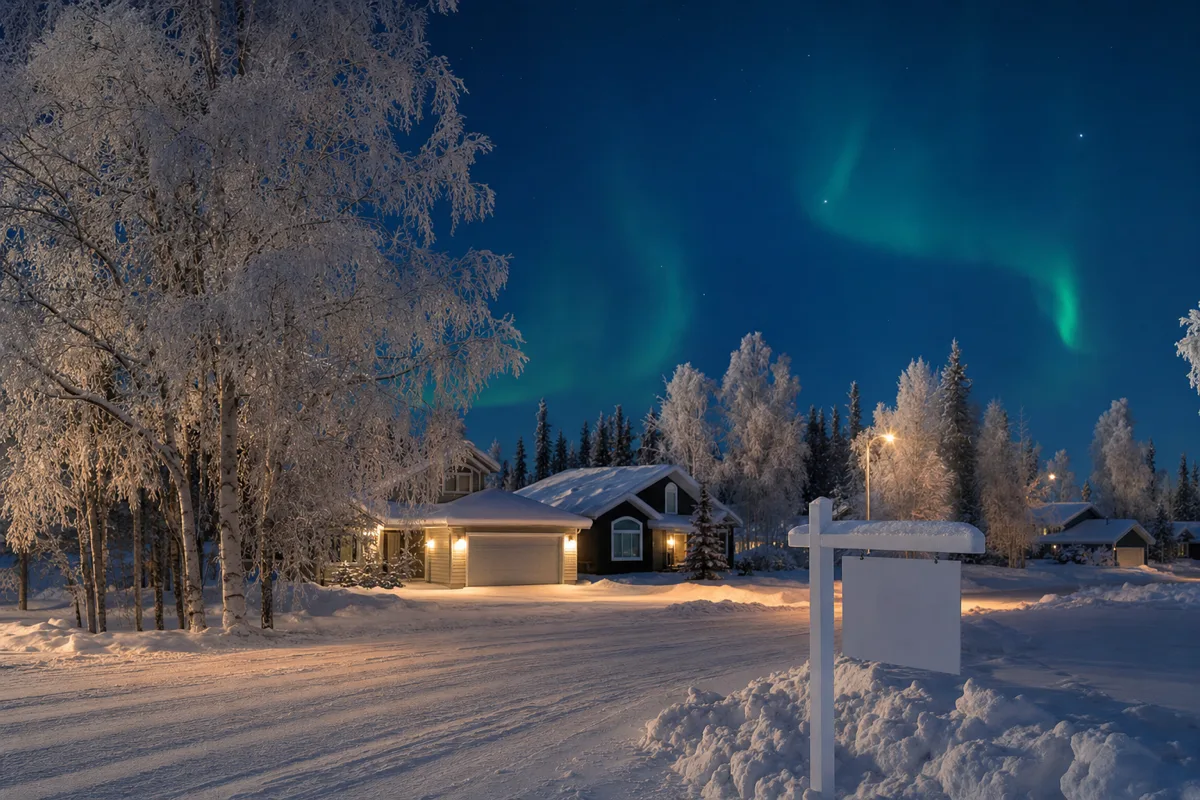
Most buyers instinctively wait for spring. They want to see homes with snow gone, gardens accessible, and daylight available for thorough inspection. In Fairbanks, that instinct may cost you. Winter buying in Fairbanks — roughly November through February — presents a strategic opportunity that experienced local buyers know well.
This guide covers the real advantages of buying during Fairbanks’ coldest months, what to inspect when it’s -20°F, how VA and FHA loans handle cold-climate minimum property requirements (MPRs), and practical tips for navigating the Fairbanks market in deep winter.
The Strategic Case for Winter Buying in Fairbanks
Less Competition, More Leverage
Fairbanks real estate activity drops measurably during the core winter months. Many buyers — especially those relocating from out of state — simply don’t want to tour homes in extreme cold or time a move to interior Alaska in January. This seasonal retreat from the market reduces competition for available inventory.
Fewer competing offers means sellers are often more willing to negotiate. In a spring or summer market, a well-priced Fairbanks home may receive multiple offers quickly. In January, that same home may sit for weeks, and the seller may be considerably more motivated.
Winter buyers with pre-approval in hand may find:
- More room to negotiate price
- Seller willingness to contribute toward closing costs
- Less pressure to waive contingencies
- More time to complete due diligence without feeling rushed
Motivated Sellers Are Real
Not everyone sells their Fairbanks home voluntarily in winter. Sellers in the market November–February include:
- Job transfers (Fairbanks has substantial military presence at Fort Wainwright, and PCS orders don’t follow seasonality)
- Estate sales
- Divorces and life transitions
- Owners who’ve already relocated and are carrying two mortgages
- Landlords exiting the rental market
These sellers often have genuine motivation to close, which shifts negotiating power toward the buyer.
For historical patterns and market data, see our Fairbanks real estate guide and our broader analysis of the best time to buy a home in Alaska.
What the Data Says About Seasonal Inventory
According to U.S. Census Bureau housing data, Alaska — like most northern states — sees measurably lower transaction volume in the November–February window. In Fairbanks specifically, this means:
- Listings are fewer — but so are competing buyers
- Days on market tend to extend — giving buyers more due-diligence time
- Price reductions are more common — sellers adjusting to the quiet market
- Appraisers and inspectors are more available — shorter scheduling windows
The spring surge typically begins in late March, with April and May representing Fairbanks’ most competitive buying months. If you’re trying to get a deal rather than win a bidding war, winter is Fairbanks’ window.
What to Inspect in Extreme Cold
Fairbanks winters regularly produce temperatures of -20°F to -40°F, with record lows reaching -60°F. This means property inspections in Fairbanks winter carry considerations that buyers in most U.S. markets never encounter.
Heating Systems Are Priority One
The single most important inspection focus in any Fairbanks winter purchase is the heating system. This is not an exaggeration: a failing heating system in Fairbanks winter can cause burst pipes, structural damage, and in extreme circumstances create life-safety hazards.
What to look for:
- Age and condition of the boiler, furnace, or heat pump
- Oil tank capacity, condition, and fill access
- Evidence of recent servicing and maintenance records
- Backup heating systems (wood stove, propane backup)
- Thermostat functionality across zones
Many Fairbanks homes use oil-fired boilers or forced-air furnaces. Ask the seller for fuel consumption records — this gives you both an indication of the home’s energy efficiency and a real-world monthly cost estimate.
Insulation and Air Sealing
Fairbanks homes with inadequate insulation or air sealing will have dramatically higher heating costs than well-insulated peers. During a winter inspection, evidence of poor insulation may include:
- Frost on interior wall surfaces near exterior edges
- Ice damming at the roofline (indicates heat loss through the roof)
- Condensation patterns on windows and doors
- Large temperature differentials between rooms
Foundation and Permafrost
Fairbanks sits in a region with discontinuous and scattered permafrost. Not every property is affected, but foundation issues related to ground movement are more common here than in most U.S. markets.
Inspection flags:
- Uneven floors or visible slope in living areas
- Doors and windows that stick or don’t close flush
- Cracks in foundation walls (distinguish frost heave from settling)
- Any visible pier or footing adjustments
A Fairbanks inspector experienced with permafrost conditions is worth specifically seeking out — this is not a generic inspection skill.
Pipes and Plumbing
Even in Fairbanks homes that are occupied, pipes can freeze in extreme cold if:
- The home has been vacant for any period without heat maintenance
- Heat tape on vulnerable pipes is worn or non-functional
- Crawl space insulation is inadequate
Verify that heat tape is present on water supply and drain lines in unconditioned spaces and that it is functional.
Winter Inspection Limitations
Be aware that some inspection elements are simply not visible in deep winter:
- The roof cannot be fully inspected with heavy snow cover
- Grade and drainage around the foundation is hidden
- Any moisture intrusion related to snowmelt won’t be visible until spring
A good inspector will document limitations in their report. Consider negotiating a re-inspection of specific items after snowmelt as a contingency, or plan financially for the possibility of spring surprises.
How VA and FHA Handle Cold-Climate MPRs in Fairbanks
Both VA and FHA loans require properties to meet Minimum Property Requirements (MPRs) or Minimum Property Standards (MPS) before the loan can close. In Fairbanks, some of these standards have direct cold-climate relevance.
VA MPRs for Fairbanks Homes
VA appraisers are trained to flag safety and habitability concerns. In Fairbanks, common VA MPR issues include:
- Inoperable heating systems or heating systems with insufficient capacity
- Exposed electrical in the heating plant area
- Significant permafrost damage affecting structural integrity
- Non-functional well or water supply (winterization issues)
If the VA appraiser flags an MPR deficiency, it typically must be corrected before closing unless the lender and buyer agree to escrow holdbacks (which have restrictions under VA guidelines).
FHA MPRs and Cold Climate
FHA’s handbook similarly requires that the heating system be capable of maintaining a minimum interior temperature. Homes in Fairbanks that are listed in poor condition or with non-functional heating may fail FHA appraisal.
However, FHA offers a solution through the FHA 203(k) renovation loan — which allows buyers to finance repairs as part of the purchase loan. For a Fairbanks home that needs a new furnace or has inspection issues, 203(k) financing may make the transaction workable.
Practical Tips for Viewing Homes at -20°F
Buying in Fairbanks winter requires some adaptation:
- Dress for extended outdoor exposure even when touring — you may wait outside briefly, and driving between showings in extreme cold requires preparation
- Start your car early — Fairbanks buyers use engine block heaters and remote starters as standard equipment
- Plan shorter viewing windows — touring three or four homes in the same day is more manageable than six or seven when temperatures are extreme
- Bring a flashlight — winter daylight in Fairbanks is extremely limited (as few as 3–4 hours of usable light near solstice)
- Check driveways and access — some properties with steep or unpaved driveways may be difficult to access in deep snow, giving you an early sense of the maintenance burden
Financing a Fairbanks Winter Purchase
Getting pre-approved before starting your Fairbanks winter search is important. Market movement may be slower in winter, but motivated sellers can still move fast when a qualified buyer appears.
Fairbanks buyers should consider VA, FHA, or conventional financing depending on their eligibility and the specific property’s condition.
Premier Mortgage (NMLS# 1168048) helps Alaska buyers — including those navigating Fairbanks’ unique market — explore their financing options.
Get a quote from Premier Mortgage (NMLS# 1168048)
Frequently Asked Questions
Are Fairbanks home prices actually lower in winter? Fairbanks winter listings do not uniformly carry lower prices than spring listings, but the negotiating environment is often more favorable. Sellers who are on the market in winter may be more willing to reduce asking prices, cover closing costs, or make concessions that spring sellers wouldn’t consider. Price relative to comparable sales (comps) is what matters — don’t assume winter means automatic discount, but do recognize your leverage.
Can I get a mortgage inspection done in winter in Fairbanks? Yes — licensed home inspectors in Fairbanks operate year-round and are experienced with winter inspections. The important thing is to choose an inspector with specific Fairbanks/interior Alaska experience who understands permafrost foundations, heating systems, and extreme cold construction details. Ask for references and examples of winter inspection reports.
What if the VA appraiser finds a heating issue on my Fairbanks purchase? VA MPR issues must generally be resolved before closing. Options include: the seller making the repair, the buyer making the repair (with lender approval), or an escrow holdback for minor repairs. For significant heating system replacements, VA may allow a longer resolution period. Work with your lender and real estate agent to determine the best path for your specific situation.
Is it hard to find a moving company available in Fairbanks in January? Moving capacity in Fairbanks during deep winter can be limited, and some moving companies charge premiums for extreme cold moves. Planning your closing and moving schedule with buffer time, and confirming mover availability early, is especially important for winter purchases.
How do I know if a Fairbanks property has permafrost issues? A qualified Fairbanks home inspector should assess for permafrost-related foundation movement. Signs include uneven floors, sticking doors and windows, and visible foundation cracks or adjustments. For older homes or properties with known soil issues, a geotechnical assessment may be warranted. Your lender’s appraiser will also flag obvious structural concerns.
Ready to Make Your Move?
Get pre-approved for your home loan first — it gives you a competitive edge. Need a listing agent? We can help.
Or call 9078411600 · or email contact@akhomehq.com
Disclaimer: This article is for informational purposes only and does not constitute financial, mortgage, legal, or tax advice. Interest rates, loan programs, eligibility requirements, and fees are subject to change without notice and may vary based on your individual circumstances. Alaska Home HQ is not a lender, broker, or financial institution. All loan applications are processed by Premier Mortgage (NMLS: 1168048). We may have a business relationship with Premier Mortgage and may receive compensation when you use their services through our links. Consult a licensed mortgage professional before making financial decisions. Terms of Service · Privacy Policy