Multi-Generational Homes in Alaska: Guide
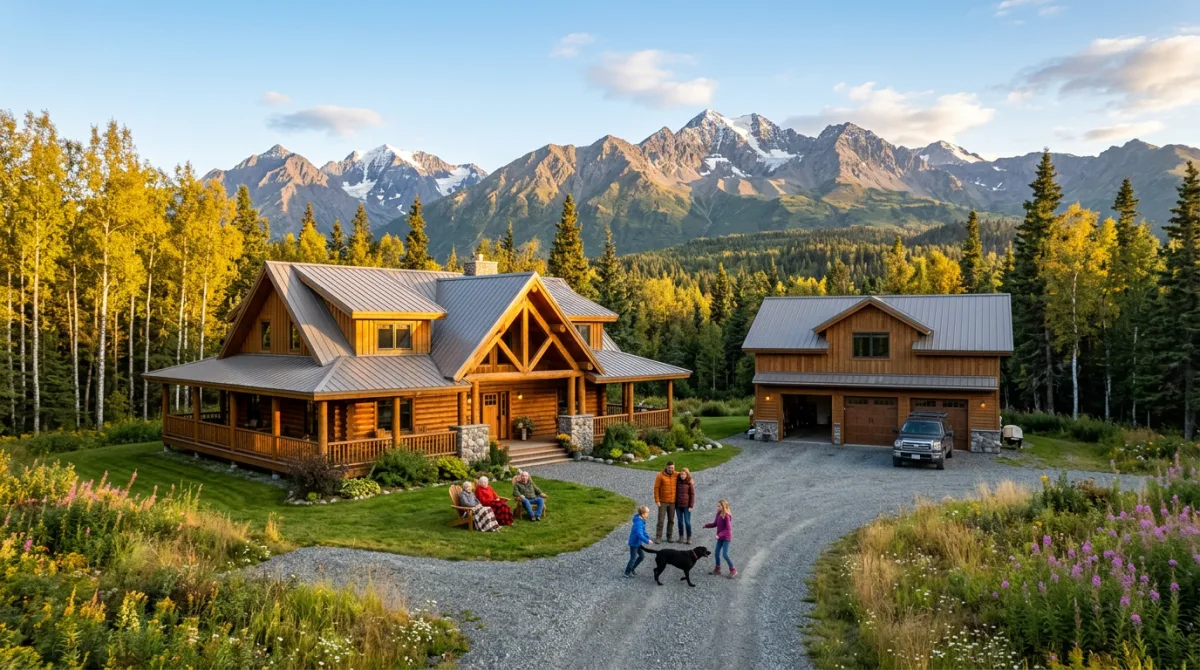
Multi-generational living is growing across Alaska — adult children helping aging parents, grandparents moving in to reduce childcare costs, or extended families combining resources for homeownership in an expensive market. Alaska’s property types, zoning rules, and financing options make multi-gen homebuying both feasible and financially smart when done right.
Why Multi-Generational Homes Work in Alaska
Alaska has unique advantages for multi-generational living:
- High cost of living: Combining household incomes under one roof reduces per-person housing costs significantly
- Rural property abundance: Mat-Su Valley, Kenai Peninsula, and Interior Alaska have many properties with ADU potential or enough land for additional structures
- Extended family culture: Alaska’s Native and military communities have long traditions of multi-generational household structures
- PFD income: Multiple adults in one household each receive annual PFD payments — a meaningful combined income that offsets Alaska’s high costs
- Aging population: Alaska has a growing senior population, and many families prefer in-home support to assisted living costs
What Counts as a Multi-Generational Home?
Multi-generational properties typically fall into one of these categories:
Accessory Dwelling Units (ADUs): A secondary living unit on the same property — attached garage conversion, basement apartment, or separate cottage. One household in the main home, another in the ADU.
Duplex or multi-family: A legally classified 2–4 unit building where each unit has its own entrance, kitchen, and utility connections. Different legal treatment than an ADU.
Large single-family with in-law suite: A single-family home with an interior suite — private bedroom, bathroom, and sometimes a kitchenette — that doesn’t qualify as a legal separate unit.
Two homes on one property: In rural Alaska, some properties legitimately have two residences — rare and financing is more complex.
ADU Zoning in Alaska Boroughs
ADU rules vary significantly by borough and municipality. Alaska’s communities range from permissive (rural boroughs with minimal zoning) to restrictive (urban municipalities with detailed ADU requirements).
Anchorage Municipality: Allows ADUs in most residential zones. Requires a conditional use permit for detached ADUs in some zones. Owner occupancy requirement applies in some areas. ADUs up to 800–1,000 sq ft typically permitted.
Matanuska-Susitna Borough: Borough has limited zoning outside municipality hubs. Many rural Mat-Su properties outside designated areas operate with minimal restrictions, making Palmer and Wasilla area rural properties naturally multi-gen friendly. Check with the MSB Planning Department for specific parcel rules.
Fairbanks North Star Borough: Has zoning code that allows ADUs in residential zones with conditions. FNSB code addresses setbacks, utilities, and owner occupancy in some zones.
Kenai Peninsula Borough: Similar to Mat-Su — large portions are unzoned. Rural Kenai Peninsula properties often have flexible land use.
Southeast Alaska (Juneau, Sitka, Ketchikan): Municipal zoning is more formal. Each city has specific ADU regulations — check with the city’s community development office.
Practical rule: Rural and semi-rural Alaska properties on larger parcels often have the most flexibility for additional structures. Urban lots in Anchorage or Juneau require compliance with specific ADU code.
Financing a Multi-Generational Purchase
FHA Multi-Unit Financing
FHA loans can finance up to 4 units as long as one unit is owner-occupied. This makes an FHA-financed duplex, triplex, or fourplex a common multi-generational tool:
- 3.5% down on the full purchase price
- Rental income from other units counts toward qualification (up to 75% of market rent per FHA guidelines)
- Alaska FHA limit for multi-unit: up to $1,072,300 for a 4-plex
A family buying a duplex in Anchorage can house two generations — each in their own unit — with a single FHA loan. The extended family member pays “rent” which is really just offsetting the mortgage.
See our buying a duplex in Alaska guide for the investment angle.
VA Financing for Multi-Unit
VA loans also work on up to 4-unit properties with owner occupancy. A veteran and their parents could buy a fourplex in Palmer — veteran lives in one unit, parents in another, rental income from the remaining two units covers most of the mortgage.
Conventional Loans with Co-Borrower
For larger or more complex properties, conventional loans with a co-borrower arrangement allow multiple family members to combine incomes for qualification. See our co-borrower mortgage guide for Alaska.
Construction-to-Permanent Loans
If you own land or are buying a property to add an ADU, a construction-to-permanent loan can finance both the primary home and an ADU in a single loan closing. Alaska construction loans are available but require a licensed contractor, detailed plans, and lender approval of the ADU addition.
See our construction loans in Alaska guide.
Cost Considerations for Alaska Multi-Gen Properties
ADU conversion costs: Converting a garage or basement to a livable ADU in Alaska typically costs $40,000–$120,000+ depending on insulation requirements, heating systems, and plumbing. Alaska’s extreme cold demands high-quality construction — shortcuts in insulation or heating create safety and habitability problems.
Heating for two units: Running two separate heating systems is more expensive than one. Radiant heat systems can serve multiple zones efficiently in a connected structure.
Permitting: Unpermitted ADUs create financing headaches — lenders won’t count rental income from non-permitted units, and they create complications at resale. Pull proper permits.
Property taxes: Adding a legal ADU may increase your assessed value and property taxes. Mat-Su Borough’s lower tax rates make this sting less than in Anchorage.
Multi-Generational vs. Duplex: Which Makes More Sense?
| Factor | Multi-Gen Home with ADU | Duplex |
|---|---|---|
| Privacy | Moderate (connected spaces common) | High (separate entrances/units) |
| Legal rental income | May not apply if owner-occupied | Full rental income allowed |
| Financing flexibility | Standard residential loan | Multi-family loan options |
| Resale market | Smaller buyer pool | Attractive to investors |
| Zoning complexity | ADU rules vary widely | Clearer legal status |
For family living arrangements, the ADU/multi-gen home model works well because the relationship is personal and flexible. For an investment strategy with eventual rental income, a duplex typically has cleaner economics.
Finding Multi-Generational Properties in Alaska
The best Alaska markets for multi-gen purchases:
- Mat-Su Valley (Palmer/Wasilla): Rural lots with room for ADUs, lower prices, flexible rural zoning
- Anchorage outskirts (Eagle River/Chugiak): Larger lots with ADU potential closer to Anchorage amenities
- Kenai Peninsula: Affordable larger properties with room for secondary structures
- Fairbanks surrounding areas: Rural parcels with existing secondary buildings common
Search for properties with “guest cabin,” “mother-in-law suite,” “ADU,” “carriage house,” or simply large acreage with existing secondary structures.
Ready to explore multi-generational buying? Get pre-approved first, then work with your agent to find properties that meet the zoning and structural requirements. Premier Mortgage (NMLS# 1168048) can help you structure the financing for a multi-gen purchase.
See also: Palmer, Alaska real estate guide and the Mat-Su Valley homes guide.
Frequently Asked Questions
Are ADUs legal in the Mat-Su Valley for multi-generational living?
Much of the Mat-Su Borough outside incorporated areas has limited zoning, giving property owners more flexibility. However, ADUs within incorporated communities (like Palmer or Wasilla) may require permits and compliance with MSB or city code. Contact the Mat-Su Borough Community Development Department to verify rules for a specific parcel before purchasing.
Can I use an FHA loan to buy a home with a separate mother-in-law suite in Alaska?
Yes, if the suite is part of the single-family property (not a legal separate unit). FHA loans on a single-family home with an interior in-law suite are straightforward. If the property is classified as a duplex or multi-family unit, FHA multi-unit rules apply and owner occupancy is required.
How much does it cost to add an ADU to an Alaska home?
Adding an ADU in Alaska typically costs $40,000–$120,000+ depending on size, location, and construction quality. Alaska’s climate demands superior insulation, heating, and vapor barriers — corners cut in ADU construction cause expensive problems. Budget for a permitted, well-insulated unit with its own heating system.
Does rental income from an ADU count toward my Alaska mortgage qualification?
FHA and conventional guidelines allow lenders to consider future rental income from an ADU, but typically require documented rental history or a market rent analysis. Rules vary by loan type. If the ADU is owner-occupied by family members who pay below-market rent, lenders may not count it. Consult your lender about how rental income from a planned ADU affects your qualification.
What’s the difference between a multi-generational home and a duplex for financing purposes?
A single-family home with an ADU or in-law suite is financed as a single-family property — standard residential mortgage rates and programs apply. A legally classified duplex or multi-family property is financed as multi-family — different loan options, higher down payments on investment properties, but also the ability to count rental income from all units.
Ready to Make Your Move?
Get pre-approved for your home loan first — it gives you a competitive edge. Need a listing agent? We can help.
Or call 9078411600 · or email contact@akhomehq.com
Disclaimer: This article is for informational purposes only and does not constitute financial, mortgage, legal, or tax advice. Interest rates, loan programs, eligibility requirements, and fees are subject to change without notice and may vary based on your individual circumstances. Alaska Home HQ is not a lender, broker, or financial institution. All loan applications are processed by Premier Mortgage (NMLS: 1168048). We may have a business relationship with Premier Mortgage and may receive compensation when you use their services through our links. Consult a licensed mortgage professional before making financial decisions. Terms of Service · Privacy Policy