University of Alaska Land Sale Guide
A University of Alaska land sale is a purchase from the University of Alaska Land Management office, not from the Alaska Department of Natural Resources and not from the Alaska Mental Health Trust Land Office. The university posts parcels, takes offers under its own cash terms, orders a title report after a purchase agreement, and deeds the land when it has been paid. The buyer who wanted a state land sale or a Mental Health Trust parcel is in a different office, with a different contract.
UA Land Management’s site separates competitive offerings, where offers are taken during a set window, from over-the-counter parcels offered at a stated minimum price. The pages say they are informational and are not themselves an offer to sell. A listing can be corrected after it is posted. The live sale page holds the deadline. This article does not freeze one.
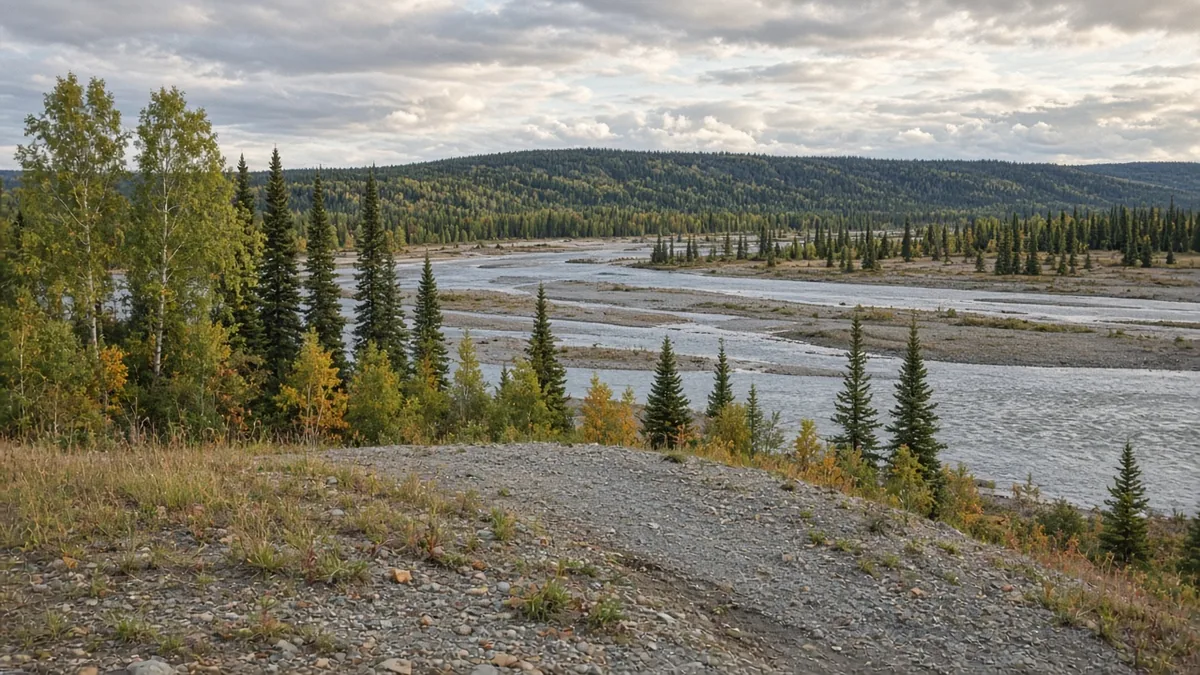
The competitive page also says parcels are taken as-is and where-is, with no promise that a parcel suits any particular use, and that sending an offer accepts that. Walking the ground is allowed when the walk does not interfere with the university’s use of the property. A photograph of birch and a river bar is not a soils test, a wetland line, or a promise of a driveway.
Alaska Home HQ is educational. It is not the university, and it is not a lender.
How a University of Alaska land sale is offered
Land Management’s land-sale FAQ says the list on the website is what is currently offered, and that the site is updated as needed. A parcel that is not on the list is not silently for sale.
On a competitive sale, the page names an offer window, a sealed-bid opening, and email notice to offerors. Those dates belong to that sale. The terms and conditions linked from the listing control the deposit, the form, and where the packet goes. The offer form is the last two pages of those terms. It asks for the full parcel number, a mailing address, and an email for each person who would sign the purchase agreement.
The listed price is the minimum fair market value the university says it will accept. The FAQ says Land Management will not accept an offer under that price. Over-the-counter parcels sit at that minimum. Competitive parcels take offers inside a window. An over-the-counter parcel does not have a bid opening, and a competitive parcel does not take a number under the listed minimum.
Some sales are labeled Alaska residents only. The FAQ limits that version to people who have lived in Alaska at least one year. The packet needs an Alaska driver’s license or state ID, plus at least one more record covering a full year before that sale started. A Permanent Fund Dividend eligibility confirmation for the current year can be that second record. A PFD signature page, or a status that only says the application was received, does not count. The FAQ also names employment or military records, an Alaska occupational license, tax records showing Alaska work, school records, and court or agency records. A sale that is not marked residents-only follows the general rule on the same page: anyone 18 or older.
The competitive page says proceeds from university trust land go in largest part to the UA Scholars Program: $15,000 scholarships for the top ten percent of Alaska high school graduates. A sale can also include Foundation property. Neither fact changes the cash terms or makes a parcel buildable.
Public notices show the kind of ground that shows up. A notice dated August 25, 2026 described a Fairbanks tract near Bethany Street and the Richardson Highway, along the Tanana River, that the university intended to split on the Chena River flood-control levee, keep the north side, and sell the south side. Another notice that summer described two parcels near Tall Tree Avenue and the Sterling Highway, on Stariski Creek near Happy Valley. Notices expire. They illustrate the map. They are not a current inventory.
Offers are mailed to the Anchorage office with the deposit the terms name. The FAQ says that amount varies and lives in the terms. The Anchorage desk is at 1835 Bragaw Street, Suite 490, 907-786-7766. The Fairbanks desk is at 2025 Yukon Drive, Suite 207, 907-450-8133. The email on the site is ua-land@alaska.edu.
Cash at closing, and a loan from somewhere else
The FAQ answers the financing question in one place. UA Land Management does not offer financing on its land sales. Purchases are on cash terms. The entire balance is due at closing. The buyer may get a loan from an outside source. The university no longer finances the land it sells. If someone already has a university land loan, that loan cannot be assumed. It has to be paid off.
Cash terms and an outside loan are not the same product as a house loan in town. A parcel with no dwelling is a land purchase. The land-purchase financing guide is that question. A lender that will take raw land still has to live with the university’s timeline, the as-is clause, and the title report. A pre-approval on a subdivision house does not stretch itself to a river tract.
The office’s own goal, stated in the FAQ, is to close within 90 days. The same answer says the timeline has variables, especially around the title report. A loan file that needs an appraisal, a survey, or a new easement can run past a goal written for a cash buyer. Ask what that sale’s terms say if the report is slow.
From the offer to the deed
After the packet arrives, the FAQ’s sequence is plain. The offer is reviewed under the terms. A response goes by mail or email. If it is accepted, a purchase and sale agreement comes with it. After the signatures, Land Management requests a title report. When the buyer accepts that report, the remaining price and the closing costs are due, and then the deed is signed and recorded. The recorded deed is emailed, and the original is mailed.
Read the exceptions before accepting title. An easement, a lease, or a gap in access is easier to walk away from before the balance is wired. University land has often been held for a long time. The chain is not the same thing as a lot in a recent subdivision. The vacant-land checklist is the broader walk-through. Use it beside the university terms, not instead of them.
Homesteading is a state program. The FAQ says it is not available on university land. Casual use in the FAQ’s examples, hiking and berry picking, is not a purchase.
What the listing does not prove
As-is means the university is not promising a house site, a driveway, power, a well, or dry ground. Southcentral and Interior parcels can look dry in August and hold water in breakup. A wetland line, a floodplain, and a section-line claim are three different documents. None of them is created by winning the offer.
On a Tanana tract or a Stariski Creek tract, the useful questions are the same. Does legal access reach a public road. Does a levee or a stream split the usable ground from the ground in the photo. Will the borough or the city treat it as a building site. The title report, a survey, the planning desk, and a walk in the wet season answer those. The minimum price does not.
Freight, a foundation, and a permit are not in the university’s price. A loan quote before the offer shows whether an outside lender will look at that legal description. The quote is not an approval, and acceptance of the offer is not a promise that a lender will follow.
Thinking about buying? Getting pre-approved helps you know your budget before you fall in love with a parcel. Premier Mortgage (NMLS# 1168048) can help.
Frequently Asked Questions
Can I pay a University of Alaska land deposit with a credit card?
The FAQ says Land Management does not take credit cards for land-sale payments. The deposit and the balance are a cashier’s check, a money order, or a wire the office sets up. The deposit amount is not one number for every parcel. It is written in that sale’s terms.
What if the parcel I want is not on the website?
The FAQ says the website list is what is currently offered, and that land which is not listed is requested by inquiry. An inquiry is not an accepted offer and does not reserve the tract. If a later notice offers it, the terms posted with that notice are the ones that apply.
Can I mine on university land?
The FAQ says mining depends on the place and on any restrictions on that land, and it tells you to contact the office. A land-sale offer is not the same request as a mining permission. Read the title report before you accept title, so a reservation or a restriction is visible before the balance is wired.
Can more than one person buy?
The offer form asks for an email address for each person who will sign the purchase agreement. Put every buyer on that form. A name added after acceptance is a change to the contract, and the FAQ’s sequence assumes the signers were named up front.
Are Foundation parcels and trust parcels different contracts?
The competitive-sale page says a sale can include University of Alaska Foundation property and university trust property, and it ties trust-land proceeds to the UA Scholars Program. The cash terms, the as-is clause, and the title-review step are still the ones linked from the listing. The beneficiary does not change the deed work.
Ready to Make Your Move?
Get pre-approved for your home loan first — it gives you a competitive edge. Need a listing agent? We can help.
Or call 9078411600 · or email contact@akhomehq.com
Disclaimer: This article is for informational purposes only and does not constitute financial, mortgage, legal, or tax advice. Interest rates, loan programs, eligibility requirements, and fees are subject to change without notice and may vary based on your individual circumstances. Alaska Home HQ is not a lender, broker, or financial institution. All loan applications are processed by Premier Mortgage (NMLS: 1168048). We may have a business relationship with Premier Mortgage and may receive compensation when you use their services through our links. Consult a licensed mortgage professional before making financial decisions. Terms of Service · Privacy Policy