Accreted Land Mortgage Alaska
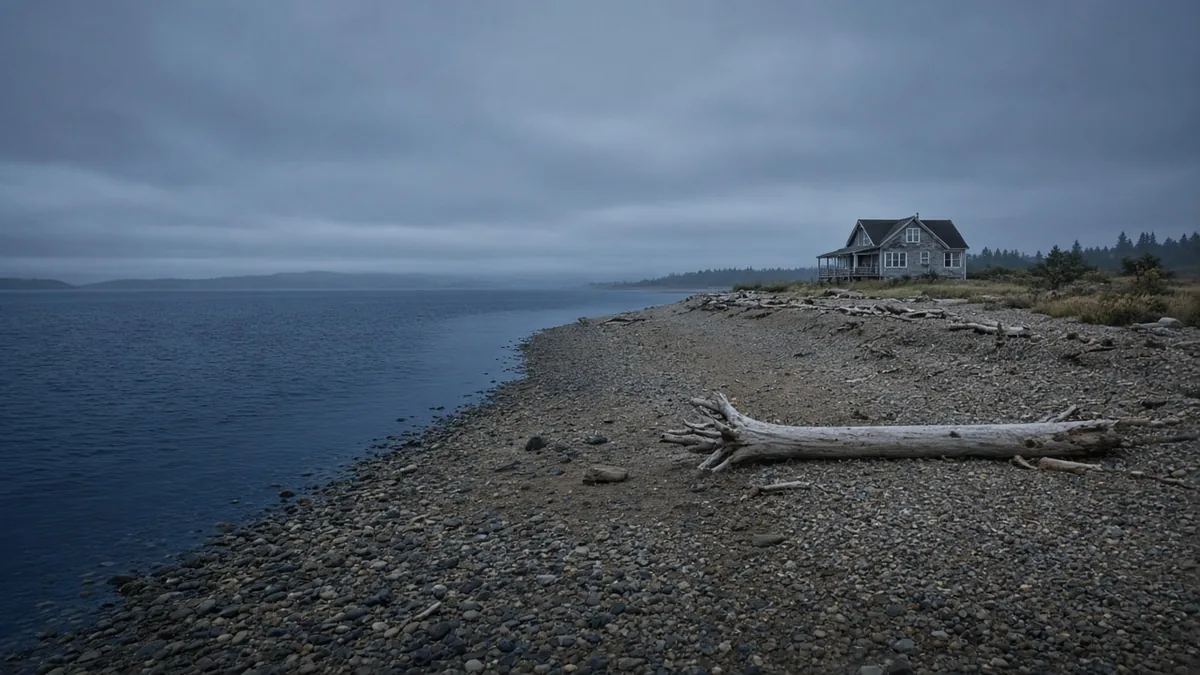
An accreted land mortgage Alaska file is a legal description that no longer matches the ground. A river migrated, or a coast built gravel and sand outward, slowly enough that the upland and the water’s edge are in a different relationship than the deed recites. The lot the owner walks is larger, or shaped differently, than the lot the recorder’s copy describes. Lenders and title companies insure the description, not the walk. Until a survey and a recorded instrument reconcile them, the extra ground is a story, not collateral.
Alaska Home HQ is educational. It is not a lender, a surveyor, or a court. Subject to credit approval. Who owns the beach below the line the law cares about is the beach ownership page. Flood insurance on a mapped zone is the flood-zone mortgage page. This page is only the mismatch between the deed and land the water added or rearranged, the kind of mismatch that shows up on a Homer spit lot or a river bar.
When an accreted land mortgage Alaska description fails
Accretion, in ordinary language, is the gradual addition of soil by water. Erosion is the gradual loss. Avulsion is a sudden jump, a storm or a flood that cuts a new channel in a day. Those words describe different facts, and title treats them differently. This page will not pretend one rule decides every Alaska shoreline. It will say what the loan file can see: the deed’s calls, the surveyor’s map of where the monuments and the water are now, and the exception the title company writes when those two pictures disagree.
The as-built survey page is the habit of drawing improvements on a lot. An accretion problem often needs more than an as-built of the house. It needs a survey that shows the deed line, the current mean or ordinary water line the surveyor is willing to certify, and the strip in between. Ask the surveyor to label the strip as land that is not inside the deed, if that is what the measurements show, rather than quietly stretching the lot to the new beach. A pretty map that moves the boundary without saying so is the map that gets the title exception anyway, later and angrier.
The Alaska Recorder’s Office will record a new instrument. It will not decide, at the counter, that the owner now owns the accreted strip. A deed of the original lot conveys the original lot. A deed that adds a description of the new ground, without a basis the title company will insure, can make the exception larger. Get the title company’s written requirement before recording a “corrective” description that a lawyer has not tied to a theory the insurer accepts. Some files insure the original deeded lot only, and the house happens to sit safely inside it. The extra beach is then outside the collateral. That can be an acceptable loan if the improvements are inside the insured parcel and the appraisal is honest about what is included. Some files cannot close until the strip is included, because the house or the septic sits on it. The survey tells you which file you have.
What the appraisal and the photos keep mixing up
Appraisers value what they are told is the property. If the listing walks the buyer out across new gravel and the deed is a small upland lot, the appraisal that uses the walk will not match the title policy that uses the deed. Give the appraiser the survey and the insured legal description. Ask for the value of the insured parcel. A value that depends on land the policy will not insure is a value the lender cannot use with a straight face.
Beach ownership is the public’s relationship to the shore, and it is the other article. Accretion is the private description problem. A lot can have both. The owner may believe new ground attached to the upland, and the public may still have rights below a tidal line. Do not collapse those into one opinion. The surveyor locates lines. A lawyer and the title company say which line the policy will insure. This page does not award the beach.
Flood insurance is also the other article. A river that built a bar can still flood the bar. A coast that added a berm can still be a mapped flood zone, or an unmapped one. Insuring the description does not answer whether the building needs flood coverage. Order that question on its own page. Buyers who came for the new ground and stay for the flood quote are doing two pieces of work. Both belong in the contract timeline.
Erosion is the mirror image and it kills loans too. If the deed describes land that the river has taken, the house may now sit on a remnant, or on a neighbor’s side of a new channel. The same survey discipline applies. Do not reload a legal description from a prior policy without a current measurement when the water is the boundary. Homer, the Kenai, and any braided river will make an older description feel confident and wrong.
How the contract should carry the risk
The purchase contract can sell “the land described in the deed” or it can sell “the land described in the deed together with accreted ground as shown on a survey to be insured.” Those are different deals. The second one is only real if a title company will insure the together-with. Write the deadline for that commitment inside the inspection or title period, so a refusal is a walk or a price change rather than a surprise at signing. A seller who has paid taxes on a larger footprint than the deed still may not have insurable title to the larger footprint. Tax assessment is not a boundary determination. The assessed value page is about tax value versus price. It is not a survey.
Neighbors matter when the accretion sits where two lots meet the water. A strip that widens one lot and pinches another is a dispute, not a gift. If the survey shows overlap with an adjoiner, the file is a boundary dispute. The boundary survey page is that fight. Accretion does not authorize a new fence in the middle of it while the loan is pending. Leave the ground alone until the insured description is chosen.
Rates vary and are subject to credit approval. When the survey and the title commitment describe the same land, and the improvements sit on that land, Premier Mortgage (NMLS# 1168048) can look at a loan on the parcel the policy will actually insure.
Frequently Asked Questions
Does new beach in front of an Alaska lot automatically become part of the deed?
Not on the loan file. Gradual buildup may support a claim that the upland grew, and a sudden channel change may not. This page does not decide which one happened. A survey that separates the deeded lot from the new ground, and a title company that says what it will insure, are the documents a lender can use. A walk to the water is not a legal description.
Is accreted land the same question as who owns the beach?
No. Beach ownership is the public and private relationship along the shore, on its own page. Accretion is the mismatch between a deed and ground the water added or moved. A parcel can raise both questions. Answer them with different documents. A title policy that insures the upland lot does not, by that fact, insure a theory of the beach.
Can the appraisal include the extra ground?
Only if that ground is part of the insured collateral. If the policy excepts the strip, the appraisal used for the loan should value the insured parcel. A listing price built on uninsurable beach inflates the number the buyer’s lender cannot support. Hand the appraiser the survey and the commitment, not only the marketing map.
Will flood insurance solve an accretion problem?
Flood coverage and legal description are different problems. A bar the river built can sit in a mapped floodplain or outside one, and the description can still be wrong either way. The flood-zone page is the insurance question. This page is the deed and the survey. Budget time for both if the house is near moving water.
What if the house sits on the accreted strip and not on the deeded lot?
Then insuring only the original lot does not insure the house, and the loan generally will not close on that split. The cure is a description the title company will insure that actually contains the improvements, which may require a recorded instrument and a survey they accept. Get that requirement in writing during the title period. A deed the seller drafts over a weekend is not that requirement.
Ready to Take the Next Step?
Get a free home loan quote today through our trusted partner.
Or call 9078411600
Disclaimer: This article is for informational purposes only and does not constitute financial, mortgage, legal, or tax advice. Interest rates, loan programs, eligibility requirements, and fees are subject to change without notice and may vary based on your individual circumstances. Alaska Home HQ is not a lender, broker, or financial institution. All loan applications are processed by Premier Mortgage (NMLS: 1168048). We may have a business relationship with Premier Mortgage and may receive compensation when you use their services through our links. Consult a licensed mortgage professional before making financial decisions. Terms of Service · Privacy Policy