Alaska Cesspool and Seepage Pit Mortgage
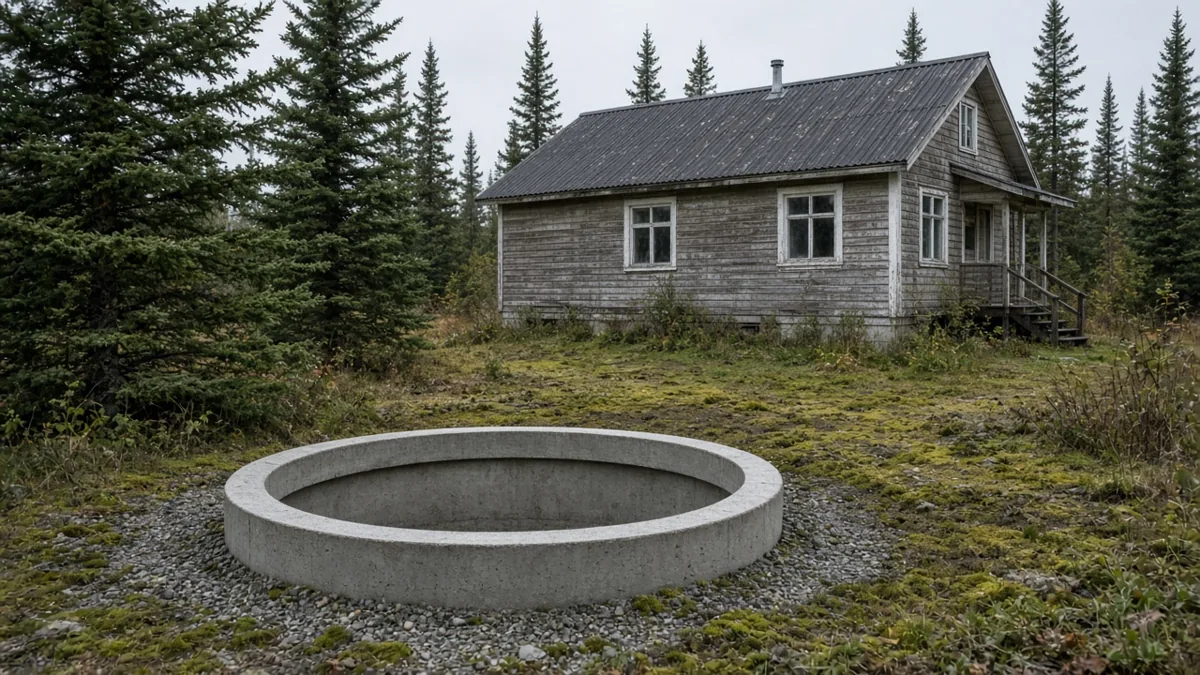
An Alaska cesspool seepage pit mortgage file starts with a hole that a listing may have misnamed. A cesspool and a seepage pit are not the same thing in Alaska’s wastewater chapter. A cesspool is a system the chapter tells people not to install, modify, or use. A seepage pit is defined as one form of conventional soil absorption system, taking effluent after a septic tank, with the absorption area counted on the sidewalls. A loan file that uses the words as synonyms will order the wrong inspection and cite the wrong rule. Many agency standards still want a wastewater system that works and that the local health authority accepts. A prohibited cesspool has a hard time meeting that test. A seepage pit still has to meet the chapter’s rules for the system it actually is.
The well and septic requirements page is the general private-system loan file. The DEC approval guide is the approval path. The holding-tank guide is pumped storage, which is a third system. The inspection guide is how the inspector should describe what they found. Houses in Juneau and Ketchikan can turn up old pits. The chapter is statewide.
Alaska Home HQ is educational. It is not a lender and it is not the Department of Environmental Conservation. Rates vary. Subject to credit approval.
What an Alaska cesspool seepage pit mortgage has to name
18 AAC 72.015(a), in the wastewater chapter DEC posted, says a person may not install, modify, or use a cesspool for wastewater treatment or disposal. That is a use ban. It is not a distance table. This article does not apply the 100-foot private-water separation to a cesspool, because the 100-foot list in 18 AAC 72.100(a)(1) does not use the word cesspool. The use ban is the sentence that governs. A cesspool that is “only a little too close” to a well is still a cesspool the chapter says not to use.
The same chapter defines a seepage pit, at 18 AAC 72.990(80), as a conventional soil absorption system that uses a perforated tank to distribute septic tank effluent to a distribution medium of clean sewer rock, with the absorption area calculated on the sidewalls only. Read the pieces. Septic tank effluent comes first. The pit is the absorption part. The rock and the sidewall calculation are part of the definition. A pit that receives raw sewage with no septic tank is not meeting that definition on its face.
The definition of a conventional soil absorption system includes, as typical designs, a 5-wide trench, a shallow trench, a deep trench, a bed, or a seepage pit. The system receives wastewater that has at least had primary treatment, and it uses the soil for treatment. A conventional wastewater system, in the same definition section, uses a septic tank followed by disposal into a conventional soil absorption system. A lawful seepage pit, in this vocabulary, is the second half of that pair. It is a soil absorption system of a particular shape. It is not a cesspool, and it is not a holding tank.
Listings, old appraisals, and neighbors will still say “cesspool” when they mean a seepage pit, or “septic” when they mean a rock pit with no tank. The mortgage condition should use the chapter’s words after someone qualified has looked. The inspection guide is where that description gets written so the underwriter is not left with a nickname.
Distances that apply to a soil absorption system
Because the chapter defines a seepage pit as a conventional soil absorption system, the sentences that name a soil absorption system are the sentences to read. 18 AAC 72.100(a)(1) requires at least 100 horizontal feet, nearest edge to nearest edge, from a source of drinking water for a private water system to a soil absorption system, unless the department has approved a lesser distance. The same paragraph also names the septic tank and a wastewater holding tank. Those are separate items on one list. A seepage pit is on the list only because it is a soil absorption system, not because the paragraph reprints the word “seepage pit.”
18 AAC 72.520(b) sets a minimum 100 feet between certain surface waters and a septic tank, a soil absorption system, a lift station, or a sewer manhole, for a person installing or modifying a conventional wastewater system. Again, the soil absorption system is the named item. A seepage pit that is that kind of system is inside that noun. This article does not copy either 100-foot sentence onto a cesspool.
Federal mortgage handbooks have had their own distance tables in older guides. This article does not quote those tables, and it does not say the Department of Environmental Conservation uses the same distances as FHA. Alaska’s numbers are the ones in 18 AAC 72. A lender’s overlay can ask for more. It cannot rename the state chapter.
The department can approve a lesser separation. The editor’s note to 18 AAC 72.100 points to the waiver and approval sections. A lesser distance without that paper is not a lesser distance. It is a miss.
What agency property standards usually ask
FHA’s Single Family Housing Policy Handbook, in the onsite sewage section of Handbook 4000.1, says the mortgagee must confirm a connection to a public or community sewage disposal system whenever feasible and available at a reasonable cost. If connection costs are not reasonable, existing onsite sewage disposal systems are acceptable provided they are functioning properly and meet the requirements of the local health department. If the onsite system is not sufficient and an off-site system is available, the mortgagee must confirm the connection. If the onsite system is not sufficient and an off-site system is not available, the mortgagee must reject the property unless the onsite system is repaired or replaced and complies with local health department standards.
That is a federal mortgage rule about function and about the local health department. It is not a statement that FHA and the department share a distance chart. In Alaska, the local rule on cesspools is the use ban in 18 AAC 72.015(a). An onsite system that the chapter says a person may not use has a plain problem under a handbook sentence that requires the local health department’s standards. A seepage pit that is a real conventional soil absorption system, functioning, and documented to the chapter, is a different fact. The handbook’s phrase is “functioning properly and meet the requirements of the local health department.” Both halves have to be true. A pit that meets a definition and is surfacing sewage fails the functioning half. A pit that works and was never the system the chapter describes fails the local-requirements half.
Other investors write shorter rules: a property must have an acceptable sewage system, or the appraiser must note what is there. A note that says “cesspool” can stop a file even when the buyer is willing to replace it. The septic replacement guide is the financing question for building a lawful system. Replacement does not close by itself. The contract has to allow the time, and the lender has to allow the escrow or the repair. Ask before you waive the inspection.
18 AAC 72.090 describes when a wastewater system is in failure, including a system that no longer works as designed or as approved, and sewage that surfaces when the design did not allow that. A failed pit is not saved by a better nickname. Mark it as a failure, keep people off it, and follow the cleanup and repair duties that section states.
How to keep the file accurate
Ask the inspector and, when you need it, a registered engineer or the department which system is in the ground. Ask for any approval, registration, or as-built that names a septic tank and a seepage pit, or that names something else. If the paper says cesspool, read 18 AAC 72.015(a) again and expect the loan to stall until the system is one the chapter allows and the lender’s handbook accepts. If the paper says seepage pit, check for the septic tank ahead of it, the separation distances that apply to a soil absorption system, and proof it is functioning.
Do not tell the appraiser to write “septic, typical for the area” to clear a condition. Cite the chapter for the state rule, Handbook 4000.1 for the FHA sewage paragraph above, and the lender for any overlay.
Get a connection estimate if the appraiser says public sewer is available. This page does not invent that cost. The handbook’s words are feasible and reasonable cost.
Ready to explore your options? Get a free home loan quote from Premier Mortgage (NMLS# 1168048).
Frequently Asked Questions
Are a cesspool and a seepage pit the same system?
The wastewater chapter bans installing, modifying, or using a cesspool. It defines a seepage pit as a conventional soil absorption system that distributes septic tank effluent into sewer rock, with sidewall area only. One is prohibited. The other is a defined part of a conventional system and still has to meet the rest of the chapter.
Does the 100-foot well rule apply to a cesspool?
This article does not apply the 100-foot figure to a cesspool. 18 AAC 72.100(a)(1) names a soil absorption system, a septic tank, and a wastewater holding tank, and it does not name a cesspool. The cesspool rule is the use ban in 18 AAC 72.015(a), while a seepage pit defined as a soil absorption system falls under that soil-absorption item unless the department approved a lesser distance.
Does FHA use Alaska’s distances?
Handbook 4000.1 says an existing onsite system can be acceptable when a public connection is not reasonably available, if the system works and meets the local health department. That is not a distance table, and it is not the text of 18 AAC 72. Use the chapter for state separations. Use the handbook for the FHA connection and performance rule.
Can a loan close on a house that still uses a cesspool?
The chapter says a person may not use a cesspool. FHA’s handbook requires onsite systems to meet the local health department when a public connection is not the path. A lender can also refuse the property until it is repaired or replaced. Expect a stall, and read the replacement-financing guide if a new system is the plan.
What should the inspector write?
The name the chapter uses, after looking at the tank, the pit, and the effluent path. “Septic,” “cesspool,” and “seepage pit” are not interchangeable on a loan condition. The approval guide and the inspection guide are where that wording gets matched to paper.
Ready to Take the Next Step?
Get a free home loan quote today through our trusted partner.
Or call 9078411600
Disclaimer: This article is for informational purposes only and does not constitute financial, mortgage, legal, or tax advice. Interest rates, loan programs, eligibility requirements, and fees are subject to change without notice and may vary based on your individual circumstances. Alaska Home HQ is not a lender, broker, or financial institution. All loan applications are processed by Premier Mortgage (NMLS: 1168048). We may have a business relationship with Premier Mortgage and may receive compensation when you use their services through our links. Consult a licensed mortgage professional before making financial decisions. Terms of Service · Privacy Policy