Alaska Float House Mortgage
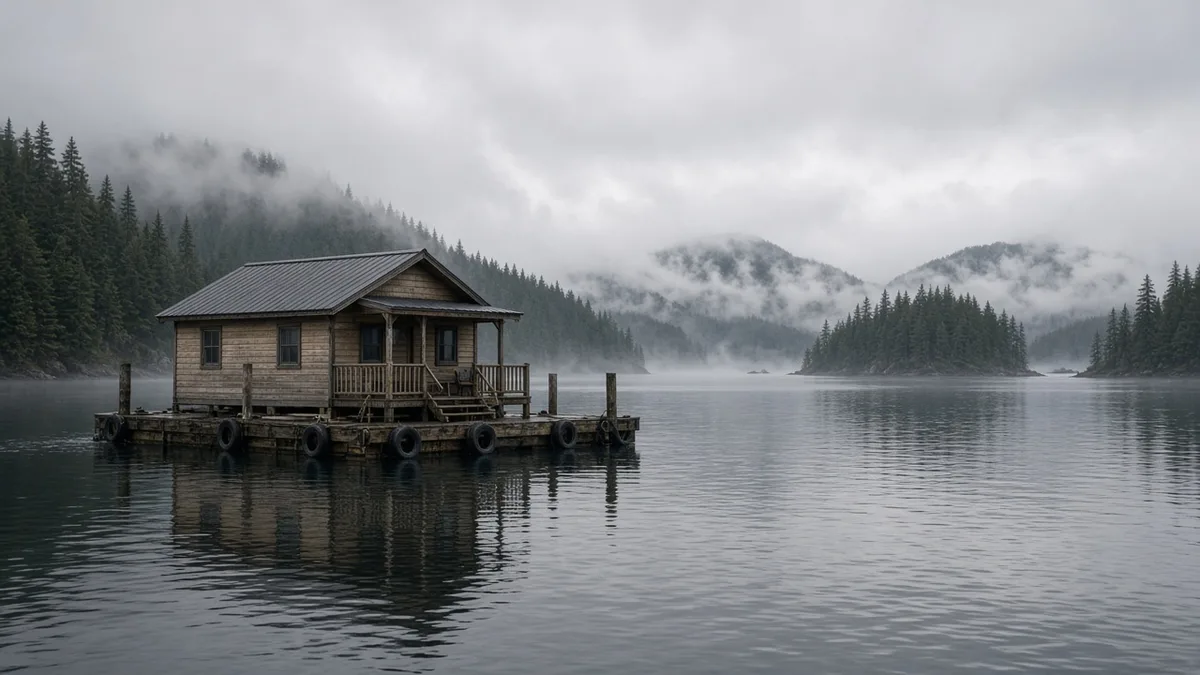
An Alaska float house mortgage is a home loan on a residence that sits on the water, typically over tidelands the State of Alaska manages, under a permit or a lease from the Department of Natural Resources rather than under a deed to the seafloor. The structure can look like a house. The interest the buyer is getting can be a personal authorization to keep it there. Those are different facts, and the loan file has to carry both.
This is not the leasehold-land guide. That guide is about a ground lease of upland, the dirt under a house. A float house is on the water. The waterfront homes guide is about buying along the shore, which is often a deeded lot with a view. A float house in Sitka can be a residence on a DNR tidelands authorization. The pretty channel does not replace the authorization.
Alaska Home HQ is educational. It is not a lender and it is not DNR. Rates vary. Subject to credit approval.
What an Alaska float house mortgage reads on state tidelands
DNR’s abandoned and derelict vessel page says the state owns most tidelands, submerged lands, and shorelands where a vessel is likely to sit, with exclusions such as state lands conveyed to municipalities or withdrawn before statehood. The same page says that, under the vessel definition it cites at AS 30.30.170(6), float houses fall under floating facilities. It tells readers to use Alaska Mapper and the department’s public information contacts when the question is who owns a particular piece of shore.
Staying in one spot without an authorization is limited. The page says a person can anchor in the same spot without an authorization for up to 14 consecutive days. It points to generally allowed uses at 11 AAC 96.020 and says that after that period the vessel is moved at least two miles before a new 14-day period starts. Shuttling between two sites two miles apart does not satisfy the rule. The page names an exception, including anchoring in front of private upland the person owns. A float house that has spent the winter in one bight is not inside a 14-day story. It needs the authorization that covers a long stay, or it needs to fit an exception the page actually describes.
A longer stay is a land-use permit conversation. The page says an application for the appropriate land use permit under AS 38.05.850 costs $240, that the division reviews applications, and that there is no guarantee an application becomes a permit. The department’s land-use permit form asks, in the marine-waters questions, whether the applicant is anchoring a personal-use float house. On the float-house portion it states that grounding is prohibited and asks for the water depth under the facility at an extreme low tide. This article does not fill in that depth. The form is asking for the site’s number, not publishing a statewide minimum this page can copy.
A lease is a different document from a permit
DNR’s fact sheet on leasing state land defines tideland as the land between mean high water and mean low water that tidal water covers periodically, and submerged land as the land from mean low water seaward three miles. It says state land can be leased for commercial surface use under AS 38.05.070, AS 38.05.073, and AS 38.05.075, and it mentions other statutes, including AS 38.05.035 and AS 38.05.810, for certain conditions. The fact sheet’s main subject is a general commercial lease under AS 38.05.070.
The same fact sheet says leases can be issued for almost any commercial, industrial, agricultural, or grazing use, and for some private uses, and that the state does not typically lease land for residential use. It offers land for purchase through a disposal program instead. A float-house buyer who was told “it’s a state lease, so it’s just like a lot” should read that sentence before treating the authorization as a deed. If the file really is a lease, the fact sheet also describes terms worth reading on the document itself. A short-term lease, as the fact sheet defines it, is 10 years or less. A long-term lease is more than 10 years and, the fact sheet says, requires a survey and an appraisal. Assignment or a sublease takes DNR’s written approval. The public-notice step it describes, citing AS 38.05.945, is a minimum of 30 days, followed by a 20-day appeal period, with the decision becoming effective on the 31st day if no appeal is filed. That calendar is not a mortgage closing calendar. A new lease is not a title objection that clears in a week.
A permit and a lease do not automatically transfer because a purchase contract says the buyer gets the house. The permit in the seller’s name has to be read for what happens at sale. The lease, if that is the instrument, has to be read for whether DNR has approved an assignment to the buyer. Title’s job is to identify what can be insured. The title insurance guide is the schedule of exceptions and covered interests. A float house file wants the authorization, the description of the structure, and any upland interest that actually belongs to the sale, each labeled as what it is.
What the mortgage is securing
The lender is being asked to finance a dwelling. The seafloor under it is often state land. If the buyer’s right to keep the dwelling there expires, cannot move to the buyer, or does not exist beyond a 14-day generally allowed use, the collateral story is incomplete. That is not a reason to declare that every permitted float house fails, and it is not a reason to declare that every one is fine. Programs differ. This page does not set a minimum remaining term for a tidelands permit. The DNR pages opened for it do not publish a mortgage minimum. The authorization that exists is the document. Its term, its transfer language, and its site rules, including the form’s statement that grounding is prohibited, are what the underwriter and the appraiser can read.
Insurance is a parallel question. Ask the insurer whether a dwelling on a float is a dwelling they will write, because a lender wants a policy that matches the collateral. This page does not quote a premium and does not name a required policy form.
An upland lot with a float tied in front of it can be two interests: the deeded upland, and the authorization for the float. The derelict-vessel page’s exception for anchoring in front of private upland is not a promise that the float is part of the lot for lending purposes. Show both. If the float is the only residence and the upland is a steep unbuildable strip, say that plainly.
A Permanent Fund Dividend can help with cash to close or with a haul-out. It does not create a tidelands permit, and it does not assign a lease. DNR’s application fee of $240, as stated on the derelict-vessel page for the AS 38.05.850 permit, is a filing cost, not evidence that a permit will be issued. The page also states a civil penalty of not more than $1,000 per day, under AS 30.30.015, for leaving a derelict vessel on DNR-managed land without approval. An unauthorized long stay is an enforcement problem. It is a poor thing to discover after the inspection deadline.
Ready to explore your options? Get a free home loan quote from Premier Mortgage (NMLS# 1168048).
Frequently Asked Questions
Is a float house the same as a house on leased land?
A leasehold upland house sits on a ground lease of the lot. A float house sits on the water, usually over state tidelands, under whatever permit or lease DNR actually issued. DNR’s leasing fact sheet says the state does not typically lease land for residential use. Read the instrument in the file instead of assuming the word “lease” means a deed.
Can I keep a float house in one place with no permit?
DNR’s derelict-vessel page says anchoring in the same spot without an authorization is limited to 14 consecutive days, after which the vessel is moved at least two miles to start another 14-day period. Moving back and forth between two sites two miles apart does not meet that rule. A long-term residence needs an authorization, unless it fits an exception the department describes, such as anchoring in front of your own upland.
Does the state have to approve a buyer taking over a tidelands lease?
The leasing fact sheet says a lease can be assigned or subleased with DNR’s written approval, if the new party is eligible and the lessee is in good standing. A permit may read differently. Neither document assigns itself because a purchase agreement says so. Build DNR’s timeline into the closing if a new approval is required.
Will a lender finance any permitted float house?
This page does not say yes, and it does not say no. The file needs the current authorization, a reading of whether it can pass to the buyer, and an appraisal of a dwelling the program can secure. There is no published remaining-term number on this page, because the DNR pages opened for it do not state a mortgage minimum. Subject to credit approval and to the property qualifying.
What does “grounding is prohibited” mean for the loan?
The state’s land-use permit questionnaire for marine waters states that grounding is prohibited and asks for the depth under the facility at an extreme low tide. The answer is a site fact for that application, not a depth this article invents. If the float takes the bottom at low water, that conflict belongs in the DNR file before it belongs in a closing disclosure.
Ready to Take the Next Step?
Get a free home loan quote today through our trusted partner.
Or call 9078411600
Disclaimer: This article is for informational purposes only and does not constitute financial, mortgage, legal, or tax advice. Interest rates, loan programs, eligibility requirements, and fees are subject to change without notice and may vary based on your individual circumstances. Alaska Home HQ is not a lender, broker, or financial institution. All loan applications are processed by Premier Mortgage (NMLS: 1168048). We may have a business relationship with Premier Mortgage and may receive compensation when you use their services through our links. Consult a licensed mortgage professional before making financial decisions. Terms of Service · Privacy Policy