Alaska Kit Home Financing Guide
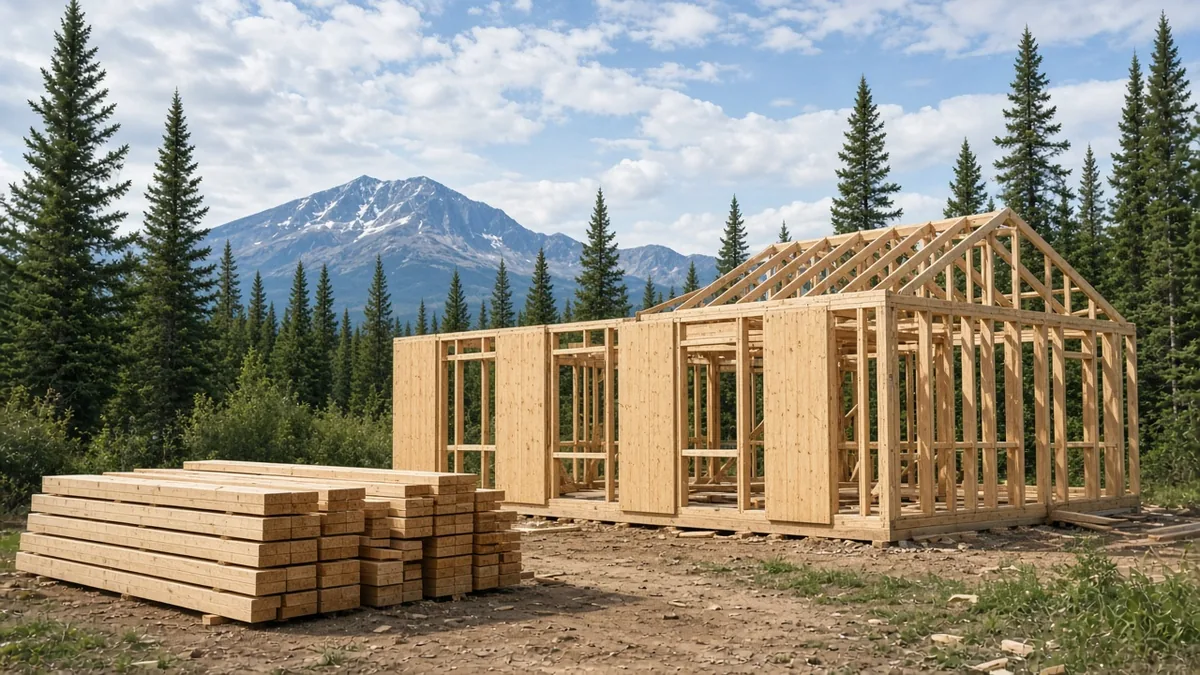
Alaska kit home financing is a construction-to-permanent loan for a precut or panelized package shipped to a lot and built there. Precut means the lumber is cut and labeled. Panelized means wall sections arrive and get stood up. Either way the house does not exist on the day the truck or the barge shows up. The collateral is a lot, a materials package, and a plan. The loan that fits is construction financing that becomes a permanent mortgage when the house is finished.
This is not the log-home financing page. A log package is its own appraisal and its own construction file. This is not modular financing. Modular sections arrive as three-dimensional boxes. A kit arrives as a package. This is not a HUD-code manufactured home. Fannie Mae defines a manufactured home as a dwelling built on a permanent chassis, to the HUD code, installed on a permanent foundation, and titled as real property. The same Fannie material says other factory-built housing that is not on a permanent chassis, such as modular, is treated as site-built and is not under the manufactured-home rules. A precut or panelized kit, assembled on site, is in that site-built conversation once it is a house. If the brochure shows a chassis and a HUD label, use the manufactured-home guide instead, whatever the seller calls it.
The owner-builder construction loan is the file in which the owner is the builder. This page is the package and the loan around a build. Many construction files are written to a licensed general contractor, a permit where a local building authority issues one, and draws the lender controls. If you intend to swing the hammer yourself, read the owner-builder page before you order the kit.
Alaska Home HQ is educational. It is not a lender. Rates vary. Subject to credit approval.
How Alaska kit home financing is closed
Fannie Mae’s single-closing construction-to-permanent section says one closing can cover both the construction loan and the permanent financing. The lender manages disbursement to the builder, the contractor, or other authorized suppliers. Because the note already states the permanent terms, the construction loan converts to the permanent mortgage when construction is complete. A two-closing structure also exists: one loan for the build, and a separate loan that pays it off when the house is done. Which structure a lender offers is that lender’s product. This article does not promise either one on a given kit.
Fannie’s delivery notes on construction-to-permanent financing say the borrower holds title to the lot. The lot can already be owned, or it can be bought as part of the transaction. A kit invoice with no lot is not a mortgage on a dwelling. If the lot is raw land you are buying from a private seller, or from a land office, that purchase has to close in a way the construction lender will accept. The construction-loan guide is the wider map of draws, inspections, and the conversion. The kit page is the package.
The appraiser values the house as proposed, from plans and specifications, as complete. There is no HUD data plate to photograph, because this is not a manufactured home. The value is the finished site-built house, not the price on the factory quote. If the as-complete value comes in under the cost to build, the file has a gap. How a buyer covers a gap is a separate negotiation. This page does not set a down-payment percentage. Construction files often want the land equity and the cash to be visible before the first draw. The lender is the one who says what that lot needs to show. A national advertisement is not Alaska underwriting.
What the kit price leaves out
The number on the brochure is the package. Alaska adds the rest, and the rest is what makes these files stall. Freight by highway or by barge. A foundation that fits the soils on that lot. Water, whether a well or a community system. Wastewater, whether a septic system or a sewer connection. Heat. A roof designed for the snow that place actually gets. Driveway, electric service, and the permits the borough or city requires where it requires them. Unless the contract puts those lines in writing, they are not in the kit price. A draw schedule that only funds the factory will run out of money with a shell standing in the weather.
The draw-schedule guide is how disbursement usually gets written: inspections, then money to the people who did the work. On a kit, one of those payees may be the manufacturer, and another is the contractor on the site. The lender wants invoices that match the budget. A change order for a different window package is a budget change, not a surprise the permanent loan absorbs later.
Where a city or an organized borough issues building permits, the permit and the inspections are what the draws hang on. In parts of Alaska there is no local building official. The lender then says what third-party inspection it will accept. This article will not invent a statewide permit office. Ask before the kit is ordered, because a package sitting on a lot you cannot get inspected is a storage problem.
Season is the other Alaska line. In the Mat-Su, around Wasilla, excavation is easier after breakup and before the ground locks up. Contractors book that window. A kit that arrives in October and sits under snow until May is paying for storage and for a construction loan that is not converting. Coastal deliveries depend on the barge schedule, not on the factory’s ship date. Build the calendar backward from the inspections, not forward from the catalog.
The Permanent Fund Dividend sometimes helps a household hold cash for the land or for the cost over the kit price. It is not a construction budget, and a lender does not treat the dividend as a substitute for a contract that lists freight and foundation.
Insurance during the build is part of the file. The lender asks for coverage while the project is still a frame. The policy type and the amount are what that lender requires. This page does not quote a premium.
Ready to explore your options? Get a free home loan quote from Premier Mortgage (NMLS# 1168048).
Frequently Asked Questions
Is a panelized kit a manufactured home?
Not if it has no permanent chassis and no HUD certification label. Fannie Mae treats factory-built housing without a chassis, and it uses modular as the example, as site-built. A kit assembled on your foundation is underwritten as a site-built house once it is complete. A unit on a chassis is the manufactured-home guide even when the seller says “kit.”
Does the catalog price include getting the package to Alaska?
Only if the contract says so. Freight, the foundation, water, wastewater, heat, and the site work are separate costs on most of these files. The construction budget the lender approves is the whole list, not the factory invoice. If a line is missing, the draws run out before the house is done.
Can the construction loan and the mortgage be one closing?
Fannie Mae’s guide allows a single closing that converts to the permanent loan when the house is complete, and the market also uses two closings. A given lender may offer one, the other, or neither for a kit. The plans, the contractor, and the lot title are what that lender reviews. The guide is not a promise that every kit qualifies for a one-time close.
What if I already own the lot?
Fannie’s construction-to-permanent notes say the borrower holds title to the lot, whether it was bought earlier or is bought in the same transaction. Owning the lot can be the equity in the file. It does not remove the need for a budget, a builder or an owner-builder approval, and an as-complete appraisal. The land value and the kit are not the same number.
Who inspects the build if the borough does not issue permits?
The lender names the inspection it will use when there is no local building official. That might be an engineer or another third party the lender accepts. Order the kit after that answer, not before. A package on the ground with no inspection path is not a draw the lender has agreed to fund.
Ready to Take the Next Step?
Get a free home loan quote today through our trusted partner.
Or call 9078411600
Disclaimer: This article is for informational purposes only and does not constitute financial, mortgage, legal, or tax advice. Interest rates, loan programs, eligibility requirements, and fees are subject to change without notice and may vary based on your individual circumstances. Alaska Home HQ is not a lender, broker, or financial institution. All loan applications are processed by Premier Mortgage (NMLS: 1168048). We may have a business relationship with Premier Mortgage and may receive compensation when you use their services through our links. Consult a licensed mortgage professional before making financial decisions. Terms of Service · Privacy Policy