Alaska Landlocked Property Mortgage Guide
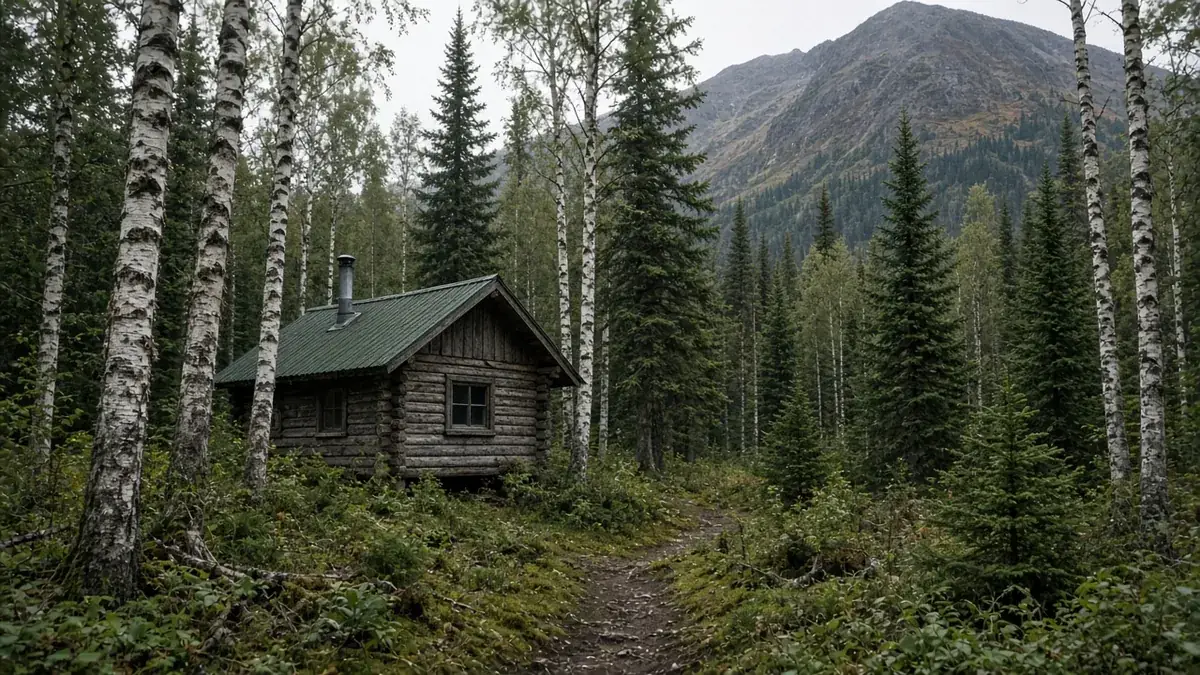
An Alaska landlocked property mortgage is a loan file in which the title commitment shows no legal vehicular access. The parcel does not touch a public road, and the commitment does not list an appurtenant easement that reaches one. A trail the neighbors use, a cat track across a section, or a verbal okay to drive through is not a line on Schedule B. The mortgage looks at the commitment and the appraisal, not at the tire tracks.
This is not the private-road maintenance article. That page is for a road that already has a recorded easement and a maintenance agreement. If those documents are in the commitment, the parcel is not landlocked. It is a private-road file. This is also not boat-only access. A cabin reached only by skiff is a different access fact. Landlocked, in this article, means the commitment shows no recorded road right at all.
Alaska Home HQ is educational. It is not a lender, and it is not a title company. Rates vary. Subject to credit approval.
Why an Alaska landlocked property mortgage stops
Fannie Mae’s general property eligibility rules say the mortgaged premises must be readily accessible by roads that meet local standards. The same list requires the property to be safe, sound, and structurally secure, served by utilities that meet community standards, and suitable for year-round use. The access clause is the one that stops a landlocked legal description. An appraiser who writes “no legal access” is not making a style comment. The underwriter is reading that sentence against the guide.
The title commitment is the document that shows what the title company is willing to insure. Schedule A describes the estate and the land. Schedule B lists exceptions. An access easement that actually benefits the parcel shows up there, or in a document referred to there, and the legal description of the easement has to connect to a public road. An easement that stops in the middle of someone else’s parcel leaves a gap. A gap is still landlocked. A plat that labels a strip “roadway” without dedicating it, or without an easement the commitment picks up, is a picture. The commitment is the insurance.
Physical use does not fill the gap. In Homer, on the Kenai Peninsula, and on large Mat-Su tracts, people drive the beach, the section line, or a neighbor’s driveway for years. Winter makes this worse, because a plowed track across snow looks like a road until breakup, and then it looks like a trespass. A lender closing on the Fannie access rule wants the right recorded before the deed of trust, not a hope that the neighbor stays friendly.
What people mistake for access
A section-line easement is its own legal theory. Some townships have them. Some do not. A vacation, a federal reservation, or a gap in the township survey can remove the strip a buyer expected to see. A line on a USGS map is not the easement a title company will insure. If a section-line claim is the access theory, that article is the place to read it, and the commitment either reflects a right the title company will insure or it does not. This page does not assign a width to that strip.
A prescriptive easement, or an easement by necessity, is a court outcome. It is not on the commitment until a judgment or a deed is recorded and the title company revises the report. Litigation can be the right path for an owner who has used a route for a long time. It is a poor plan for a purchase that has to close on a contract calendar. Until the paper is recorded, the file the lender sees is the landlocked one.
A public road that “almost” touches the corner is a survey question. If the survey shows a gap of any size, the parcel does not front the road. Buying a sliver from the neighbor, or taking an easement across that sliver, is how the gap closes. The sliver has to be in a recordable instrument. A handshake at the kitchen table is not an instrument.
Utilities are a separate sentence in the Fannie list. A lot can have legal access and still lack power, or have power and no road right. A meter on a post is not insured access. A recorded easement is not a finished driveway. The loan can require both the right and a road that meets local standards. “Local standards” is the phrase in the guide. What a borough accepts as a road, and what a lender’s appraiser will call adequate, are questions for that borough and that appraisal, not a statewide foot-width this article can invent.
How a landlocked file gets a road right
The usual cure, when the neighbor agrees, is a written easement, signed, acknowledged, and recorded in the recording district. The title company then updates the commitment or endorses it so the easement is appurtenant to the parcel and runs to a public road. The appraiser can then say the site has legal vehicular access, and can still comment if the physical road is too rough for year-round use. Recording is the step that changes the file. A draft in someone’s email does not.
The purchase contract can make that recording a contingency, with a date. If the neighbor will not sign, the conventional file described by the access rule does not have a road to underwrite. Seller financing and a cash purchase are different conversations, and they do not change what the commitment shows. A buyer using a loan that has to meet the Fannie access sentence needs the easement in the record first.
Read the easement before you celebrate it. Does it allow vehicles, or only utilities. Does it expire. Does it say the grantor can relocate it. Who maintains the surface. Maintenance of a private road that already exists is the other article. On a landlocked parcel, maintenance does not arise until the right exists. An easement that forbids vehicles, or that a prior owner can revoke at will, may not satisfy “readily accessible by roads.”
The Permanent Fund Dividend can sit in savings for closing costs. It does not buy an easement the neighbor refuses to sign, and it does not appear on a title commitment.
Insuring over a known access gap is not a casual endorsement. Ask the title officer, in the commitment review, whether they will insure access. If the answer is no, the lender is not going to pretend the appraisal can insure it instead. Title and appraisal answer different questions. Both have to be yes on access before a standard conventional file moves.
Seasonal pressure is real. Sellers want to close before the road they plowed drifts in. Buyers want to see the route in summer, when the muskeg and the creek crossing are visible. A winter closing on a route nobody has surveyed is how landlocked parcels get financed in stories and fail in underwriting. See the route when the ground is bare, then record the right that matches the route.
Ready to explore your options? Get a free home loan quote from Premier Mortgage (NMLS# 1168048).
Frequently Asked Questions
If I can drive to the cabin, why would a lender call it landlocked?
Because the drive may cross land you do not have a recorded right to use. The commitment insures the legal description, not the habit. If no easement benefits the parcel and the parcel does not touch a public road, the access the guide asks for is not in the file yet, no matter how worn the trail is.
Can the seller just say access is over the section line?
They can say it. The title company and the appraiser still have to insure and describe a right. A section-line claim is a separate legal question, and it is not automatic in every township. Until the commitment reflects an access right, the loan file is still the landlocked one.
What if the neighbor will give access but will not maintain the road?
Those are two documents. The easement creates the right to cross, and a maintenance agreement, when the road is private and already identified, is the other article on this site. The right is what gets recorded first. A promise to plow, with no easement, leaves the parcel landlocked on paper.
Does a survey monument at the corner count as frontage?
A monument shows where the surveyor says the corner is. Frontage exists if the boundary and the public road actually touch, or if an easement bridges them. If the survey drawing shows a gap, the monument did not close it. The fix is a deed or an easement for the gap, then a revised commitment.
Will a cash offer avoid this?
A cash buyer can choose to take the title the commitment describes, including a parcel with no insured access. A loan that follows the Fannie Mae access rule does not have that choice. The seller’s preference for a fast closing does not create a road right the title company left off the report.
Ready to Take the Next Step?
Get a free home loan quote today through our trusted partner.
Or call 9078411600
Disclaimer: This article is for informational purposes only and does not constitute financial, mortgage, legal, or tax advice. Interest rates, loan programs, eligibility requirements, and fees are subject to change without notice and may vary based on your individual circumstances. Alaska Home HQ is not a lender, broker, or financial institution. All loan applications are processed by Premier Mortgage (NMLS: 1168048). We may have a business relationship with Premier Mortgage and may receive compensation when you use their services through our links. Consult a licensed mortgage professional before making financial decisions. Terms of Service · Privacy Policy