Alaska Snow Load Appraisal: What Home Buyers Must Know
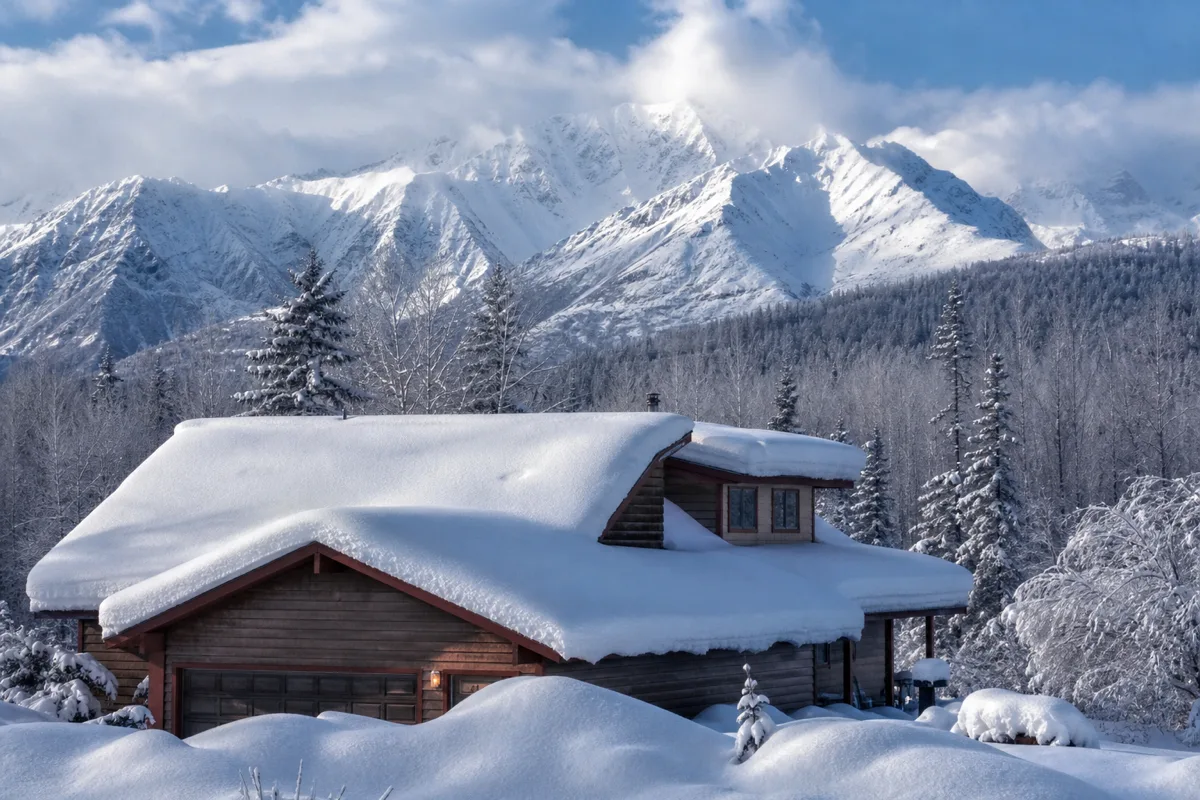
Alaska’s climate is one of the primary factors that makes home appraisal and property inspection more complex here than in the Lower 48. Roof snow load capacity — the structural ability of a roof to bear accumulated snow weight — is a serious safety and financing concern that appraisers and lenders evaluate on Alaska home purchases. If you’re buying a home in Alaska, particularly in high-snowfall areas like the Mat-Su Valley, Southcentral Alaska, or Southeast communities, understanding snow load requirements can prevent costly surprises during underwriting.
What Is Snow Load and Why Does It Matter?
Snow load refers to the downward force exerted on a structure by accumulated snow and ice. This force is measured in pounds per square foot (psf). Alaska’s building codes specify minimum ground snow loads by geographic area, and roof designs must be engineered to safely carry those loads.
Why it matters for buyers:
- Roof failure due to excessive snow accumulation is a real structural risk in Alaska
- FHA, VA, and conventional appraisers are trained to flag structures that appear unable to handle local snow loads
- A home with an inadequate or improperly designed roof may fail appraisal, requiring repairs before the loan can close
- Deferred maintenance — sagging rafters, inadequate pitch, or rotting structural members — increases collapse risk
Alaska Snow Load Zones
The Alaska Uniform Residential Building Code establishes ground snow load requirements by region. These vary significantly across the state:
Anchorage area: Ground snow load of 50 psf in much of Anchorage, with some areas requiring higher values
Mat-Su Valley: Ground snow loads of 60–100+ psf in many parts of the valley; communities at higher elevations can see even higher requirements
Fairbanks/Interior: Moderate snow loads compared to Southcentral; interior Alaska is cold but generally drier
Southeast Alaska (Juneau, Ketchikan, Sitka): Very high snow loads are possible, particularly at elevation, but coastal communities often have rain rather than snow — loads vary
Rural communities: Snow load requirements depend on elevation and local climate data
What FHA and VA Appraisers Look For
For FHA and VA loans, the appraisal must confirm that the property meets Minimum Property Requirements (MPR) related to structural soundness. Regarding snow load, appraisers typically assess:
Roof pitch: Low-pitch or flat roofs accumulate snow more readily than steeply pitched roofs. A roof with inadequate pitch for the local snow load may trigger further review or require certification by a structural engineer.
Visible structural distress: Sagging ridgelines, bowed rafters or trusses, deflected beams, or cracked structural members are red flags the appraiser will note.
Roof condition: Age, material condition, missing sections, and evidence of past leaks or overloading are evaluated.
Extensions and additions: Improperly permitted additions — a common issue in rural Alaska — may not have been engineered for local snow loads. Carports, attached structures, and large overhangs are commonly flagged areas.
If the appraiser has concerns about structural capacity, they may call for a structural engineer’s inspection before the appraisal can be completed.
Common Snow Load Issues That Affect Alaska Closings
Sagging roof systems: A visible sag in the ridgeline or between trusses indicates past overloading or inadequate original design. This typically requires a structural engineer’s report and may need repair before closing.
Flat or near-flat roof sections: Additions or modifications that created low-slope roof sections — particularly when the original structure has adequate pitch — are common problem areas.
Heavy snow years and deferred maintenance: In high-snow years, a structurally marginal roof may develop or worsen existing problems. Buying a home after a heavy winter requires careful inspection of roof framing.
Unpermitted structures: Rural Alaska properties with unpermitted buildings or additions may have structures built without engineering review — making it impossible to verify code compliance.
How Buyers Can Prepare
Order a home inspection early: A licensed Alaska home inspector should specifically assess the roof structure and comment on apparent snow load adequacy. Get on record any concerns before the appraisal.
Request building permits: Ask the seller for permit history for any additions. Permitted work was inspected at construction; unpermitted work carries unknown risk.
Have a structural engineer inspect if needed: If any snow load concerns arise during home inspection or appraisal, investing $500–$1,500 in a structural engineer’s assessment provides certainty and documentation.
Factor repair costs into your offer: If snow load-related repairs are needed, negotiate credits or repairs from the seller. This is a structural safety issue — not a cosmetic one.
Roof Maintenance After Purchase
Buying in Alaska means taking on the responsibility of ongoing roof maintenance. In high-snowfall areas:
- Snow should be removed from roofs when accumulation approaches the design load threshold (typically 24–36+ inches depending on density)
- Professional roof raking or shoveling companies operate throughout the Mat-Su and Anchorage areas
- Metal standing seam roofs are popular in Alaska because they allow snow to slide off naturally
Buying an Alaska home and worried about appraisal requirements? Premier Mortgage (NMLS# 1168048) partners with lenders experienced in Alaska’s unique property conditions.
More resources:
- Alaska Home Appraisal Process
- Alaska Home Inspection Checklist
- FHA Loans in Alaska
- VA Loans in Alaska
Frequently Asked Questions
Will a flat roof fail an FHA appraisal in Alaska?
Not automatically — but a low-slope or flat roof in a high-snowfall area will receive additional scrutiny. The appraiser will assess whether the roof structure appears adequate for local conditions and may call for a structural engineer’s inspection if concerned. Proper drainage, condition, and visible structural integrity are the key factors.
Who pays for structural repairs required by an FHA or VA appraisal?
Structural repairs flagged as required conditions of the FHA or VA appraisal must be completed before the loan closes. This is typically negotiated with the seller — the seller repairs, provides a credit, or reduces the purchase price to allow the buyer to fund repairs. Some sellers choose to re-list rather than address structural issues.
How do I know if a home’s roof is engineered for Alaska snow loads?
Permitted construction was inspected against local building codes that include snow load requirements. Request building permits for the roof and any additions. For older homes without permits, a structural engineer can assess whether the current structure appears adequate. This analysis is especially important for additions and modifications.
Can I buy an Alaska home with a known snow load problem?
Yes, in some cases — particularly with conventional financing where lender overlays are less rigid. However, FHA and VA lenders must ensure the property meets minimum property standards, which include structural soundness. A seller-funded repair or purchase price reduction that allows you to fund repairs after closing may be a path forward.
How much snow can a typical Alaska roof handle?
Roof design loads vary by location and engineering. A properly engineered roof in the Mat-Su Valley designed for a 60 psf ground snow load might be built to handle 30–40 psf on the roof surface (snow load calculations adjust for roof slope and other factors). The actual safe limit is specific to the structure’s framing design — consult a structural engineer rather than relying on general estimates.
Ready to Take the Next Step?
Get a free home loan quote today through our trusted partner.
Or call 9078411600
Disclaimer: This article is for informational purposes only and does not constitute financial, mortgage, legal, or tax advice. Interest rates, loan programs, eligibility requirements, and fees are subject to change without notice and may vary based on your individual circumstances. Alaska Home HQ is not a lender, broker, or financial institution. All loan applications are processed by Premier Mortgage (NMLS: 1168048). We may have a business relationship with Premier Mortgage and may receive compensation when you use their services through our links. Consult a licensed mortgage professional before making financial decisions. Terms of Service · Privacy Policy