Alaska Substandard Lot Mortgage Guide
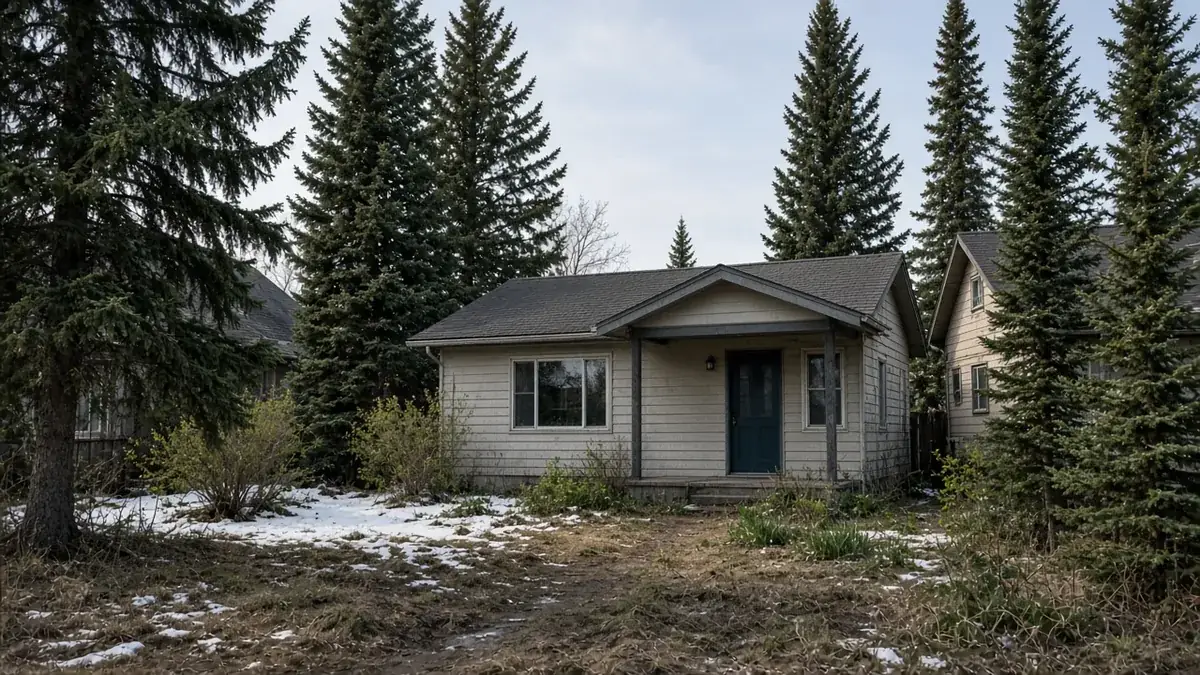
An Alaska substandard lot mortgage is a loan on a house whose lot is smaller than the minimum lot area the zoning code requires today. The house is often already standing. The lot was often legal when it was created, and a later ordinance raised the minimum. There is no single Alaska square footage that makes a lot substandard. The number lives in the district that applies to that parcel, and the mortgage file lives or dies on how the appraiser labels the use.
This is not a plat-waiver file. A plat waiver is a decision about whether a subdivision plat is required. This is not a tiny-house zoning article. A tiny house can sit on a lot that meets today’s minimum. A second dwelling on one lot is a count of houses, not a measurement of the lot. The substandard lot is the undersized lot itself.
Where nobody zones the land, there is no minimum to miss. Much of the unorganized borough has no borough zoning code. Fannie Mae’s appraisal section has a box for no local zoning. A small cabin lot in that country is a different problem from a lot in Wasilla, Anchorage, the Kenai Peninsula Borough, the Fairbanks North Star Borough, or Juneau, where a code sets area by district. This article does not print those minimums. They differ, and they get rewritten.
Alaska Home HQ is educational. It is not a lender. Rates vary. Subject to credit approval.
What an Alaska substandard lot mortgage needs from the appraisal
Fannie Mae’s site section of the appraisal report tells the appraiser to report the zoning class and, in a general way, what that class permits. The report then says which of four things the property is: a legal conforming use, a legal non-conforming (grandfathered) use, an illegal use, or a property with no local zoning.
The same section says Fannie Mae buys loans when the improvements are a legal conforming use of the land. It also buys a loan on a legal nonconforming use, provided the appraisal reflects any adverse effect that status has on value and marketability. A grandfathered small lot lives in that second sentence. The fact that the house has stood for decades explains how the lot became nonconforming. It does not replace the comment on value.
An illegal use sits outside that purchase rule. A piece cut off a larger parcel without the subdivision the code required, or a dwelling the zone does not allow, is not “a little under the minimum.” The Mat-Su zoning guide helps a reader find that borough’s districts. It cannot declare a particular lot legal. The planning department that wrote the minimum is the desk that says whether this parcel is a lot of record.
One sentence in that Fannie section gets pasted onto every odd lot, and it does not belong there. Fannie Mae will not buy a loan on property subject to certain land-use regulations, such as coastal tideland or wetland laws, that prevent reconstruction or maintenance of the improvements if they are damaged or destroyed. The examples are tideland and wetland rules, not an ordinary residential lot-area minimum. A small lot can still have a rebuild question. That question goes to planning, in writing: is this a legal lot of record, what is today’s minimum area, may the existing house stay, and what does the code do if the house is destroyed. The answer in the Mat-Su is not the answer in Anchorage, and a code rewrite can change it. This page does not invent the answer, and it does not invent a setback in feet. An older house can sit closer to a line than today’s code would allow. The survey shows where the walls are. The code says whether that location is a legal nonconformity.
Three ways an Alaska lot ends up small
The lot was platted when the minimum was lower, and the zone changed later. If planning calls it a lot of record and a legal nonconforming lot, the appraisal uses that label and discusses whether buyers pay less because of it. Older streets in Wasilla and in Anchorage neighborhoods produce this file when a house from an earlier plat sits on ground the current table would not create.
The lot was created by a deed the borough or city did not approve. A warranty deed from a parent to a child does not create a legal lot. The plat, or a recorded waiver where that is the local tool, is what the planning file shows. If the problem is the missing plat, the plat-waiver guide is the closer article. A substandard-lot label assumes a lot that exists and is smaller than today’s area minimum.
The lot meets the area minimum and fails something else. A second kitchen, a guest cabin, or a use the zone does not list can stop a loan. Those are real problems. They are not lot-area problems. Calling them a substandard lot sends the appraiser hunting acreage when the file needs a use question answered.
The Permanent Fund Dividend sometimes sits in a buyer’s savings toward closing costs. It does not change the zoning label, and it does not add square feet to the lot.
What underwriting does with the label
A report that says legal conforming ends the lot-size story unless some other condition is written on it. A report that says legal nonconforming needs the comment on value and marketability, and the file is stronger with the planning note that supports the label. “Typical for the block, no effect on value” is a different sentence from “buyers resist this lot because a destroyed house could not be replaced.” The second sentence can move the value. The loan follows the appraisal and the selling guide, not the list price.
A report that says illegal is a planning problem before it is a down-payment problem. Where a cure exists, it is a local action: a variance, a replat, or a lot-line adjustment. Some codes have those tools. Some do not. This article will not say a variance is available on your parcel. The planning letter is the document, and those actions often take longer than a purchase contract assumes.
A report that says no local zoning means the substandard-lot frame does not fit. Access, water, wastewater, the condition of the house, and year-round use still matter. A small lot with no area minimum can still appraise hard because comparable sales are miles apart. That is a value problem, not a grandfathering problem.
Snow hides lot corners. An as-built shot while the stakes are buried can miss a wall that sits over the line. When the house is tight to the boundary, the survey that matches the zoning letter is the one made when the corners can be found. Breakup in Southcentral is when those corners show up. Waiting for bare ground is a calendar choice, not a loan product.
Ready to explore your options? Get a free home loan quote from Premier Mortgage (NMLS# 1168048).
Frequently Asked Questions
Does a small lot lower the Alaska loan limit?
Area minimums and loan limits are different systems. A conforming loan limit is not calculated from lot square footage. What changes is eligibility and appraised value. A legal nonconforming lot can still be inside the limit and still appraise for less than the house next door on a standard lot.
Is a flag lot the same as a substandard lot?
No. A flag lot is a shape, usually a house site behind another lot with a strip out to the road, and it can meet today’s area minimum or fall short of it. The zoning letter answers area. The survey answers whether the strip actually touches a road the title company will insure.
What if the zone regulates width but my lot has enough area?
Width, depth, and coverage are still zoning characteristics. The appraiser’s choice is still conforming, legal nonconforming, illegal, or no zoning. A lot that meets area and misses width is not “fine because the acres are enough.” The planning note is what says whether width was legal when the lot was created.
Can the seller’s old permit cure an illegal lot?
A permit to build the house that is standing is evidence of what was allowed then. It is not automatically a finding that the lot meets today’s code, and it is not a replat. Bring it to the planning desk and ask them to say, in their own words, whether the lot is a legal lot of record. The mortgage file needs that sentence, not a story about who pulled the permit.
Will every lender follow the Fannie Mae wording?
Loans intended for sale to Fannie Mae are written against that guide, including the legal-nonconforming sentence. A lender can still ask for a zoning letter, or decline a lot the guide would allow, which is an overlay on that file. Another lender may read the same planning document differently.
Ready to Take the Next Step?
Get a free home loan quote today through our trusted partner.
Or call 9078411600
Disclaimer: This article is for informational purposes only and does not constitute financial, mortgage, legal, or tax advice. Interest rates, loan programs, eligibility requirements, and fees are subject to change without notice and may vary based on your individual circumstances. Alaska Home HQ is not a lender, broker, or financial institution. All loan applications are processed by Premier Mortgage (NMLS: 1168048). We may have a business relationship with Premier Mortgage and may receive compensation when you use their services through our links. Consult a licensed mortgage professional before making financial decisions. Terms of Service · Privacy Policy