Off-Grid Property Financing in Alaska: A Guide
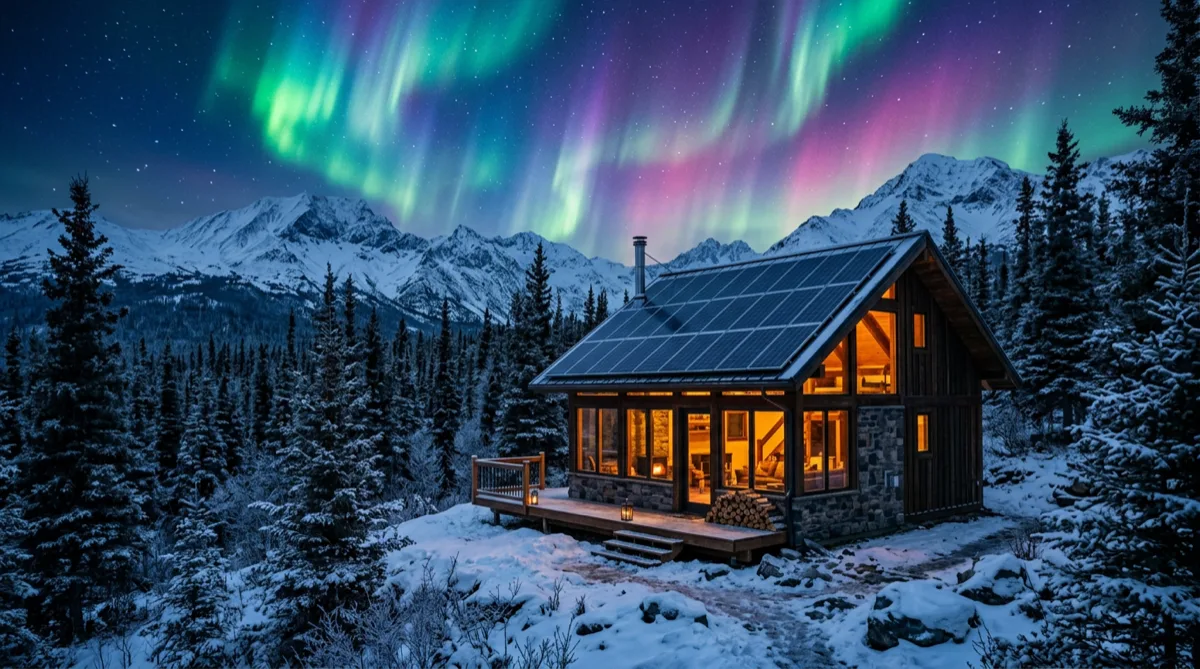
Alaska is one of the last places in America where you can own a truly off-grid property — no utility lines, no municipal water, no road access in winter. For many Alaskans, that independence is the dream. But financing an off-grid property in Alaska comes with unique requirements that catch unprepared buyers off guard.
This guide covers everything you need to know about securing a mortgage for an off-grid home in Alaska — from which loan programs work, to what lenders actually look for, to the specific challenges of rural and remote properties.
What Counts as “Off-Grid” to a Lender?
Lenders define off-grid differently depending on the specific property characteristics. The most relevant factors are:
- No utility grid connection: Property relies entirely on solar, wind, hydro, or generator power
- No public water/sewer: Property uses a well, cistern, or hauled water, plus a septic system or outhouse
- No year-round road access: Property is accessible only by bush plane, boat, snowmobile, or ATV depending on season
- Remote or rural location: Outside census-defined urban areas or communities without utility infrastructure
Each of these factors creates separate challenges with lenders. A property may be partially off-grid (well and septic but connected to utility power) or fully off-grid (no connections to any public systems). Fully off-grid properties face the most scrutiny.
Which Loan Programs Work for Off-Grid Alaska Properties?
Not all mortgage programs will finance off-grid properties. Here’s where Alaska buyers typically have the most success:
AHFC Rural Owner Program
Alaska Housing Finance Corporation (AHFC) offers the Rural Owner program specifically for properties outside Alaska’s standard loan areas. This is often the best starting point for off-grid buyers because AHFC understands Alaska’s unique housing stock.
The AHFC Rural program covers properties that traditional lenders would decline — including properties with limited road access and non-standard utility systems. Eligibility requirements include owner-occupancy, income limits, and minimum property standards.
Visit AHFC’s website for current Rural program rates, income limits, and eligible areas.
USDA Rural Development Loans
USDA loans are zero-down and designed specifically for rural areas. Many Alaska communities — including areas in the Kenai Peninsula, Interior, and Southeast — fall within USDA’s eligible rural zones.
The key challenge with USDA and off-grid properties is the property condition requirements. USDA requires the home to meet HUD’s minimum property standards, which includes functional heating, safe drinking water, and sanitary facilities. A generator-powered cabin with a composting toilet may not qualify without upgrades.
Read our full overview of USDA loans in Alaska for eligibility details.
Conventional Portfolio Loans
Some Alaska lenders offer “portfolio loans” — mortgages they hold on their own books rather than selling to Fannie Mae or Freddie Mac. Because these loans don’t have to conform to GSE guidelines, lenders can use their own underwriting criteria.
Portfolio lenders may be more willing to finance off-grid properties if the property is well-maintained, the borrower is strong, and the loan amount is manageable. Expect higher down payment requirements (20–30%) and slightly higher rates on portfolio products.
Alaska-based credit unions and community banks are your best resources for portfolio lending. Start by contacting Alaska USA Federal Credit Union, Denali Federal Credit Union, and TruNorth Federal Credit Union.
Owner Financing
For truly remote or unusual off-grid properties, owner financing (also called seller financing) is sometimes the most practical path. The seller acts as the lender — you make monthly payments directly to them rather than a bank. Terms are negotiable, and there’s no third-party underwriting of the property.
Owner financing is more common in rural Alaska markets where bank financing is difficult. The downsides: terms may be less favorable, and you lose the consumer protections that come with regulated mortgage products.
Construction-to-Permanent Loans
If you’re building an off-grid cabin from scratch, a construction loan in Alaska that converts to permanent financing after completion may be your best route. Lenders can underwrite to the finished value of the property and disburse funds in draws as construction progresses.
Thinking about buying or building off-grid in Alaska? Get a free home loan quote from Premier Mortgage (NMLS# 1168048).
What Lenders Look For on Off-Grid Properties
Even lenders comfortable with rural Alaska properties have specific requirements. Here’s what you should be prepared to document:
Power and Heating Systems
Lenders want to know that the property can be safely heated year-round. For off-grid Alaska properties, this typically means:
- Backup heating source: Most lenders require two independent heat sources (e.g., wood stove + oil boiler), because a single-point failure in an Alaska winter is a life-safety issue
- Fuel storage capacity: For oil, propane, or diesel systems, how large is the tank? Is there year-round delivery access?
- Solar or wind system documentation: Age of the system, battery bank capacity, backup generator specs
Water Supply
If the property uses a well or cistern, lenders will require:
- Water quality test: Coliform bacteria, nitrate, arsenic, and other contaminants tested within the past 12 months
- Well flow rate: FHA and USDA require a minimum 3–5 gallons per minute from a drilled well
- FHA well-to-septic distance rules: Well must be at least 50 feet from septic tank, 100 feet from drain field (varies by jurisdiction and soil type)
Alaska Department of Environmental Conservation (DEC) has specific standards for private water systems. See well and water systems for Alaska homes for more context on what DEC requires.
Road and Site Access
For properties without year-round road access, lenders need to understand how the property is reached. An appraisal of a remote off-grid property will note accessibility limitations, which may affect the loan-to-value the lender is comfortable with.
Access easements must be documented in the title — particularly for properties reached via private roads or land owned by others. Title companies and real estate attorneys in Alaska are experienced with access easement issues.
Appraisal Challenges
One of the biggest hurdles for off-grid Alaska property financing is the appraisal. Off-grid properties often have limited comparable sales (comps) in the surrounding area. An appraiser may need to use comps from a wide geographic radius or apply significant adjustments, which can result in a lower-than-expected appraised value.
If the appraised value comes in below the purchase price, you’ll need to either negotiate the price down, make up the difference in cash, or appeal the appraisal.
Tips for Buyers of Off-Grid Alaska Properties
1. Start with an AHFC-approved lender. They’ll know the Rural program and understand Alaska’s unique property types better than a national bank.
2. Get a thorough home inspection. Off-grid systems (solar arrays, well pumps, generators, fuel tanks) require specialized inspection. Budget for a 4–8 hour inspection by an inspector experienced with off-grid systems.
3. Test the water before the appraisal. Don’t wait until you’re under contract to discover the well has a contamination issue. Request recent water test results from the seller upfront.
4. Document all easements. Access rights and easements should be clearly documented before you make an offer. Title insurance is essential.
5. Budget for higher carrying costs. Off-grid living in Alaska means fuel costs, generator maintenance, battery replacement, and hauled water if needed. These affect your monthly cost of ownership — not just the mortgage payment.
6. Explore Homer as a starting point. The Homer area has a concentration of off-grid and remote properties, along with lenders experienced in financing them.
Frequently Asked Questions
Can you get a conventional mortgage on an off-grid home in Alaska?
Sometimes. It depends on the specific property. Homes with well and septic but no utility grid connection are often financeable with conventional portfolio loans, especially if the buyer has strong credit and a sizeable down payment. Fully remote properties with no road access and no utilities are more challenging and typically require AHFC Rural loans or owner financing.
Do FHA or VA loans work for off-grid Alaska homes?
FHA and VA loans have strict Minimum Property Standards (MPS) that require safe, sanitary, and structurally sound properties. An off-grid home with a functional well, septic, and reliable heating may qualify — but properties that lack safe water or heating systems will not. An FHA or VA appraisal will flag deficiencies that must be corrected before closing.
How does AHFC’s Rural program differ from a standard AHFC loan?
AHFC’s Rural program is designed specifically for properties in communities without utility infrastructure or that fall outside AHFC’s primary lending areas. Income limits, loan limits, and eligible property types differ from AHFC’s standard programs. The Rural program may accommodate properties that standard AHFC underwriting would decline. Contact an AHFC-approved lender for current eligibility details.
What is the typical down payment for an off-grid Alaska property?
Down payment requirements vary by loan program and property type. USDA loans can be zero down in eligible areas. AHFC Rural may require 10% or more. Conventional portfolio loans for remote properties often require 20–30% down. If the property is truly unusual (no road access, no utilities, unique construction), expect to bring more cash to the table.
Is owner financing common in rural Alaska real estate?
Yes, more so than in urban Alaska markets. When traditional financing is difficult to obtain — due to property type, location, or buyer qualifications — owner financing is a legitimate alternative. Be sure to have a real estate attorney review the contract, ensure the title is clear, and understand your rights as a buyer in a seller-financed transaction.
Ready to Take the Next Step?
Get a free home loan quote today through our trusted partner.
Or call 9078411600
Disclaimer: This article is for informational purposes only and does not constitute financial, mortgage, legal, or tax advice. Interest rates, loan programs, eligibility requirements, and fees are subject to change without notice and may vary based on your individual circumstances. Alaska Home HQ is not a lender, broker, or financial institution. All loan applications are processed by Premier Mortgage (NMLS: 1168048). We may have a business relationship with Premier Mortgage and may receive compensation when you use their services through our links. Consult a licensed mortgage professional before making financial decisions. Terms of Service · Privacy Policy