Well Water Systems for Alaska Homeowners
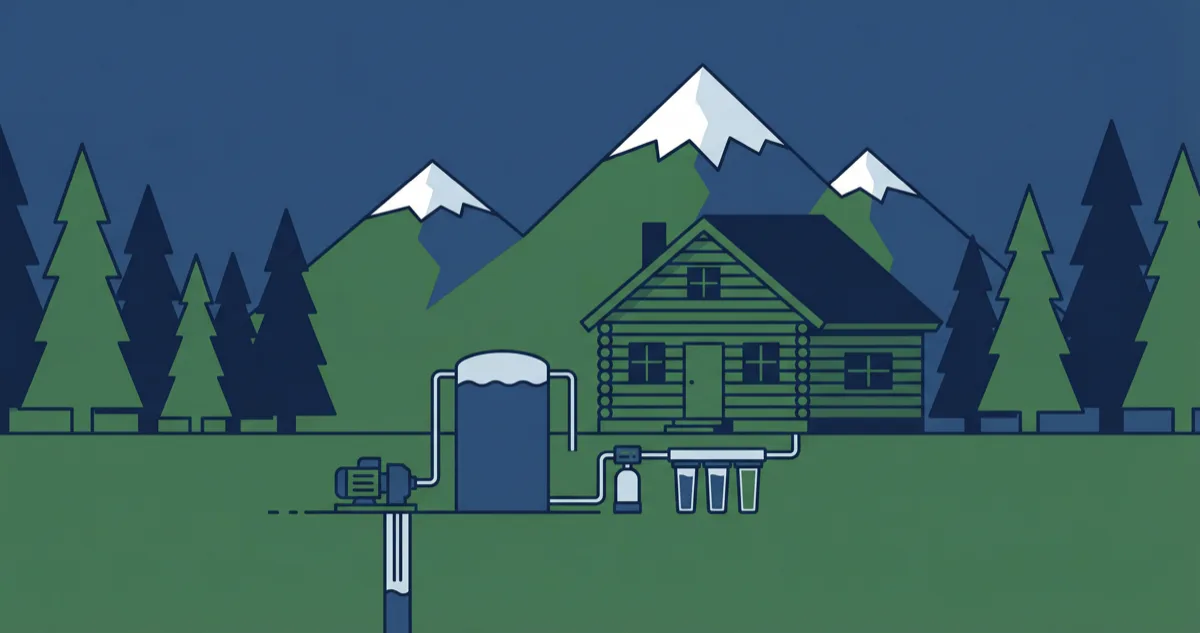
Well Water Systems for Alaska Homeowners: Drilling, Testing, and Maintenance
For a large number of Alaska homeowners — particularly outside of Anchorage, Juneau, and other municipal centers — well water systems are the primary source of household water. A properly drilled, tested, and maintained well provides clean, reliable water year-round, even through Alaska’s harshest winters.
But well water in Alaska comes with its own set of considerations that homeowners in milder climates don’t face. From drilling costs and water quality concerns to freeze protection and pump maintenance, understanding your well water system is part of responsible Alaska homeownership.
This guide covers what you need to know whether you’re drilling a new well, buying a home with an existing well, or maintaining the system you already have.
Well Drilling in Alaska: What to Expect
Finding Water
Alaska’s geology varies dramatically from region to region, and that directly affects well drilling. In some areas, productive aquifers lie 50 to 100 feet below the surface. In others — particularly rocky or mountainous terrain — drillers may need to go 300 feet or deeper before hitting adequate water.
Before drilling, a qualified well driller will consider:
- Local well logs — Records from neighboring wells provide insight into expected depth and water yield
- Geological surveys — The Alaska Division of Geological and Geophysical Surveys maintains data on groundwater conditions
- Site characteristics — Terrain, soil type, proximity to water bodies, and elevation all influence well placement and expected depth
- Setback requirements — Wells must meet minimum distances from septic systems, property lines, and other potential contamination sources
Drilling Costs
Well drilling in Alaska typically costs between $8,000 and $20,000 for a complete residential installation, though costs can exceed that range in challenging conditions. Here’s a general breakdown:
| Component | Typical Cost Range |
|---|---|
| Drilling (per foot) | $25–$65/ft |
| Well casing and screen | $1,500–$4,000 |
| Submersible pump and motor | $1,500–$3,500 |
| Pressure tank and controls | $800–$2,000 |
| Pitless adapter and well head | $500–$1,200 |
| Electrical connections | $500–$1,500 |
| Water line to house | $1,000–$3,000 |
Total cost depends heavily on drilling depth. A 100-foot well in soft sediment costs far less than a 300-foot well through bedrock. In the Mat-Su Valley, wells typically range from 60 to 200 feet. On the Kenai Peninsula near Homer, depths vary widely — some properties hit water at 40 feet while others require 200 feet or more.
Choosing a Well Driller
Select a driller who is:
- Licensed and bonded in Alaska
- Experienced in your specific area (local geology knowledge matters)
- Willing to provide references from recent jobs
- Clear about pricing structure (per-foot vs. fixed bid, what’s included)
- Familiar with DEC well construction standards
A reputable driller will also provide a well log documenting the geology encountered, water-bearing zones, well depth, casing specifications, and initial yield test results. Keep this document — it’s valuable for future maintenance and if you ever sell the property.
Water Quality: Testing and Treatment
Alaska well water is generally clean and safe, but natural geological conditions create water quality issues in certain areas that require testing and, in some cases, treatment.
Required and Recommended Testing
At minimum, test your well water for:
- Coliform bacteria — Indicates possible contamination from surface water or septic systems. Required for new wells and recommended annually.
- Nitrates — Can indicate contamination from septic systems, fertilizers, or animal waste. Particularly important if your well is near a septic drain field.
- Arsenic — Naturally occurring in groundwater in several Alaska regions, particularly parts of the Mat-Su Valley, Fairbanks, and the Kenai Peninsula. The EPA maximum contaminant level is 10 parts per billion (ppb). Testing is essential — arsenic is odorless and tasteless.
- Iron and manganese — Common in Alaska groundwater. Not typically a health hazard at levels found in most wells, but they cause staining, taste issues, and can clog plumbing and appliances.
- pH and hardness — Affects pipe corrosion, appliance longevity, and water taste.
Arsenic in Alaska Well Water
Arsenic deserves special attention because it’s a widespread issue in Alaska groundwater. Naturally occurring arsenic is found in bedrock and sediments across parts of the state, with the Mat-Su Valley being one of the most well-documented areas of concern.
Key facts about arsenic in Alaska wells:
- Not all wells are affected — Arsenic levels vary significantly, even between neighboring properties. Testing is the only way to know your exposure.
- Health risks — Long-term exposure to arsenic above EPA limits is associated with increased cancer risk and other health effects. It’s a serious concern, not something to dismiss.
- Treatment is effective — Point-of-use reverse osmosis systems and whole-house adsorptive media systems (iron-based media is common) reliably reduce arsenic to safe levels. Costs range from $300 to $500 for under-sink RO systems to $2,000 to $5,000 for whole-house treatment.
- Ongoing testing — If your well has elevated arsenic, test annually to confirm your treatment system is working effectively.
Iron and Manganese
If your water leaves orange or brown stains on fixtures, laundry, or toilet bowls, you likely have elevated iron. Black staining typically indicates manganese. Both are common in Alaska well water and treatable:
- Iron/manganese filters — Whole-house systems using birm, greensand, or similar media. Typically $1,500 to $4,000 installed.
- Water softeners — Can address moderate iron levels along with water hardness. $1,000 to $3,000 installed.
- Aeration systems — For high iron levels, aeration oxidizes dissolved iron for removal by filtration.
A water quality analysis from a certified lab determines the right treatment approach for your specific water chemistry.
Winter Freeze Protection for Well Systems
Frozen well components are one of the most common and costly winter problems for Alaska homeowners. Prevention is straightforward but requires attention before temperatures drop.
Vulnerable Points
The components most susceptible to freezing:
- Well head and pitless adapter — The above-ground portion of the well and the connection point where the water line exits the casing below frost depth
- Water line from well to house — Must be buried below frost depth (typically 6 to 10 feet depending on location) or protected with insulation and heat trace
- Pressure tank and pump house — If located in an unheated outbuilding, the tank and associated plumbing can freeze
- Crawlspace plumbing — Where the water line enters the house through an unheated crawlspace
Freeze Prevention Strategies
- Proper burial depth — Water lines should be buried below the local frost depth. In the Mat-Su Valley, this is typically 6 to 8 feet. In Fairbanks and the Interior, 8 to 10 feet or more may be required.
- Heat trace cable — Self-regulating heat trace applied to water lines in vulnerable areas (well head, house entry, crawlspace runs) provides reliable freeze protection. Budget $200 to $800 for materials and installation per vulnerable section.
- Insulated well houses — If your pressure tank or wellhead is in an above-ground enclosure, insulate the structure and add a thermostatically controlled heat source (electric heater, heat lamp, or radiant panel).
- Continuous water flow — In extreme cold, allowing a small trickle from a faucet keeps water moving and reduces freeze risk. This is a backup strategy, not a primary one.
- Bleed-back valves — Some systems include a bleed-back valve that allows water to drain from the pressure tank and water line back into the well when the pump cycles off, preventing standing water from freezing in the line.
What to Do If Your Well System Freezes
If you lose water during cold weather:
- Check your breaker panel — power interruption to the pump or heat trace is the most common cause
- Inspect visible plumbing for frozen sections (frost on pipes, no water past a specific point)
- Apply gentle heat to frozen sections — hair dryer, heat gun on low, or wrap with towels soaked in hot water. Never use an open flame.
- If the freeze point is underground or inaccessible, call a plumber experienced with Alaska well systems
For additional guidance on protecting your home’s plumbing from winter damage, see our plumbing guide for Alaska homes.
Pump Systems and Maintenance
Submersible Pumps
Most Alaska residential wells use submersible pumps — motors housed in a sealed unit that sits inside the well casing, submerged in the water. Submersible pumps are quieter, more efficient, and less prone to freezing than above-ground jet pumps.
A typical residential submersible pump:
- Operates on 220-volt power
- Produces 5 to 25 gallons per minute depending on well depth and pump size
- Lasts 10 to 20 years with proper maintenance
- Costs $1,500 to $3,500 to replace (including labor and materials)
Pressure Tanks
The pressure tank stores pressurized water so the pump doesn’t cycle on and off with every faucet use. Proper pressure tank sizing and maintenance extends pump life significantly.
Signs your pressure tank may need attention:
- Pump cycles on and off rapidly (short cycling) — usually indicates a waterlogged tank (failed bladder)
- Fluctuating water pressure
- Pump running constantly
Pressure tank replacement typically costs $500 to $1,500 depending on size and accessibility.
Routine Maintenance Schedule
| Task | Frequency |
|---|---|
| Water quality testing (bacteria, nitrates) | Annually |
| Arsenic testing (if applicable) | Annually |
| Check pressure tank air charge | Every 6 months |
| Inspect well cap and casing for damage | Annually (spring) |
| Check heat trace operation | Before freeze-up (September/October) |
| Inspect filtration system and replace media/filters | Per manufacturer schedule |
| Full system inspection by professional | Every 3–5 years |
| Pump replacement planning | At 10–15 years of age |
Buying a Home with an Existing Well
If you’re purchasing a property with a well, protect yourself with thorough due diligence:
Before Closing
- Request the well log — This document shows drilling depth, casing specs, water-bearing zones, and original yield. If the seller doesn’t have it, check with ADNR or the original driller.
- Get a water quality test — Test for bacteria, nitrates, arsenic, iron, manganese, pH, and hardness at minimum. Use a certified lab, not a home test kit.
- Measure the well yield — A drawdown test measures how much water the well produces over time. Low-yield wells (under 3 gallons per minute) may struggle to supply a household during high-use periods.
- Inspect the well head and casing — Look for proper sealing, a sanitary well cap, and no visible damage or contamination pathways.
- Check the pump age and condition — Ask when the pump was last replaced and whether there’s been any history of pump failures.
- Verify the water line depth and freeze protection — Ensure the water line is buried below frost depth and that heat trace (if present) is functional.
Red Flags
- Seller unable to provide any well documentation
- Water quality test showing elevated coliform bacteria or arsenic above EPA limits (treatable, but factor treatment costs into your offer)
- Low yield (under 2 GPM) without a storage tank system
- Pump older than 15 years (budget for replacement)
- Well head not properly sealed or located in a low spot where surface water could enter
Well Water in the Homer and Kenai Peninsula Area
The southern Kenai Peninsula around Homer presents interesting well water conditions. Coastal terrain, varied geology, and the mix of glacial sediments and bedrock create a range of well depths and water qualities across relatively short distances.
Homeowners and buyers in the Homer area should be aware of:
- Variable well depths — Neighbors may have dramatically different well depths. Local well drillers with Homer experience are your best resource for realistic depth estimates.
- Water quality variation — Some areas produce excellent, clean water. Others have elevated minerals, particularly iron. Testing is essential.
- Coastal influence — Properties near the coast may encounter saltwater intrusion at depth, which limits usable aquifer access.
- Power reliability — Rural properties on the southern Kenai Peninsula may experience power outages that affect pump operation. A generator or battery backup system ensures water access during outages.
For more on the Homer area, visit our Homer location page.
Finance your home project with a HELOC or home equity loan from Premier Mortgage. Premier Mortgage | NMLS# 1168048 | Equal Housing Lender
Also check our guide to finding a contractor in Alaska for tips on vetting any home services professional.
Frequently Asked Questions
How deep do wells typically need to be in Alaska?
Well depth varies significantly by location and geology. In the Mat-Su Valley, residential wells typically range from 60 to 200 feet. On the Kenai Peninsula, depths can range from 40 to over 300 feet depending on the specific area. In Fairbanks, wells typically range from 80 to 250 feet. The only reliable way to estimate well depth for a specific property is to consult local well logs (available through ADNR) and talk to drillers experienced in your area. Be prepared for some uncertainty — drilling is inherently unpredictable.
Is arsenic in well water common in Alaska?
Arsenic is a naturally occurring contaminant found in groundwater across several Alaska regions, with the Mat-Su Valley being one of the most well-documented areas. Not every well is affected — levels vary significantly even between neighboring properties. The only way to know your arsenic level is to test. If your well exceeds the EPA maximum contaminant level of 10 ppb, effective treatment systems are available, ranging from under-sink reverse osmosis units ($300–$500) to whole-house adsorptive media systems ($2,000–$5,000). Annual retesting confirms treatment effectiveness.
How do I prevent my well from freezing in winter?
The primary defenses are burying your water line below the local frost depth (6 to 10 feet depending on location), installing self-regulating heat trace cable on vulnerable pipe sections (especially at the well head, house entry point, and any above-ground runs), insulating any above-ground enclosures with a supplemental heat source, and maintaining your electrical system so heat trace stays powered. Before freeze-up each fall, test your heat trace operation and inspect insulation. If your system does freeze, apply gentle heat to accessible frozen sections and call a professional for underground or in-well freeze events.
How long does a well pump last in Alaska?
A quality submersible pump typically lasts 10 to 20 years, with 12 to 15 years being common in Alaska conditions. Factors that shorten pump life include sediment in the water (causes abrasion), frequent cycling (often caused by a failing pressure tank), power surges, and running the pump dry (if well yield is low). When your pump reaches 10 years old, it’s wise to start budgeting for replacement ($1,500–$3,500 installed) so you’re not caught off guard. Some homeowners keep a backup pump on hand, though professional installation is recommended.
Should I test my well water every year?
Yes, annual testing is recommended as a baseline for all Alaska well owners. At minimum, test for coliform bacteria and nitrates each year. If your area is known for arsenic (parts of Mat-Su, Fairbanks, Kenai Peninsula), add arsenic to your annual panel. Test for a broader range of contaminants — including iron, manganese, pH, hardness, and volatile organic compounds — every three to five years or if you notice changes in taste, odor, or appearance. Always test after any work on the well (pump replacement, casing repair) or after flooding events that could introduce surface water contamination.
Finance Your Home Improvement Project
A HELOC or home equity loan from Premier Mortgage lets you tap your home's value to fund renovations, repairs, and upgrades at competitive rates.
Or call 9078411600
Disclaimer: This article is for informational purposes only and does not constitute financial, mortgage, legal, or tax advice. Interest rates, loan programs, eligibility requirements, and fees are subject to change without notice and may vary based on your individual circumstances. Alaska Home HQ is not a lender, broker, or financial institution. All loan applications are processed by Premier Mortgage (NMLS: 1168048). We may have a business relationship with Premier Mortgage and may receive compensation when you use their services through our links. Consult a licensed mortgage professional before making financial decisions. Terms of Service · Privacy Policy