Energy Audits for Alaska Homes: Save on Heating
Energy Audits for Alaska Homes: Save on Heating
Heating an Alaska home is one of the largest ongoing expenses homeowners face. With winters that stretch seven months or longer and temperatures that can plunge well below zero, even small inefficiencies in your home’s thermal envelope translate into hundreds — or thousands — of dollars in wasted energy each year.
An energy audit identifies exactly where your home is losing heat and provides a prioritized roadmap for improvements that may pay for themselves through reduced energy costs. For homeowners in Kodiak and across Alaska, understanding what an energy audit involves — and the rebate programs that can offset improvement costs — is the first step toward a more efficient, comfortable home.
What Is an Energy Audit?
An energy audit (sometimes called an energy assessment or home energy rating) is a comprehensive evaluation of your home’s energy performance. A certified energy rater uses specialized equipment and diagnostic testing to measure:
- Where heat is escaping your home
- How efficiently your heating system operates
- How well-insulated and air-sealed your home is
- What improvements would have the greatest impact on energy performance
The result is a detailed report with specific recommendations, estimated costs, and projected savings — giving you the information needed to make smart investment decisions about your home’s energy efficiency.
What Happens During an Energy Audit
A professional energy audit typically takes 2-4 hours and involves several key components.
Visual Inspection
The auditor begins with a thorough visual examination of your home, checking:
- Insulation: Visible insulation in the attic, basement, and crawl space — type, depth, and condition
- Windows and doors: Age, glazing type, weatherstripping, and visible drafts
- Heating system: Type, age, condition, and maintenance history
- Ventilation: Bathroom fans, range hoods, HRV/ERV systems, and attic ventilation
- Ductwork: Condition, sealing, and insulation (for forced-air systems)
- Water heating: System type, insulation, and efficiency
- Electrical: Lighting types, appliance efficiency, and phantom loads
- Moisture: Signs of condensation, mold, or moisture damage
Blower Door Test
The blower door test is the cornerstone of an energy audit. A calibrated fan is temporarily mounted in an exterior doorway and depressurizes the home to measure total air leakage.
How it works:
- All exterior doors and windows are closed
- Interior doors are opened
- The fan draws air out of the home, creating a slight negative pressure
- The auditor measures the total cubic feet per minute (CFM) of air leaking into the home
- Results are expressed in Air Changes per Hour at 50 Pascals (ACH50)
What the numbers mean:
- ACH50 of 3.0 or less: Tight home — may need mechanical ventilation for air quality
- ACH50 of 3.0-7.0: Moderate leakage — room for improvement
- ACH50 of 7.0-15.0: Leaky home — significant energy savings possible through air sealing
- ACH50 above 15.0: Very leaky — air sealing should be a top priority
While the blower door runs, the auditor uses smoke pencils or an infrared camera to pinpoint exactly where air leaks occur — around windows, electrical outlets, plumbing penetrations, attic hatches, and other common trouble spots.
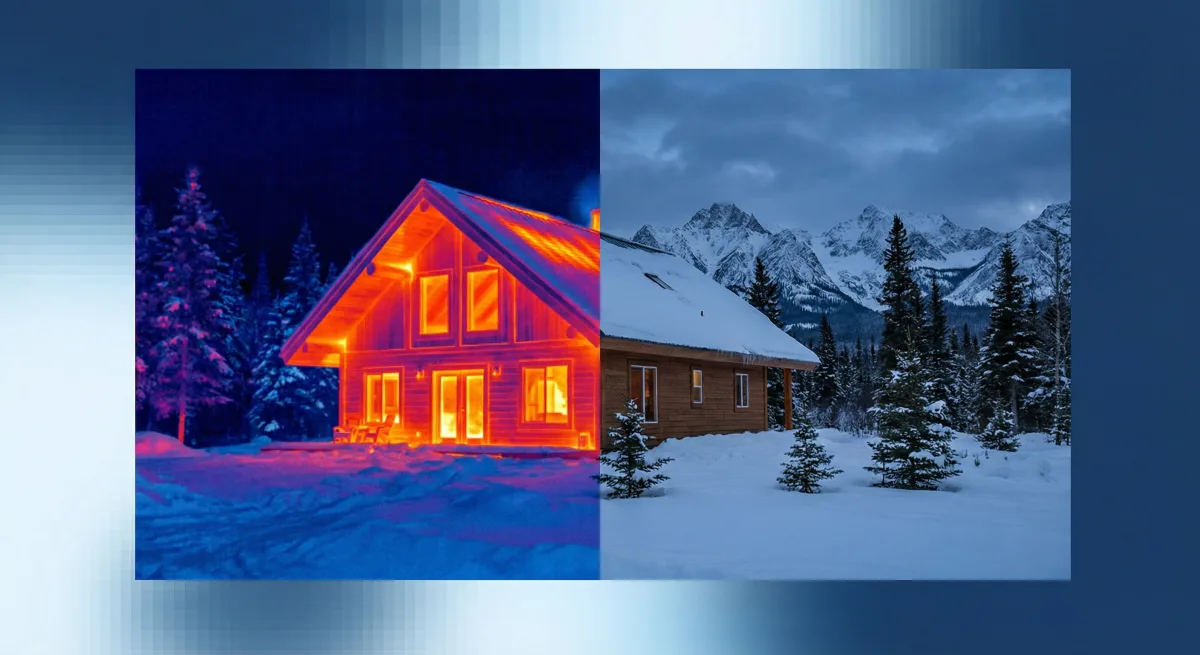
Infrared (Thermal) Imaging
An infrared camera reveals temperature differences on interior surfaces that are invisible to the naked eye. This technology identifies:
- Missing insulation: Cold spots in walls, ceilings, or floors where insulation is absent or has settled
- Air leaks: Cool air infiltration paths appear as distinct temperature patterns
- Moisture issues: Wet insulation or moisture intrusion shows as temperature anomalies
- Thermal bridges: Framing members or other structural elements that conduct heat through the building envelope
Infrared imaging is most effective when there’s a significant temperature difference between indoors and outdoors — making Alaska’s cold winters ideal for this diagnostic tool.
Heating System Evaluation
The auditor evaluates your heating system’s efficiency and condition:
- Combustion analysis: For fuel-burning systems (oil, gas, propane), measuring the efficiency of combustion and checking for safety issues
- System sizing: Is the heating system appropriately sized for your home? Oversized systems cycle frequently and operate less efficiently.
- Distribution: Are ducts, baseboards, or radiant systems delivering heat effectively?
- Controls: Are thermostats and zone controls functioning properly?
- Maintenance: Is the system clean and well-maintained?
Fuel Usage Analysis
The auditor reviews your actual energy consumption — typically 12-24 months of fuel delivery records and utility bills — to establish baseline energy use and identify patterns.
Common Findings in Alaska Energy Audits
Certain issues appear consistently in Alaska homes across different ages and construction types.
Air Leakage
Air leakage is typically the single largest source of energy waste in Alaska homes. Common leak locations include:
- Attic penetrations: Plumbing vents, electrical wires, recessed lights, and attic hatches
- Rim joists and sill plates: Where the foundation meets the framing
- Windows and doors: Gaps in weatherstripping, caulking, and framing
- Electrical outlets and switches: Particularly on exterior walls
- Plumbing and mechanical penetrations: Where pipes and ducts pass through floors and walls
- Chimney chases: Gaps around chimneys and flue pipes
- Additions and dormers: Transition areas between original construction and additions
Inadequate Insulation
Many Alaska homes — particularly those built before the 1980s — have less insulation than current standards recommend:
| Component | Common Finding | Current Recommendation |
|---|---|---|
| Attic | R-19 to R-38 | R-49 to R-60 |
| Walls | R-11 to R-19 | R-21 to R-33+ |
| Floor/crawl space | R-0 to R-19 | R-30 to R-38 |
| Basement walls | R-0 to R-10 | R-15 to R-20 |
Upgrading insulation in accessible areas (particularly attics and crawl spaces) is often one of the most cost-effective improvements.
Heating System Inefficiency
Older heating systems may operate at 70-80% efficiency, meaning 20-30% of the fuel you purchase is wasted. Modern high-efficiency systems can achieve 90-98% efficiency. Common findings include:
- Aging boilers or furnaces past their optimal lifespan
- Improperly adjusted burners
- Uninsulated hot water pipes or ductwork
- Outdated controls without programmable thermostats
- Oversized systems that short-cycle
For a comprehensive look at heating options, see our home heating guide for Alaska.
Ventilation Issues
Alaska homes face a ventilation paradox: you want to keep cold air out, but you also need fresh air circulation for health and moisture control. Common issues include:
- No mechanical ventilation in tightly built homes
- Bathroom fans that vent into the attic (causing moisture and ice problems)
- Disconnected or poorly installed HRV/ERV systems
- Blocked soffit vents or ridge vents
Moisture and Condensation
Moisture problems are prevalent in Alaska homes due to the large temperature differential between interior and exterior environments:
- Condensation on windows (indicating high indoor humidity or poor window performance)
- Frost or ice buildup in attics
- Mold in bathrooms, closets, or behind furniture on exterior walls
- Wet or compressed insulation reducing thermal performance
AHFC Energy Rebate Programs
The Alaska Housing Finance Corporation (AHFC) offers rebate programs that can significantly offset the cost of energy improvements. These programs have been a cornerstone of Alaska energy policy for years.
Home Energy Rebate Program
AHFC’s rebate program provides cash rebates to homeowners who improve their home’s energy rating. The basic structure:
- Get a pre-improvement energy rating from an AHFC-certified energy rater
- Make qualifying improvements (insulation, air sealing, windows, heating system upgrades)
- Get a post-improvement energy rating to document the improvement
- Receive a rebate based on the number of “stars” your home improves
Rebate amounts vary but can be substantial — potentially covering a meaningful portion of improvement costs. Contact AHFC or visit their website for current program details, as rebate amounts and requirements may change.
What Qualifies for Rebates
Typical qualifying improvements include:
- Adding attic, wall, or floor insulation
- Air sealing (reducing blower door test results)
- Replacing windows with high-performance units
- Upgrading heating systems to higher efficiency
- Installing heat recovery ventilation (HRV) systems
- Replacing water heaters with high-efficiency models
How to Participate
- Contact an AHFC-certified energy rater to schedule your initial assessment
- Receive your current energy rating and improvement recommendations
- Choose and complete improvements (you can do the work yourself or hire contractors)
- Schedule a post-improvement rating
- Submit your rebate application with documentation
ROI of Energy Improvements
Energy improvements in Alaska often provide attractive returns on investment due to the state’s high energy costs and long heating season.
Sample ROI Calculations
| Improvement | Typical Cost | Annual Savings | Payback Period |
|---|---|---|---|
| Attic air sealing | $500-$1,500 | $200-$500 | 2-4 years |
| Attic insulation (to R-60) | $1,500-$4,000 | $300-$700 | 4-7 years |
| Heating system upgrade | $5,000-$12,000 | $500-$1,500 | 5-10 years |
| Window replacement | $8,000-$20,000 | $300-$800 | 15-25 years |
| HRV installation | $2,000-$5,000 | $100-$300 | 10-20 years |
Savings vary significantly based on current home condition, fuel type and cost, climate zone, and specific improvements made. These are general estimates for Alaska homes.
Priority Order for Maximum ROI
Energy professionals typically recommend this order of priority:
- Air sealing — The highest ROI improvement. Sealing air leaks is relatively inexpensive and may produce immediate, noticeable results.
- Insulation — Adding insulation to underperforming areas (attic first, then floors and walls) provides reliable, long-term savings.
- Heating system — Upgrading an aging, inefficient system to a modern high-efficiency unit may reduce fuel consumption by 15-30%.
- Windows — Important for comfort and air quality, but typically the longest payback period. Focus on replacing the worst-performing windows first.
- Ventilation — An HRV system is important for air quality in tight homes, though the direct energy savings are modest.
For more on insulation options and strategies, review our comprehensive home insulation guide for Alaska.
Finding a Certified Energy Rater
To participate in AHFC programs and ensure a quality audit, work with an AHFC-certified energy rater. These professionals have completed specific training in Alaska building science and energy rating.
To find a certified rater:
- Visit the AHFC website for a directory of certified raters
- Ask your local AHFC office for recommendations
- Check with local home builders’ associations
What to Expect Cost-Wise
Energy audit costs in Alaska typically range from:
- Basic energy rating (AHFC): $300-$500
- Comprehensive energy audit with report: $400-$800
- Follow-up post-improvement rating: $200-$400
Some contractors offer free or discounted audits when bundled with improvement work, though independent audits may provide more objective recommendations.
DIY Energy Assessment Basics
While a professional audit is recommended for detailed analysis and AHFC program participation, you can perform some basic checks yourself:
Check Your Insulation
- Look in the attic: measure insulation depth and compare to recommended R-values
- Feel exterior walls on cold days — cold spots may indicate missing insulation
- Check crawl spaces and basements for insulation condition
Find Air Leaks
- On a cold day, hold your hand near windows, doors, outlets, and plumbing penetrations — drafts indicate leaks
- Look for daylight around door frames and window frames
- Check where different building materials meet (e.g., siding to foundation)
- Examine weather stripping on doors and windows for gaps or deterioration
Review Your Energy Bills
- Compare year-over-year fuel consumption (not just cost, as prices fluctuate)
- Calculate your home’s energy use per square foot
- Higher-than-average usage may indicate efficiency opportunities
Getting Started
An energy audit is a relatively small investment that provides a clear roadmap for improving your home’s efficiency, comfort, and value. In Alaska’s extreme climate, the return on energy improvements can be substantial.
Need to finance energy efficiency upgrades after your audit? A HELOC or home equity loan from Premier Mortgage can fund insulation, window replacements, and heating system upgrades. Premier Mortgage | NMLS# 1168048 | Equal Housing Lender
Explore HELOC & Home Equity Options →
Frequently Asked Questions
How much does an energy audit cost in Alaska?
A professional energy audit in Alaska typically costs $300-$800, depending on home size and the scope of testing. AHFC energy ratings for the rebate program generally run $300-$500 for the initial assessment. The investment often pays for itself through the recommendations and potential rebate eligibility it provides.
What is the AHFC Home Energy Rebate Program?
The AHFC Home Energy Rebate Program provides cash rebates to homeowners who improve their home’s energy performance. You get an initial energy rating, make qualifying improvements, then get a post-improvement rating. Rebates are based on the improvement achieved. Contact AHFC for current program details, as terms and rebate amounts may change.
How much can I save by improving my home’s energy efficiency?
Savings vary based on your home’s current condition, fuel type, and the improvements made. Alaska homeowners who complete comprehensive air sealing and insulation upgrades may see heating cost reductions of 20-40%. A home using $4,000 annually in heating fuel might save $800-$1,600 per year after improvements — with savings compounding over the life of the home.
What is a blower door test?
A blower door test measures how airtight your home is. A calibrated fan is temporarily installed in a doorway and pulls air out of the home, creating a pressure difference. The fan then measures the volume of air leaking into the home through gaps and cracks. This test quantifies air leakage and helps auditors locate specific leak points using smoke pencils or infrared cameras.
Is it worth replacing windows for energy savings in Alaska?
Window replacement can improve comfort and air quality, but the payback period for energy savings alone is typically 15-25 years. In Alaska, windows may be a priority if they’re single-pane, severely drafting, or creating condensation and frost problems. For budget-conscious homeowners, addressing air sealing and insulation first typically provides a better return, with window replacement as a longer-term improvement.
Finance Your Home Improvement Project
A HELOC or home equity loan from Premier Mortgage lets you tap your home's value to fund renovations, repairs, and upgrades at competitive rates.
Or call 9078411600
Disclaimer: This article is for informational purposes only and does not constitute financial, mortgage, legal, or tax advice. Interest rates, loan programs, eligibility requirements, and fees are subject to change without notice and may vary based on your individual circumstances. Alaska Home HQ is not a lender, broker, or financial institution. All loan applications are processed by Premier Mortgage (NMLS: 1168048). We may have a business relationship with Premier Mortgage and may receive compensation when you use their services through our links. Consult a licensed mortgage professional before making financial decisions. Terms of Service · Privacy Policy