Generator Systems for Alaska Homes
Generator Systems for Alaska Homes
Power outages in Alaska aren’t just an inconvenience — they can be a genuine emergency. When temperatures plunge to -40°F and daylight lasts only a few hours, losing electricity means losing your heating system, water pressure, and the ability to keep pipes from freezing. For many Alaska homeowners, a reliable generator system isn’t a luxury; it may be a necessity.
Whether you’re in the Wasilla area, the Kenai Peninsula, or a more rural part of the state, understanding your backup power options can help protect your home and family during Alaska’s most challenging conditions.
Why Generators Matter in Alaska
Alaska presents unique challenges that make backup power particularly important:
- Extreme cold: When the power goes out in January, your home can lose heat rapidly. Frozen pipes can burst, causing thousands of dollars in damage.
- Extended outages: Rural areas may wait days or even weeks for power restoration after major storms.
- Limited infrastructure: Many communities have single-feed power lines vulnerable to wind, ice, and fallen trees.
- Well water dependence: Homes on well water systems lose water pressure without electricity to run the pump.
- Dark winters: Extended darkness makes power outages more disruptive and potentially dangerous.
- Food preservation: Freezers full of wild-caught fish and game represent significant investment that can be lost without power.
Standby vs. Portable Generators
The two main categories of home generators serve different needs and budgets.
Standby (Whole-House) Generators
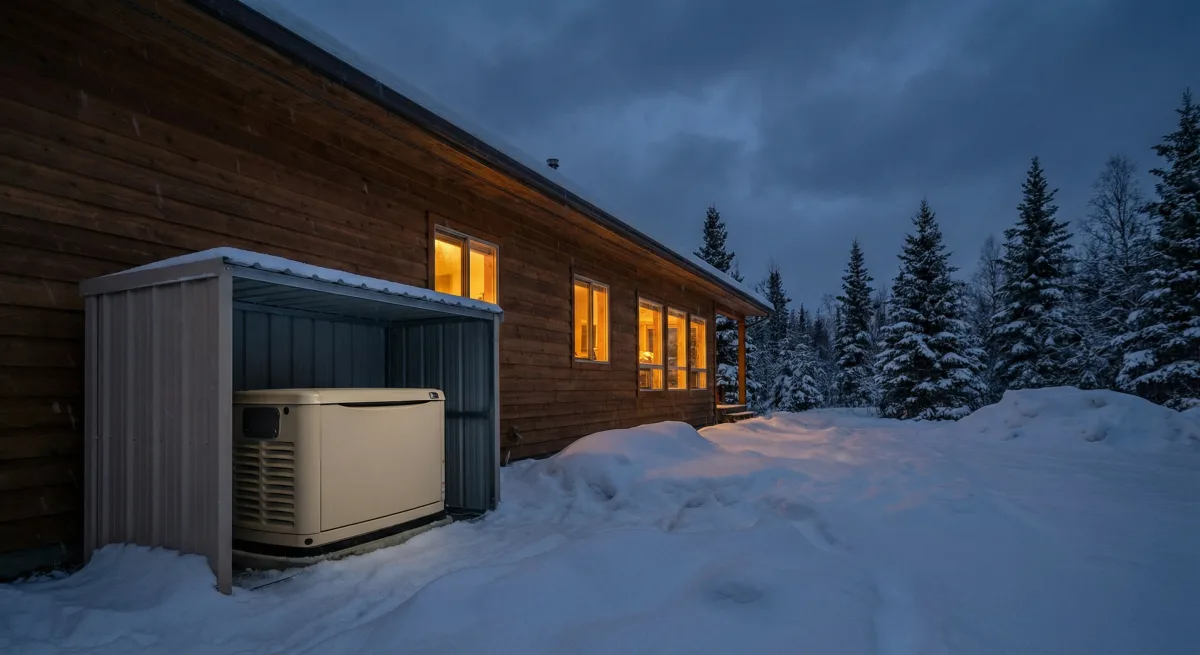
Standby generators are permanently installed outside your home and connected directly to your electrical panel. They start automatically when utility power fails — often within 10-30 seconds.
Advantages:
- Automatic operation — no need to be home to start it
- Powers your entire home or selected circuits
- Runs on natural gas or propane (no refueling during outages)
- Longer continuous runtime
- Higher wattage capacity (typically 10,000-50,000+ watts)
- Increases home value
Disadvantages:
- Higher upfront cost ($5,000-$15,000+ installed)
- Requires professional installation
- Needs an automatic transfer switch (ATS)
- Annual maintenance recommended
- Requires a fuel source connection (propane tank or natural gas line)
Portable Generators
Portable generators are mobile units that you set up and connect manually when needed. They range from small units powering a few essential items to larger models that can handle multiple circuits.
Advantages:
- Lower cost ($500-$3,000)
- Can be moved and used for multiple purposes (camping, job sites)
- No installation required
- Available in a range of sizes
Disadvantages:
- Must be manually started and connected
- Requires gasoline or diesel (which may be hard to get during extended outages)
- Limited runtime before refueling
- Carbon monoxide risk if improperly placed
- Lower wattage capacity
- Must be operated outdoors, away from windows and doors
- Noise levels can be significant
Inverter Generators
A subset of portable generators, inverter generators produce cleaner power suitable for sensitive electronics. They’re quieter and more fuel-efficient but typically offer lower wattage output and higher cost per watt.
Sizing Your Generator
Choosing the right generator size depends on what you need to power during an outage. Here’s a general guide for Alaska homes:
Essential Circuit Coverage (5,000-10,000 watts)
- Furnace/boiler blower and controls
- Well pump
- Refrigerator and freezer
- Some lighting
- Phone and internet equipment
Expanded Coverage (10,000-20,000 watts)
- Everything above, plus:
- Electric range/oven
- Washing machine
- Multiple lighting circuits
- Garage door opener
- Sump pump
Whole-House Coverage (20,000-50,000+ watts)
- All home circuits
- Electric heating systems
- Hot water heater
- All appliances simultaneously
- Shop or outbuilding power
How to Calculate Your Needs
- List every appliance and system you want to power
- Note each item’s running wattage and starting wattage (motors require 2-3x more power to start)
- Add up running wattages for all items
- Add the highest starting wattage to the total
- Choose a generator rated at least 20% above your calculated total
For Alaska homes with forced-air heating or hydronic boiler systems, the heating system is typically the top priority. A furnace blower may draw 500-800 watts running but 1,500-2,000 watts to start.
Fuel Types for Alaska Generators
The fuel you choose affects reliability, cost, and convenience — especially in Alaska’s climate.
Propane (LP Gas)
Best for: Standby generators in most Alaska locations
- Stores indefinitely without degradation
- Available via delivery throughout most of Alaska
- Clean-burning with lower emissions
- Works reliably in extreme cold
- Requires a storage tank (typically 250-1,000 gallons)
- Slightly lower energy density than diesel or gasoline
Propane is often the preferred fuel for Alaska standby generators because it doesn’t degrade in storage and performs well in cold temperatures.
Natural Gas
Best for: Standby generators in areas with natural gas service
- Unlimited fuel supply (no refueling needed)
- Lowest fuel cost per kilowatt-hour
- Clean-burning
- Limited availability — only available in parts of Anchorage and a few other communities
- Lower energy density means slightly larger generators may be needed
Diesel
Best for: Larger standby systems and rural locations
- High energy density — more power per gallon
- Widely available across Alaska
- Diesel generators tend to be durable and long-lasting
- Fuel can gel in extreme cold without additives or heated storage
- Requires fuel treatment for long-term storage
- Higher emissions than propane or natural gas
Gasoline
Best for: Portable generators only
- Readily available at gas stations
- Works in most portable generators
- Degrades in storage (use stabilizer for anything beyond 30 days)
- Can be difficult to obtain during extended power outages
- Higher fire risk during storage and refueling
- Not recommended as a primary fuel for standby systems
Automatic Transfer Switches
An automatic transfer switch (ATS) is a critical component of any standby generator installation. It monitors utility power and automatically:
- Detects a power outage
- Signals the generator to start
- Transfers your home’s electrical load from the utility to the generator
- Monitors for utility power restoration
- Transfers the load back to utility power when restored
- Signals the generator to shut down
For portable generators, a manual transfer switch provides a safe way to connect the generator to your home’s electrical panel without back-feeding power into utility lines — which is both dangerous and illegal.
Never connect a portable generator directly to your home’s electrical panel without a transfer switch. Back-feeding can electrocute utility workers and damage your home’s electrical system.
Installation Considerations for Alaska
Placement
- Generator pad should be level, well-drained, and accessible for maintenance
- Minimum 5 feet from windows, doors, and air intakes (check local codes — some require more)
- Consider snow accumulation — generators need adequate clearance and ventilation
- Protect from direct snow loads (a simple roof structure may be advisable)
- Ensure fuel line routing is protected from frost and physical damage
Cold Weather Features
Look for generators with these cold-climate features:
- Battery blanket/heater: Keeps the starting battery warm for reliable cold starts
- Oil heater: Maintains oil viscosity in extreme cold
- Cold weather kit: Factory-packaged cold weather accessories
- Block heater: Keeps the engine warm for faster starts
- Insulated enclosure: Some manufacturers offer cold-climate enclosures
Electrical Requirements
Professional installation should include:
- Properly sized transfer switch (automatic or manual)
- Dedicated electrical sub-panel for critical circuits (if not powering the whole house)
- Compliance with local electrical codes
- Permits and inspections as required by your municipality
- Proper grounding
For information about your home’s electrical capacity and potential upgrades, see our guide on electrical upgrades for Alaska homes.
Maintenance Schedule
Regular maintenance keeps your generator ready when you need it most.
Monthly
- Run the generator for 15-30 minutes under load (most standby generators do this automatically)
- Check oil level
- Inspect for leaks, damage, or pest intrusion
Annually (Before Winter)
- Change oil and oil filter
- Replace air filter
- Check and replace spark plugs as needed
- Test the automatic transfer switch
- Inspect fuel lines and connections
- Test battery and charging system
- Clean or replace coolant (liquid-cooled models)
- Professional load test
Every 2-3 Years
- Replace battery
- Inspect exhaust system
- Full professional service
Cost Estimates for Alaska
| Component | Estimated Cost Range |
|---|---|
| Portable generator (3,000-7,500W) | $500-$2,500 |
| Standby generator (10-20kW) | $3,500-$8,000 |
| Standby generator (22-50kW) | $6,000-$15,000+ |
| Automatic transfer switch | $500-$1,500 |
| Installation labor | $2,000-$5,000 |
| Concrete pad | $500-$1,500 |
| Propane tank (500 gal) | $1,500-$3,000 |
| Annual maintenance | $200-$500 |
Costs in rural Alaska may be higher due to shipping and limited contractor availability. Getting multiple quotes from qualified electricians is recommended.
Finding a Qualified Installer
Generator installation involves both electrical and sometimes plumbing/gas work, requiring licensed professionals. When selecting an installer:
- Verify proper licensing for electrical and gas work in your area
- Ask about experience with your specific generator brand
- Request references from prior Alaska installations
- Confirm they’ll handle permits and inspections
- Get a detailed written estimate
Need to finance a generator installation or whole-home backup system? A HELOC or home equity loan from Premier Mortgage can cover the cost of equipment and professional installation. Premier Mortgage | NMLS# 1168048 | Equal Housing Lender
For additional winterization tips, check out our guide to winterizing your Alaska home.
Making the Right Choice
For most Alaska homeowners, the decision comes down to budget and risk tolerance. If you live in an area with frequent or prolonged outages — particularly in rural locations or during harsh winters — a standby generator with propane fuel typically offers the most reliable protection. For occasional, brief outages in urban areas, a quality portable generator with a manual transfer switch may be sufficient.
Whatever you choose, having some form of backup power in Alaska isn’t just about convenience — it’s about protecting your home and family when conditions are at their most challenging.
Frequently Asked Questions
What size generator do I need for my Alaska home?
For essential circuits (heating, well pump, refrigerator, lighting), a 7,500-10,000 watt generator typically suffices. For whole-house coverage including electric appliances, consider a 20,000-watt or larger standby unit. Calculate your specific needs by adding up the running and starting wattages of everything you want to power.
How much does a whole-house generator cost in Alaska?
A complete standby generator installation in Alaska typically ranges from $8,000 to $20,000+, depending on generator size, fuel type, and installation complexity. This includes the generator unit, automatic transfer switch, concrete pad, fuel connection, and labor. Rural locations may see higher costs due to shipping and contractor availability.
What fuel type is best for Alaska generators?
Propane is often the preferred fuel for Alaska standby generators because it stores indefinitely, performs well in extreme cold, and is available via delivery across most of the state. Natural gas offers unlimited supply but is only available in limited areas. Diesel provides high energy density but may require cold-weather additives.
Can I install a generator myself?
While portable generators don’t require professional installation, connecting any generator to your home’s electrical panel — whether through a manual or automatic transfer switch — requires a licensed electrician. Improper connections can create serious safety hazards including back-feeding, which can electrocute utility workers.
How often should I maintain my generator?
Run your generator monthly for 15-30 minutes under load, perform a comprehensive service annually before winter (oil change, filter replacement, transfer switch test), and have a full professional service every 2-3 years. In Alaska’s harsh climate, pre-winter maintenance is particularly important to ensure reliable cold-weather performance.
Finance Your Home Improvement Project
A HELOC or home equity loan from Premier Mortgage lets you tap your home's value to fund renovations, repairs, and upgrades at competitive rates.
Or call 9078411600
Disclaimer: This article is for informational purposes only and does not constitute financial, mortgage, legal, or tax advice. Interest rates, loan programs, eligibility requirements, and fees are subject to change without notice and may vary based on your individual circumstances. Alaska Home HQ is not a lender, broker, or financial institution. All loan applications are processed by Premier Mortgage (NMLS: 1168048). We may have a business relationship with Premier Mortgage and may receive compensation when you use their services through our links. Consult a licensed mortgage professional before making financial decisions. Terms of Service · Privacy Policy